
Few pop groups translate to wall art as effortlessly as ABBA. Formed in Stockholm in 1972 and named from the first letters of Agnetha, Björn, Benny and Anni-Frid, the Swedish quartet built a visual language of glitter, spotlights, matching costumes and clean Scandinavian graphic design that still reads as instantly as their melodies. With more than 380 million records sold, according to their label Polar Music, an ABBA album cover on your wall works as both a music tribute and a bold piece of retro design. The result is a lineup of covers as photogenic as the band itself. This collection gathers the studio sleeves that defined pop from Brighton to the ABBA Arena, ready to print at gallery quality.
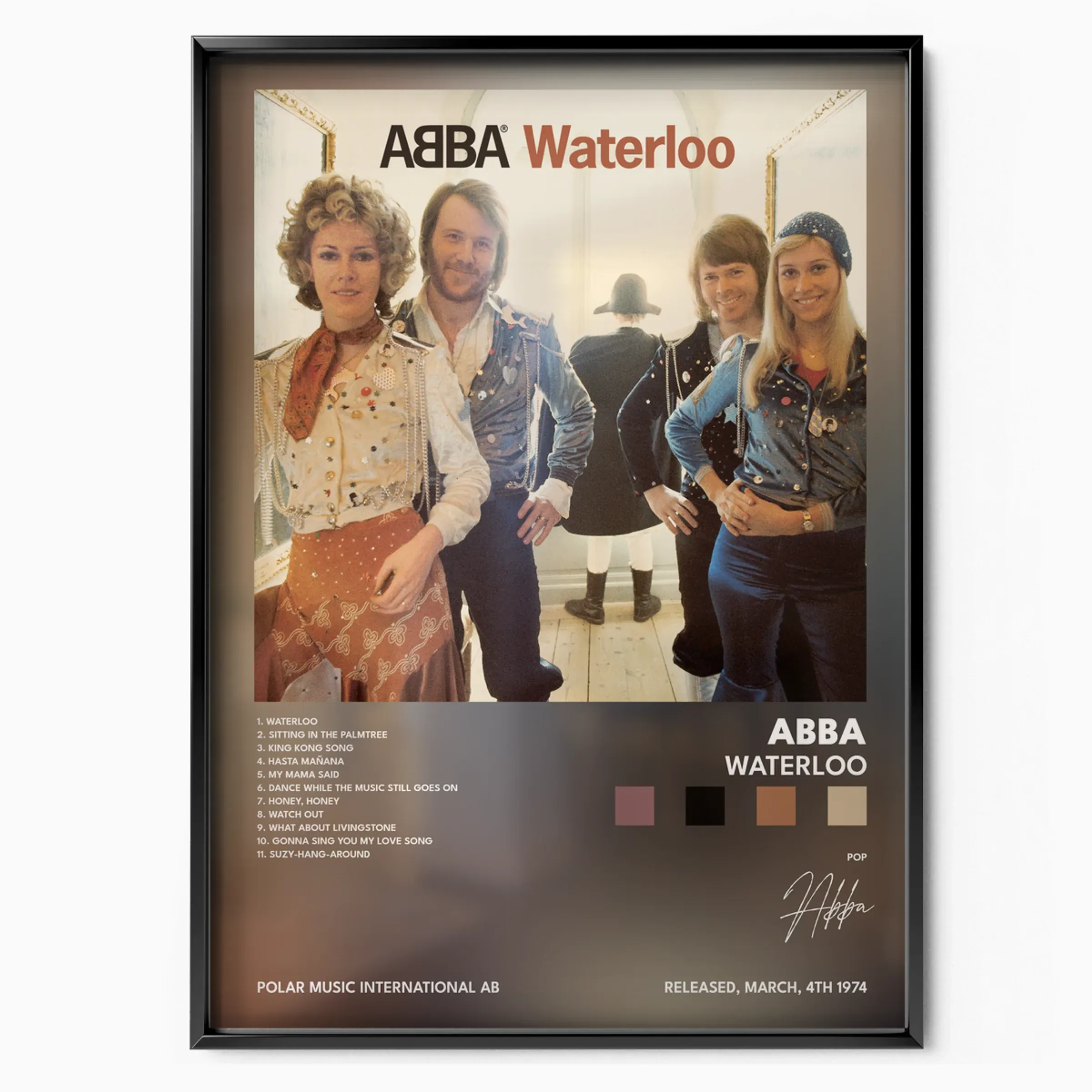
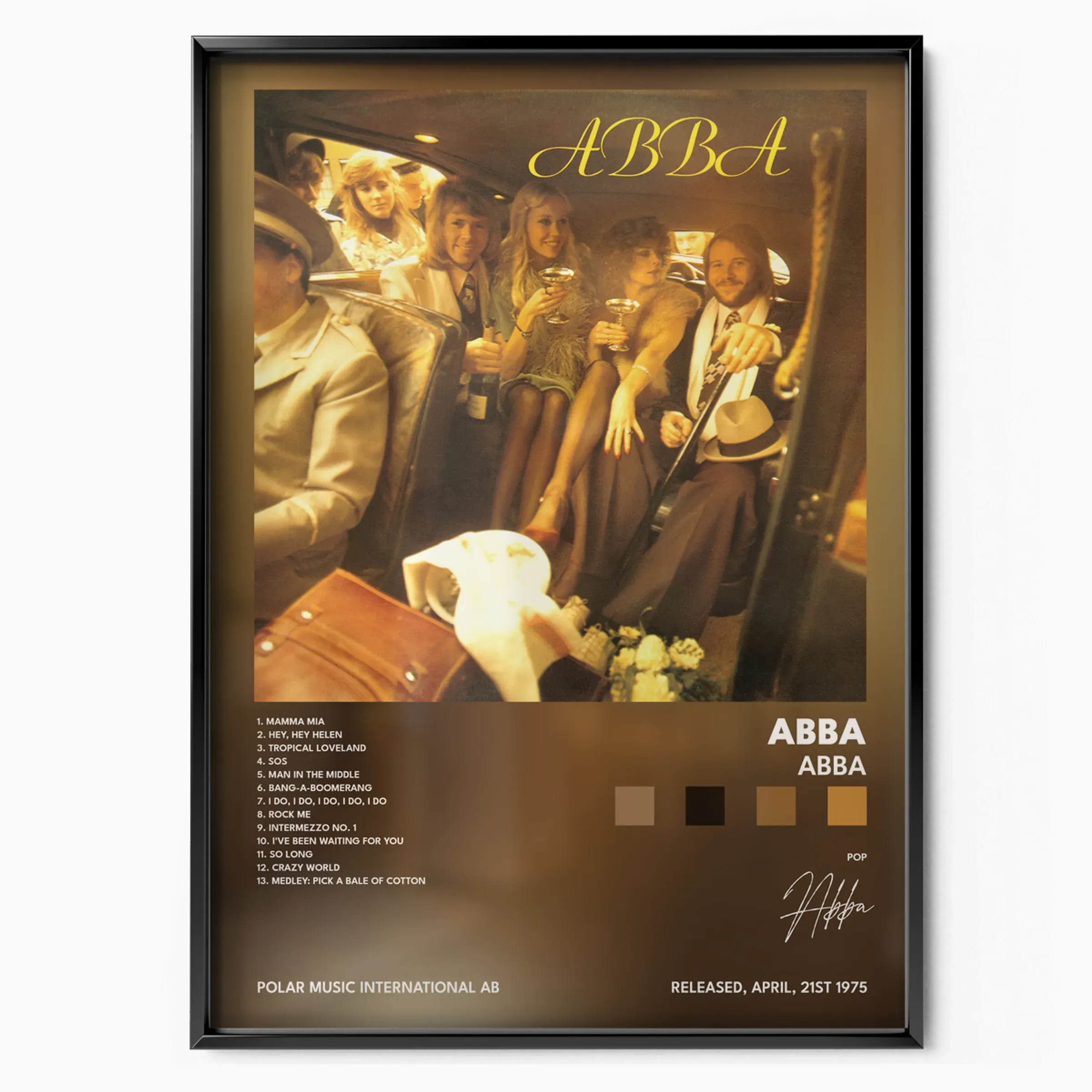
The story starts with the Eurovision breakthrough. Waterloo captures the moment everything changed: on 6 April 1974 the group won the Eurovision Song Contest at The Dome in Brighton, England, giving Sweden its first victory in the contest and launching a worldwide career. The song was later voted the best entry in Eurovision's fifty-year history at the anniversary celebration in 2005, and a Waterloo print carries all the satin-and-platform-boot glamour of that stage. The following ABBA self-titled album from 1975 turned that momentum into hits, delivering 'SOS' and 'Mamma Mia' and proving the group was no one-song wonder. Both sleeves capture the bright, optimistic energy of the group's earliest fame.
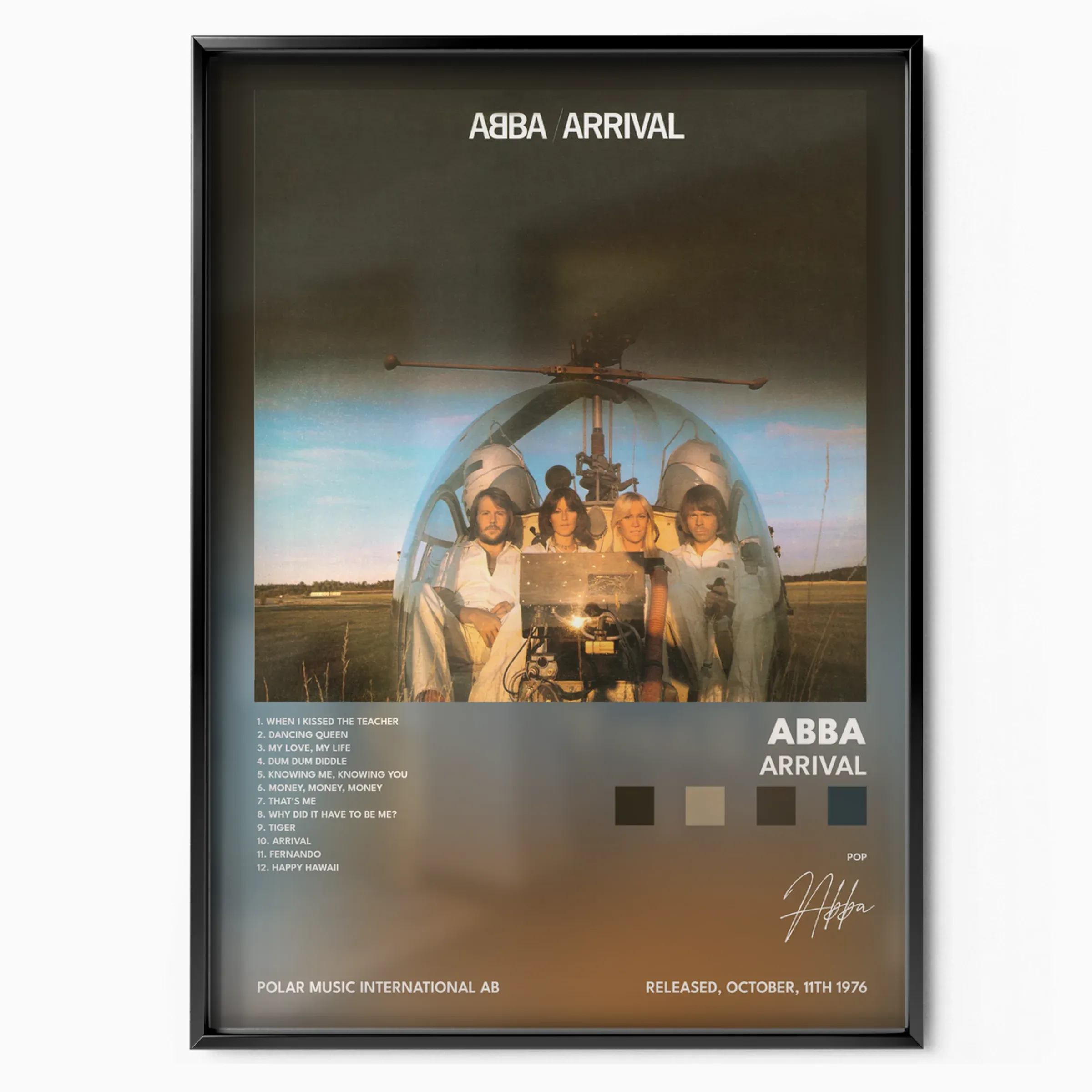
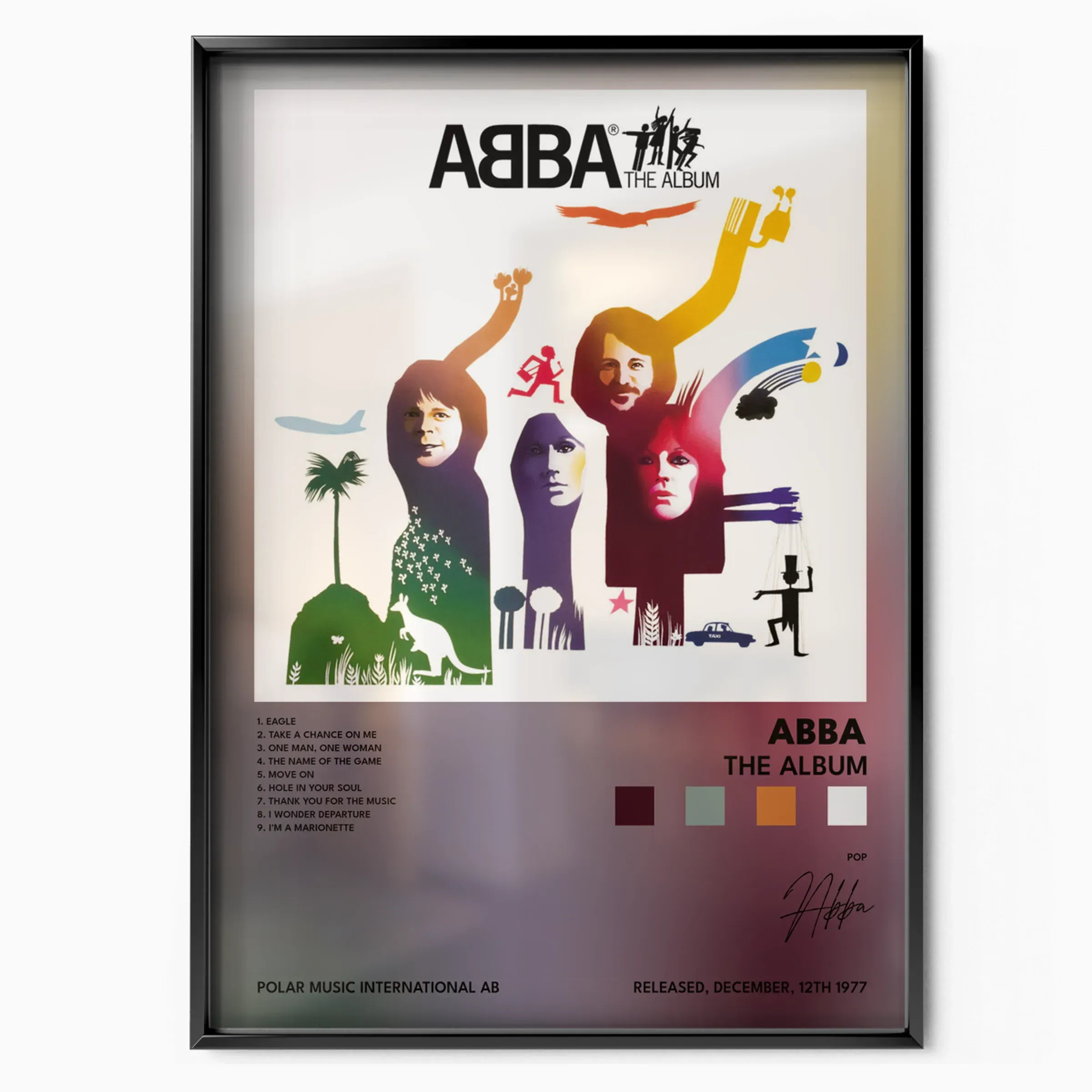
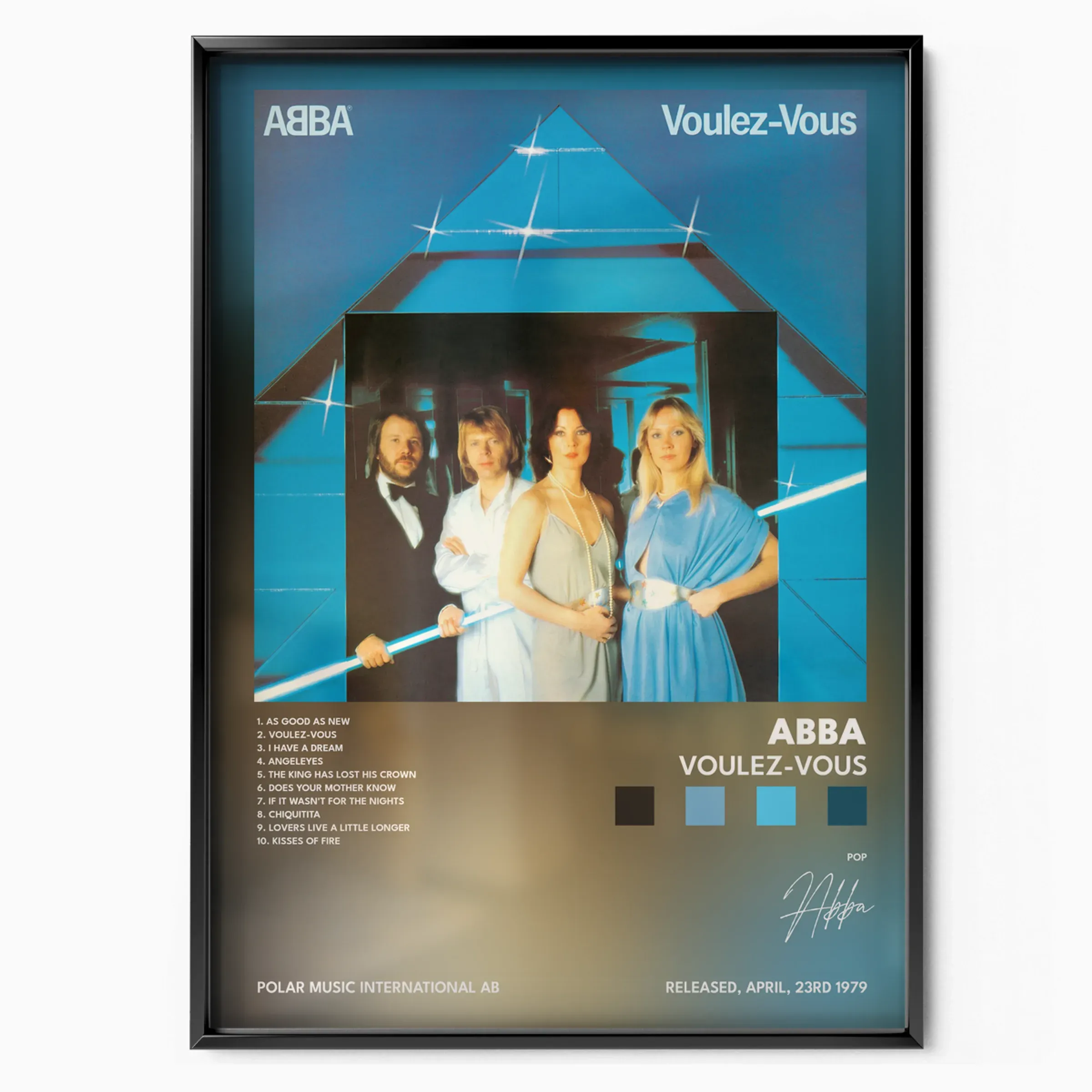
Then came the golden run. Arrival is arguably the most iconic sleeve of the lot, with the four members seated in a bubble-canopy Bell 47G helicopter, a deliberate signal that ABBA had reached the big league. The album gave the world 'Dancing Queen' and 'Money, Money, Money,' ranked as the best-selling album of 1977 in the United Kingdom, and in 2024 was selected for the United States National Recording Registry. Arrival also debuted the famous reversed-B logo, which began when Benny held a lettered card backwards at a magazine photoshoot and the designer liked the look. The Album followed in 1977, home to 'Take a Chance on Me,' 'The Name of the Game' and three songs from the stage mini-musical 'The Girl with the Golden Hair,' including 'Thank You for the Music.' Voulez-Vous from 1979 pushed the group toward the dance floor with 'Chiquitita' and 'Does Your Mother Know,' recorded while Agnetha and Björn were separating, which gave the era a real emotional undertow. Together these four albums represent ABBA at their commercial and creative peak.
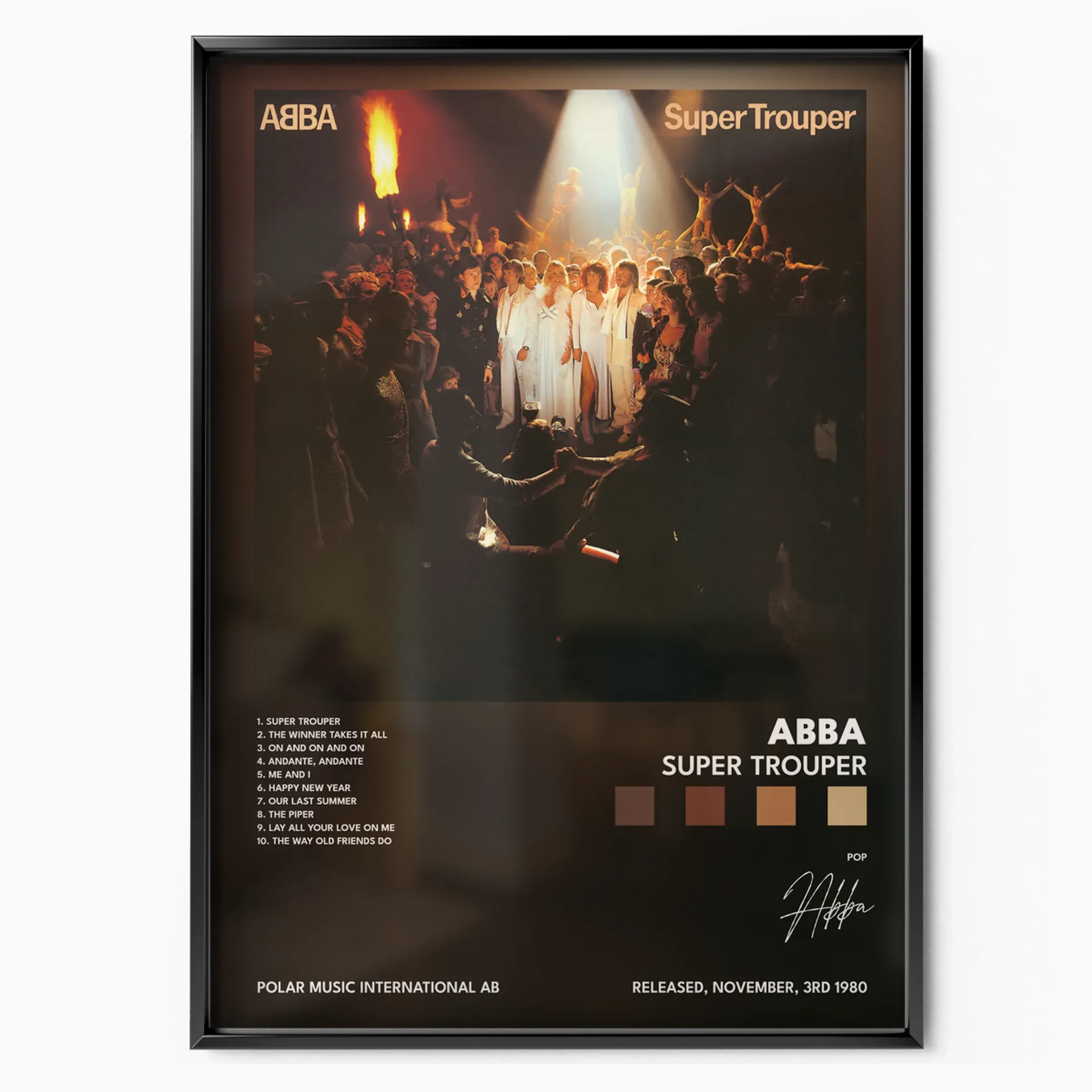
The high point of that stretch is Super Trouper. Its glowing spotlight cover was originally planned for Piccadilly Circus in London, but a local rule against entertainers and animals in the centre sent the shoot to Europa Film Studios in Stockholm, where two circus troupes and a crowd of ABBA's friends gathered under the beam. A Super Trouper poster brings that warm, theatrical glow to any room and pairs naturally with the title track and 'The Winner Takes It All.' The image, all colour and spotlight, remains one of pop's most recognisable album photographs.
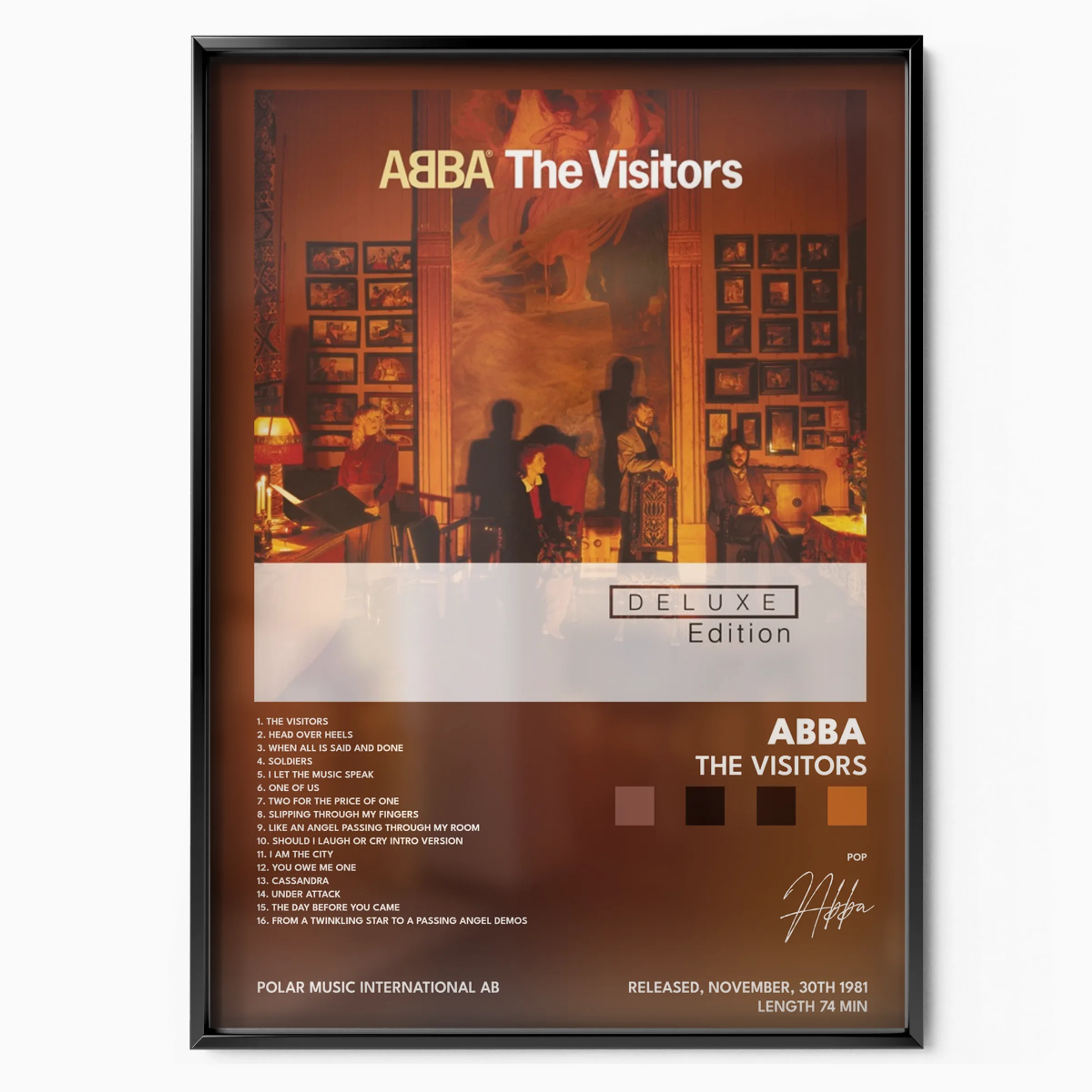
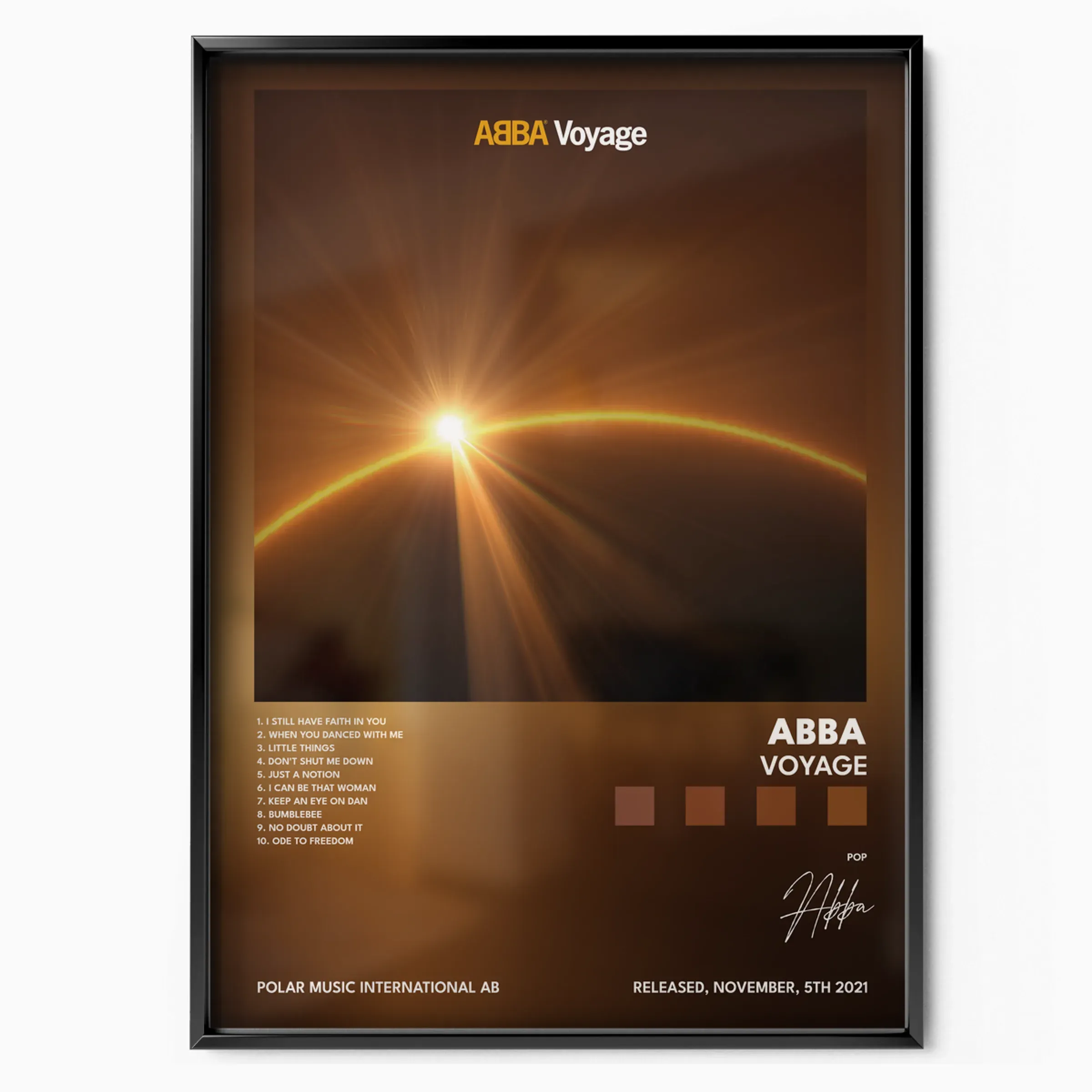
The late era and reunion close the story on a more reflective note. The Visitors, released on 30 November 1981, was the eighth and final studio album of the classic period, a darker and more mature record that also earned a place in tech history as one of the very first albums pressed on compact disc, at the Philips and PolyGram plant in Langenhagen, Germany in 1982. Its cool, painterly cover suits collectors who prefer ABBA's grown-up side. Four decades later came Voyage, released on 5 November 2021, the group's first album of new material in forty years, led by 'I Still Have Faith in You' and 'Don't Shut Me Down.' Voyage also gave its name to the ground-breaking London concert where digital ABBAtars, created by Industrial Light and Magic from 2020 motion-capture sessions, perform as the band looked in 1979.
Every design in the collection is printed on demand so the colour and detail stay true, whether you want the neon of Super Trouper or the crisp graphics of Waterloo. Choose A4 for a desk or shelf, A3 for a feature spot, A2 for a statement above a sofa, or A1 for a full focal wall, and add a black or white frame to finish the piece cleanly. Prints look equally at home in a living room, a home studio or a music-lover's hallway.
For a gallery wall, try hanging the covers in release order, from Waterloo through to Voyage, so the eye travels across ABBA's whole journey in a single glance; keep an even 5 to 7 cm gap between every frame for a tidy, professional grid. Mixing sizes within the grid, with a larger Arrival at the centre and smaller sleeves around it, adds depth without breaking the retro theme that holds the whole wall together.