
Few musicians have shaped the look of the record sleeve the way Bob Dylan has. Born Robert Allen Zimmerman in Duluth, Minnesota, on 24 May 1941, he turned the album cover into a portrait of an era, and today each of these images reads as a poster in its own right. A Dylan poster is not only a piece of music history; it is a photograph that helped define how the 1960s and 1970s pictured themselves. Few songwriters have handed graphic designers so much to work with, and fewer still have covers that hold up as fine-art prints half a century later.
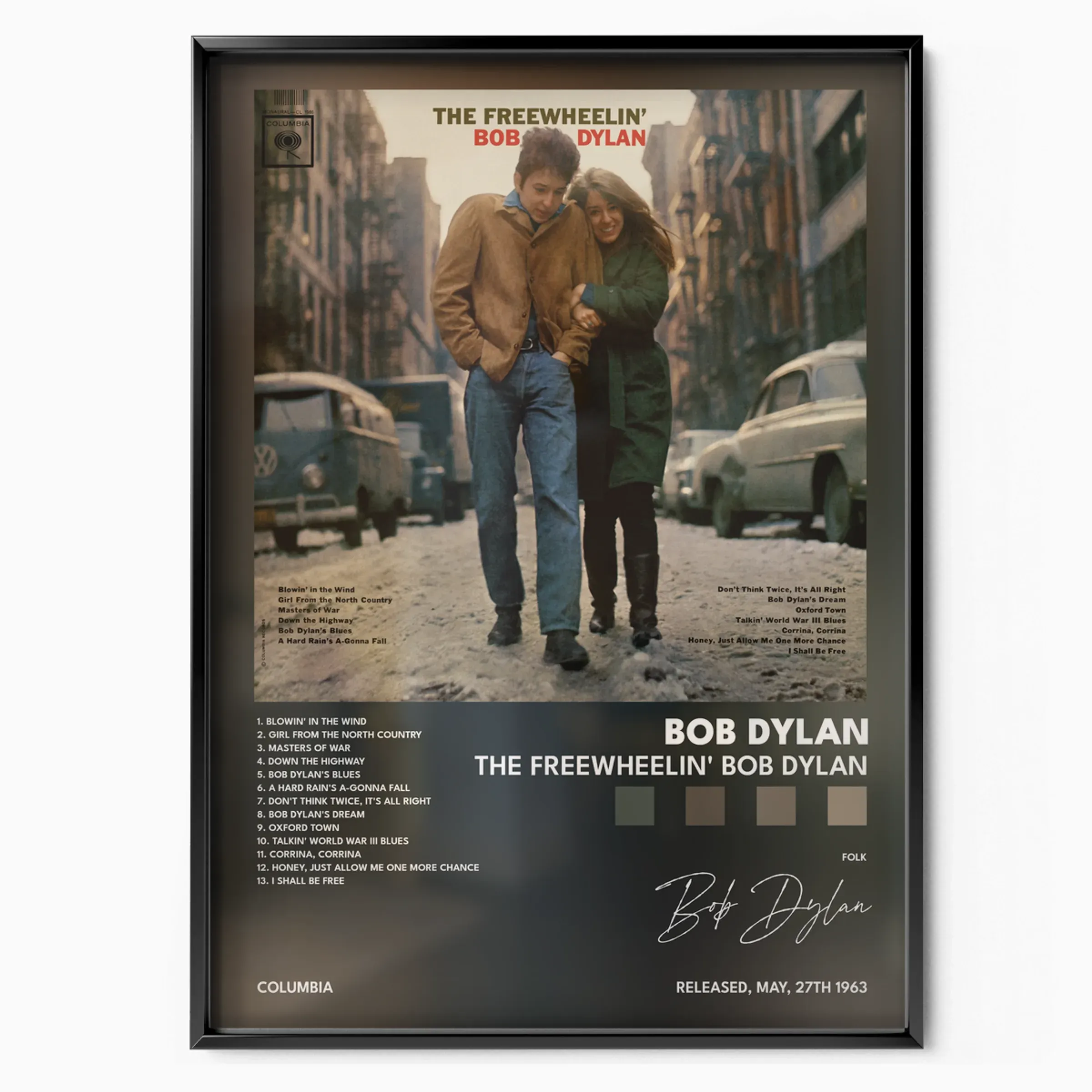
The story starts in Greenwich Village. The Freewheelin' Bob Dylan captured Columbia photographer Don Hunstein following Dylan and his girlfriend Suze Rotolo down a snow-dusted Jones Street in February 1963, arm in arm. That single frame set the template for the musician as poet of the streets, and it remains one of the most recognisable images in popular music. On a wall it reads as warmth and youth, a quiet contrast to the harder covers that followed.
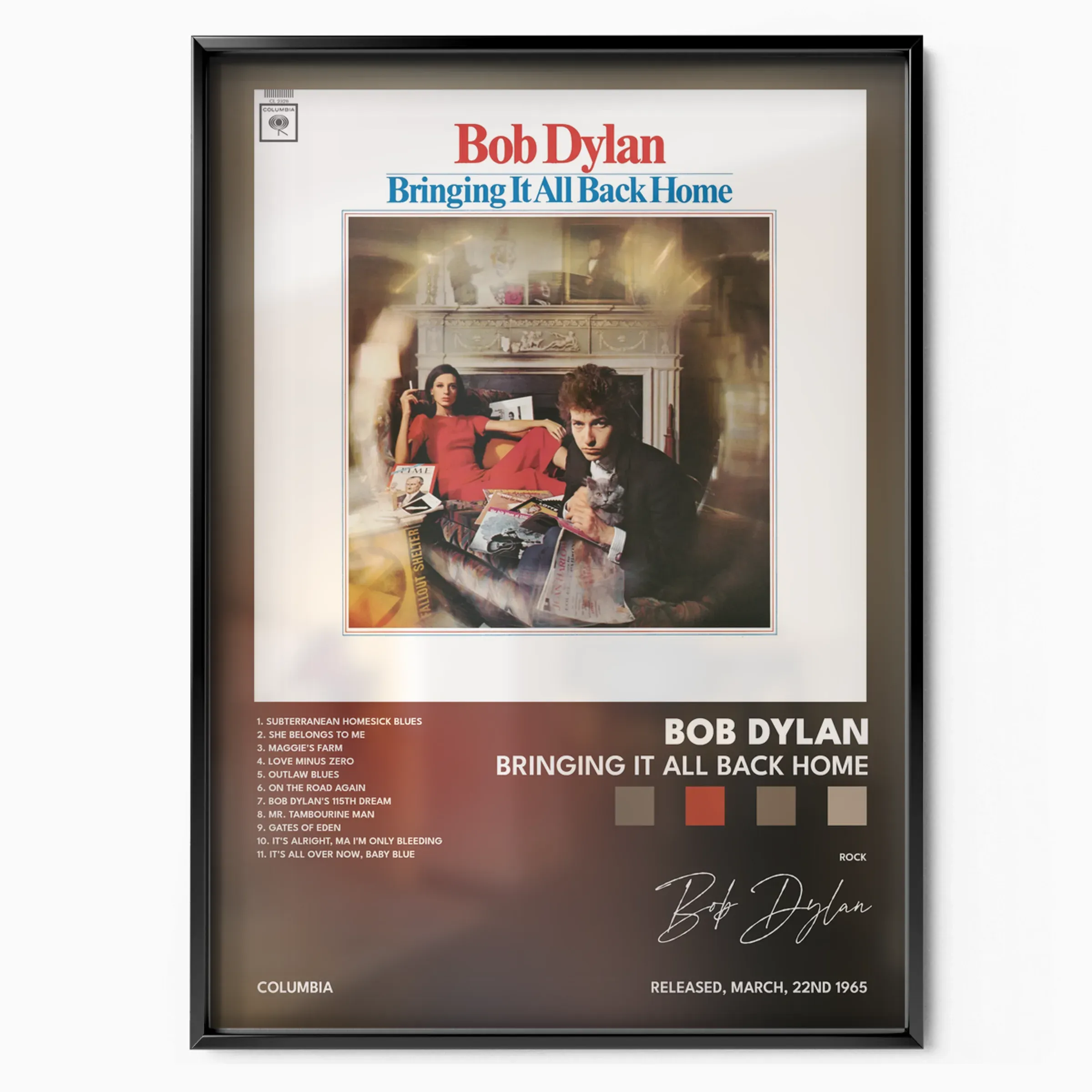
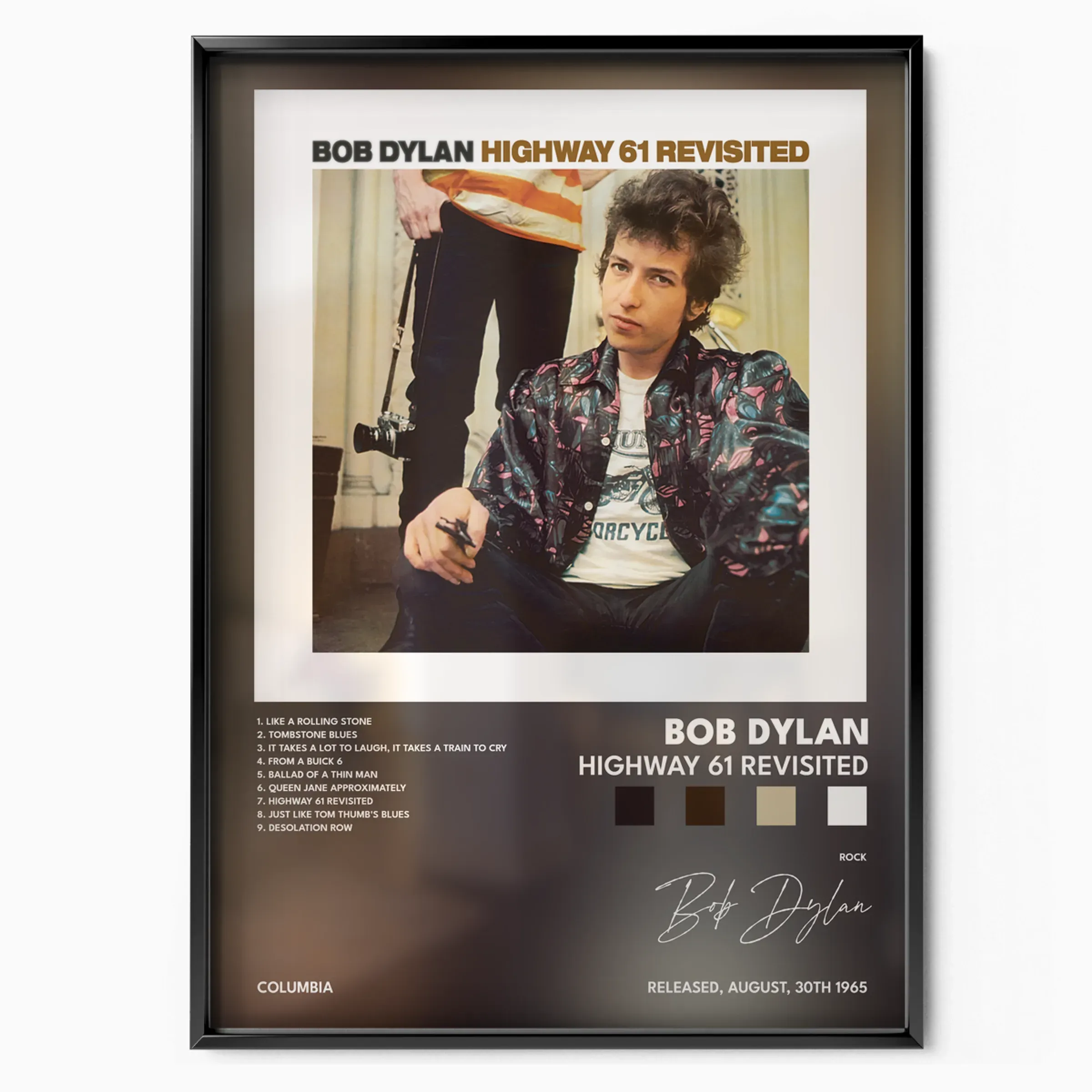
Then came the turn to electric sound. Bringing It All Back Home, his fifth studio album, released in 1965, was his first record to use electric instrumentation, and its cover is a puzzle box of props: Sally Grossman in a red outfit, a fallout-shelter sign, scattered records and the January 1965 issue of Time. Months later Highway 61 Revisited arrived, cut in New York in only a handful of days and opening with 'Like a Rolling Stone'. Its portrait of Dylan in a motorcycle T-shirt is pure attitude, and it makes a striking centrepiece for any music room. Together these two 1965 records show an artist tearing up his own rulebook, and hung side by side they capture the exact moment folk turned into rock.
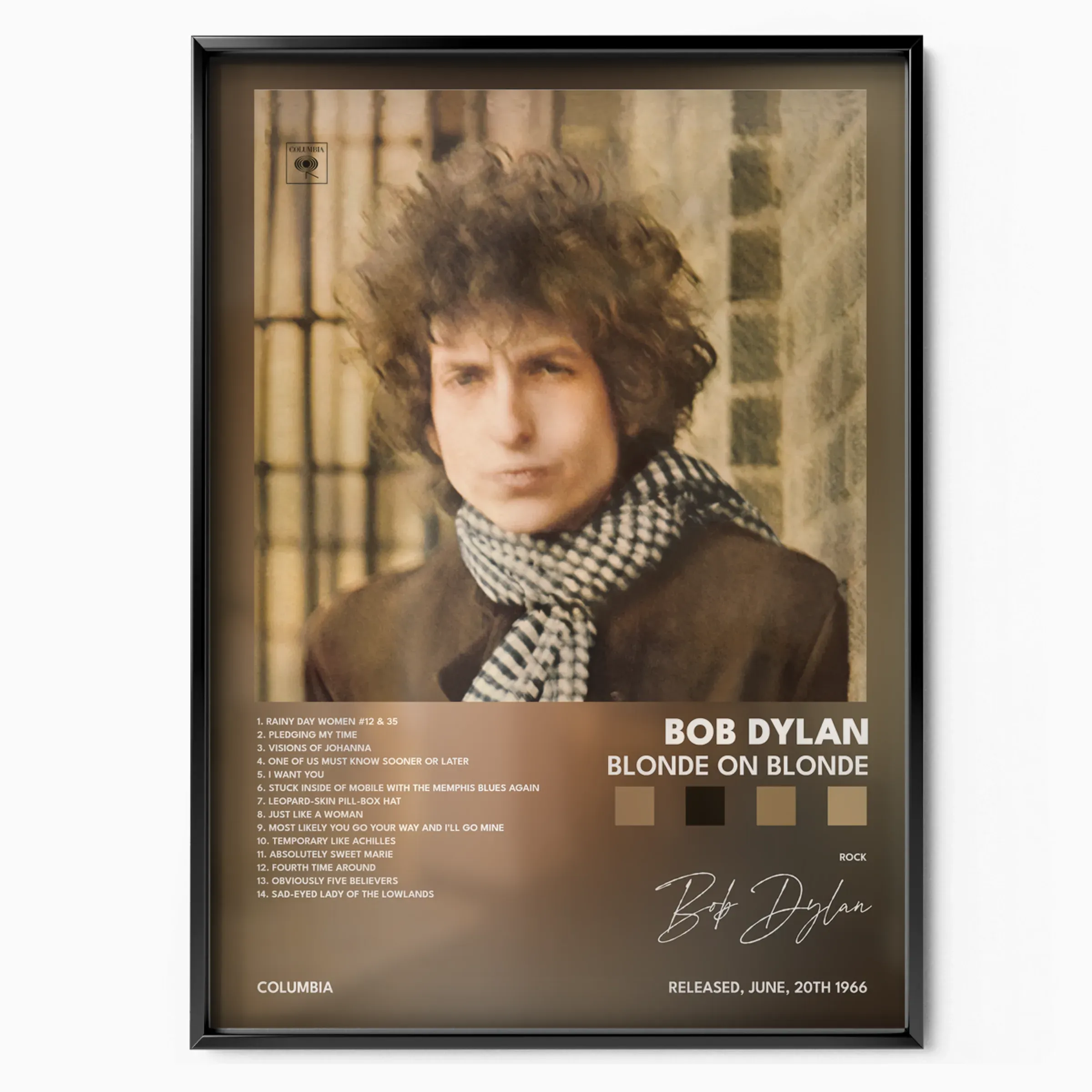
The mid-1960s peak closes with Blonde on Blonde, released in 1966 as one of rock's first double albums. Its famously blurred cover was shot by Jerry Schatzberg in New York's meatpacking district; the blur was not a drug reference but plain camera shake, since both men were shivering in the February cold, and Dylan chose that frame himself. Printed large, the soft focus becomes a mood rather than a mistake, which is why Blonde on Blonde is one of our most requested prints.
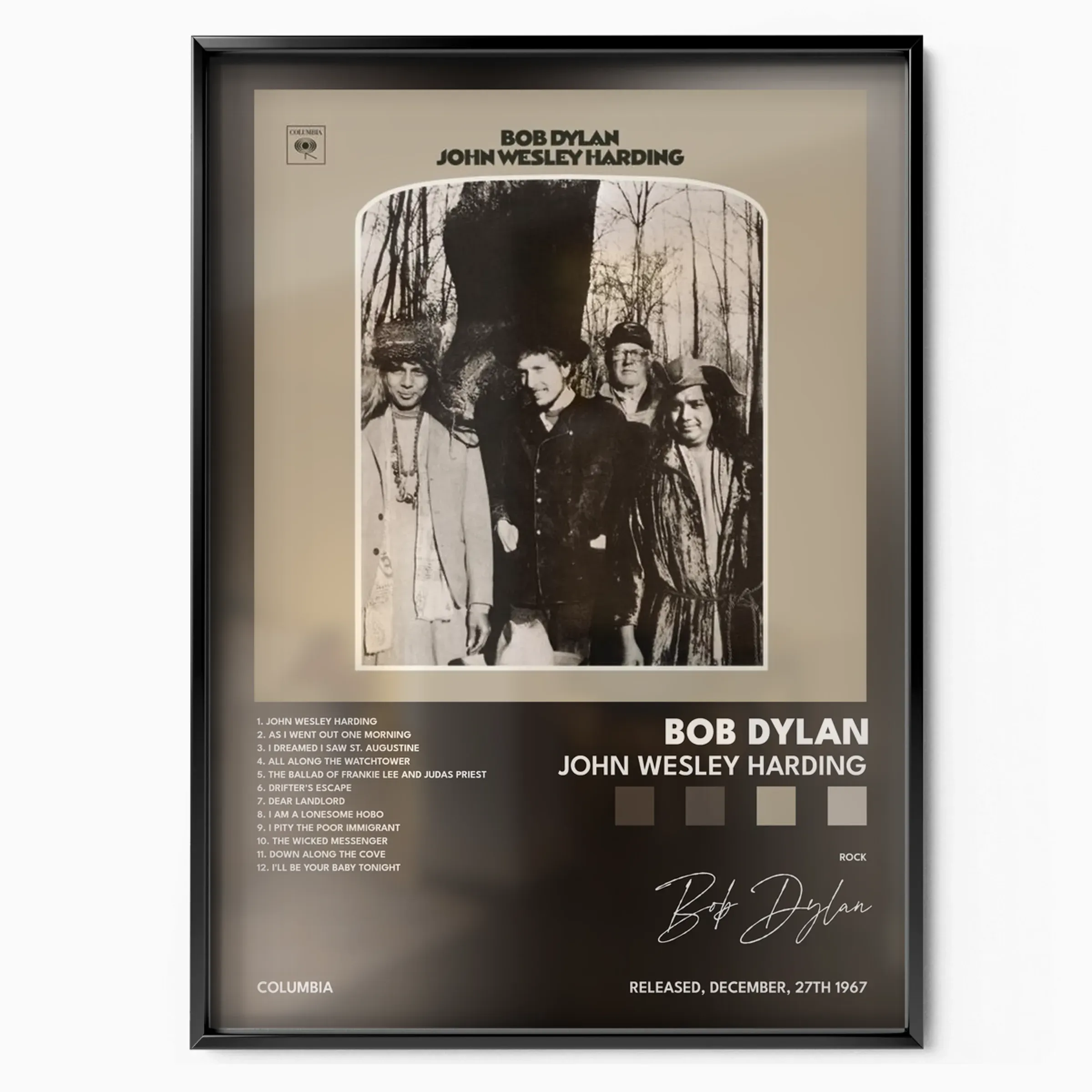
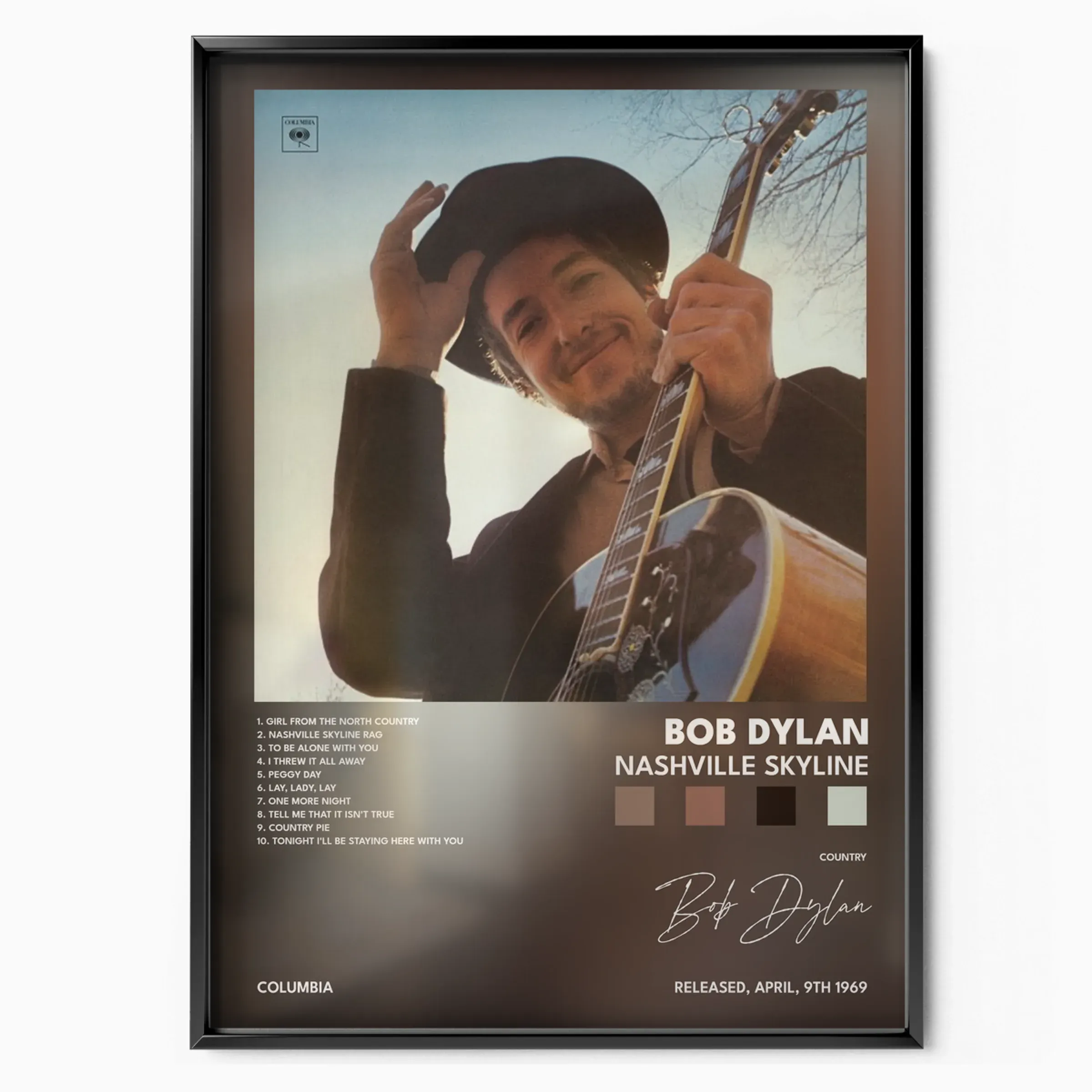
After a 1966 motorcycle accident, Dylan retreated and re-emerged quieter. John Wesley Harding, recorded in Nashville in late 1967 in under twelve hours of studio time, returned to a spare, semi-acoustic sound wrapped in country-folk parables. He leaned further into Nashville on Nashville Skyline in 1969, softening his voice and duetting with Johnny Cash on a new 'Girl from the North Country'. These two sleeves bring a gentler, sunlit palette to a gallery wall, a useful counterweight to the black-and-white intensity of the electric years. Fans who love a softer look often build a whole grouping around them, letting the muted tones tie a reading nook or bedroom together.
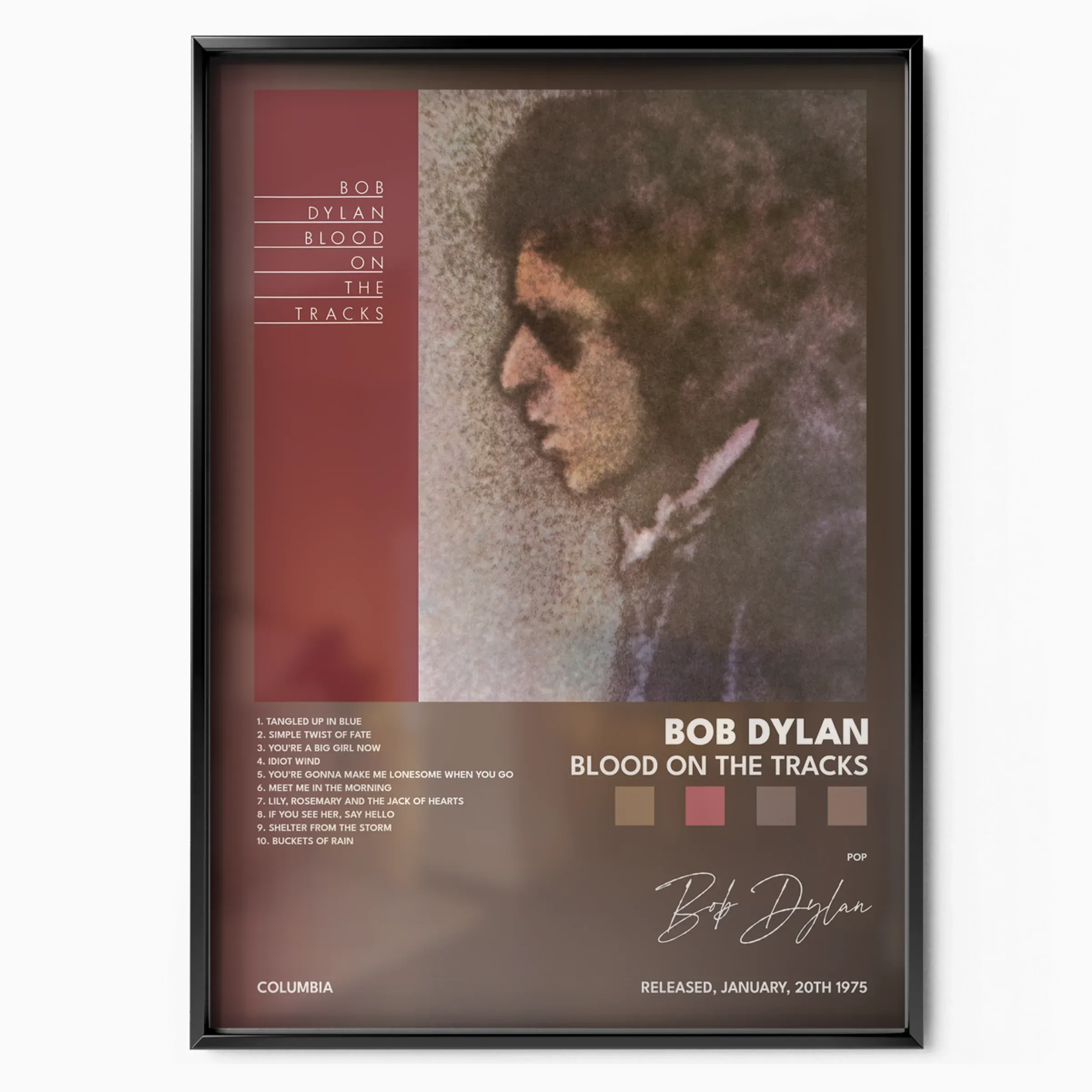
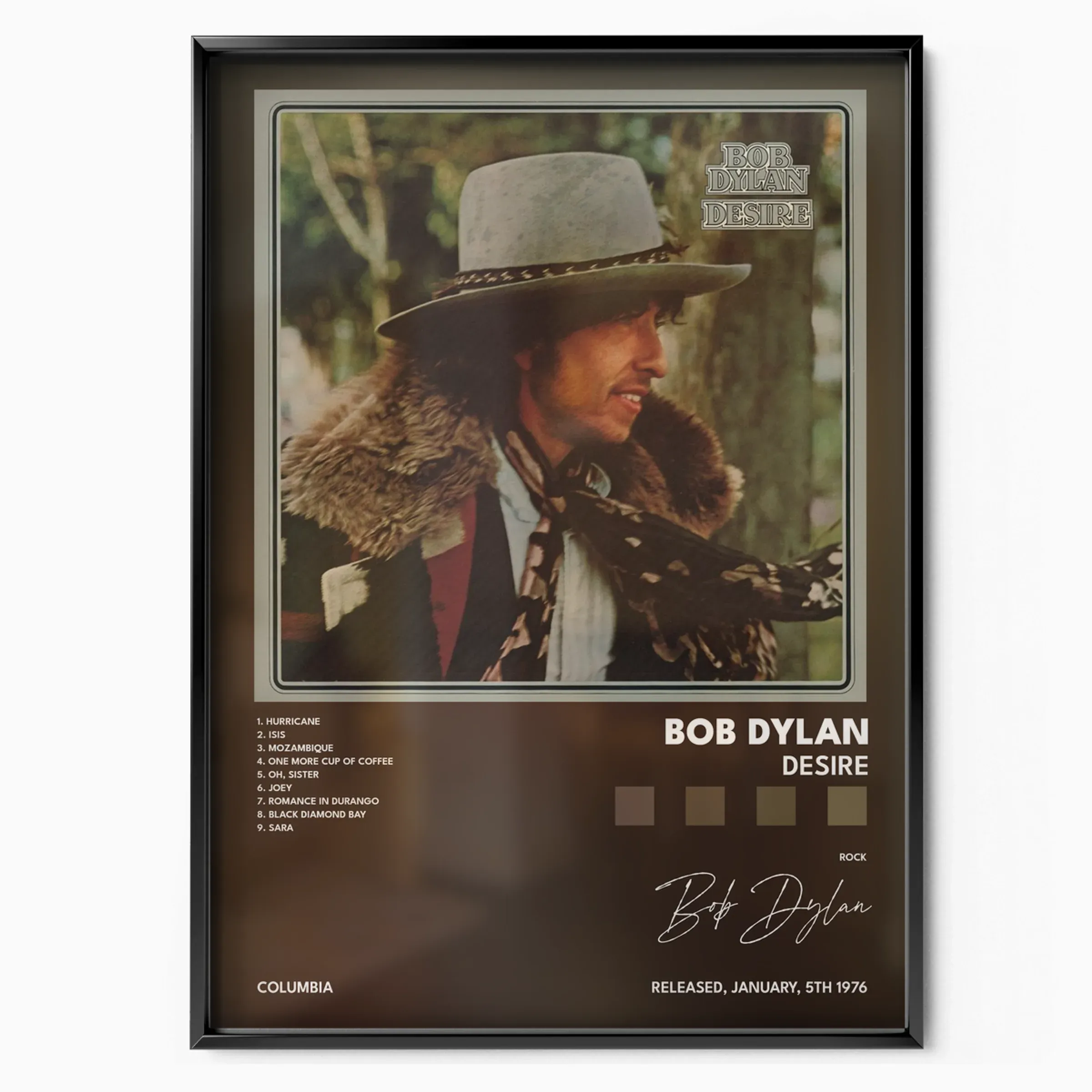
The mid-1970s brought his most raw return. Blood on the Tracks, released in January 1975, was recorded in New York and then half re-cut in Minneapolis, and it is widely read as an album about heartbreak and his estrangement from his wife Sara. It stands as one of the greatest break-up records ever made, and its poster carries that weight beautifully. A year later Desire closed the run, largely co-written with theatre director Jacques Levy, powered by Emmylou Harris on harmony and the Rolling Thunder Revue band, and headlined by the boxing protest epic 'Hurricane', his song about the imprisoned fighter Rubin Carter. Both sleeves trade the studio polish of the 1960s for a looser, more human warmth, which is exactly why they suit a lived-in room rather than a showroom.
Collectors rarely stop at one. Hang The Freewheelin' Bob Dylan beside Highway 61 Revisited and Blood on the Tracks and you trace a whole career in three frames, from folk innocence to electric fire to hard-won honesty. For a gallery wall, a simple tip helps: keep every frame the same colour and finish, then vary only the print sizes so the grid feels curated rather than cluttered.
Every poster in this collection prints on museum-grade paper in A4, A3, A2 and A1, so you can slot a small A4 into a tight alcove or let an A1 Desire anchor an entire wall. Choose unframed to suit your own moulding, or add a black or white chrome frame for a finished, ready-to-hang piece. Whether you want the doomed romance of Blonde on Blonde or the country calm of Nashville Skyline, and the electric fire of Highway 61 Revisited in between, these prints turn a lifetime of songwriting, and a Nobel Prize in Literature, into art you can live with every day.