



Why Dave Matthews Band Covers Belong on Your Wall
Dave Matthews Band formed in Charlottesville, Virginia in 1991, and across three decades the group turned its record sleeves into small paintings worth framing. These covers were never generic band photos. They were staged scenes, hand-drawn illustrations and abstract compositions, which is exactly why they translate so well from a twelve-inch jacket to a large fine-art print. On a wall, the artwork reads as art first and merch second.
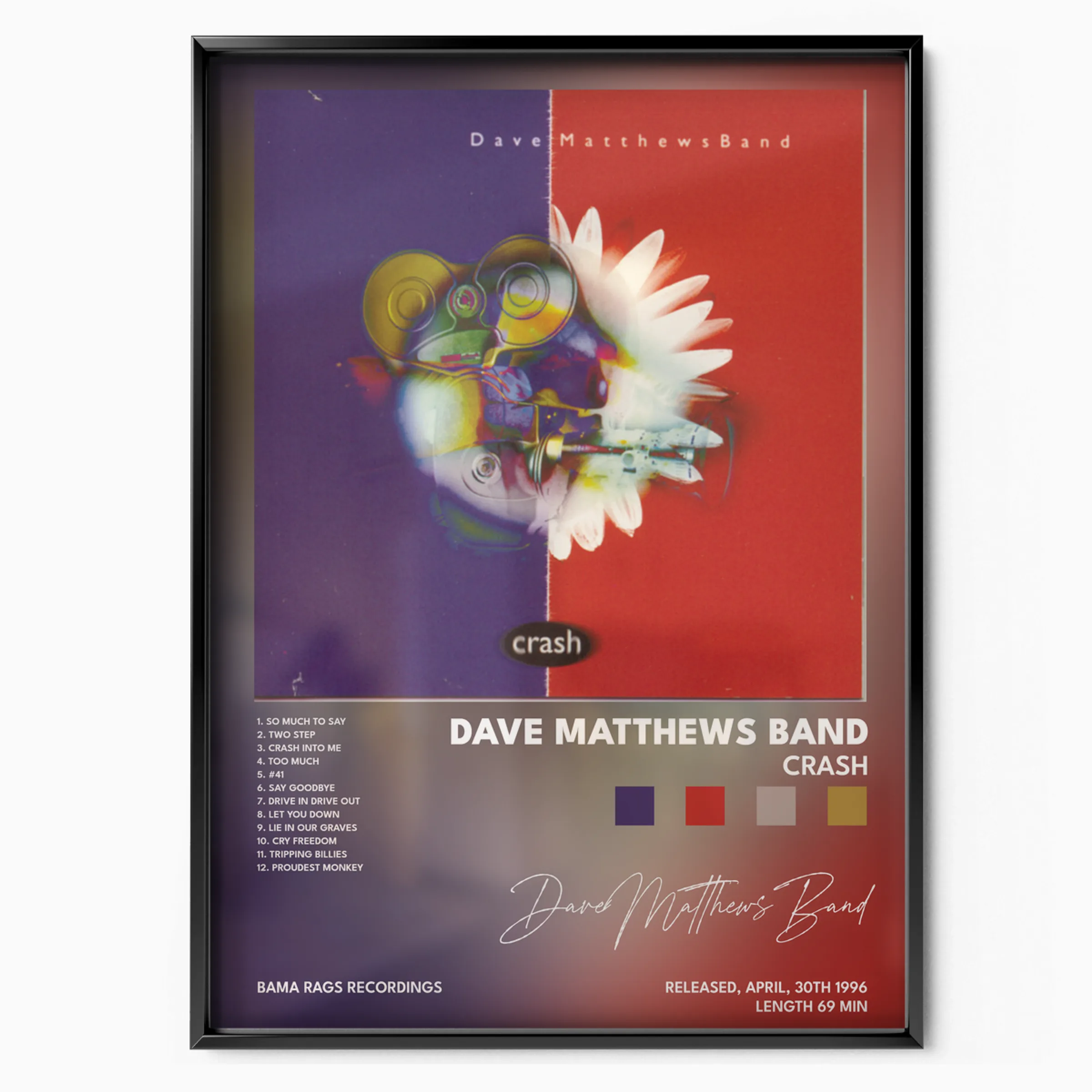
Take the debut. The cover of Under the Table and Dreaming was photographed at the Cedar Point amusement park in Sandusky, Ohio, and its lit ferris wheel against a night sky has the dreamy, slightly surreal glow that suits the record's title. Blown up to A2 or A1, the ride's lights become a field of warm color that anchors a room. Crash, illustrated by Thane Kerner, trades photography for a soft, motion-blurred abstraction that mirrors the album's restless energy and looks striking in a simple black frame.
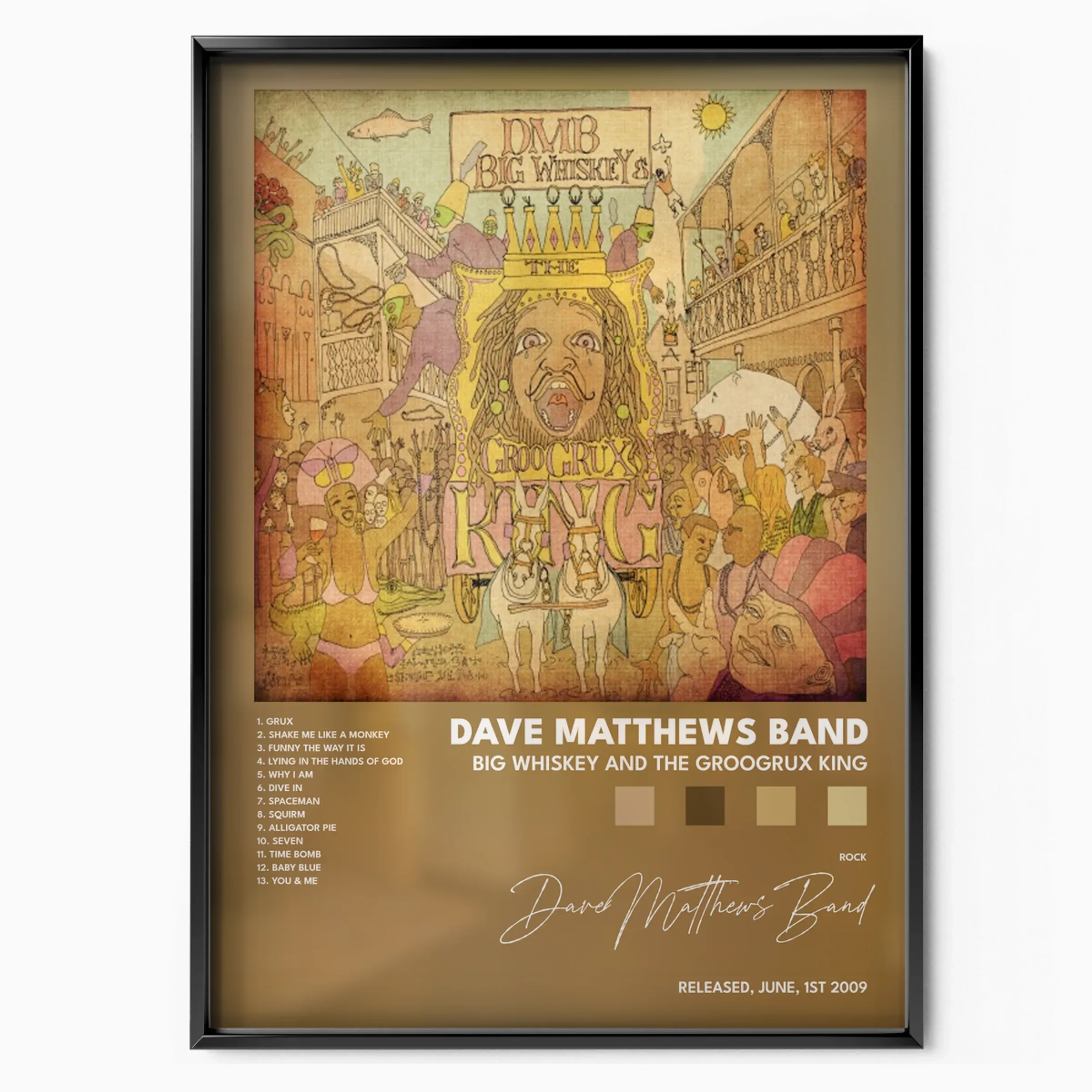
The most moving cover in the catalog is Big Whiskey and the GrooGrux King. Dave Matthews drew the entire sleeve by hand, setting a Mardi Gras parade in the French Quarter of New Orleans, where the record was made. As he worked, the laughing face on the central float slowly came to resemble saxophonist LeRoi Moore, who had died during the sessions, and the drawing became a tribute. Printed large, its dense, celebratory detail rewards close looking and carries real weight. For fans who prefer the band's darker, string-driven chapter, Before These Crowded Streets and Busted Stuff offer covers with a quieter, more painterly mood.