Nike Posters: The Swoosh, Just Do It and Sneaker Culture on Your Wall
Few brands have shaped modern design the way Nike has, and few marks are read as instantly as the Swoosh. This collection gathers 44 Nike posters that trace the whole story, from the Blue Ribbon roots of 1964 to the Air Jordan grails and the streetwear collabs of today, each one printed on museum-grade 200gsm matte stock and offered from A4 up to poster-sized A1, framed in black or chrome white or shipped unframed. Whether you queue for every drop, coach a team, or simply love the clean geometry of a single tick on a bedroom wall, there is a print here for your setup, your studio or your gift list. Because the full range runs on Buy 2 Get 1 Free, filling a wall with brand-era art costs far less than a single pair.
Below is a guide to the icons collectors reach for most, from the mark that started it all to the athletes who made it a way of life. Everything we reference is a real product in this collection, so you can click straight through to the piece you want. We ship across Europe and the US, with prices shown in EUR, USD or GBP.
The Swoosh: a 35 dollar mark that conquered the world
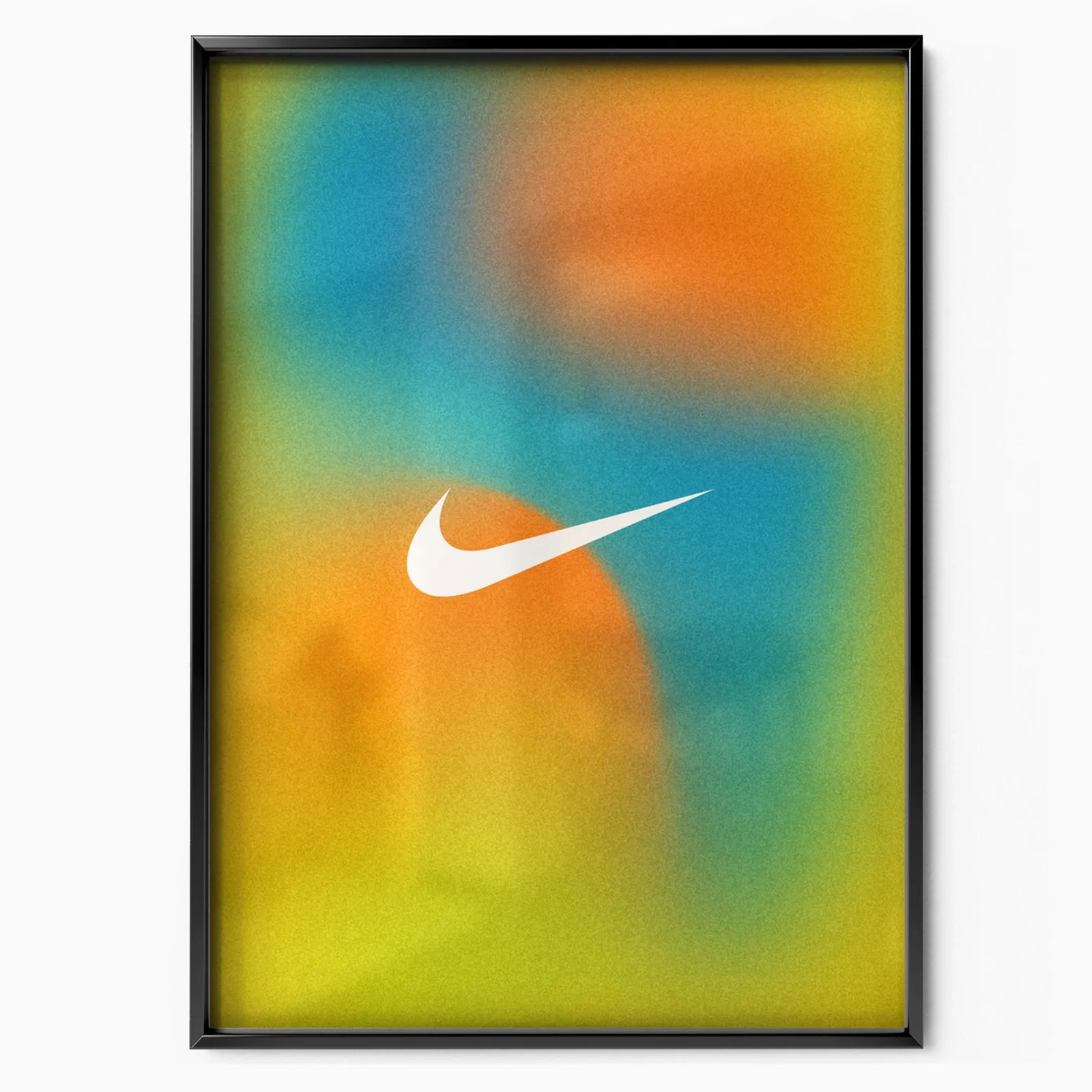
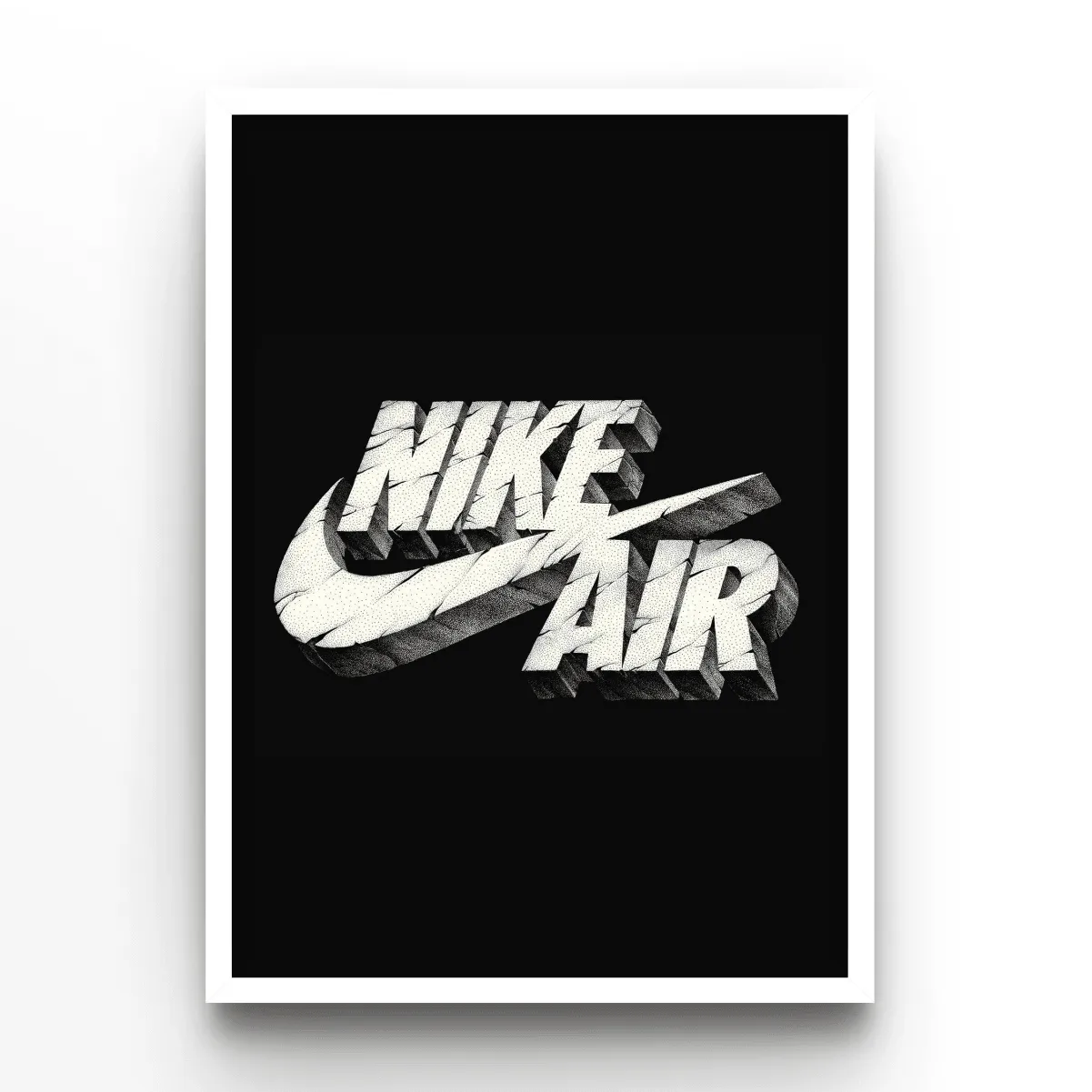
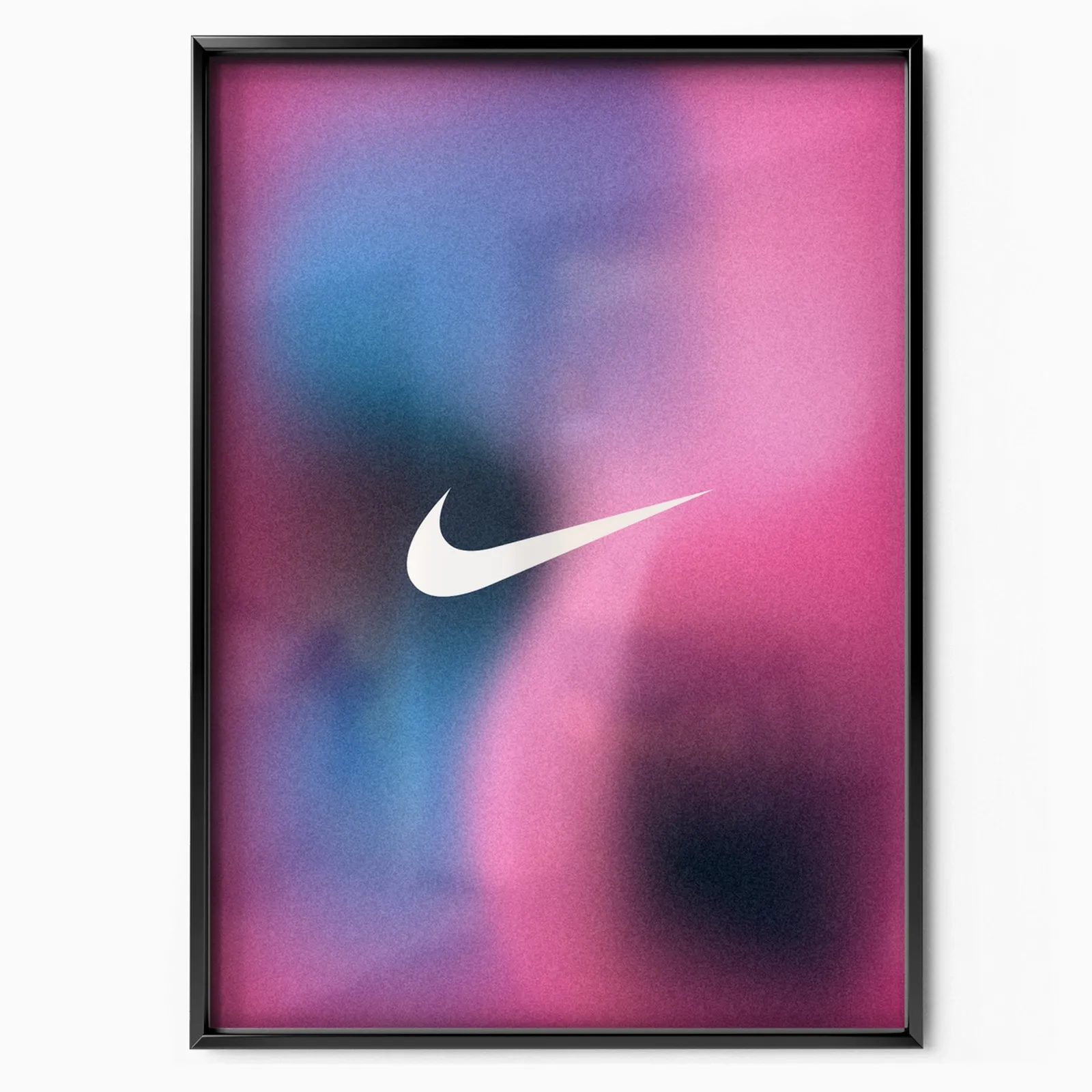
The story starts with a student and a brief. In 1971, Portland State graphic-design student Carolyn Davidson drew a single-stroke tick for Phil Knight, who wanted something that suggested motion and looked nothing like the Adidas stripes. She billed 17.5 hours of work, and the invoice came to 35 dollars. Knight's verdict was famously lukewarm: "I don't love it, but it will grow on me." It grew. Years later Nike honoured Davidson with company stock and a gold Swoosh ring. That mark anchors this collection, from the pure Original Swoosh to the graphic Thunderbolt, the sleek Art 3D render and the abstract Flowers treatment for a softer wall.
1964: the Blue Ribbon roots
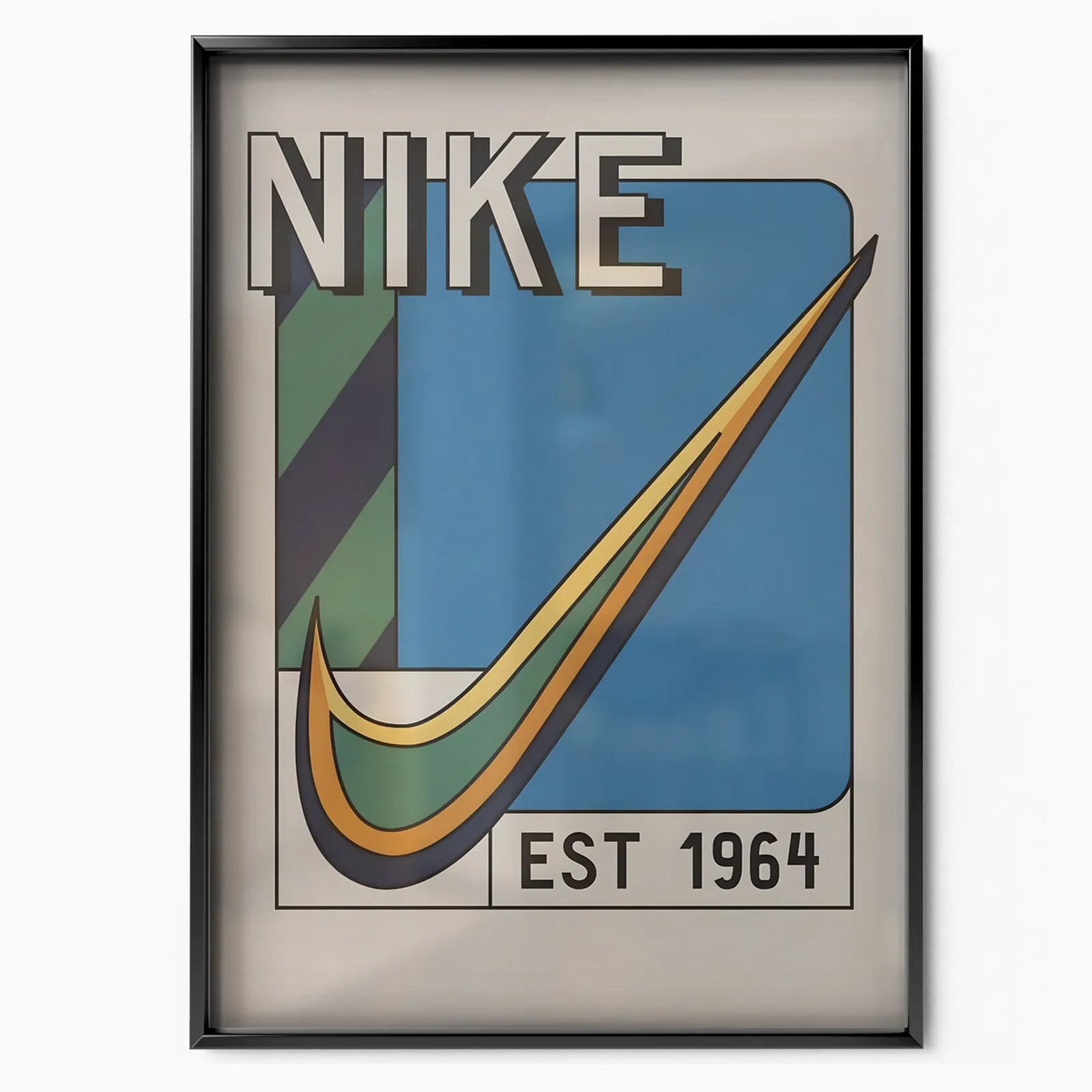
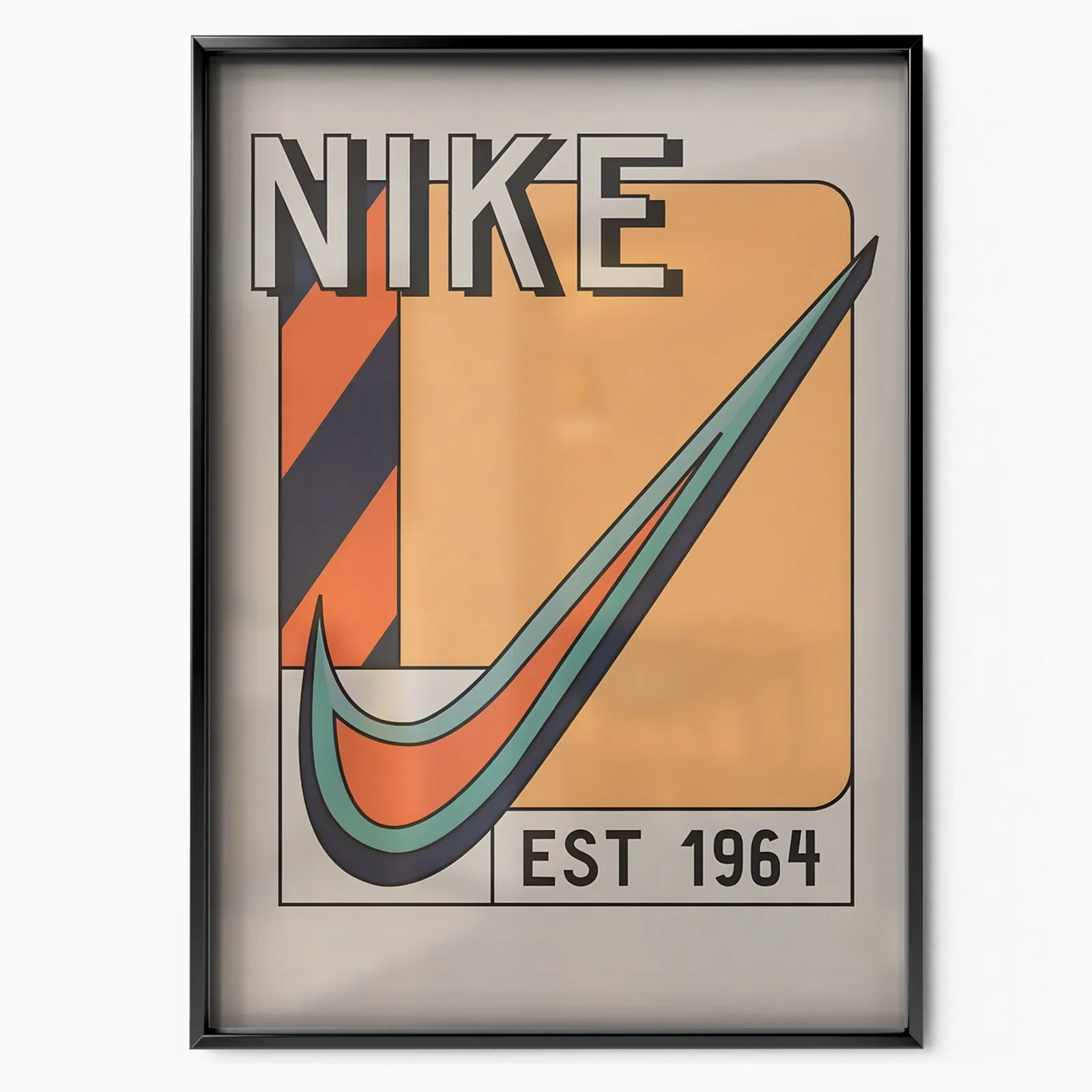
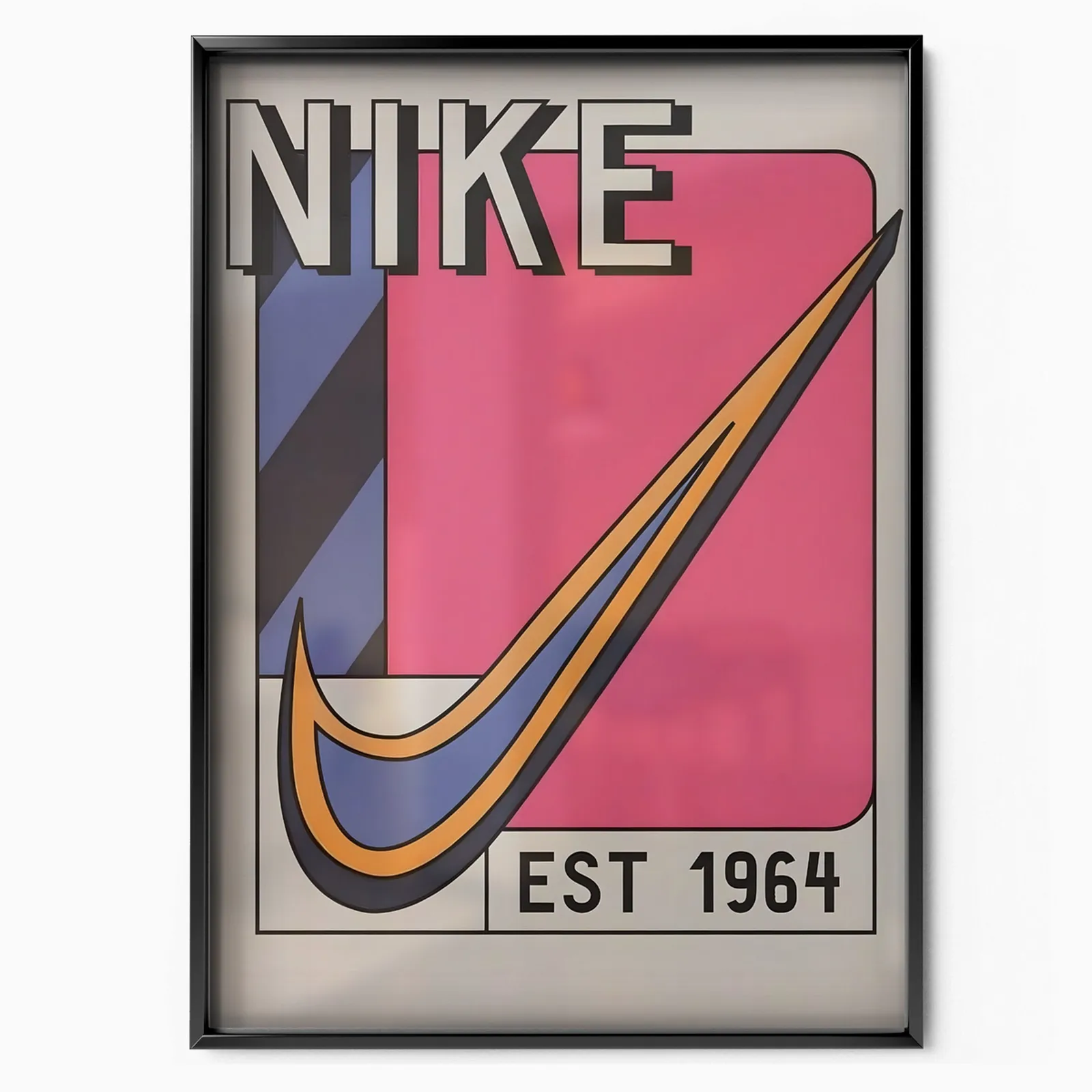
Before the Swoosh, there was Blue Ribbon Sports, founded on 25 January 1964 by track coach Bill Bowerman and his former runner Phil Knight to import Onitsuka Tiger shoes from Japan. The pair split from Onitsuka in 1971 and renamed the company Nike, after the Greek goddess of victory. Our heritage prints nod to that founding year in three colourways: the cool Vintage 1964 Blue, the warm Vintage 1964 Orange and the soft Vintage 1964 Pink, a retro trio that suits a hallway or a shop counter.
Just Do It: three words that changed advertising
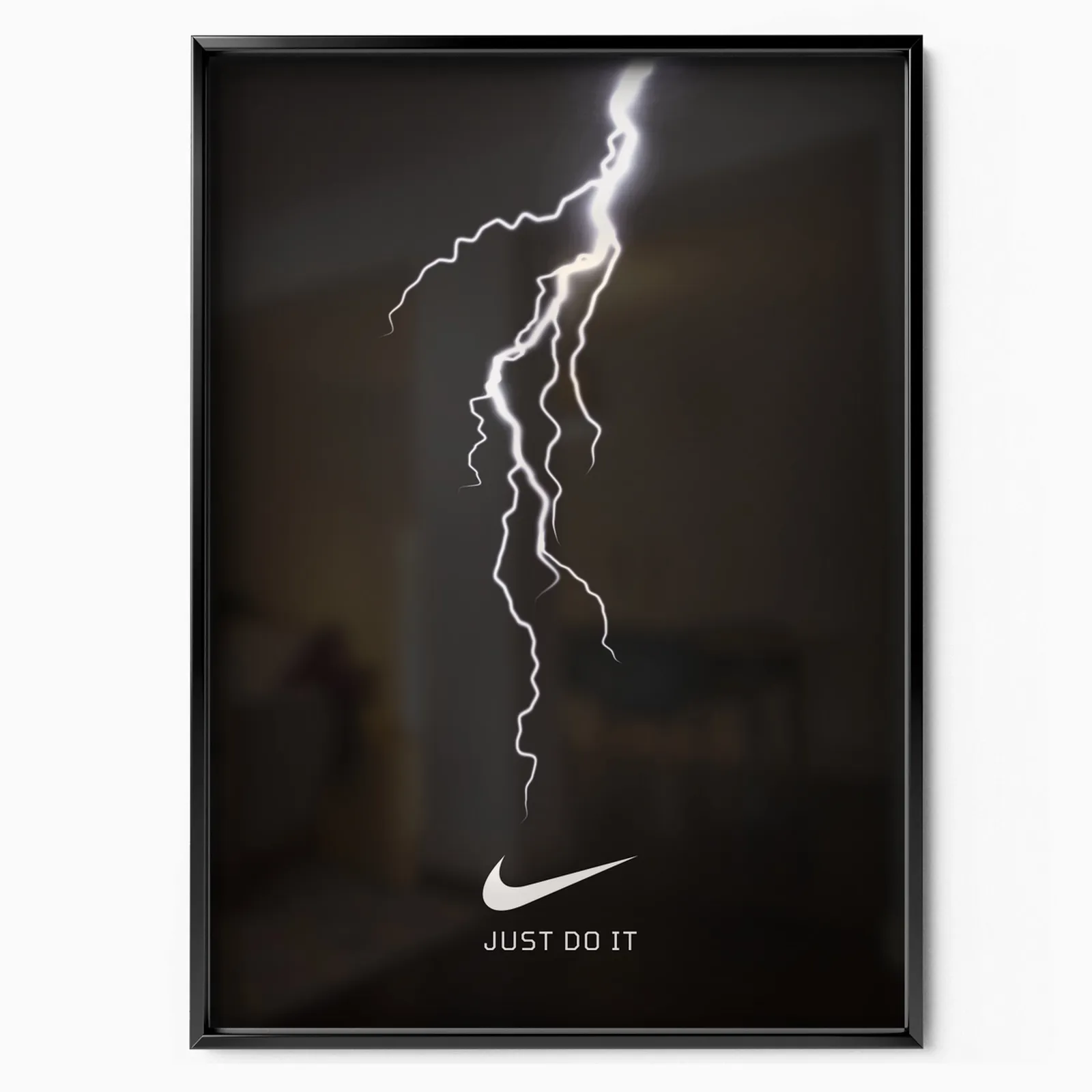
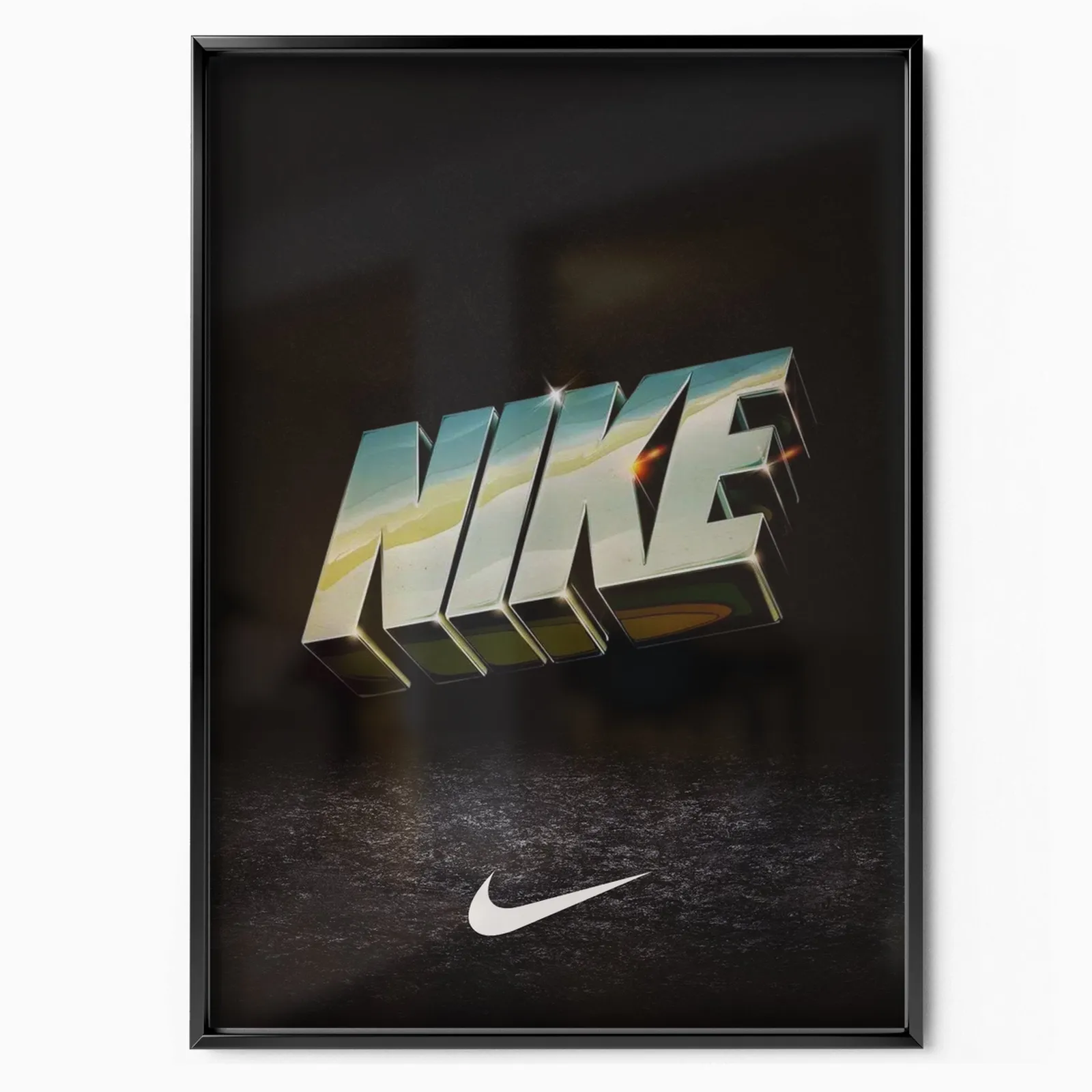
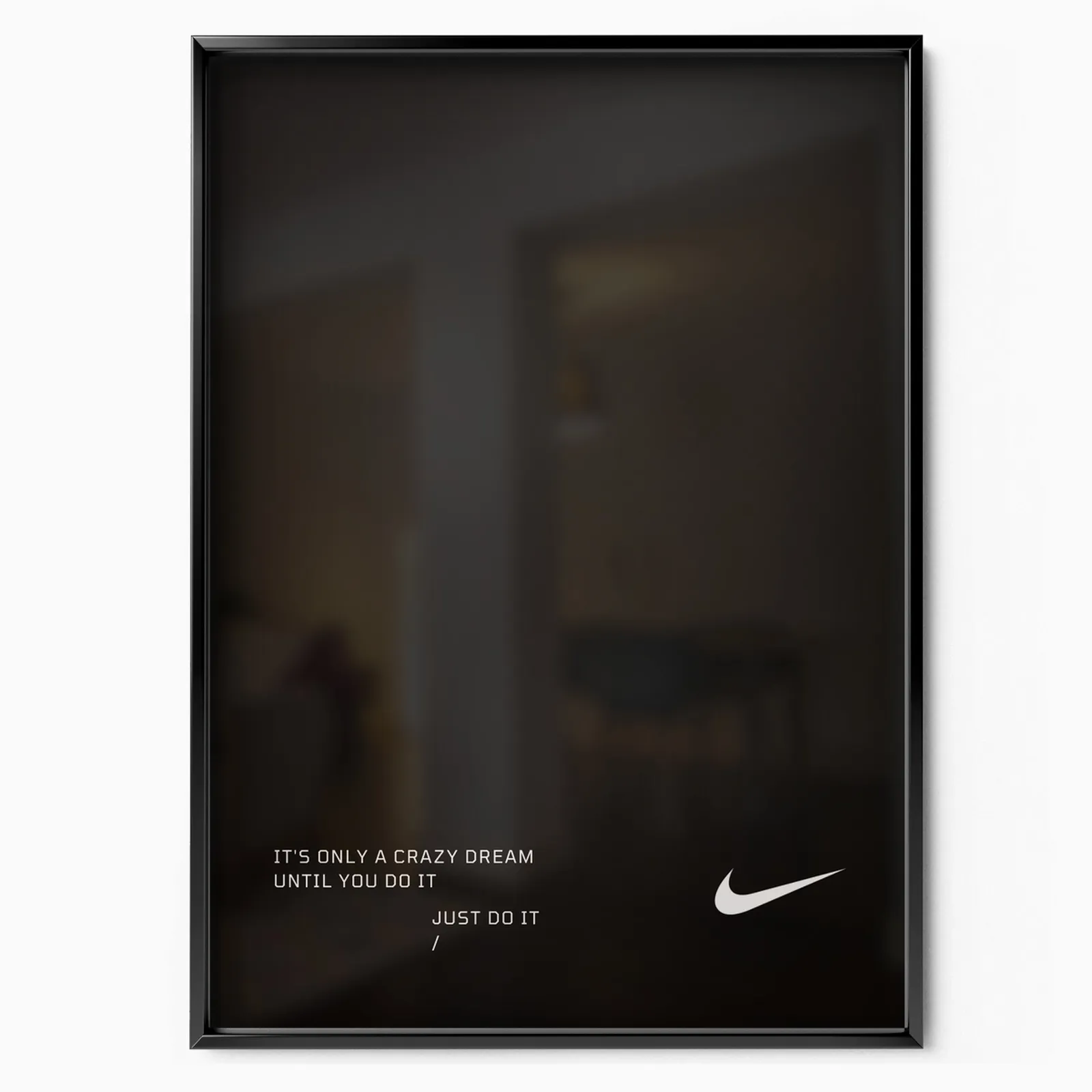
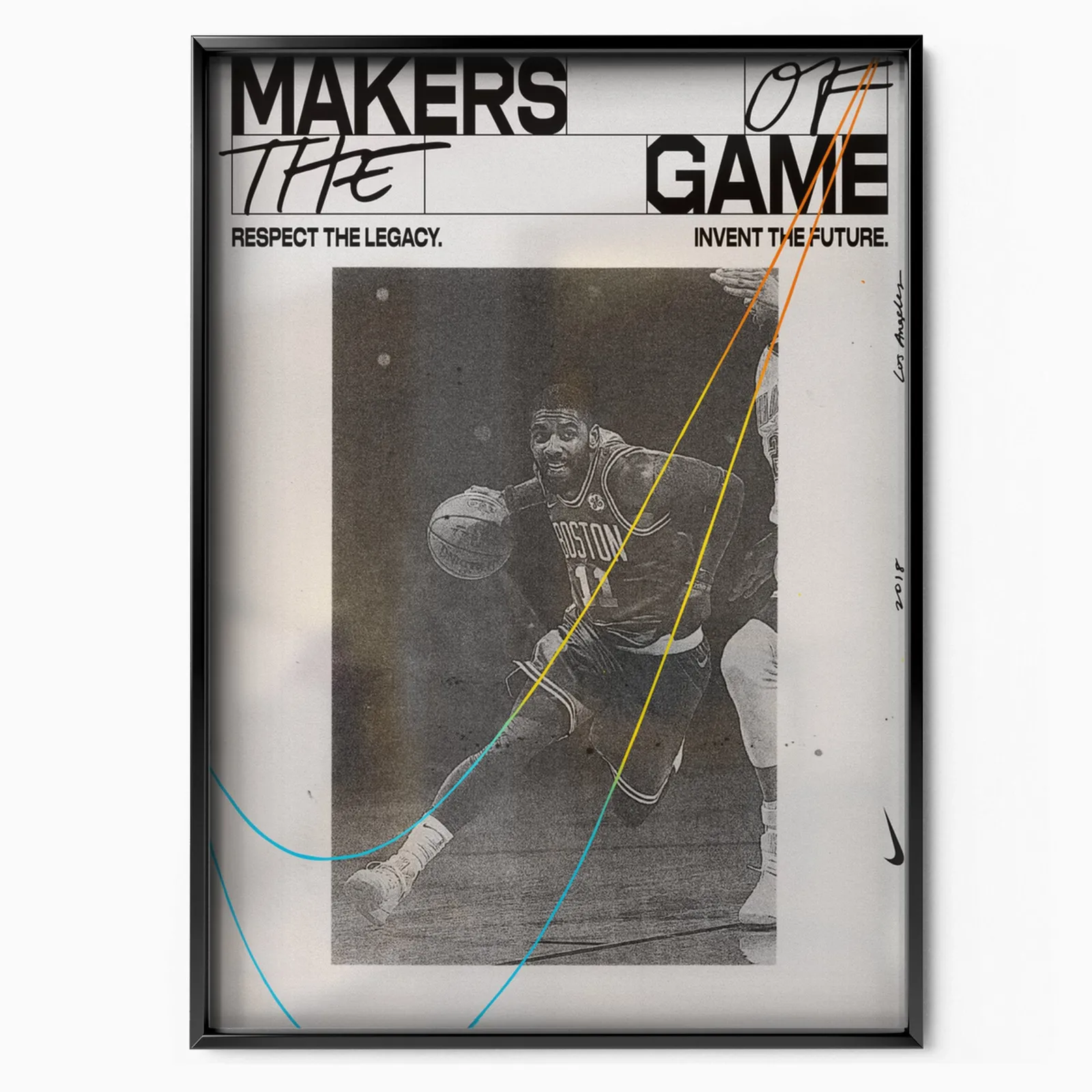
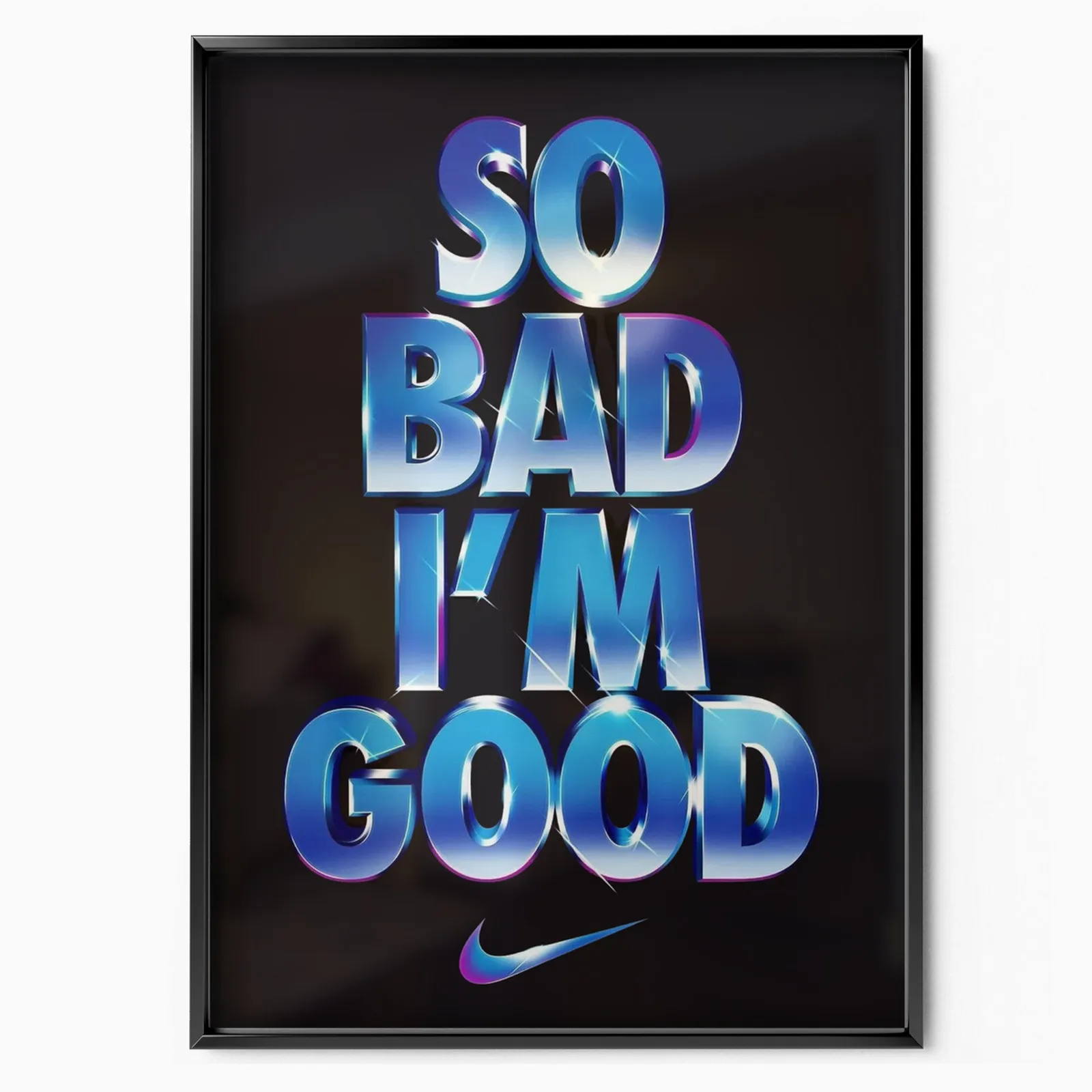
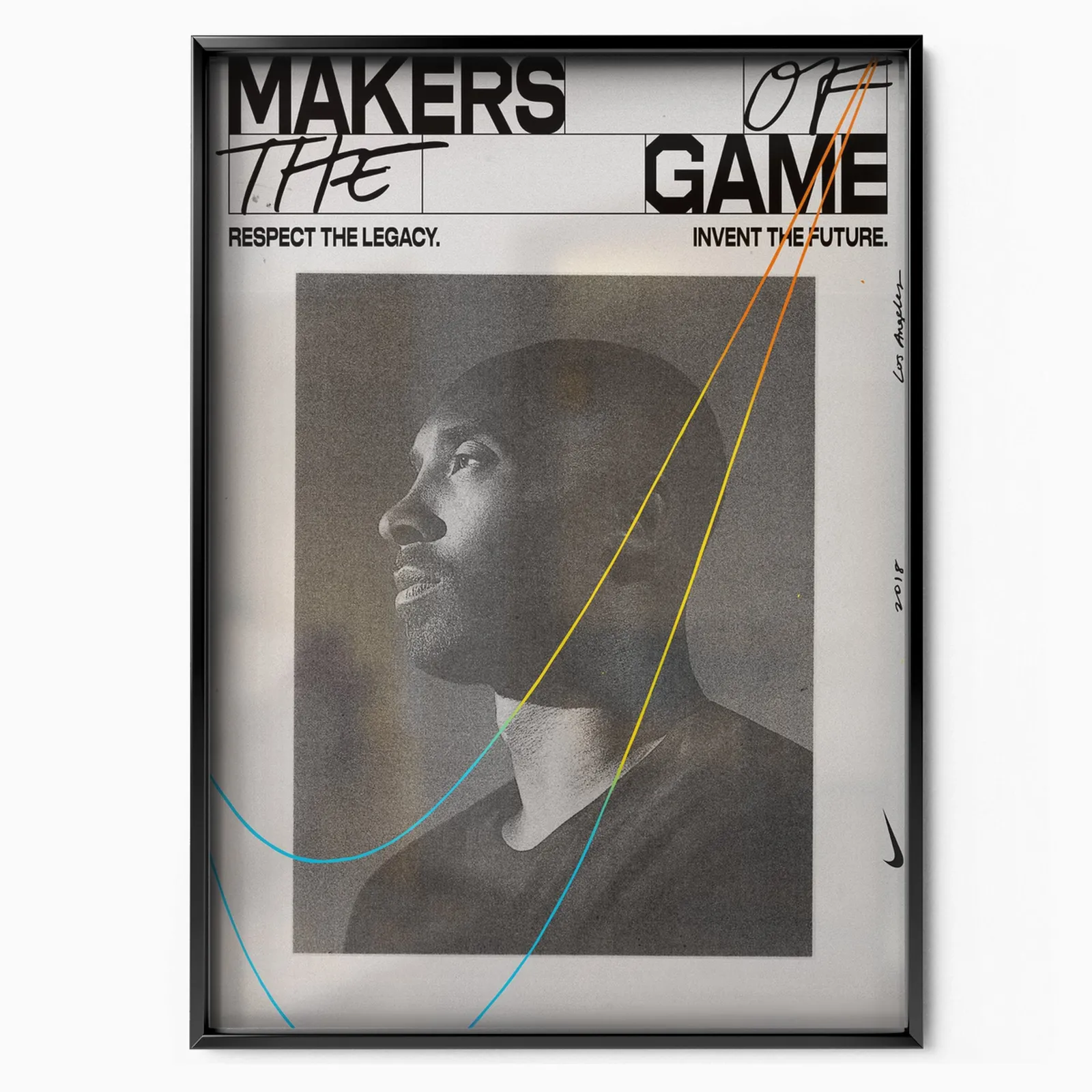
In 1988, Dan Wieden of the Portland agency Wieden and Kennedy needed a line to unify Nike's first big television campaign, one that spoke to marathoners and morning walkers alike. He landed on "Just Do It", and it reframed the whole brand. In the decade that followed, Nike's sales climbed from roughly 877 million dollars to 9.2 billion. The line lives on our walls in the flagship Just Do It print and its motivational cousins, the defiant Crazy Dream, the proud Respect the Legacy and the cheeky So Bad I'm Good. The Crazy Dream piece echoes the 2018 "Dream Crazy" campaign that marked 30 years of Just Do It, with its rallying idea: don't ask if your dreams are crazy, ask if you are crazy enough.
Air Jordan and the sneaker grails
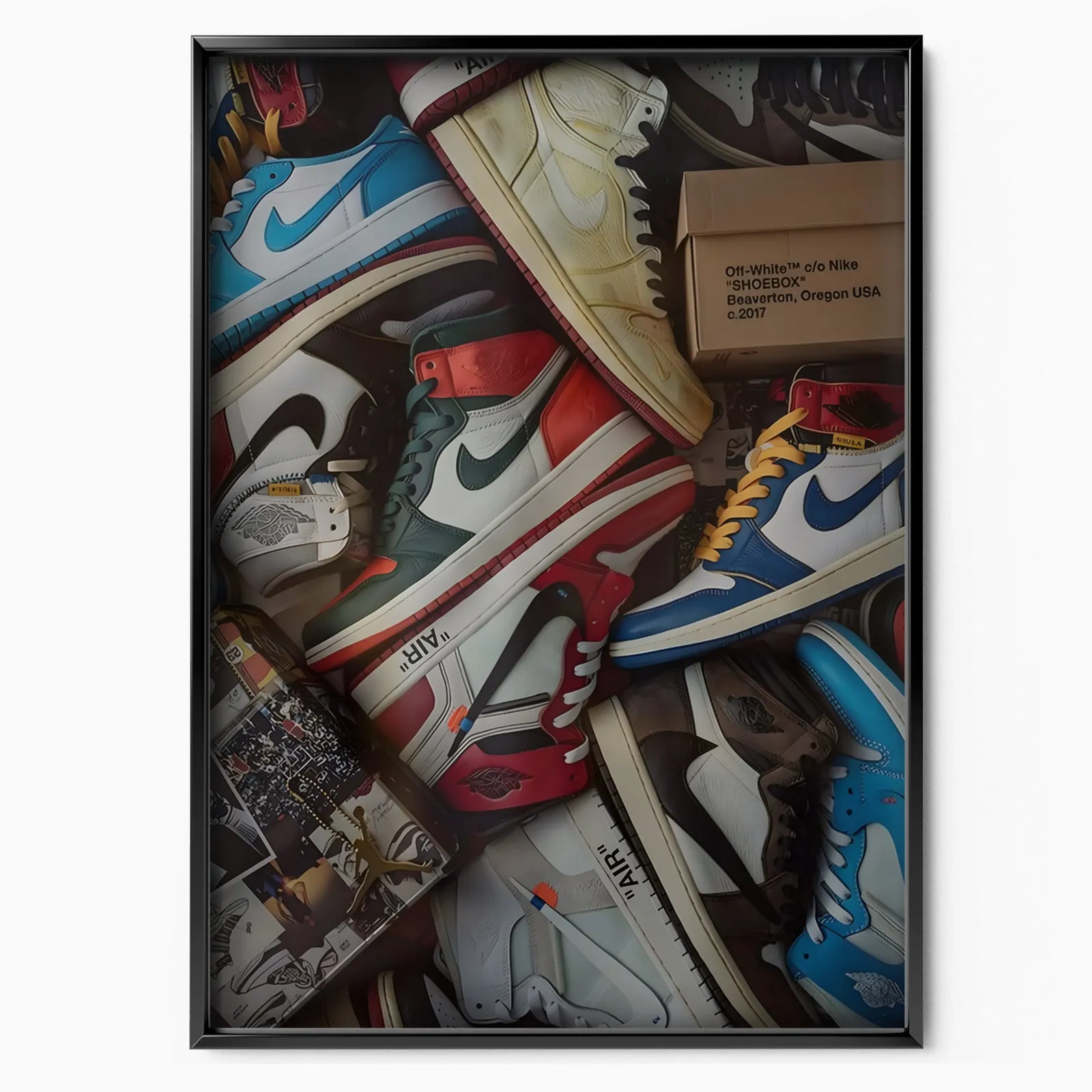
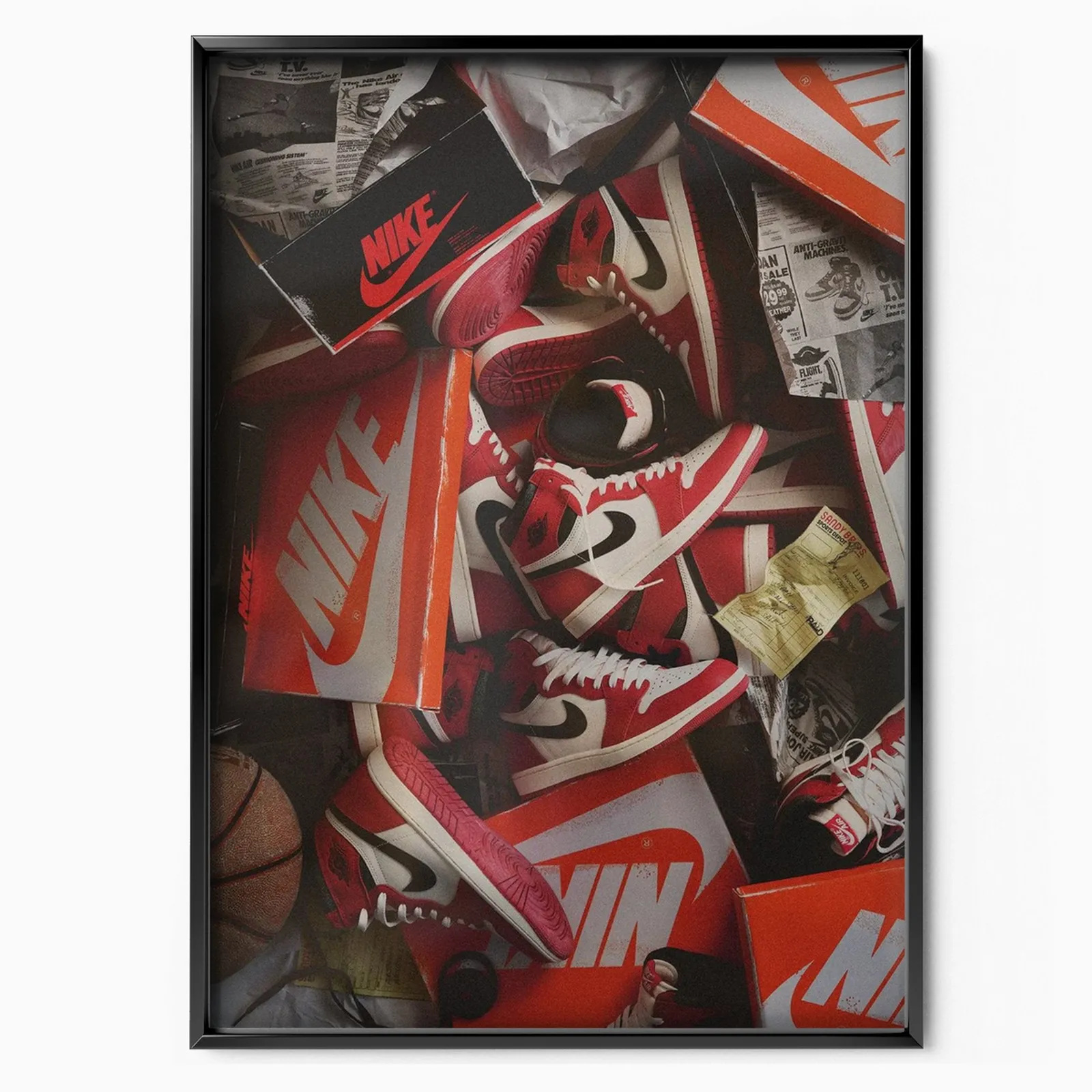
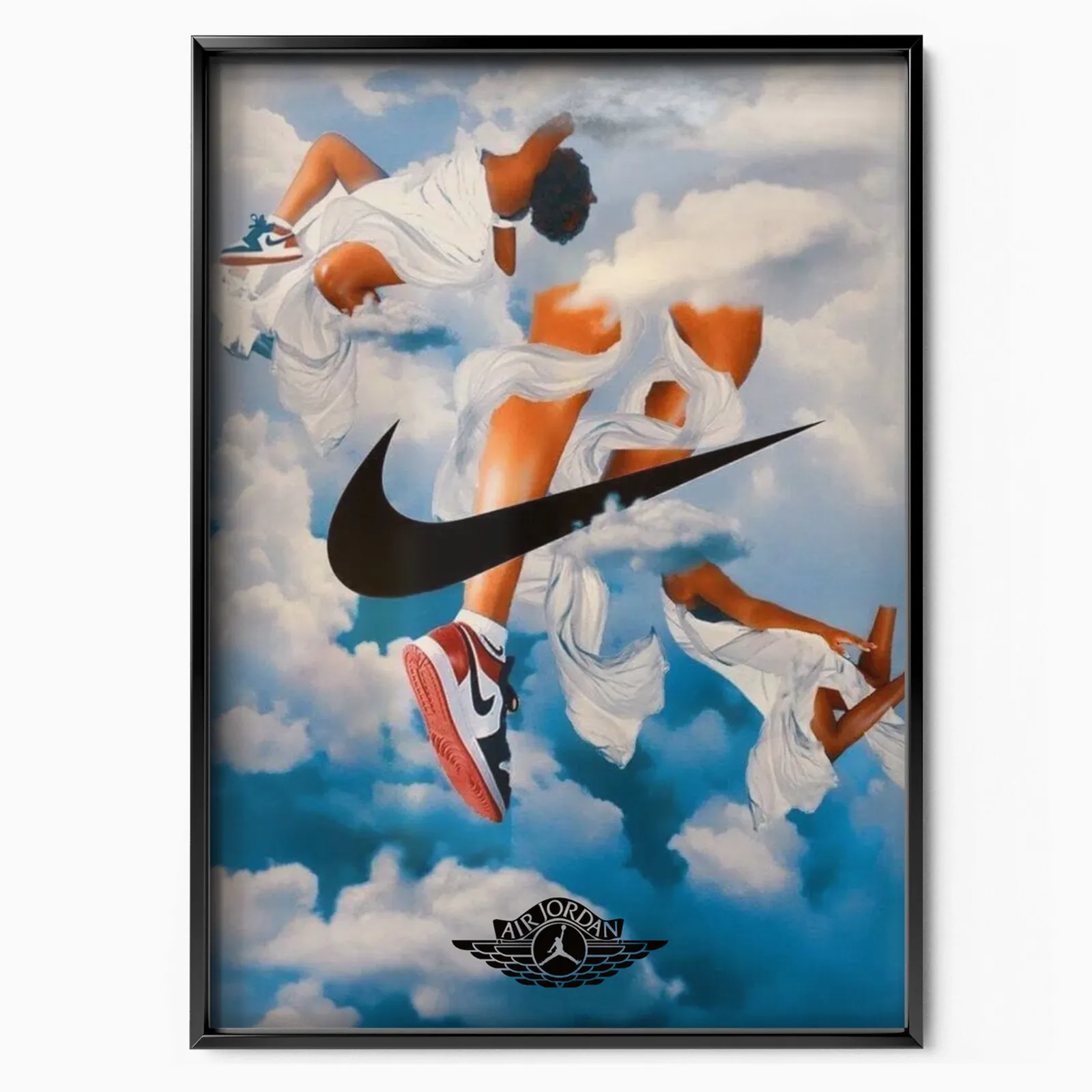
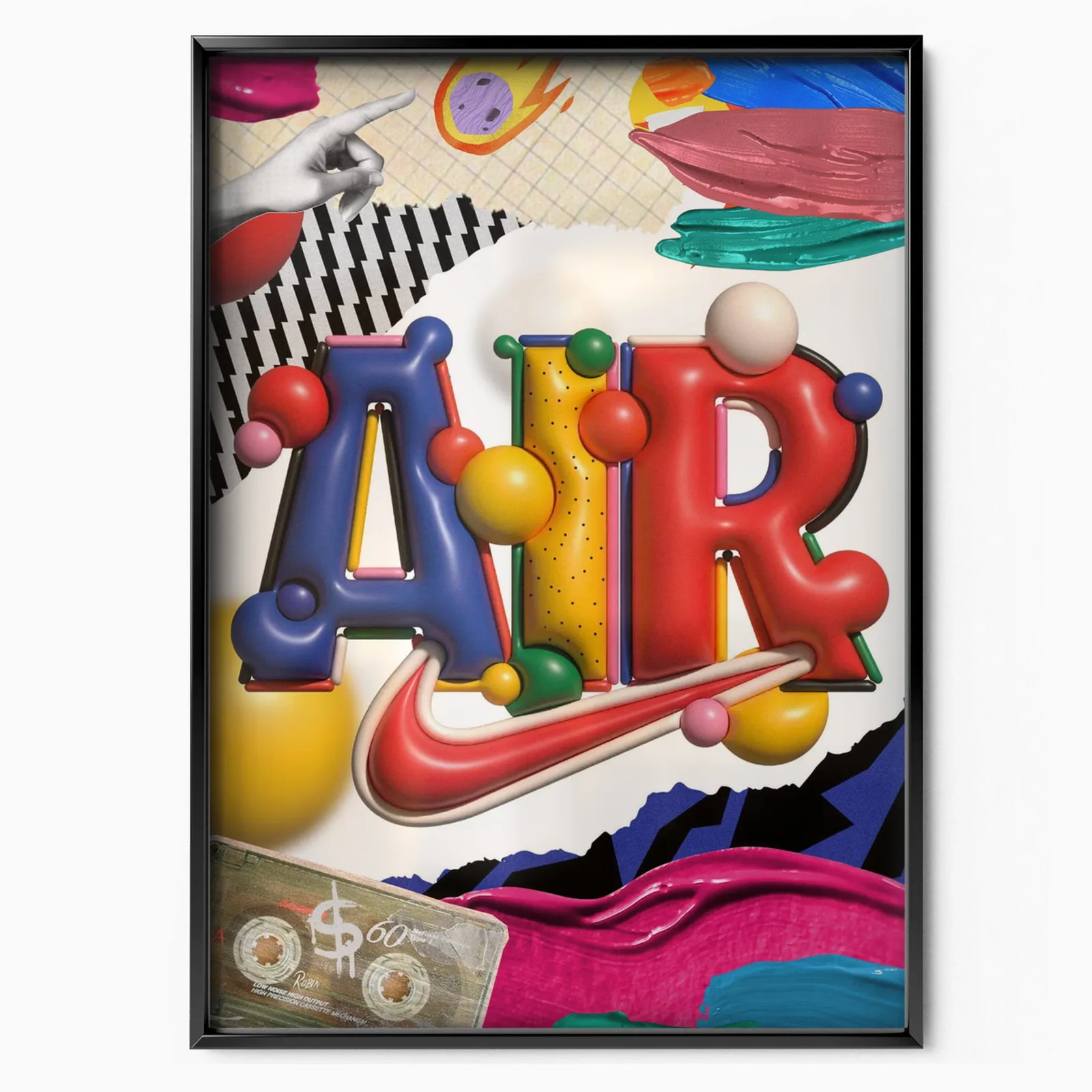
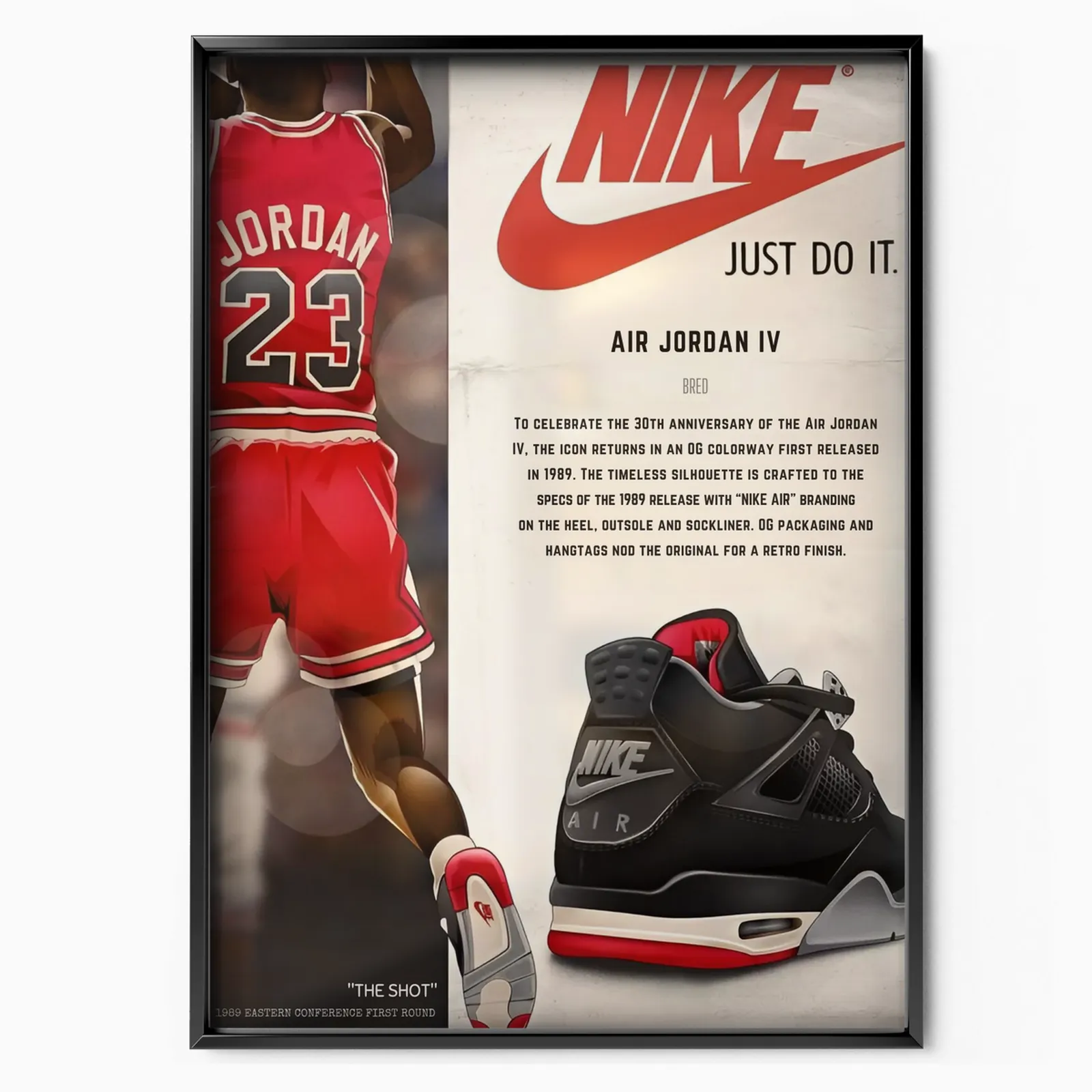
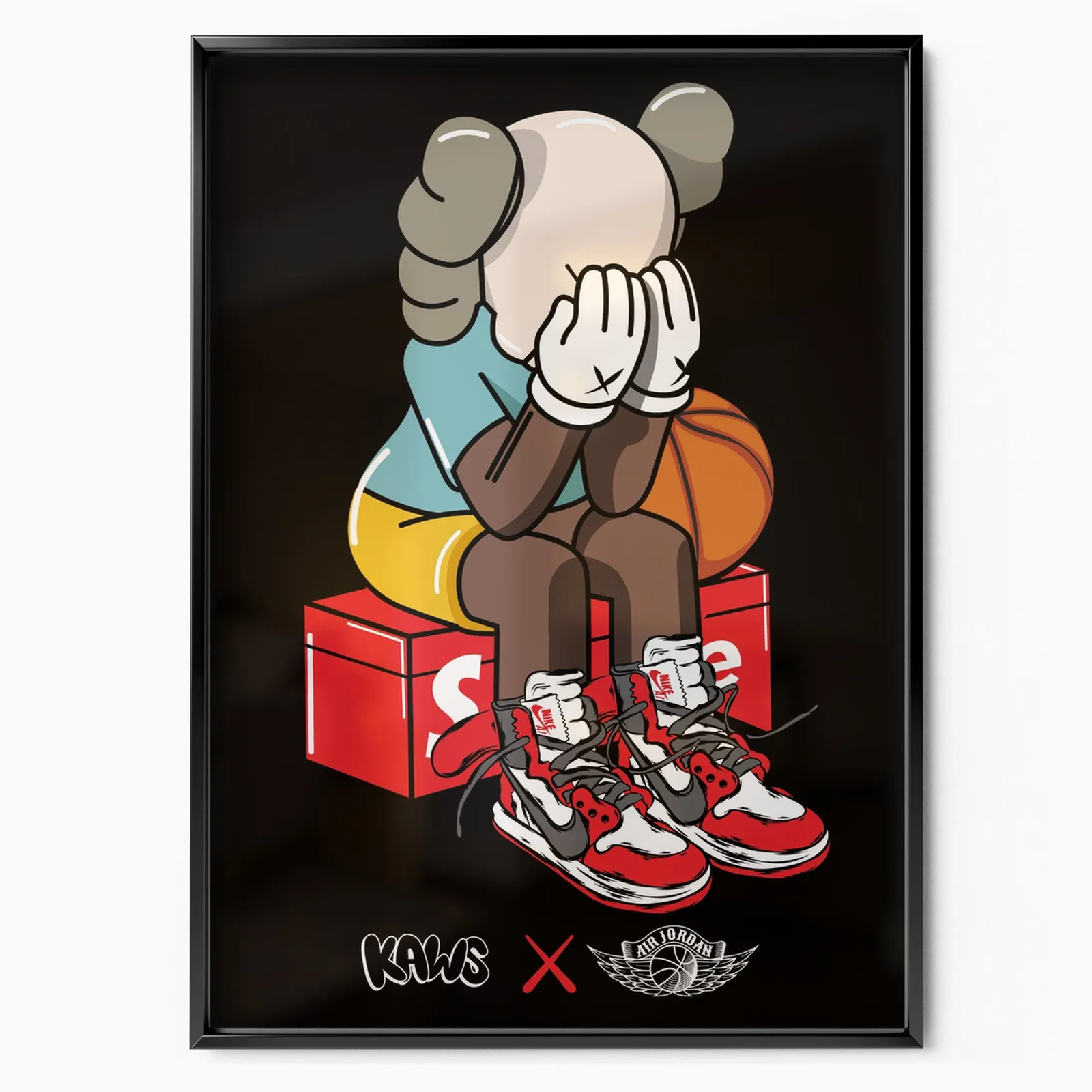
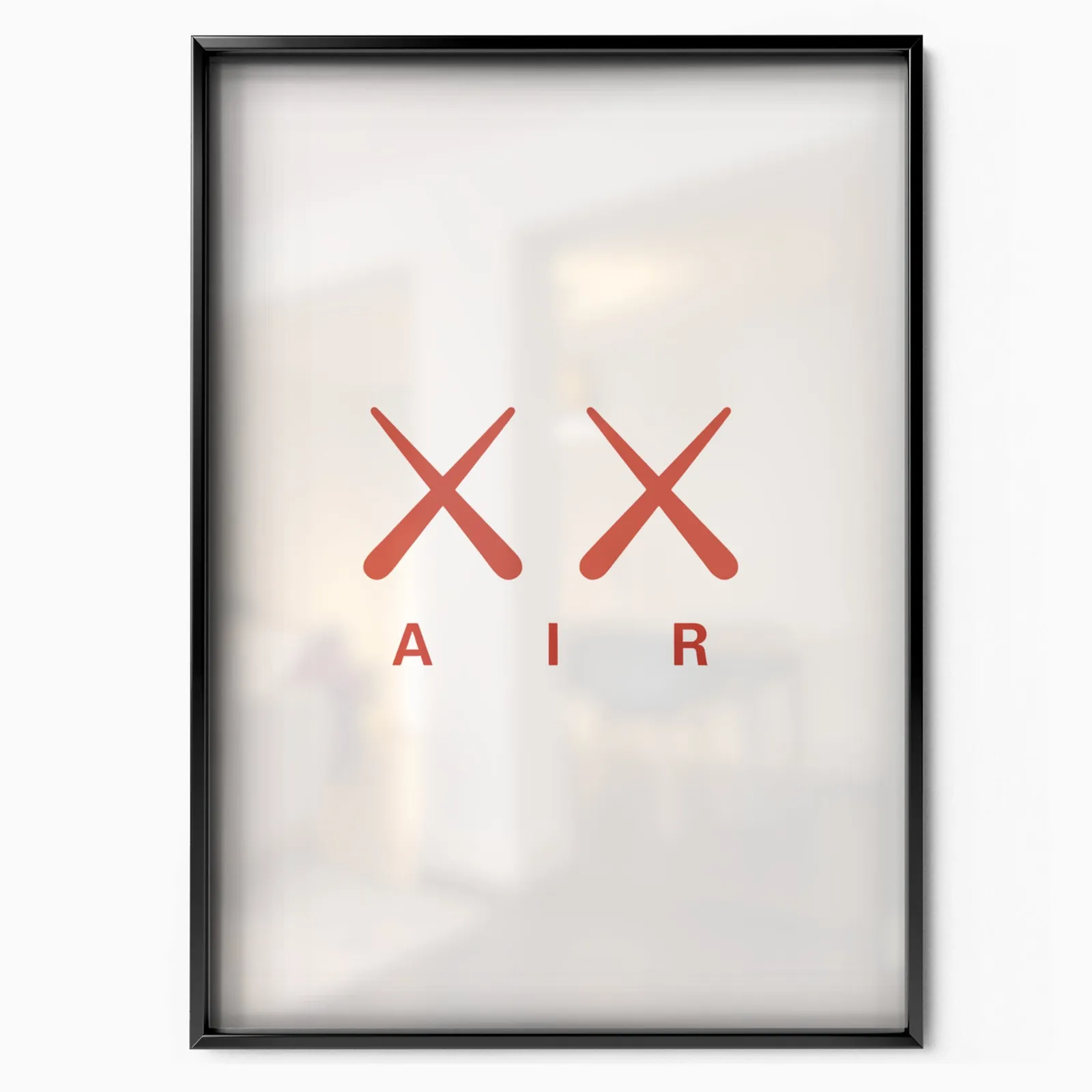
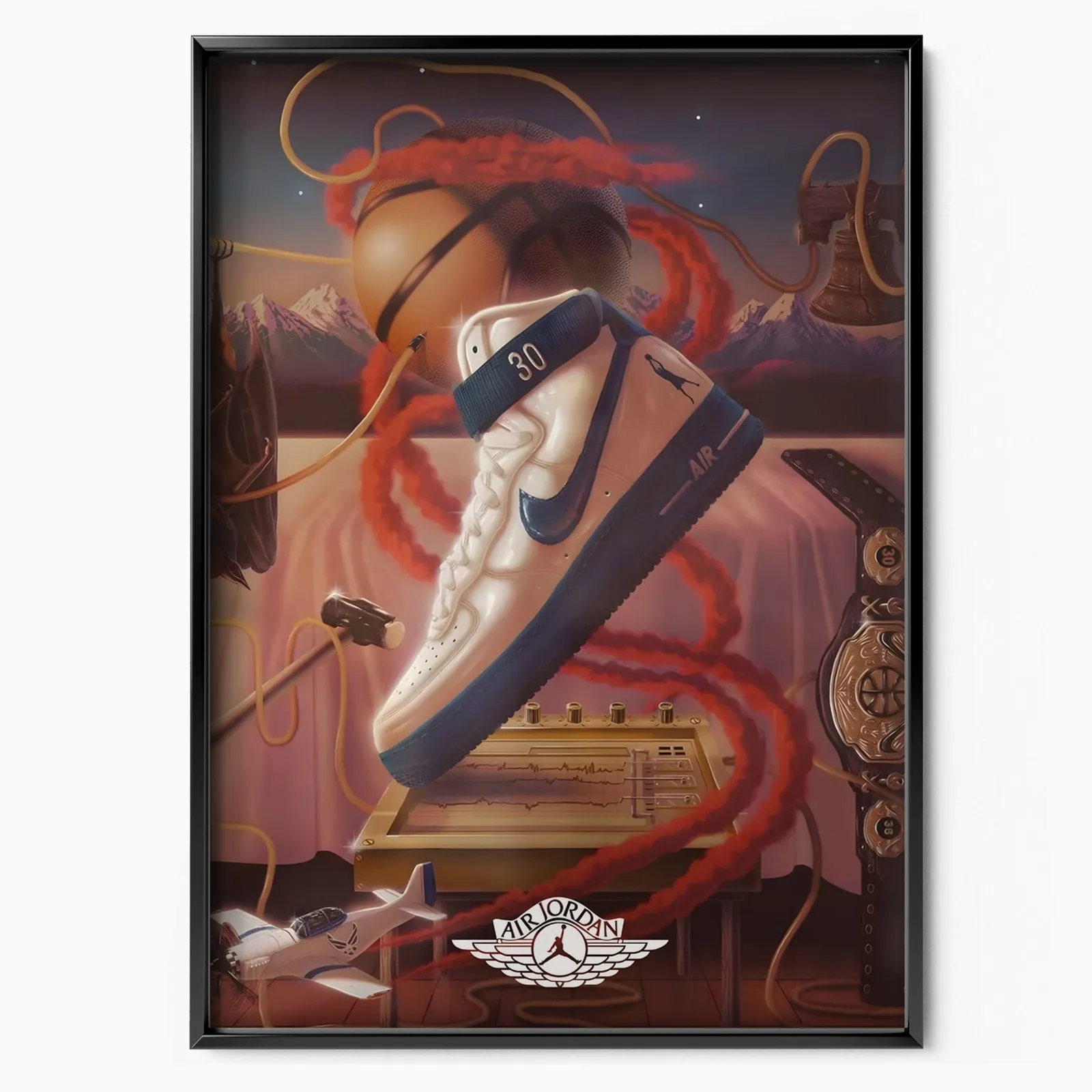
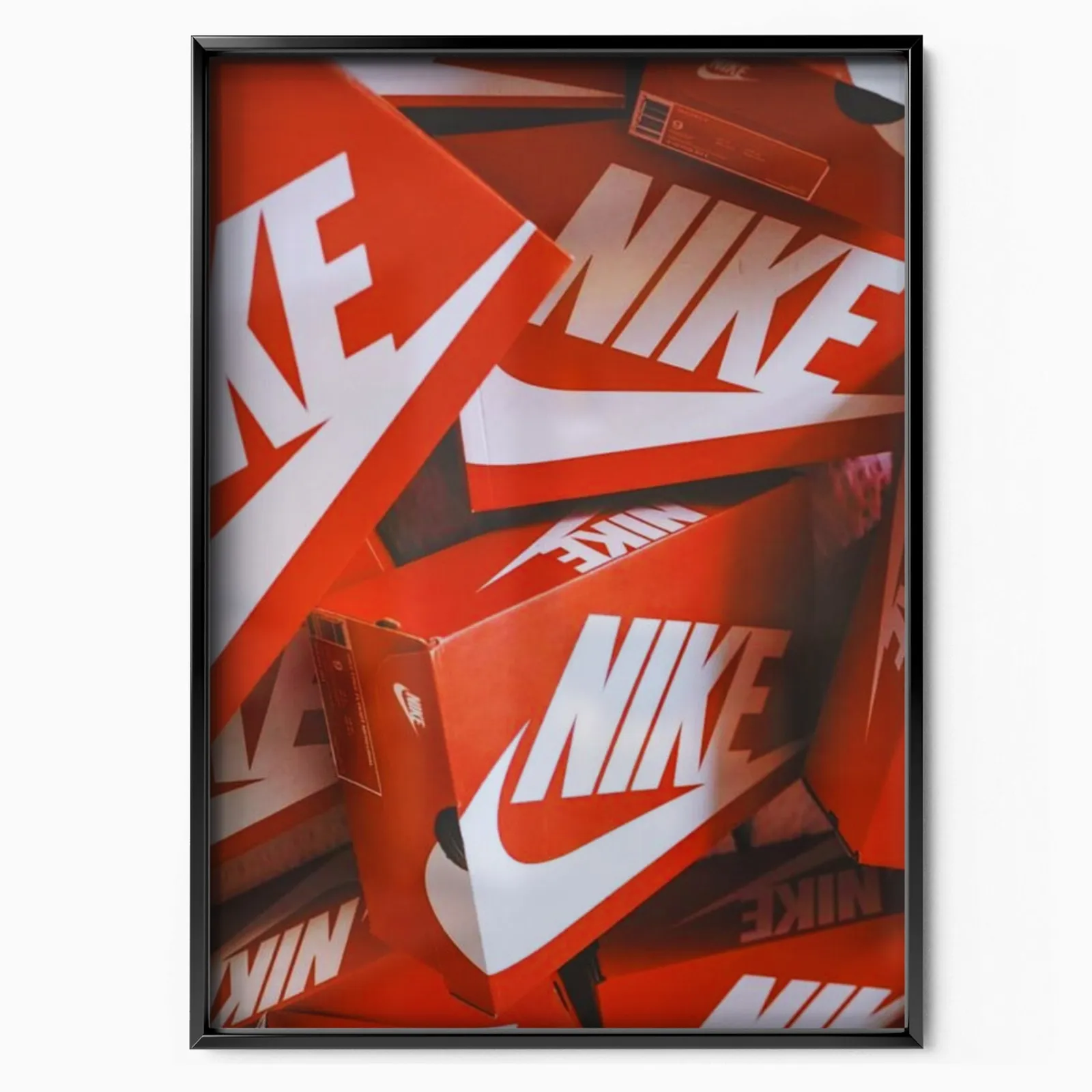
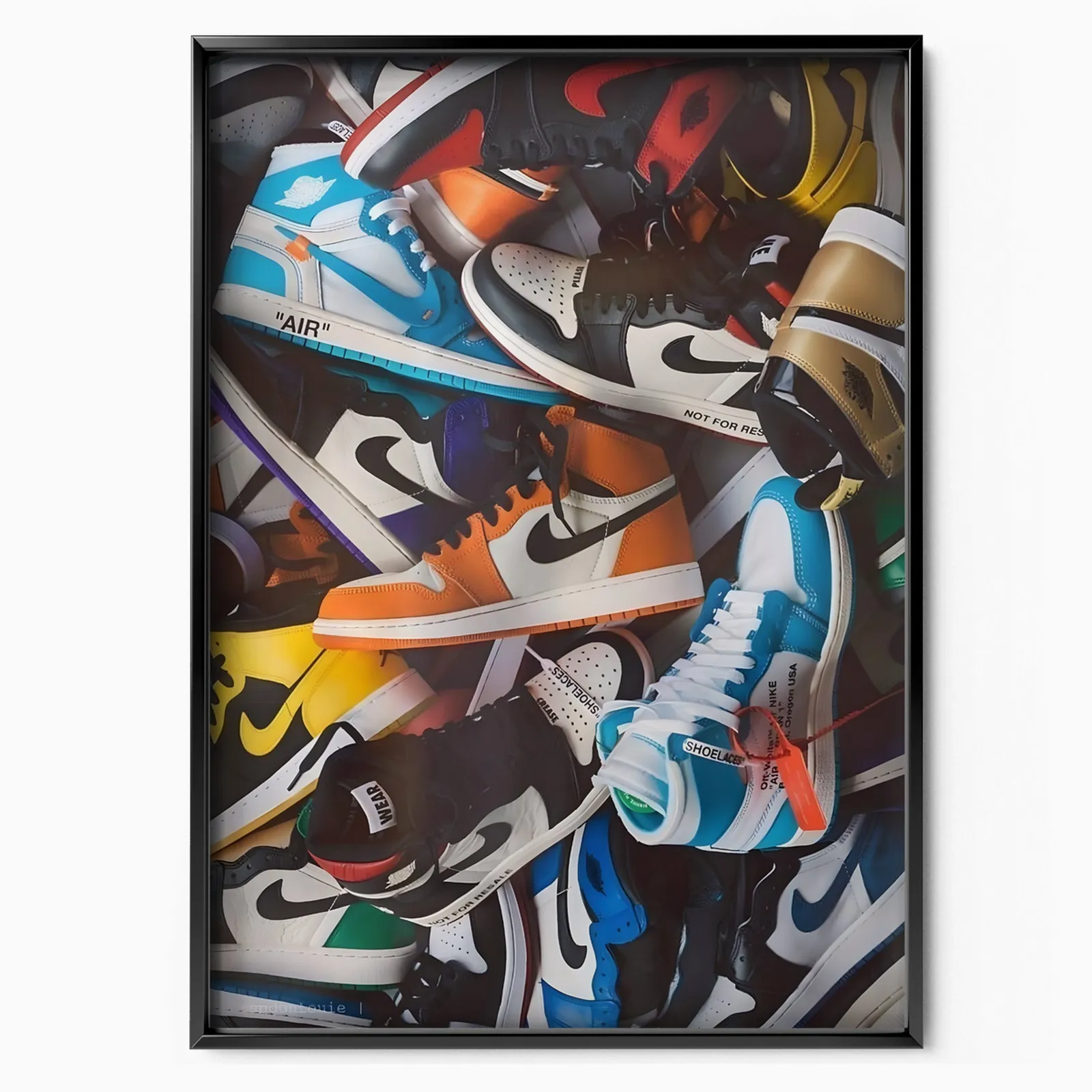
No Nike line moved culture like Air Jordan. The Air Jordan 1, designed by Peter Moore and launched in 1985, was flagged by the NBA for breaking its uniform rules, and Nike spun the ban into legend and around 55 million dollars of first-year sales. Four years later, Tinker Hatfield's Air Jordan IV debuted at the 1989 NBA All-Star Game as the first Air Jordan released worldwide, carrying the Jumpman logo. In 2017 the same silhouette became a canvas for high art when KAWS wrapped it in grey suede with a glow-in-the-dark sole, celebrated here in the KAWS x Air Jordan figure and the companion KAWS x Air print. Alongside them sit clean studies of the shoe itself: the classic Air Sneaker, the Sneaker Icon, the Sneaker Box and the playful Arcade Insert.
The Cortez, Kendrick and colourway art
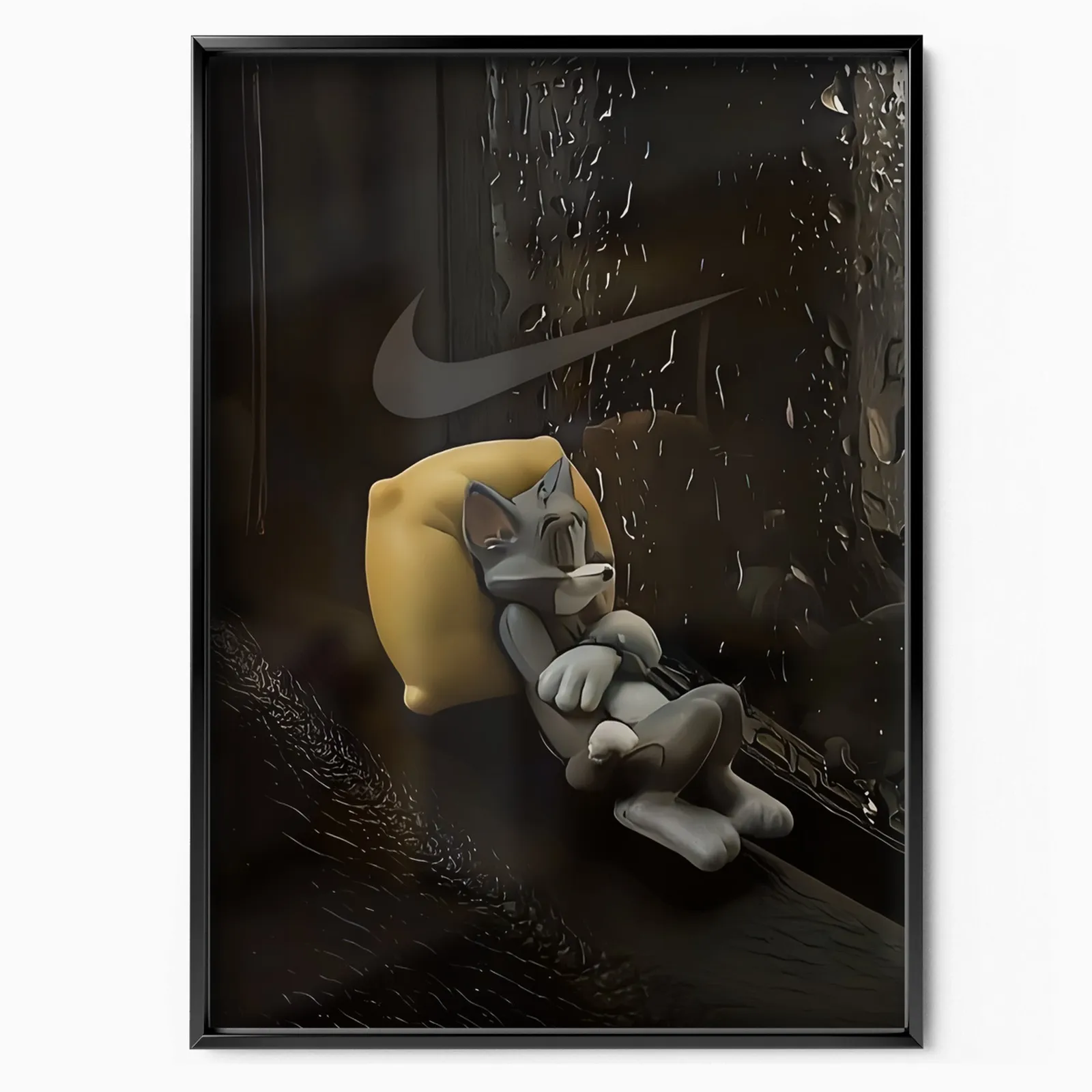
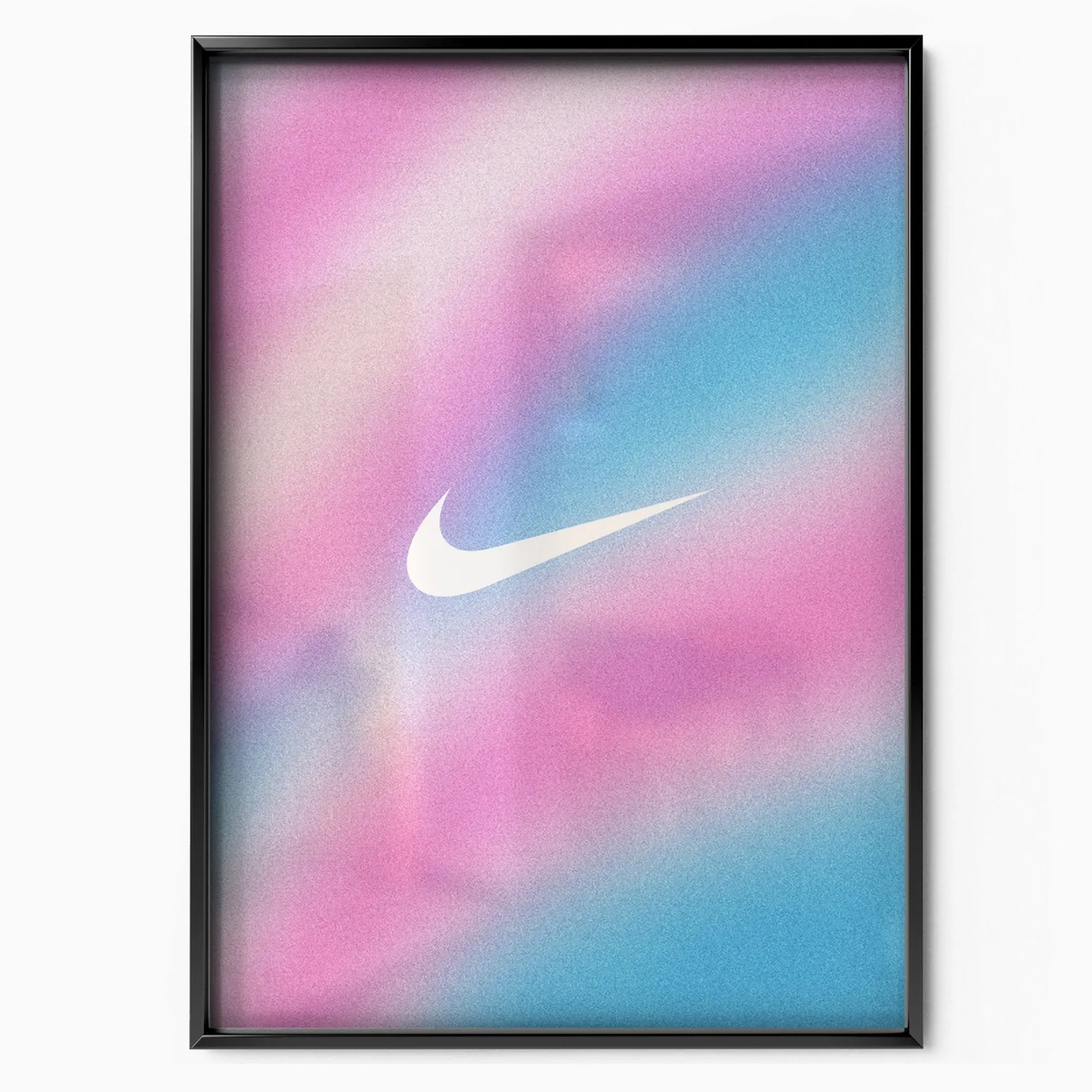
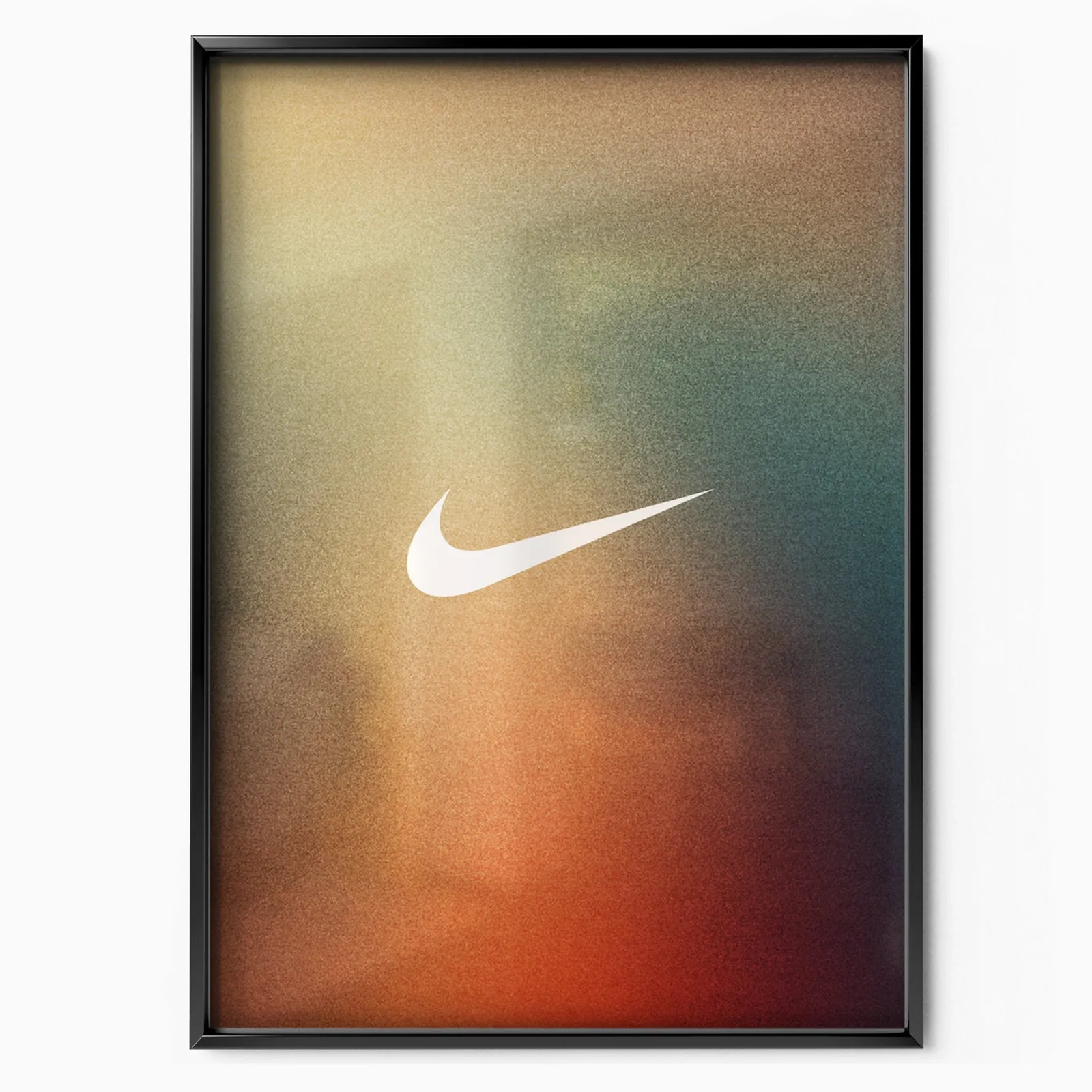
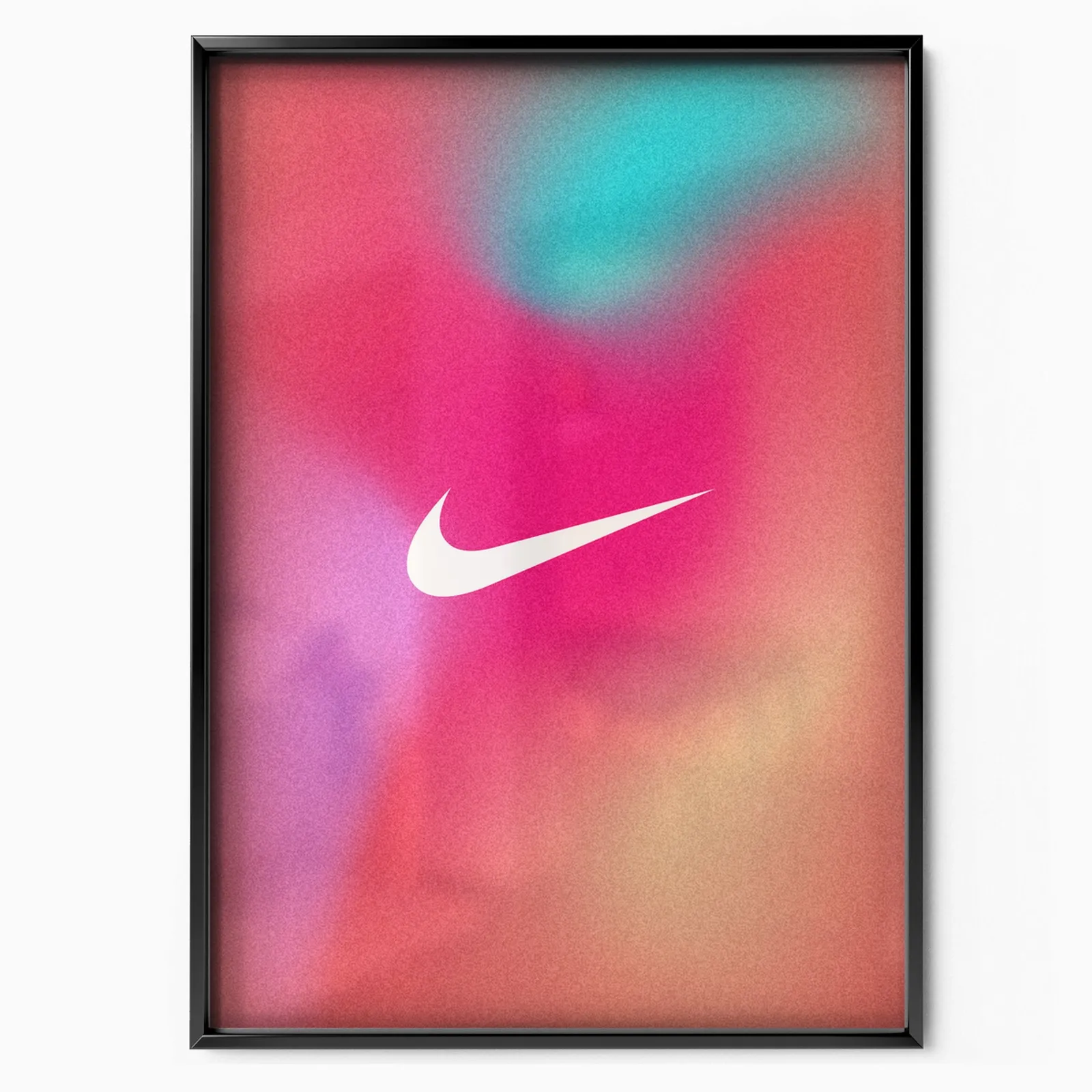
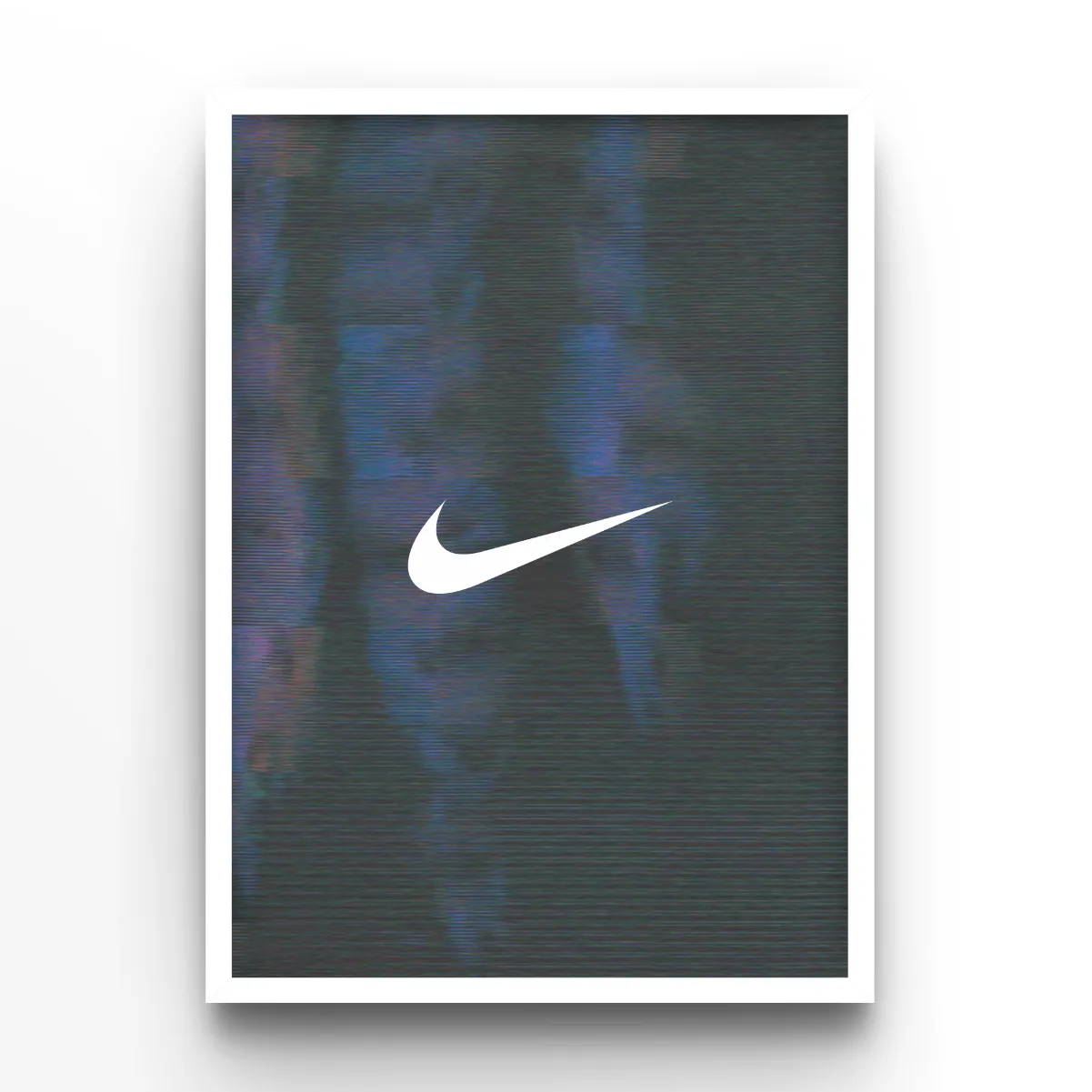
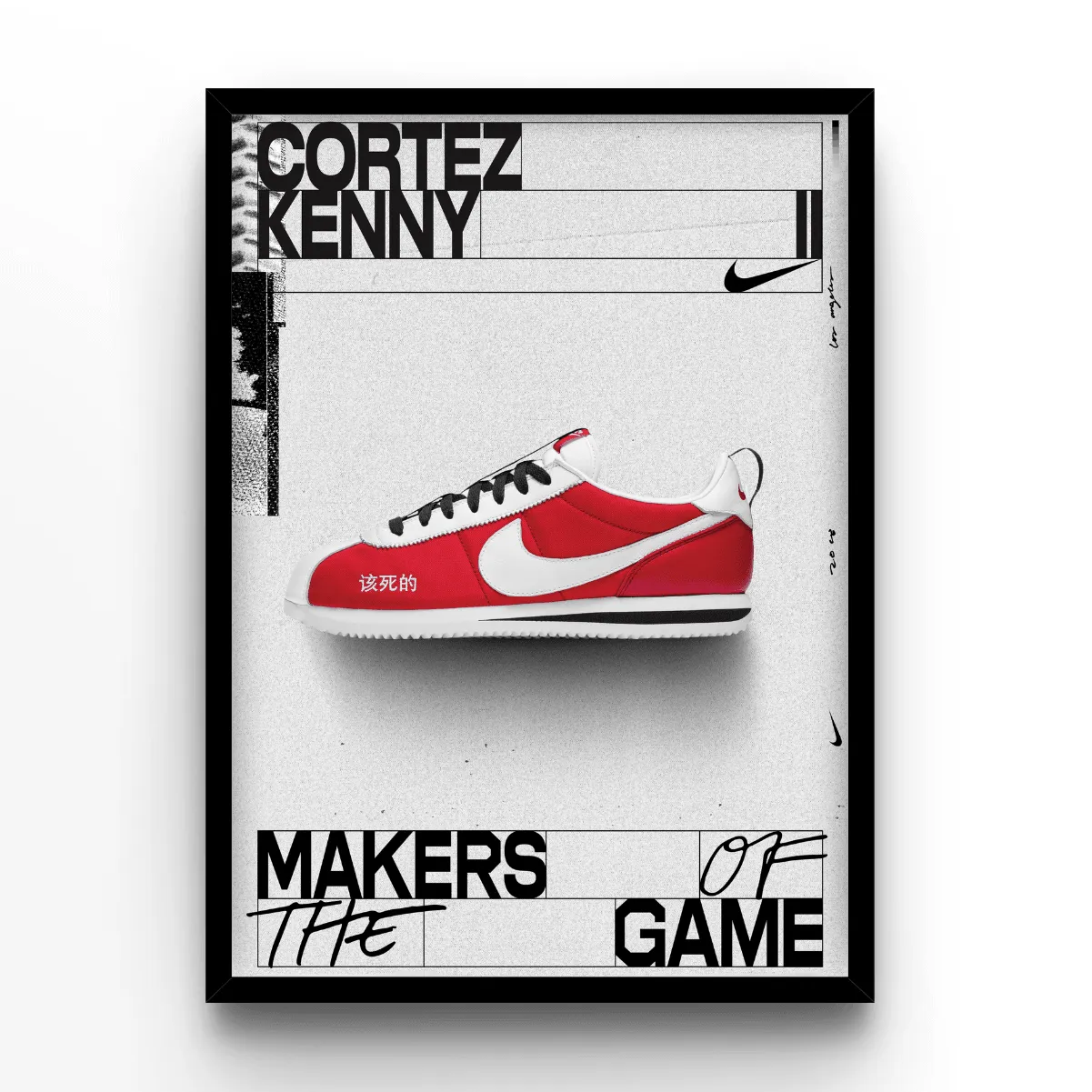
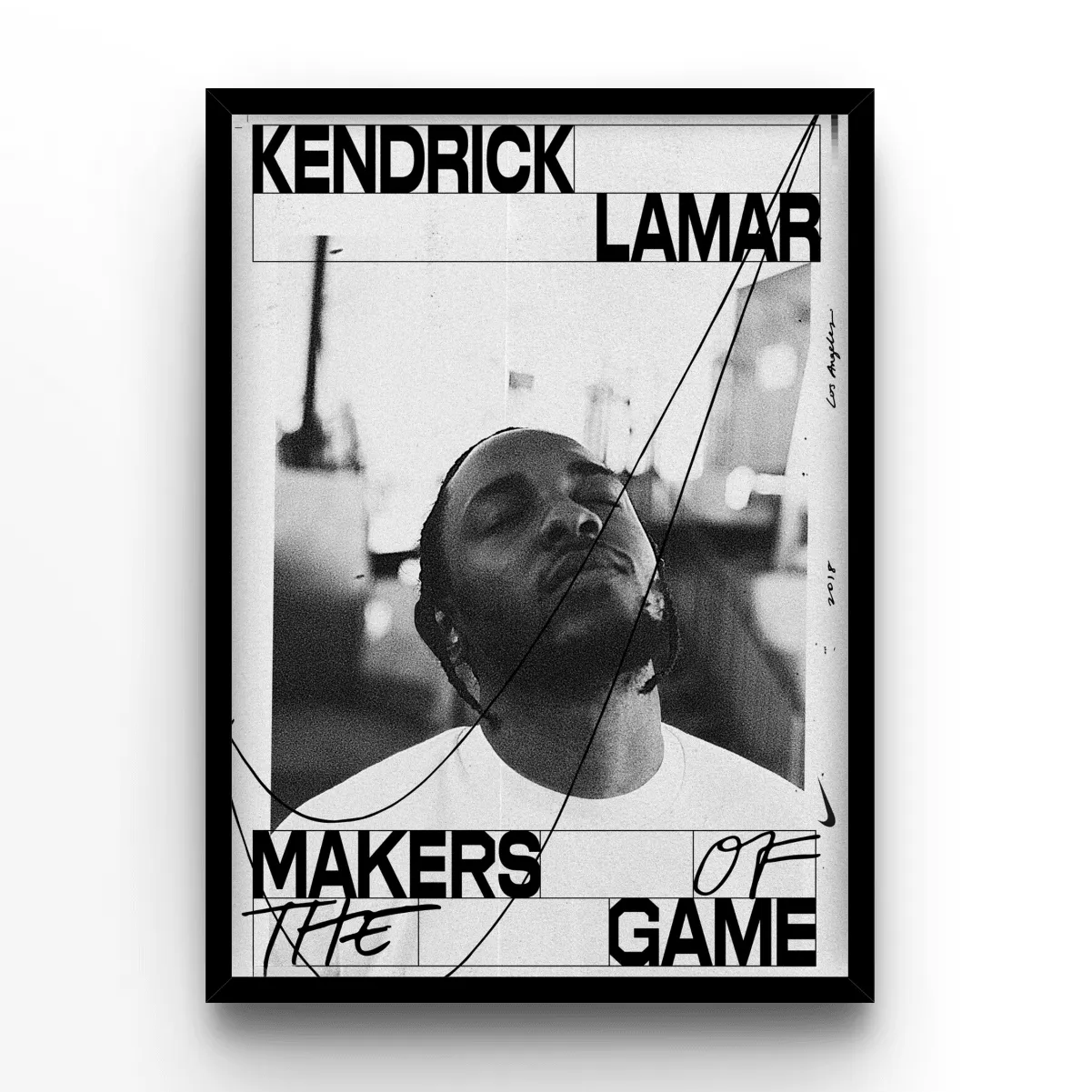
Nike's first in-house running shoe, the Cortez, arrived in 1972 as Bowerman's answer to distance training, and decades later Kendrick Lamar reworked it for his own Compton-red edition. That crossover shows up in the Cortez Kenny print and the striking Compton Portrait. For pure sneaker energy, the collection leans into bold colourways: the vivid Colorful Sneakers, the retro Vintage Sneakers, the punchy Red Sneakers, the textured Stone Kicks, the metallic Silver Kicks, the airy Sky Kicks and the fun Cartoon Cat Sneakers. For an art-forward room, the Blur series turns motion into pigment, from Blur Waves and Blur Candy to Blur VHS, Blur Red and Blur Pink.
The hardwood and the collabs
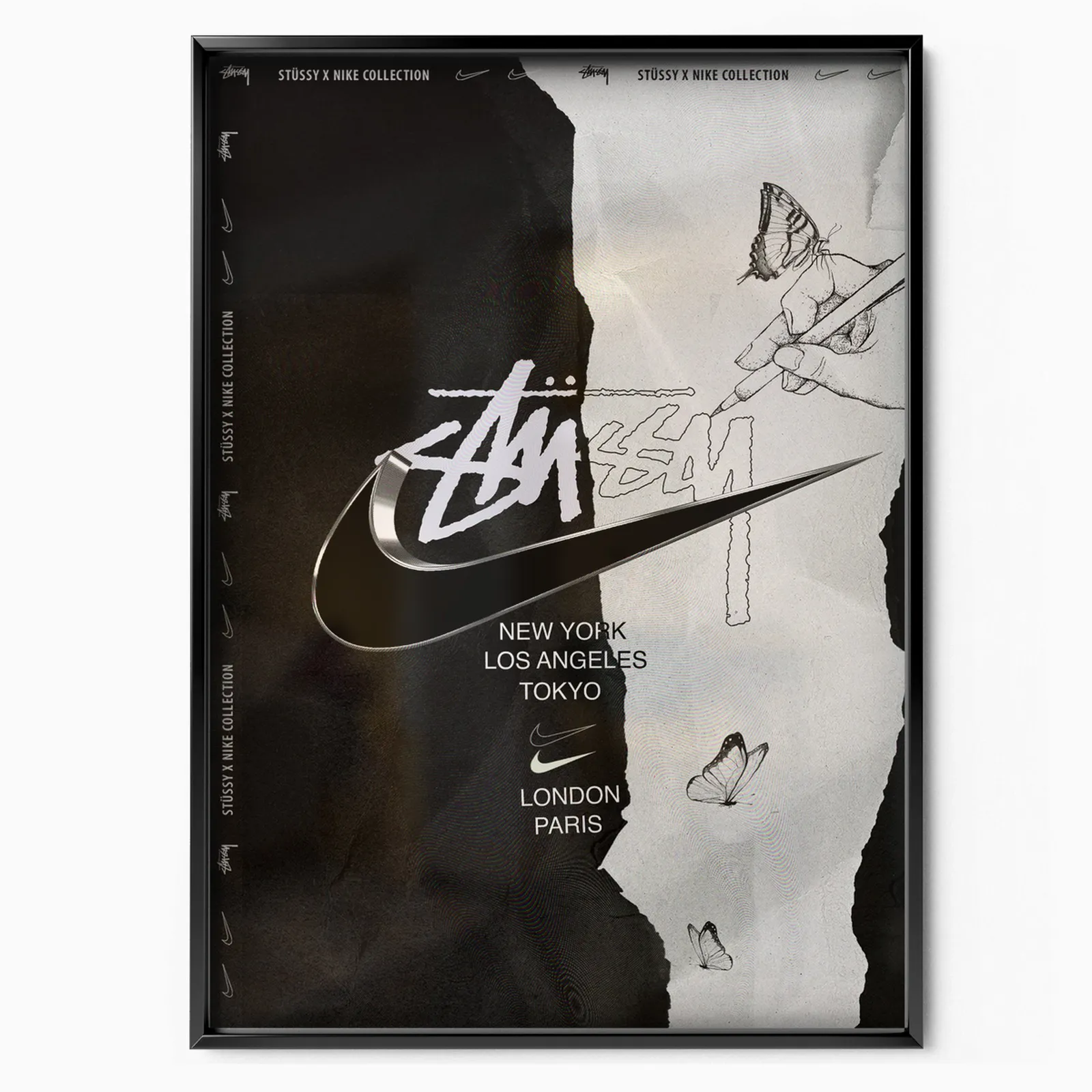
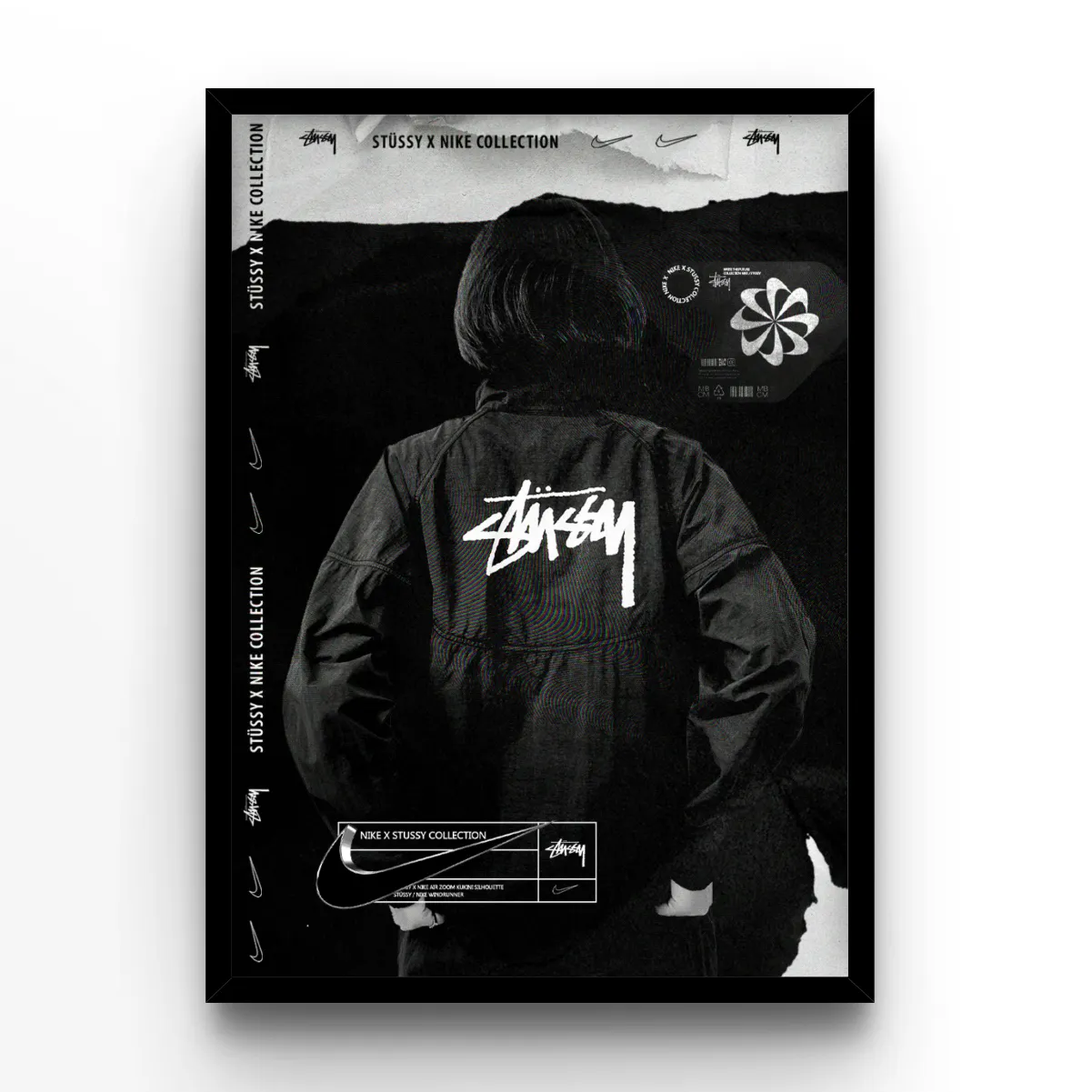
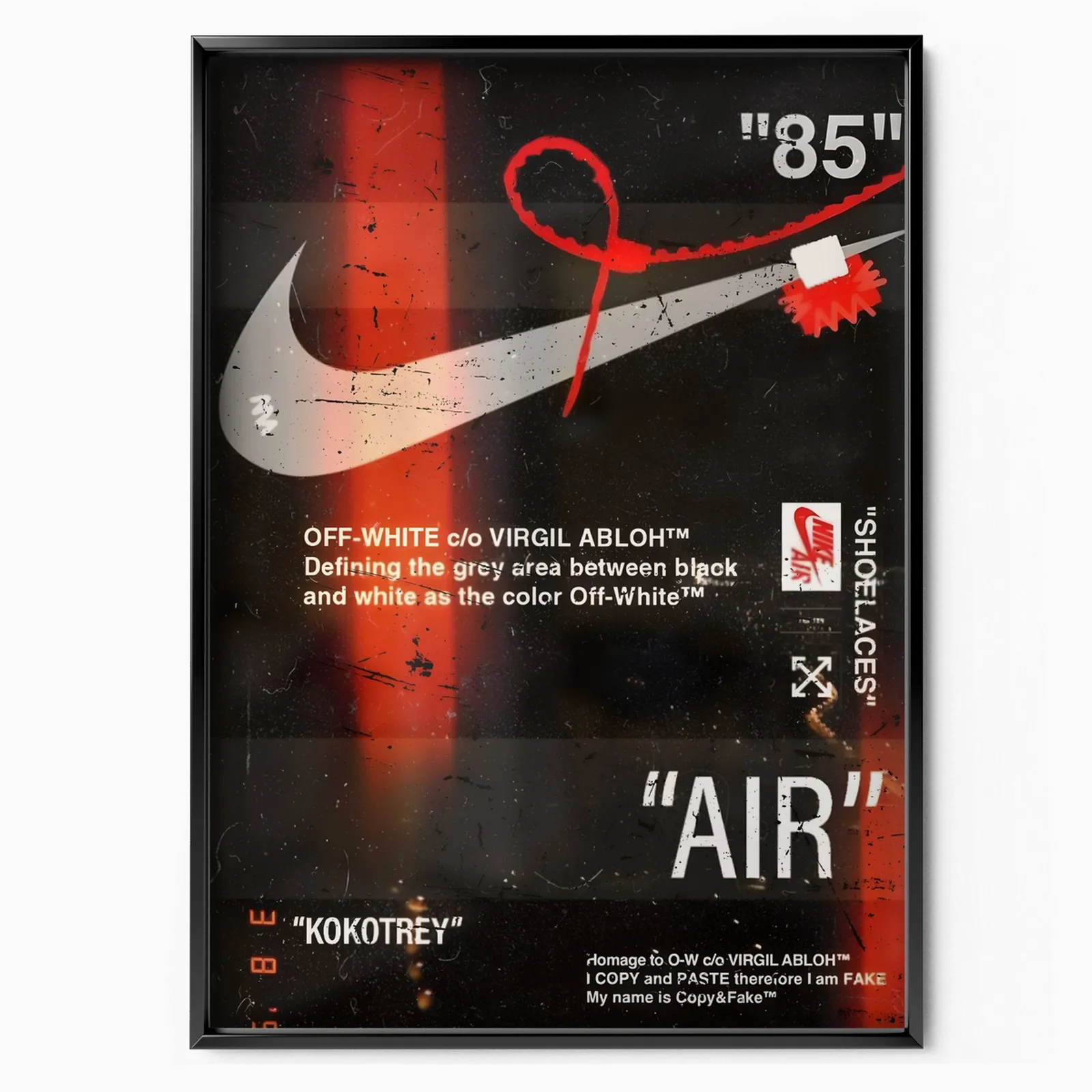
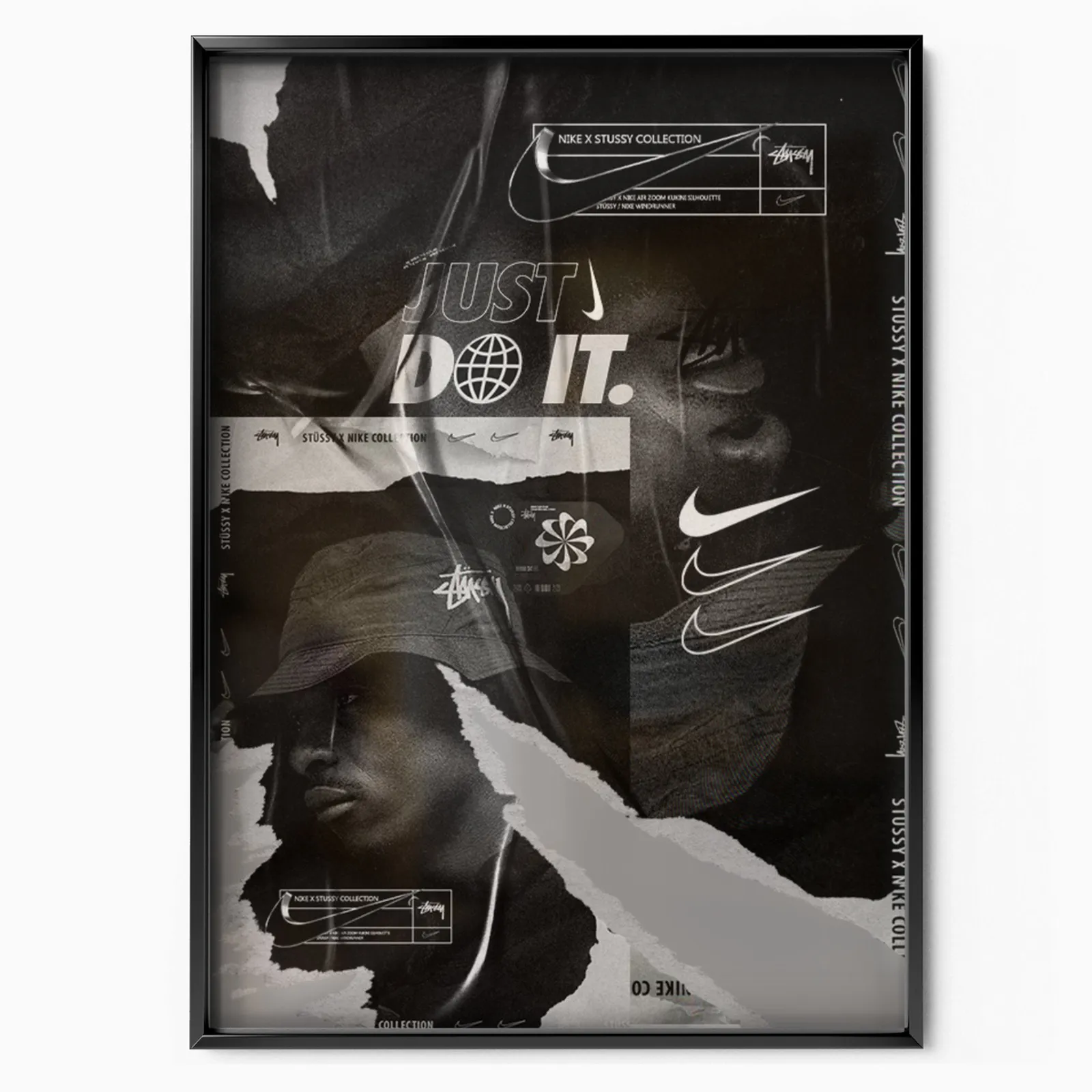
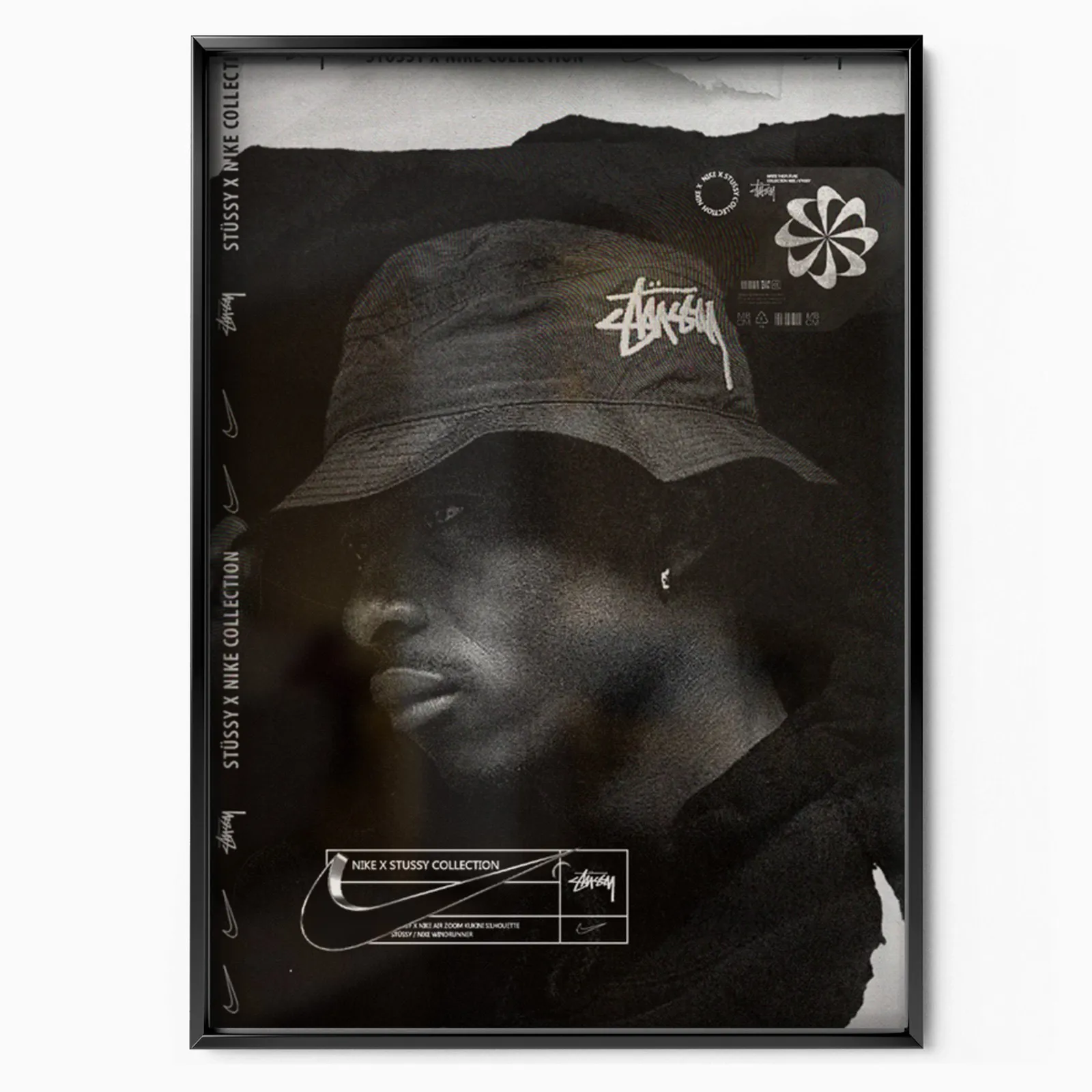
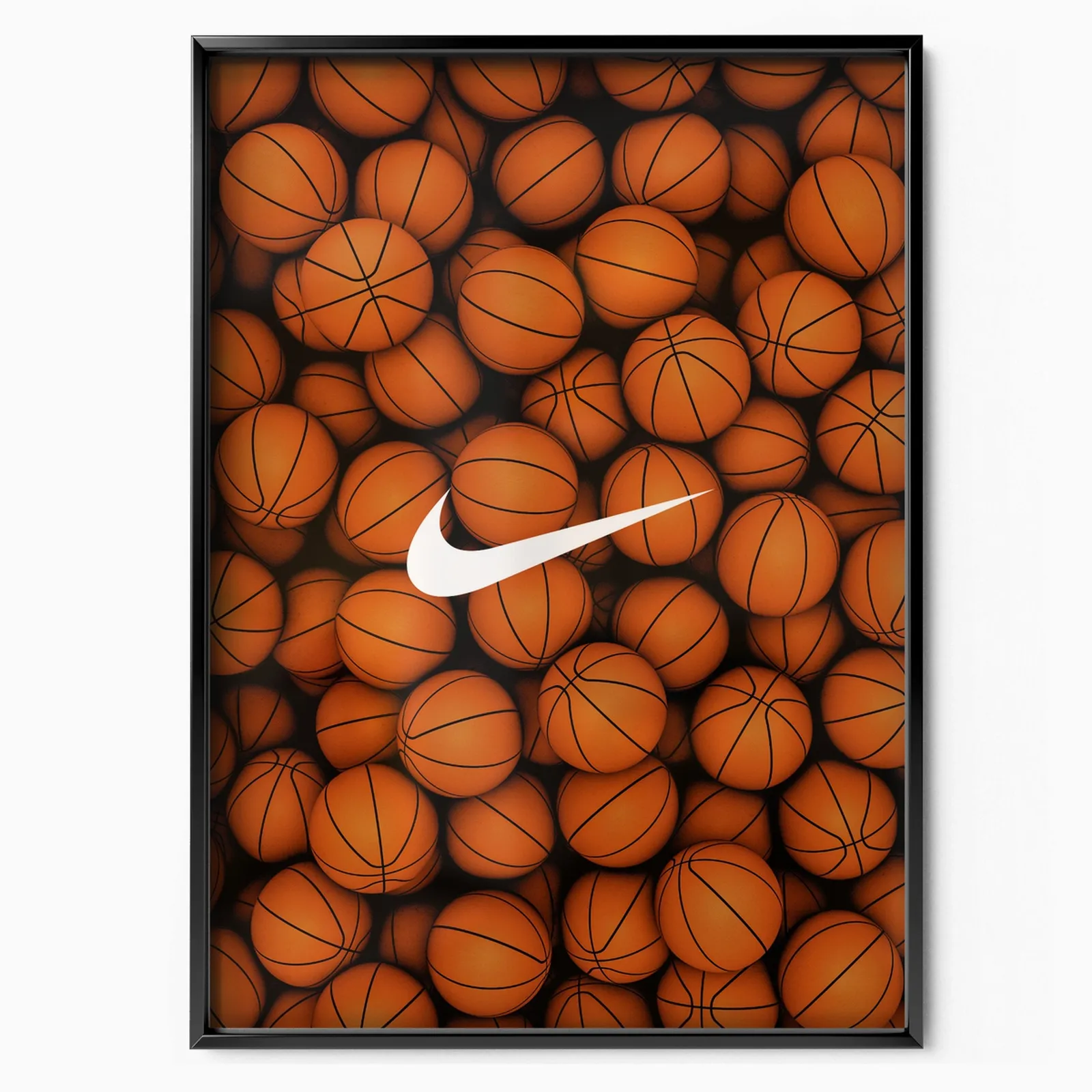
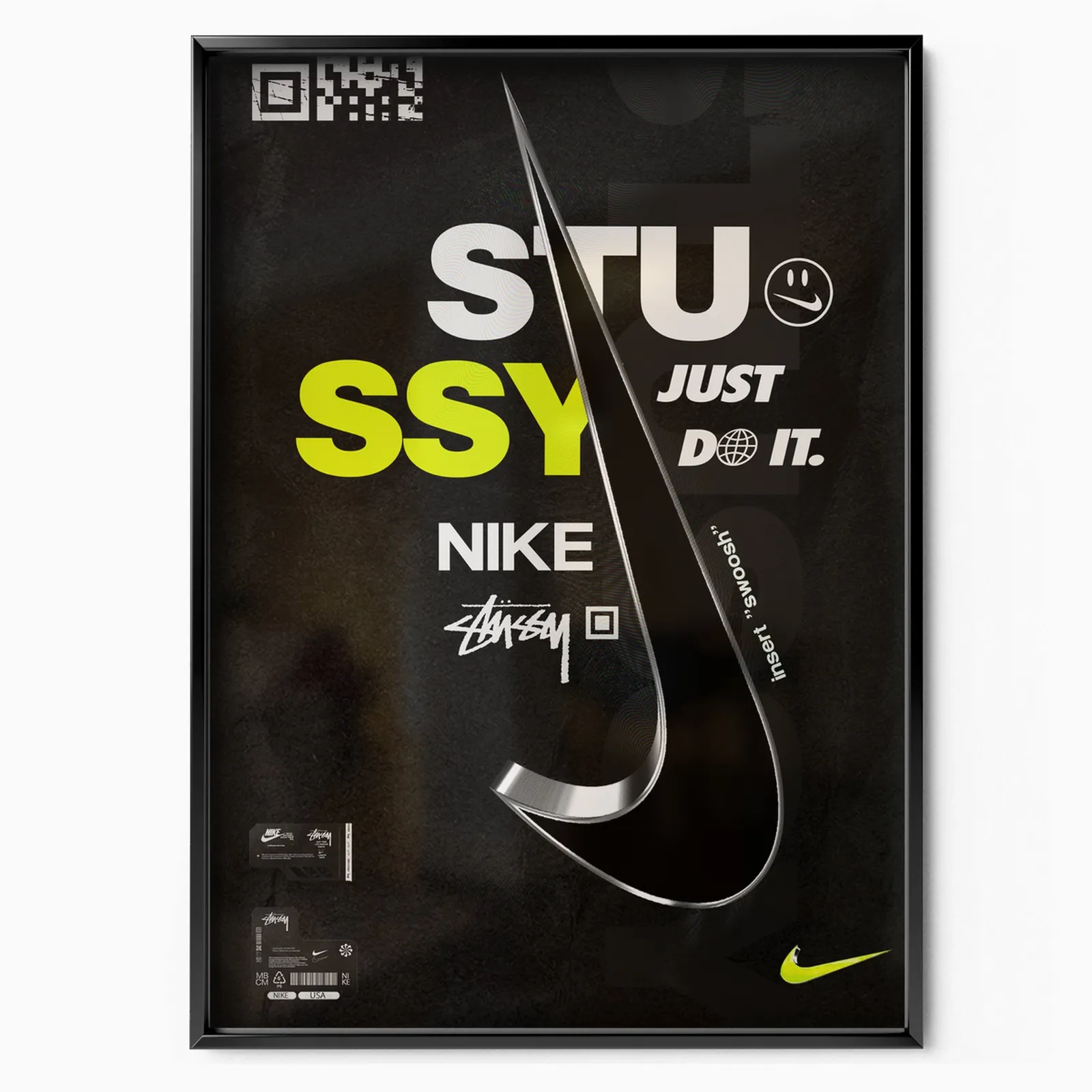
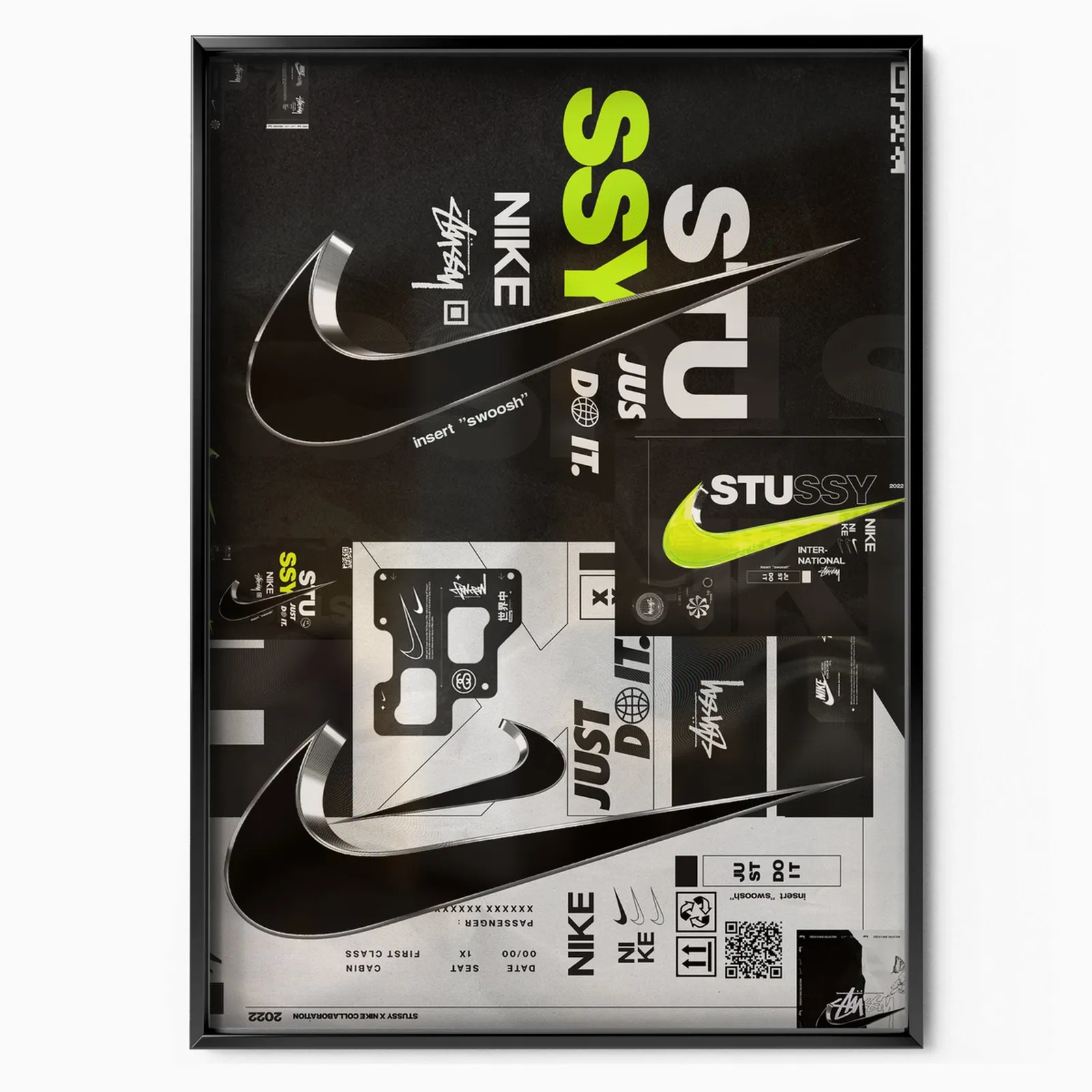
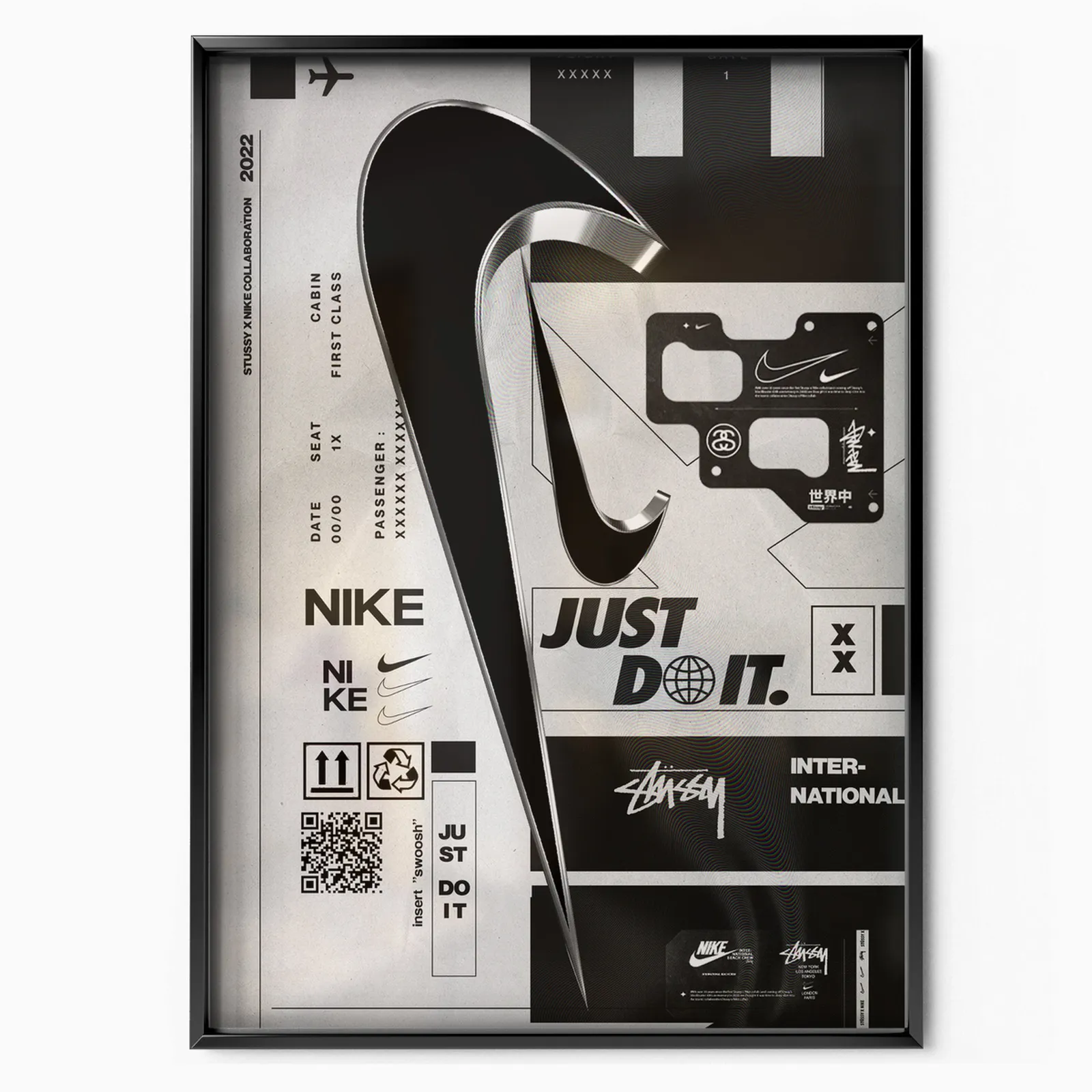
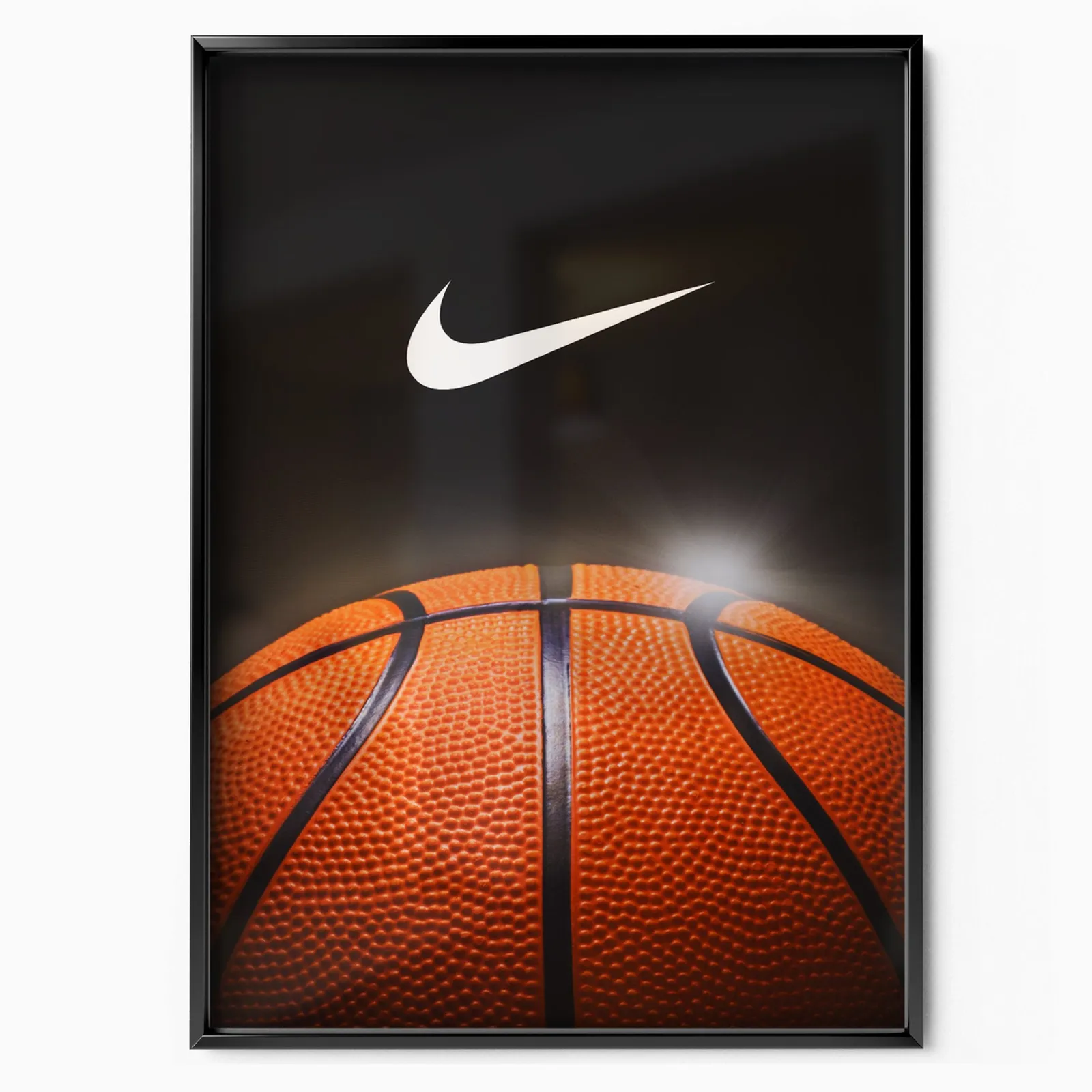
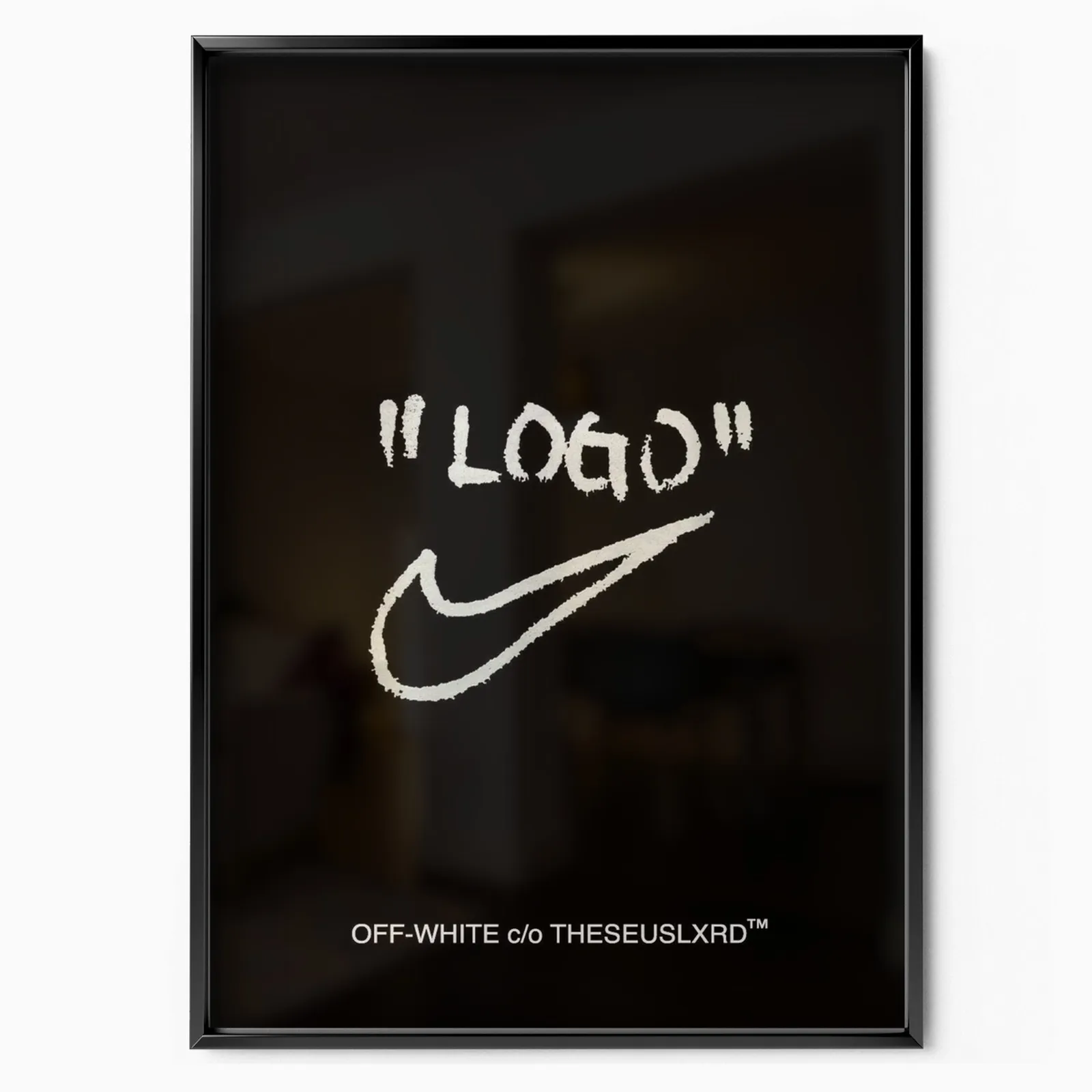
On the court, Nike Air changed the game. The exposed Air unit of the 1987 Air Max 1, which Tinker Hatfield unveiled after seeing the Pompidou Centre in Paris, built on cushioning tech Nike had run since 1978. That basketball heritage shows in the Basketball and Full Basketball prints, the aspirational Invent the Future piece, and a tribute to Kobe Bryant, who signed a four-year Nike deal in June 2003. Nike's design language also runs through streetwear: the Nike x Stussy collab, its Streetwear Collab Back, the Stussy Collection, the Stussy Style and Street International prints, plus Virgil Abloh's deconstructed Off-White Logo from the 2017 "The Ten".
Sizes, frames and building a Nike wall
Every design ships in A4, A3, A2 and A1. A4 and A3 suit a desk, a shelf or a tight bedroom grid, while A2 and A1 work as a single statement piece above a bed, a sofa or a home gym. Choose black framing for high-contrast sneaker shots and logo art, chrome white to lift brighter colourways, or unframed for the flexible, lower-cost route. All prints use museum-grade 200gsm matte stock for deep colour and a glare-free finish that holds up for years. The easiest gallery to start is a three-poster trio: one Swoosh or slogan piece, one sneaker grail and one colourway or Blur print, kept to a single frame colour and a repeated A3 size for a clean grid. Thanks to Buy 2 Get 1 Free, that third print is on the house, which makes a proper Nike wall the best-value corner of the shop.