Few bands turned the album sleeve into an event the way Led Zeppelin did. From a sepia squadron of First World War pilots to a wordless cover carrying nothing but four symbols, their artwork became folklore in its own right, argued over and decoded long after the needle lifted. This collection gathers museum-quality prints of that run, chosen for covers that reward a close look on a wall. A quick note on honesty: we currently carry the catalogue from Led Zeppelin II onward, so you will find II, III, IV, Physical Graffiti, Presence and Coda here, plus the Celebration Day live film. The 1969 debut and Houses of the Holy are not in the collection yet, so if those are the sleeves you want, keep an eye on the catalogue as it grows.
The Heavy Ascent (1969 to 1971)
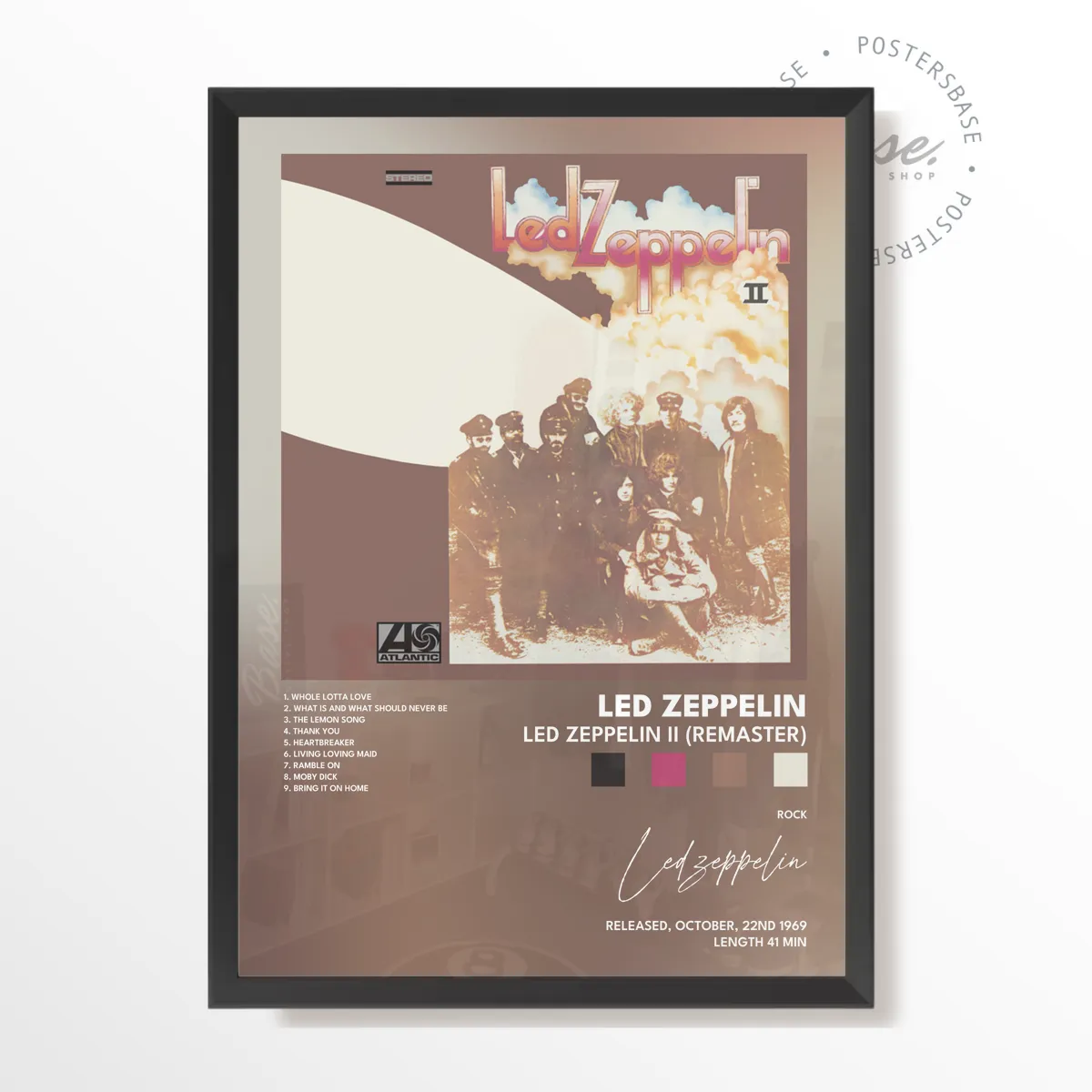
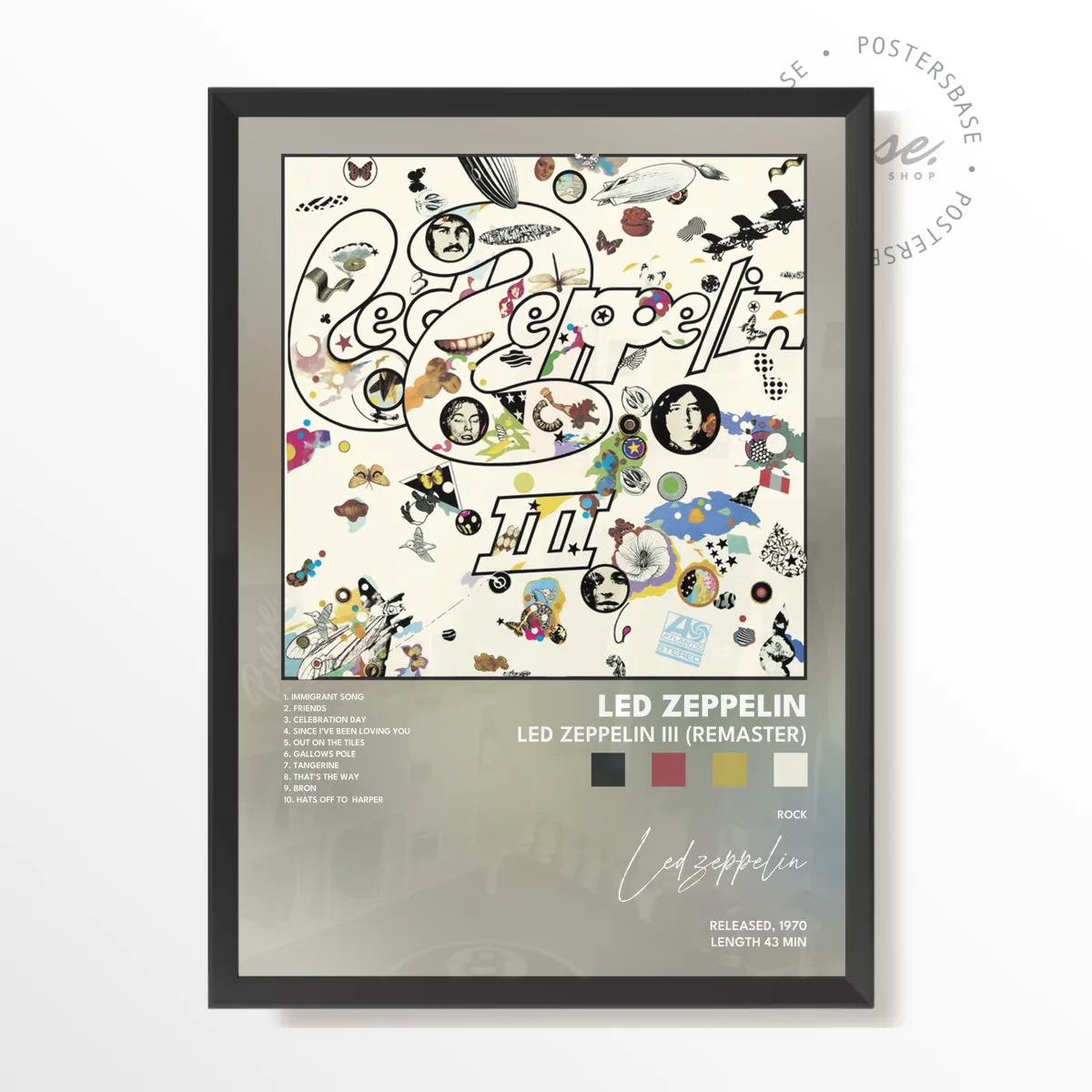
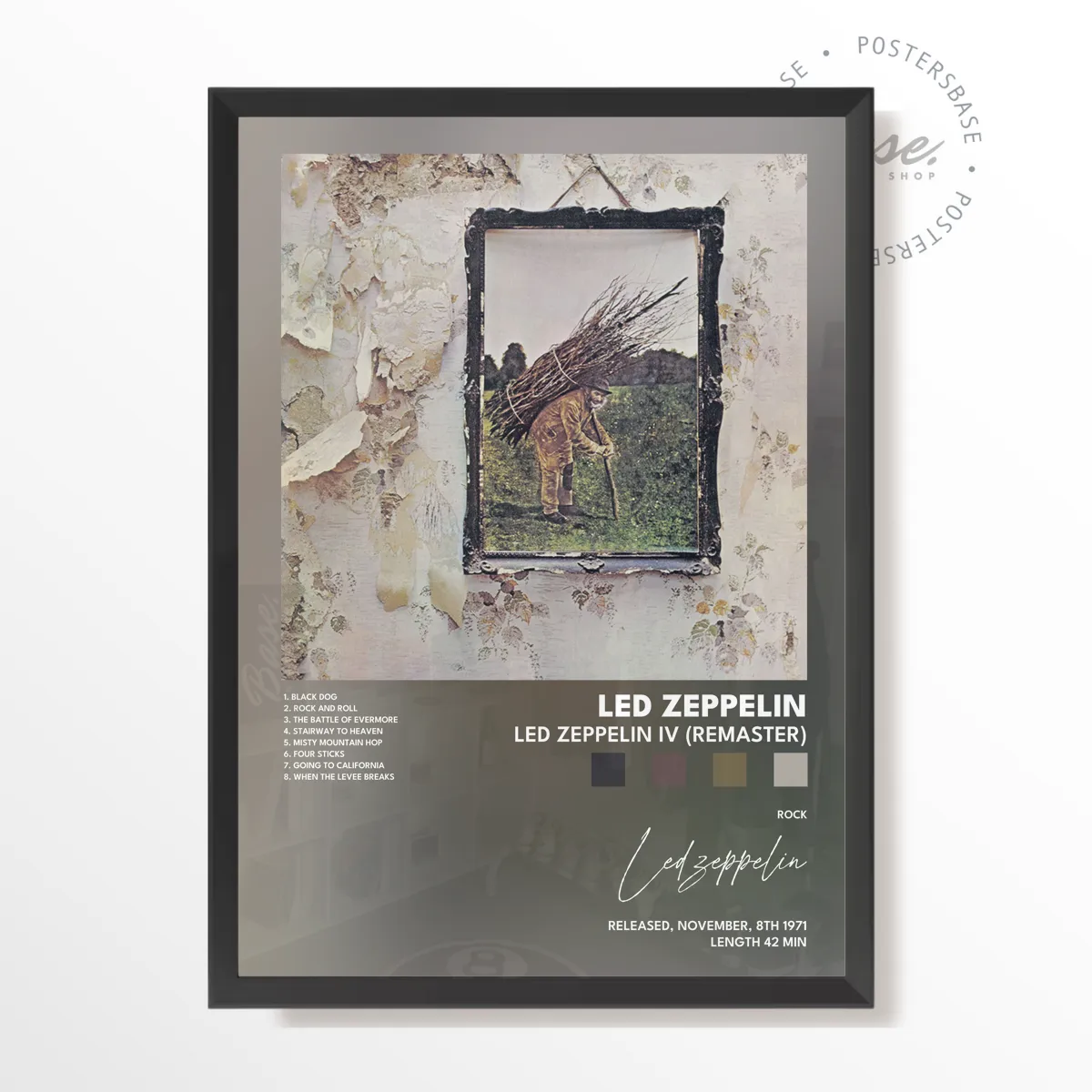
Led Zeppelin II earned the American nickname "The Brown Bomber" for its brown outer sleeve. Designer David Juniper started with a sepia photograph of Jasta 11, the First World War German squadron led by Manfred von Richthofen, the Red Baron, then airbrushed the four band members onto the pilots. On Led Zeppelin III, artist Zacron built a working volvelle, a rotating laminated disc behind the front cover that brings different images through cut-out holes, a paper device that dates back to the medieval era. Then came the boldest statement of all. Led Zeppelin IV carried no title, no band name and no text, only four hand-picked symbols, one per member, including Jimmy Page's famous "ZoSo" and Robert Plant's feather inside a circle. It is one of the best-selling albums in history and home to "Stairway to Heaven".
The Sprawling Peak (1975 to 1976)
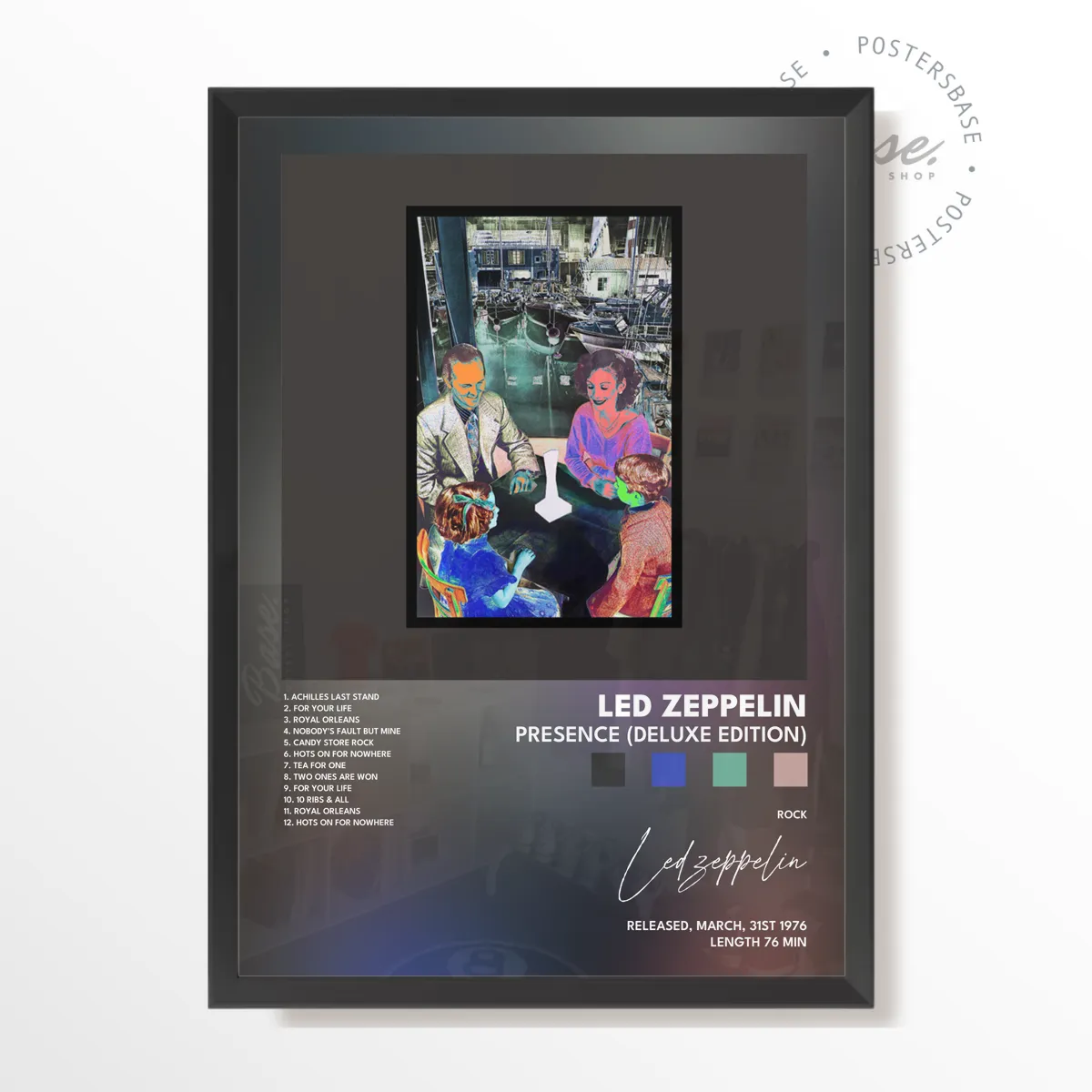
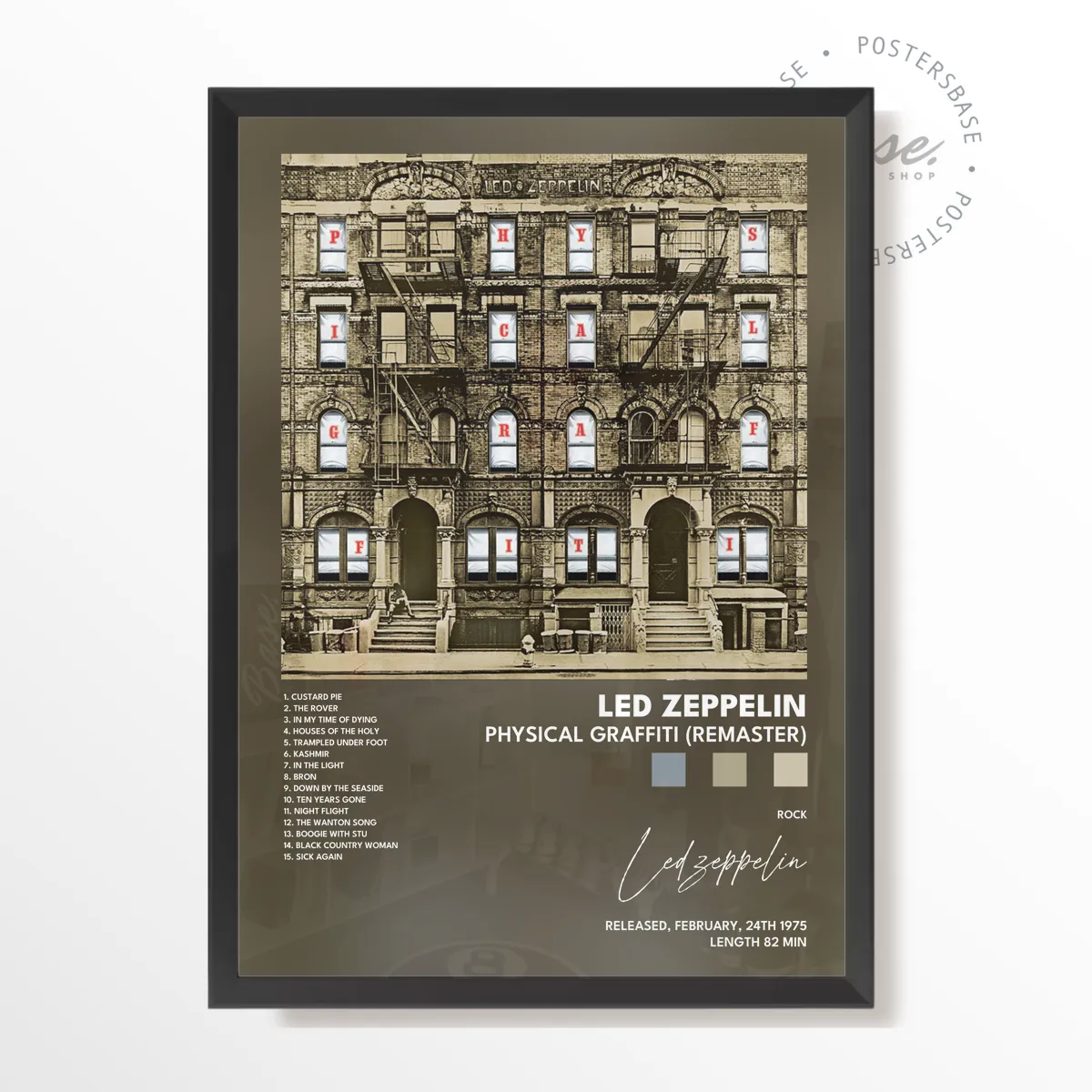
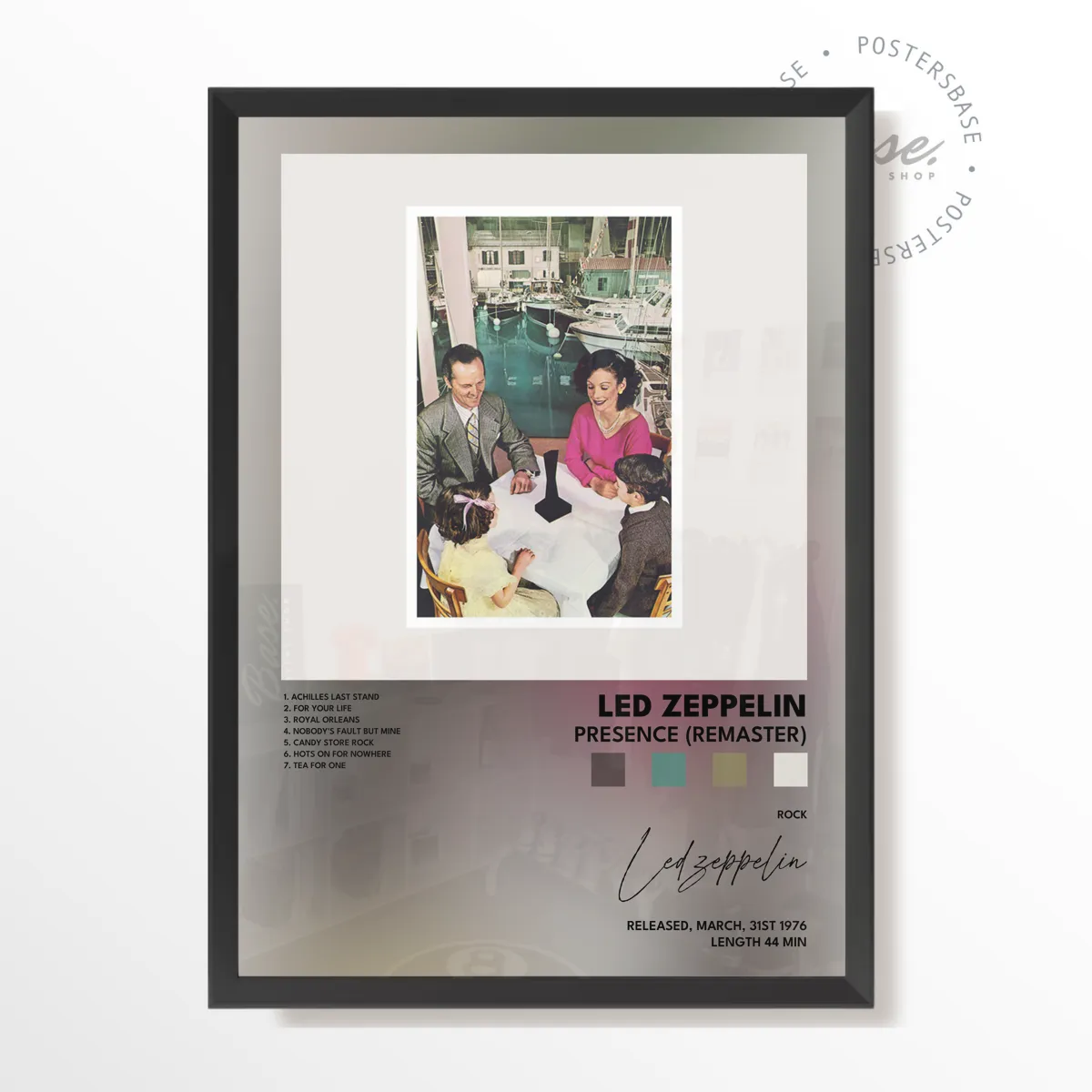
Physical Graffiti is a double album wrapped in one of design's great tricks. Peter Corriston photographed two New York tenements at 96 and 98 St. Mark's Place, removed a floor so they fit the square, and die-cut the windows so the inner sleeves show through them. Slide the sleeves and the title, or a whole cast of characters, appears in the openings. The follow-up, Presence, gave us "The Object", a black obelisk that Hipgnosis dropped into ordinary family photographs to suggest the band's silent force and presence. The design earned a Grammy nomination.
The Final Chapter (1982 to 2012)
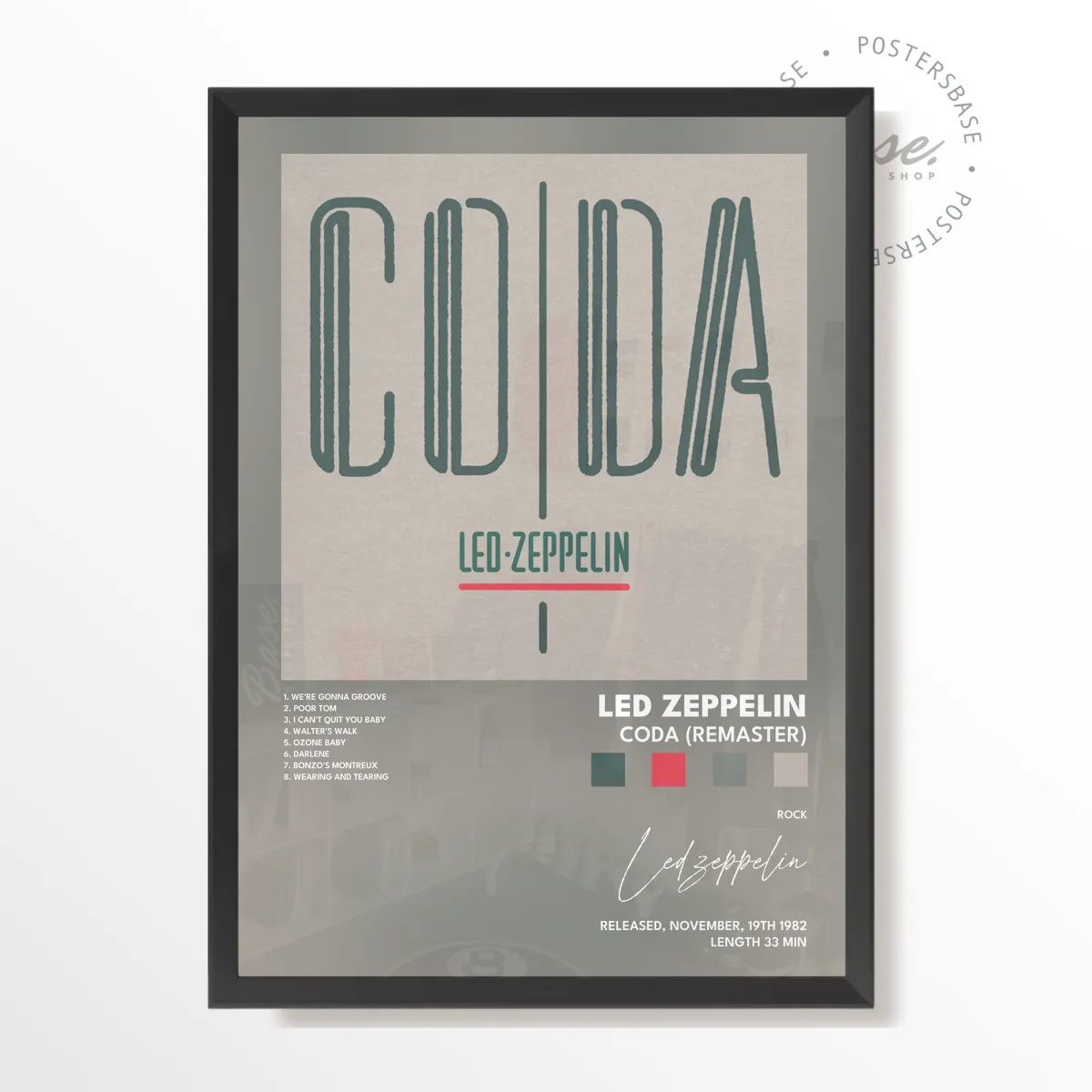
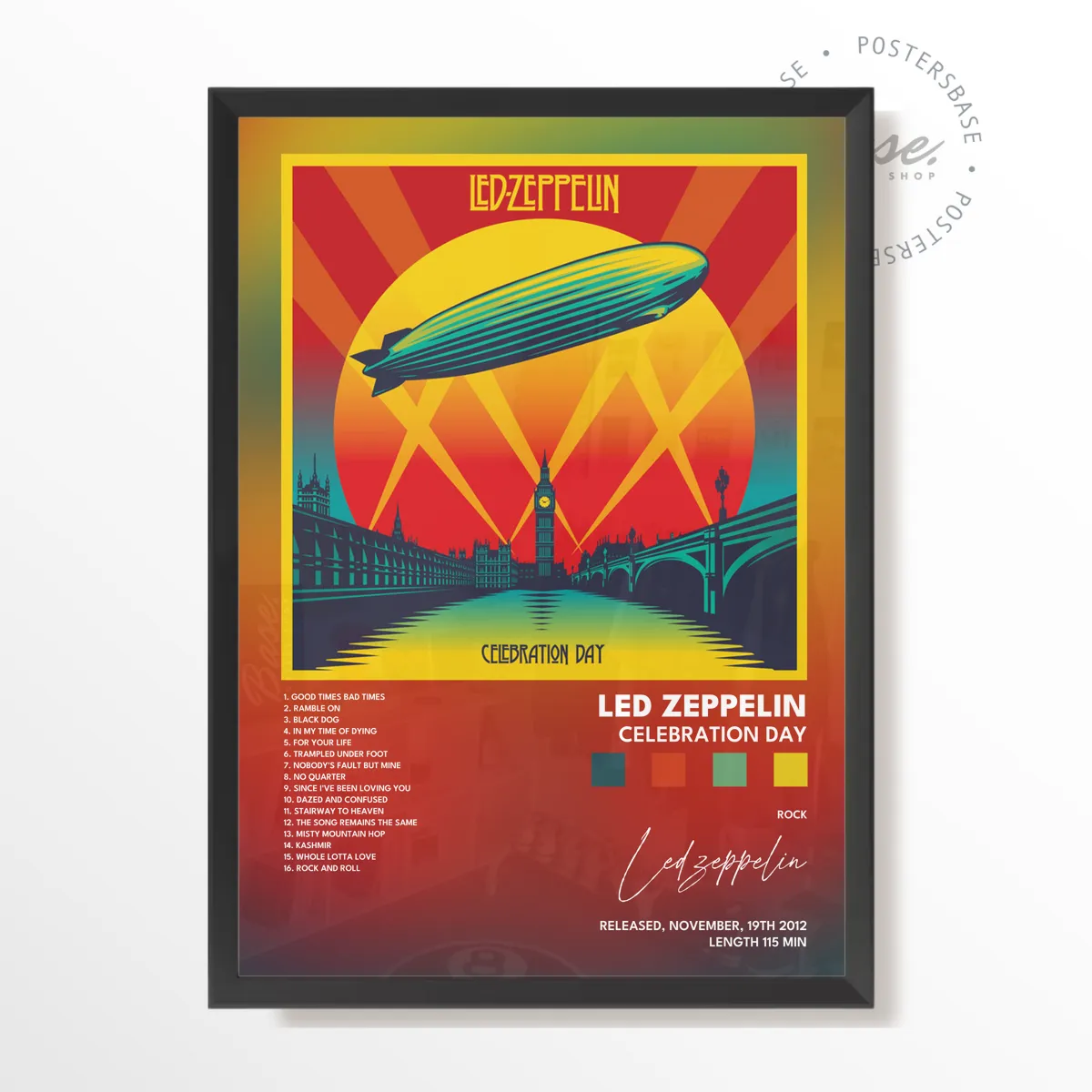
After John Bonham's death in 1980 the band closed the book with Coda, a title that names the passage ending a musical piece. It gathered vault tracks and outtakes from across twelve years, and its sleeve was the last Led Zeppelin cover Hipgnosis ever made. Decades later, Celebration Day captured the one-off 2007 reunion at London's O2 Arena, a tribute concert for Atlantic founder Ahmet Ertegun, with Jason Bonham on his father's drum stool. The show drew a reported 20 million ticket requests.
Sizes and framing
Every print comes in standard European sizes from A4 up to A1, so you can pace a small desk piece or anchor a whole wall with a large statement. A4 and A3 suit a shelf or a tight cluster, while A2 and A1 carry a room on their own. Choose unframed to slot into your own frame, or add a gallery frame in black, white or oak with a protective finish that arrives ready to hang. All artwork is printed on heavyweight, museum-grade paper with archival inks, so blacks stay deep and the brown of the Bomber or the red of a symbol reads true for years to come.
Building a gallery wall
Zeppelin covers were built for repetition. Hang II, III and IV in a tight row of matching A2 frames for a run that reads as one story, or centre a large A1 Physical Graffiti and flank it with smaller Presence and Coda prints. Mixing the sepia of II with the stark white of IV and the brick tones of Physical Graffiti gives a wall real depth without clashing. Keep the frame colour and the mat width consistent, and let the artwork carry all the variety.