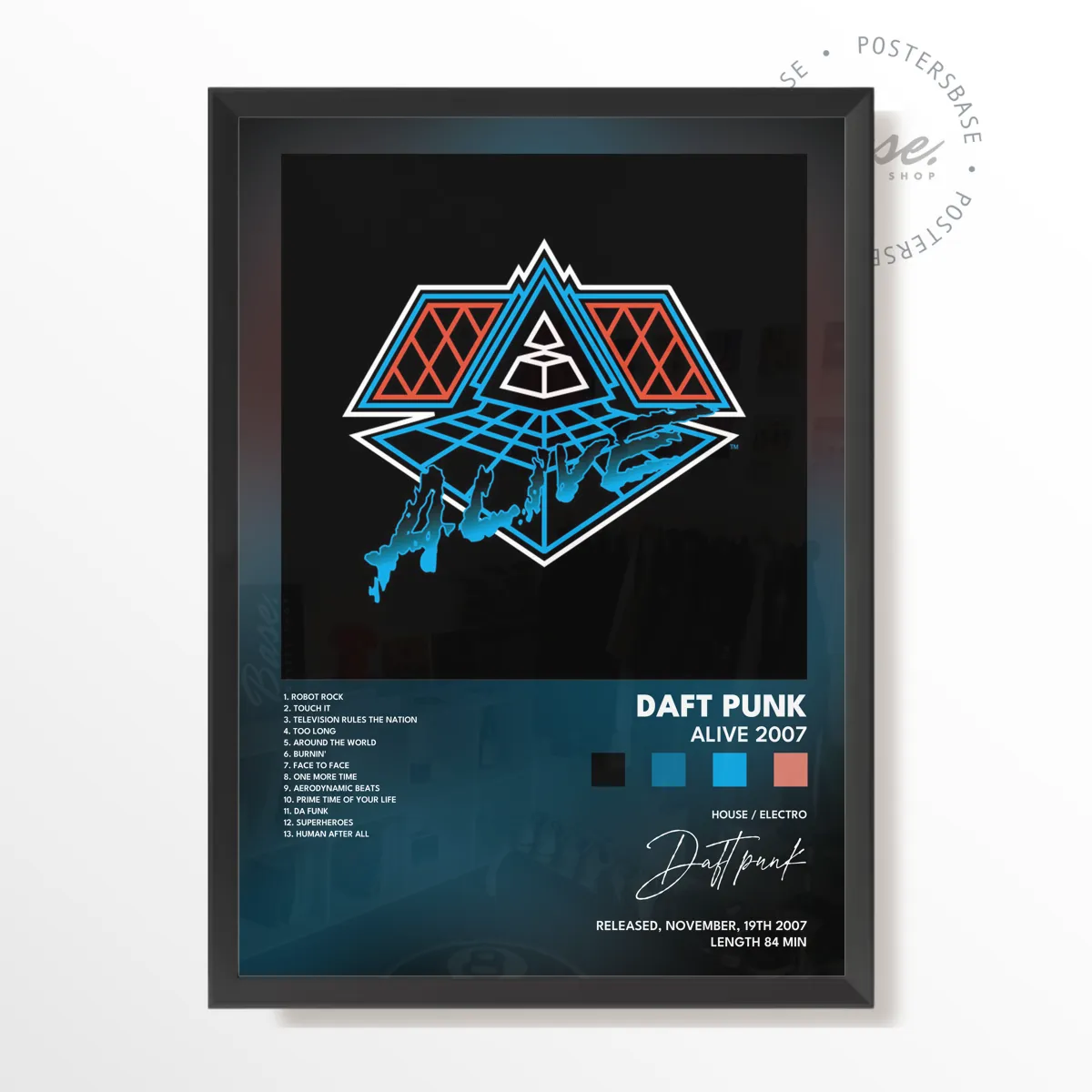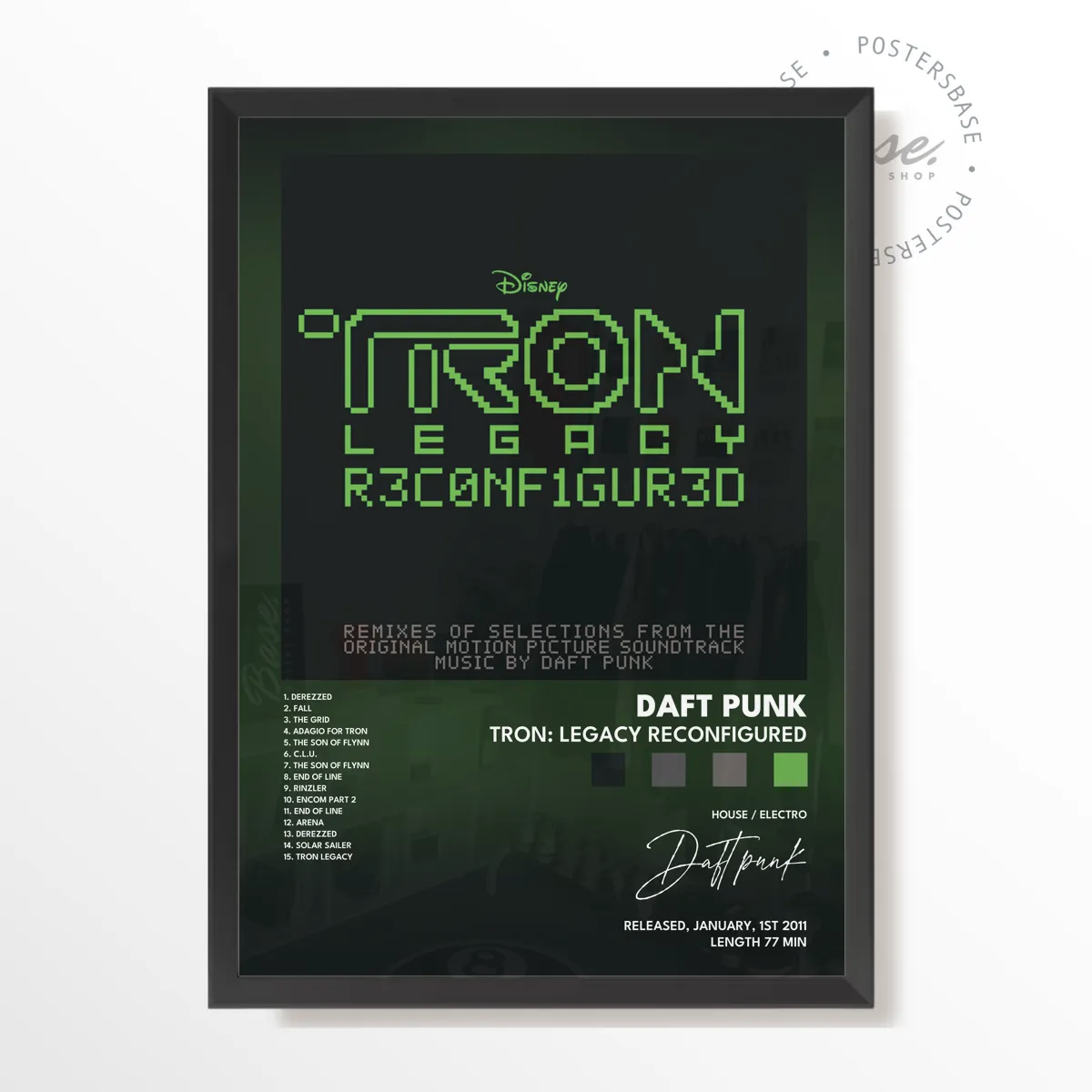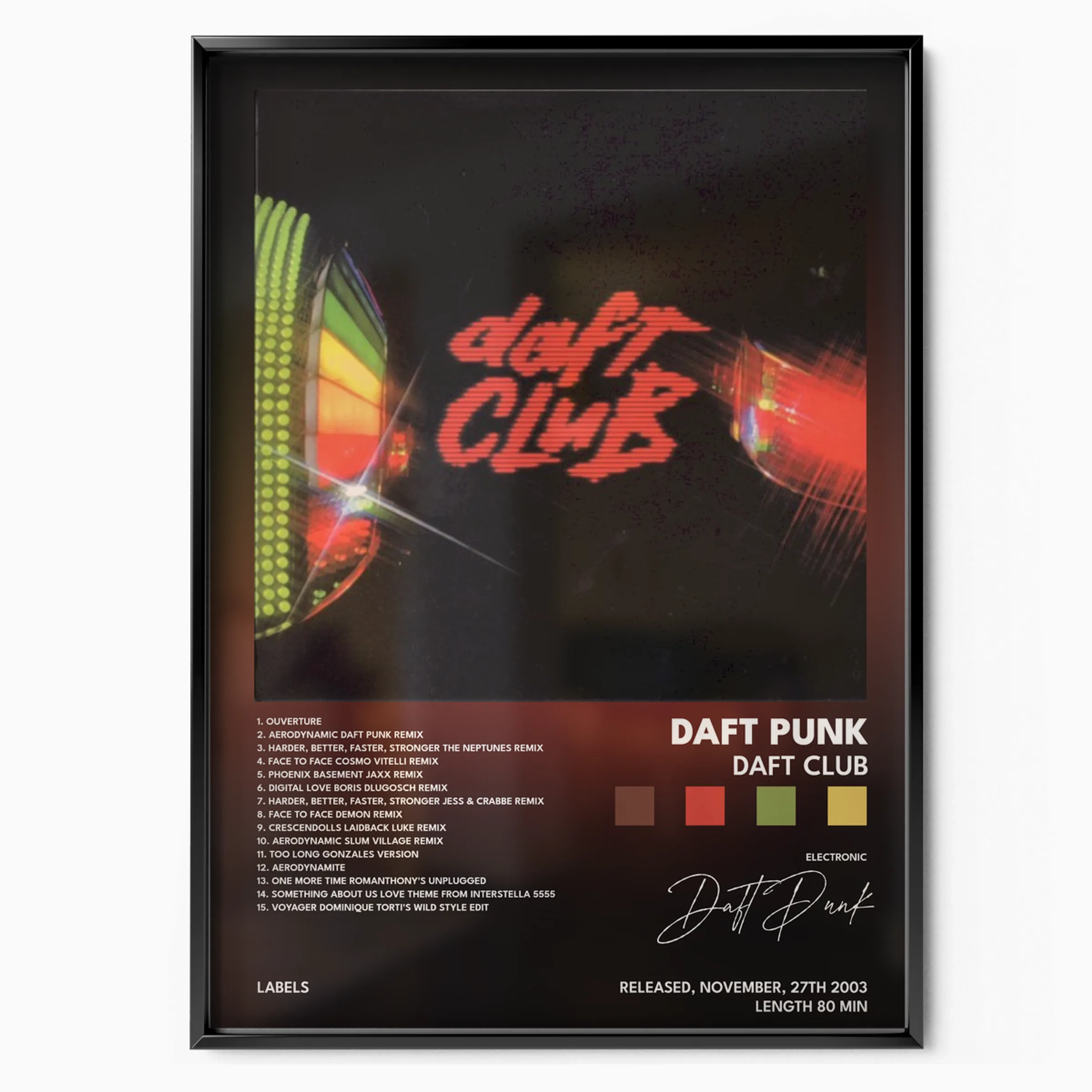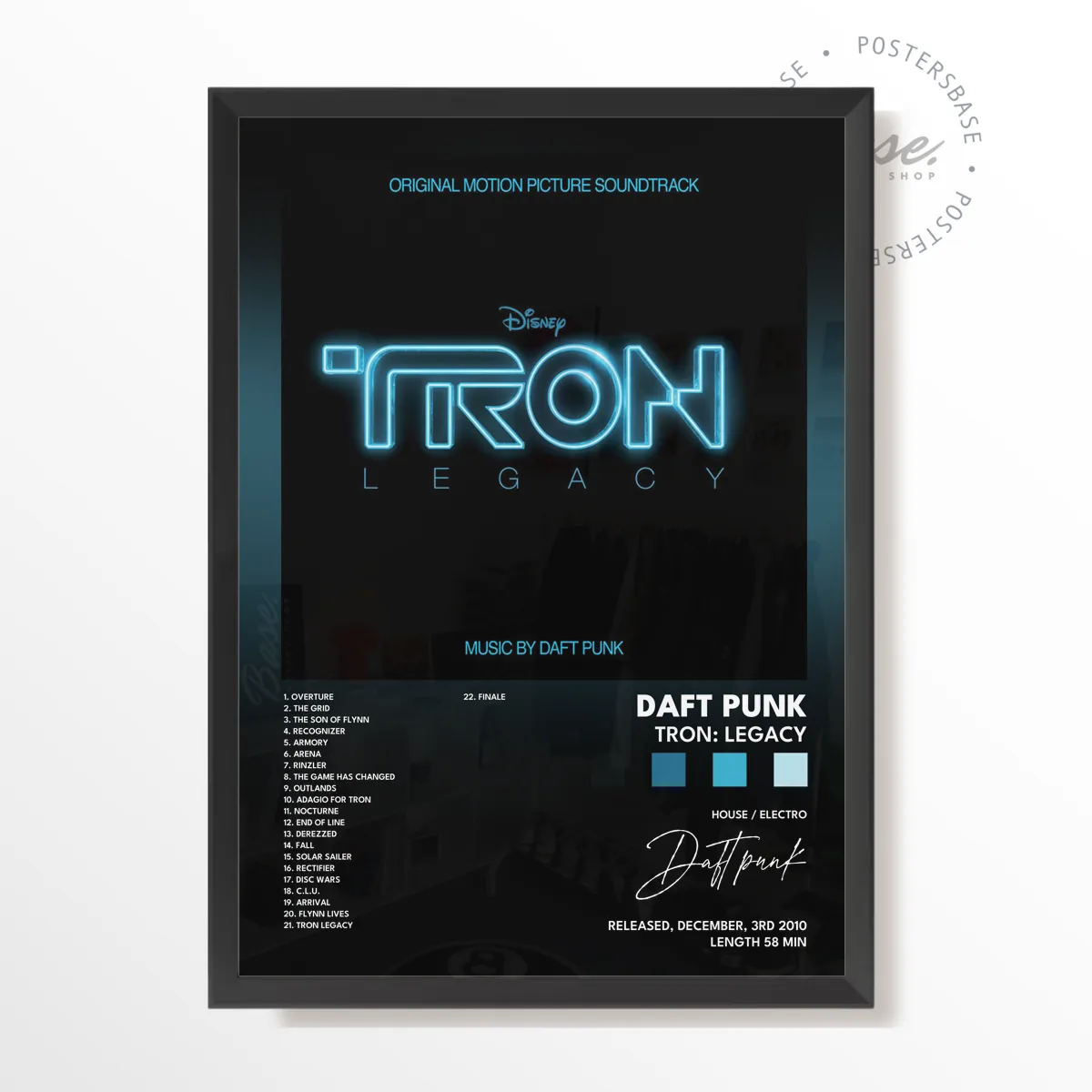
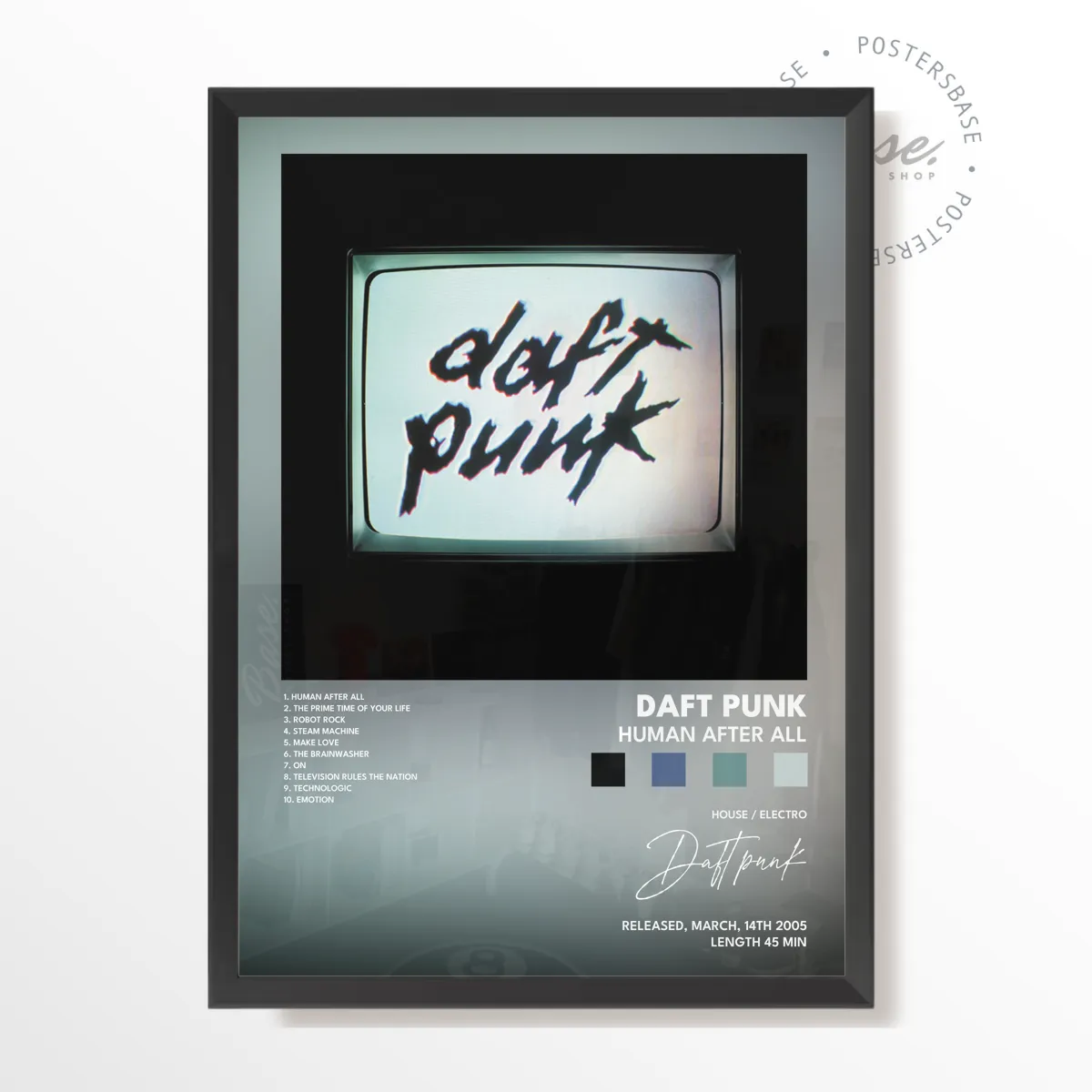
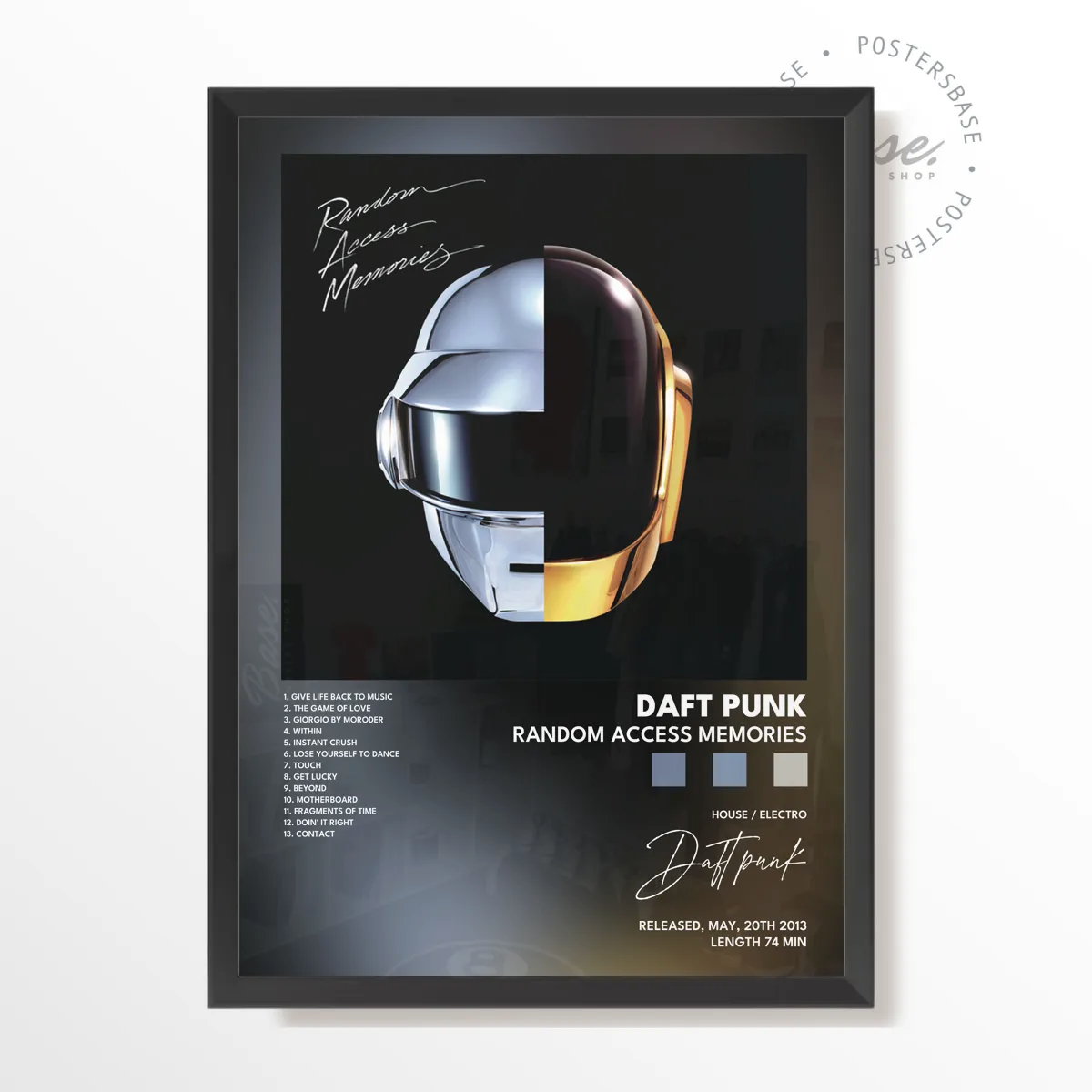
Few acts ever built a visual identity as tight as Daft Punk. Thomas Bangalter and Guy-Manuel de Homem-Christo hid their faces behind robot helmets and let the music and the artwork carry the story. Over four studio albums across sixteen years, the French duo moved from raw bedroom house to lush analog disco, and each cover became an icon of its moment. That graphic clarity is exactly why these sleeves translate so well to the wall. This collection gathers all four records, in order, so you can trace the whole arc.
1997, the bedroom beginnings
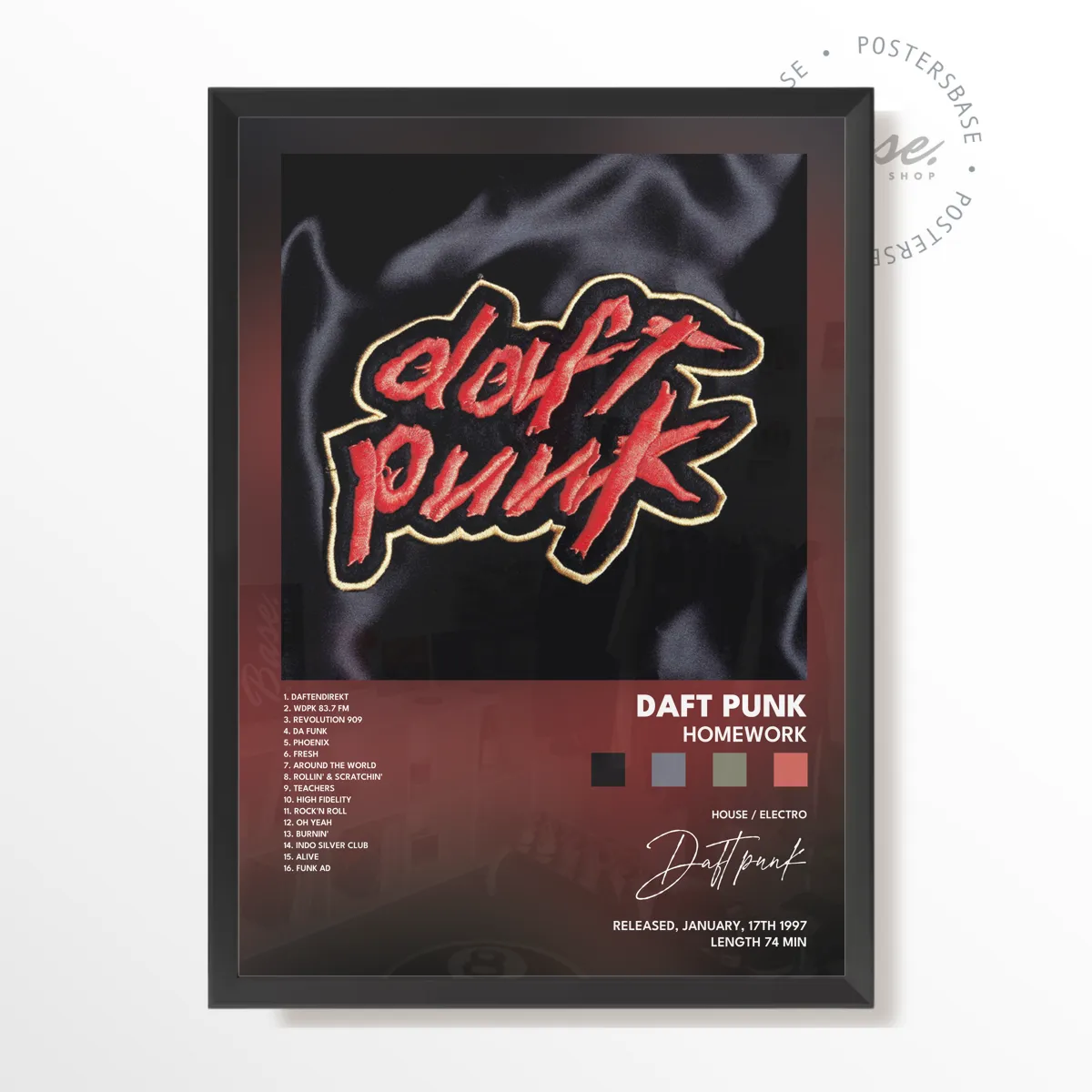
Homework arrived in January 1997 on Virgin Records and brought worldwide attention to French house. The duo never set out to make an album. They recorded a run of singles over roughly five months in a home studio, then decided the material was strong enough to stand together. The title nods to that bedroom setup and to the older records they studied beforehand. Da Funk rode a bouncy funk guitar, and Around the World became a global club anthem that hit number one on dance charts in several countries. Homework charted in fourteen countries, and its bold logo on a plain field still reads cleanly at any size.
2001 to 2005, machines and melody
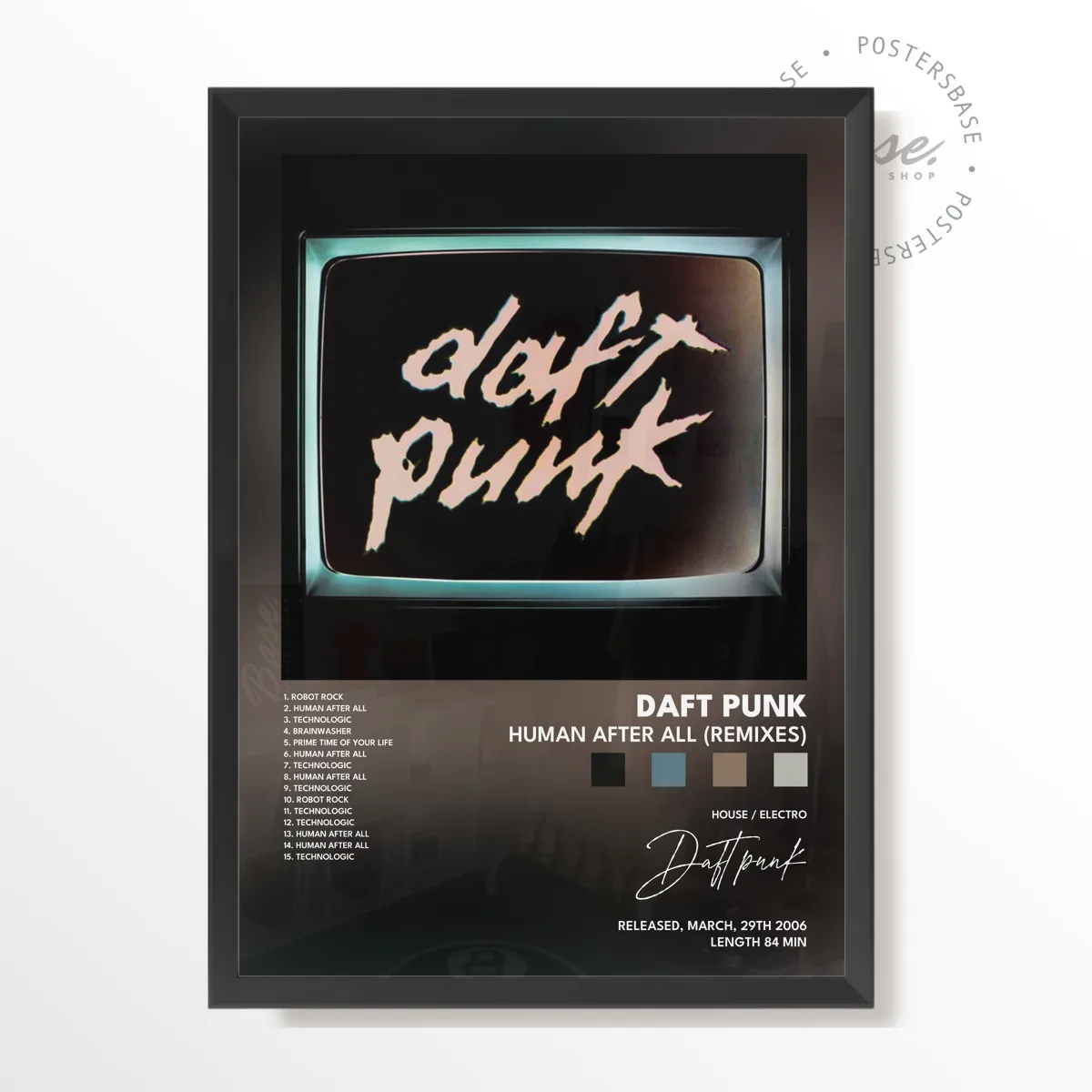
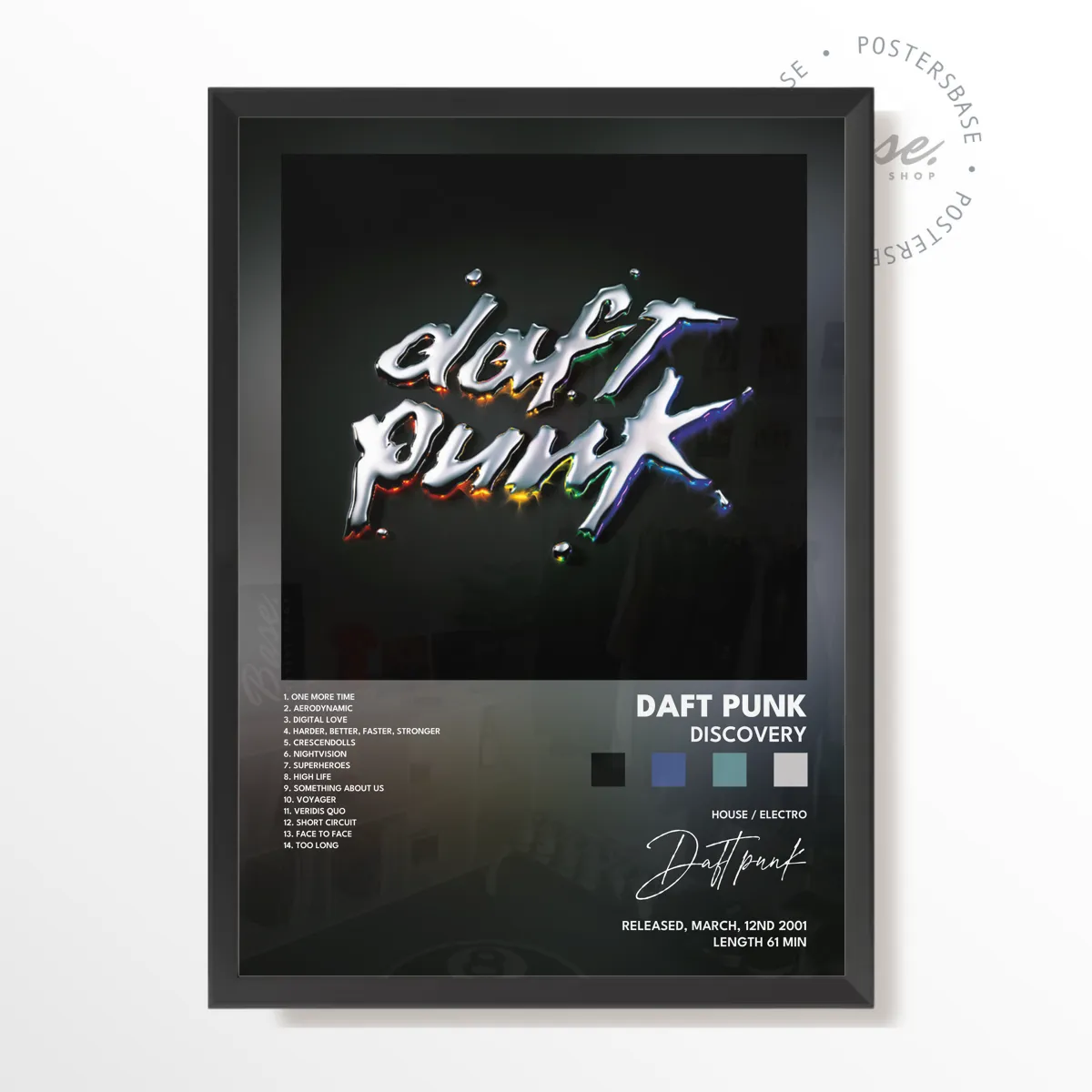
Discovery followed in 2001 and swapped gritty techno for vintage disco, garage house, and synthpop. It carried One More Time, Digital Love, Aerodynamic, and Harder, Better, Faster, Stronger. The pair later turned the entire album into Interstella 5555, a dialogue free animated film supervised by Leiji Matsumoto and produced by Toei Animation. Human After All arrived in 2005 and pushed the opposite way. Recorded in about six weeks, it was minimal, repetitive, and thick with guitars and raw electronics. Tracks like Robot Rock and Technologic divided critics, yet the stark palette makes a bold, confident print on a wall.
2013, the grand finale
Random Access Memories closed the catalog on May 17, 2013. Daft Punk set most electronics aside and hired session players to chase the analog warmth of 1970s and 1980s studios, reaching for the feel of classic records by the Eagles, Fleetwood Mac, and Pink Floyd. Collaborators included Nile Rodgers, Giorgio Moroder, Paul Williams, Julian Casablancas, and Pharrell Williams. Get Lucky reached number two on the Hot 100, their first American top ten, and the album became their first Billboard 200 number one. At the 2014 Grammys it won Album of the Year, while Get Lucky took Record of the Year. The glossy gold helmet artwork is the collection's showpiece.
Sizes and framing
Every poster prints on museum grade paper with rich, accurate color and deep blacks, which matters for artwork this graphic. Choose A4 for a desk or shelf, A3 for a focal accent, A2 for real presence, or A1 for a true statement piece. Order unframed to slot into a frame you already own, or framed and ready to hang straight from the box. The clean geometry of these covers holds up beautifully as they scale up, so do not be shy about going large with the finale.
Building a gallery wall
These four covers were made to hang together. Run them left to right in release order for a visual timeline of the duo, or mix sizes for rhythm, with Random Access Memories at A1 as the anchor and the other three at A3 around it. The shared robot identity keeps the grouping coherent even across very different palettes, from plain type to red, black, and gold. Pair them with other electronic acts in this store for a wider dance music wall, and keep even margins between frames for a clean gallery finish.