
David Bowie Posters: Iconic Rock Art Collection
Every David Bowie album cover, era by era
Glam era1972-1973
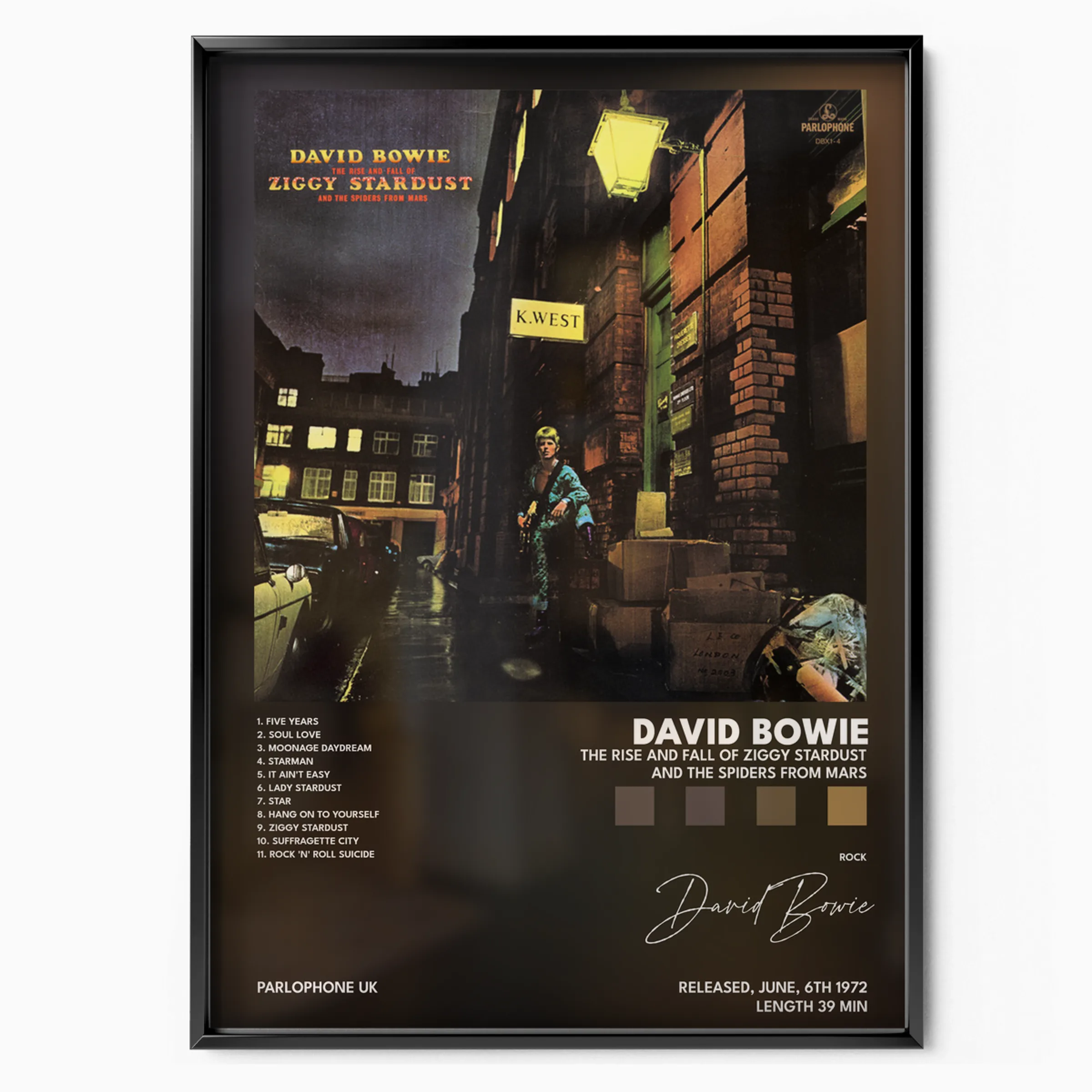
- 1972The Rise and Fall of Ziggy Stardust and the Spiders from Mars The concept album that introduced Ziggy Stardust and made Bowie a glam rock icon.
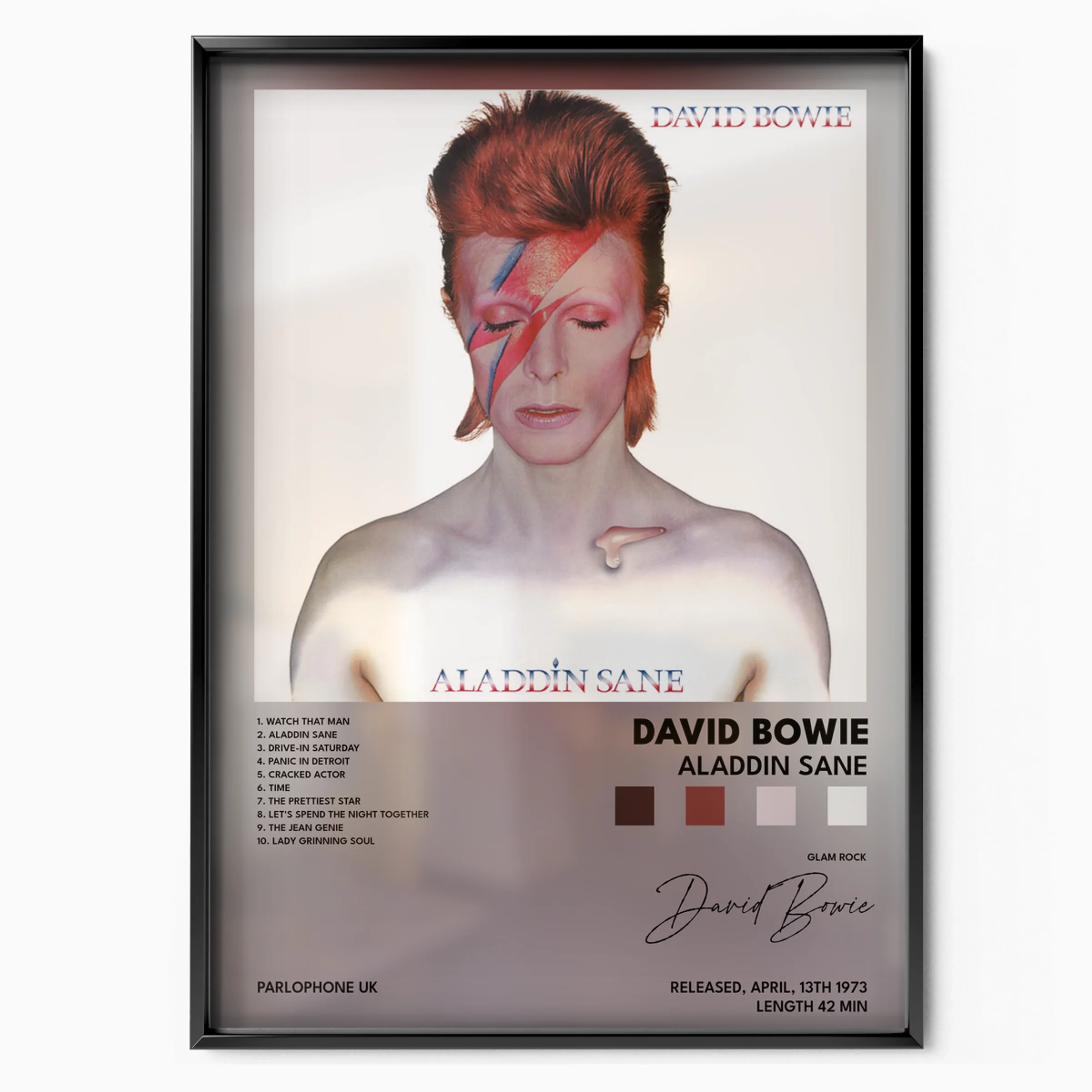
- 1973Aladdin Sane Home of the lightning bolt portrait, one of the most recognisable images in music.
Berlin era1977
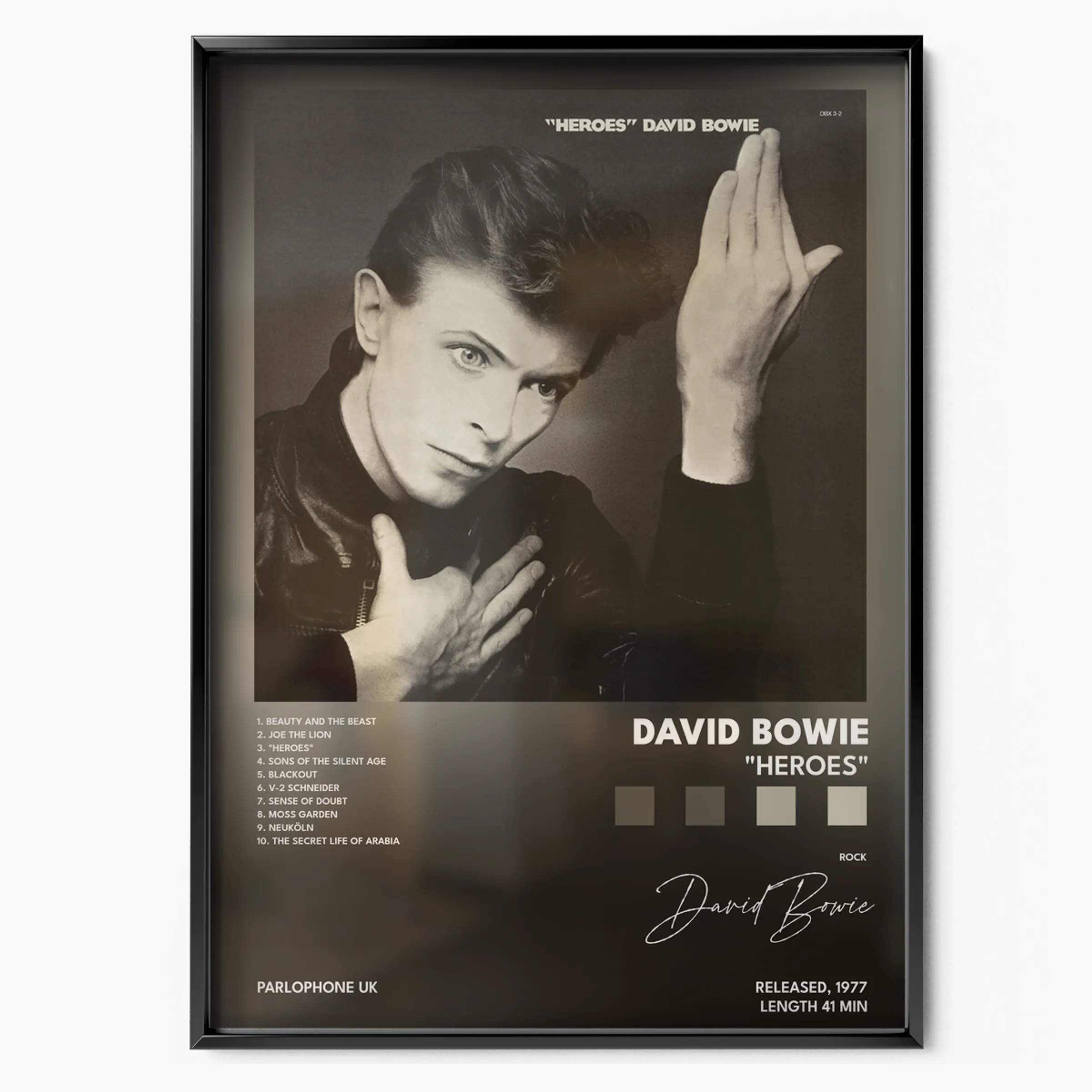
- 1977Heroes Art rock from the Berlin Trilogy, made with Brian Eno, with a stark angular cover.
Pop era1983
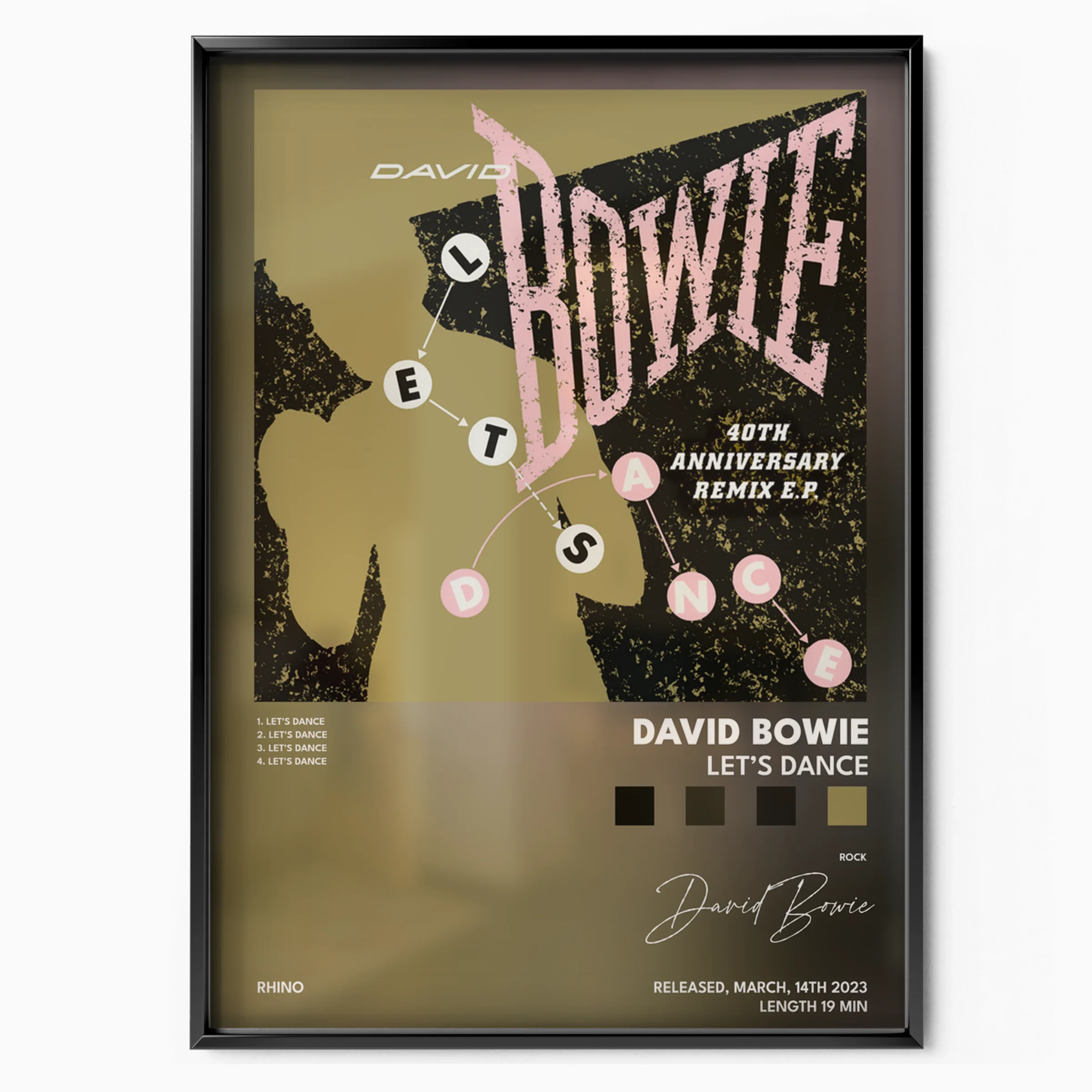
- 1983Let's Dance Produced by Nile Rodgers, a huge commercial hit that made Bowie a 1980s pop star.
David Bowie spent a career refusing to stand still, and this poster collection follows the many faces he wore across three restless decades. From the glam theatre of the early 1970s to the art rock of Berlin and the global pop of the 1980s, every sleeve here marks a deliberate reinvention. These are museum-grade prints of the album covers that defined those chapters, made for fans who want the artwork on the wall rather than tucked inside a record shelf.
The characters he became
Bowie built entire personas to inhabit. The Rise and Fall of Ziggy Stardust and the Spiders from Mars introduced Ziggy, the doomed alien rock star, while Aladdin Sane pushed the theatrics further with the famous lightning bolt across his face. Hanging these two side by side reads like a short story about fame and its cost.
Berlin and the art rock turn
Heroes came out of Bowie's Berlin period, made with Brian Eno and producer Tony Visconti. Its stark, angular cover portrait mirrors the record's colder, more experimental sound. It is one of the most quietly powerful images in his catalogue and anchors any wall built around his later work.
The pop breakthrough
Let's Dance, produced by Nile Rodgers, turned Bowie into a stadium-filling pop star and became one of his biggest commercial successes. Its bright, confident cover sits in sharp contrast to the Berlin years, which is exactly why the two look so striking near each other.
Sizes and framing
Every poster is printed to order in several sizes, so you can scale a single sleeve to fit a mantel or blow one up as a room's centrepiece. The paper takes framing well behind glass or in a clip frame, and the neutral borders suit both black and natural wood. Pick a size that leaves a little breathing room around the image and the artwork does the rest.
Building a gallery wall
Bowie rewards a grid. Because his covers span glam colour, monochrome portraiture and clean 1980s pop, a run of four prints tells a visual timeline without a single word. Keep the frames identical and the spacing even, then let the shift in style carry the eye from Ziggy through to Let's Dance.
Browse every David Bowie poster in this collection (4)
Every poster in this collection is made to order, printed only once you place it. Nothing sits in a warehouse fading under strip lights, which means the copy that reaches you is fresh and sharp.
We print on museum-grade paper chosen for depth of colour and longevity. The stock holds fine detail in the darker sleeves like Heroes and keeps the saturated tones of Let's Dance from going flat, so the artwork looks the way it was meant to look rather than washed out.
Because each print is produced individually, allow a little extra time before dispatch. The wait is the trade for a poster built to last on your wall for years, not a mass run rushed off a shelf.
Good to know about David Bowie
- David Bowie was an English singer and songwriter whose career was built on constant reinvention rather than a single fixed style.
- The Rise and Fall of Ziggy Stardust and the Spiders from Mars, released in 1972, introduced Ziggy Stardust, one of the most famous alter egos in rock history.
- Ziggy Stardust was conceived as a fictional alien rock star, and Bowie performed as the character on stage during the tour that followed.
- Aladdin Sane, released in 1973, is often described as Ziggy going to America, and its cover lightning bolt became a lasting visual shorthand for Bowie himself.
- Heroes, released in 1977, was part of Bowie's Berlin Trilogy, a run of albums made largely in the German city with collaborator Brian Eno.
- The Berlin period saw Bowie move away from glam theatrics toward a colder, more experimental art rock sound.
- Let's Dance, released in 1983, was produced by Nile Rodgers of the band Chic, whose funk and disco touch shaped its sound.
- Let's Dance became one of Bowie's biggest commercial successes and pushed him firmly into mainstream 1980s pop stardom.
- Across these four records Bowie moved through glam rock, art rock and pop, which is why his album covers work so well as a visual timeline.
- Bowie treated the album cover as part of the performance, using each sleeve to present a new persona rather than a simple portrait.


