
Few bands turned geek-rock into a wall-art aesthetic quite like Weezer. Since forming in Los Angeles in 1992 around Rivers Cuomo, Patrick Wilson, Matt Sharp, and Jason Cropper, the band has built a run of self-titled records and cult favorites whose sleeve art is instantly readable from across a room. That is exactly what makes Weezer posters so satisfying to hang: bold single-color backdrops, deadpan band photos, and cover concepts that fans recognize in a heartbeat. Whether you came in through the radio hits or the deep cuts, there is a print here for the era that shaped you. Album art like this rewards being blown up big: what looks tidy on a CD spine becomes a graphic centerpiece at poster scale, and the band's habit of self-titling its records means the covers double as a decade-by-decade timeline.
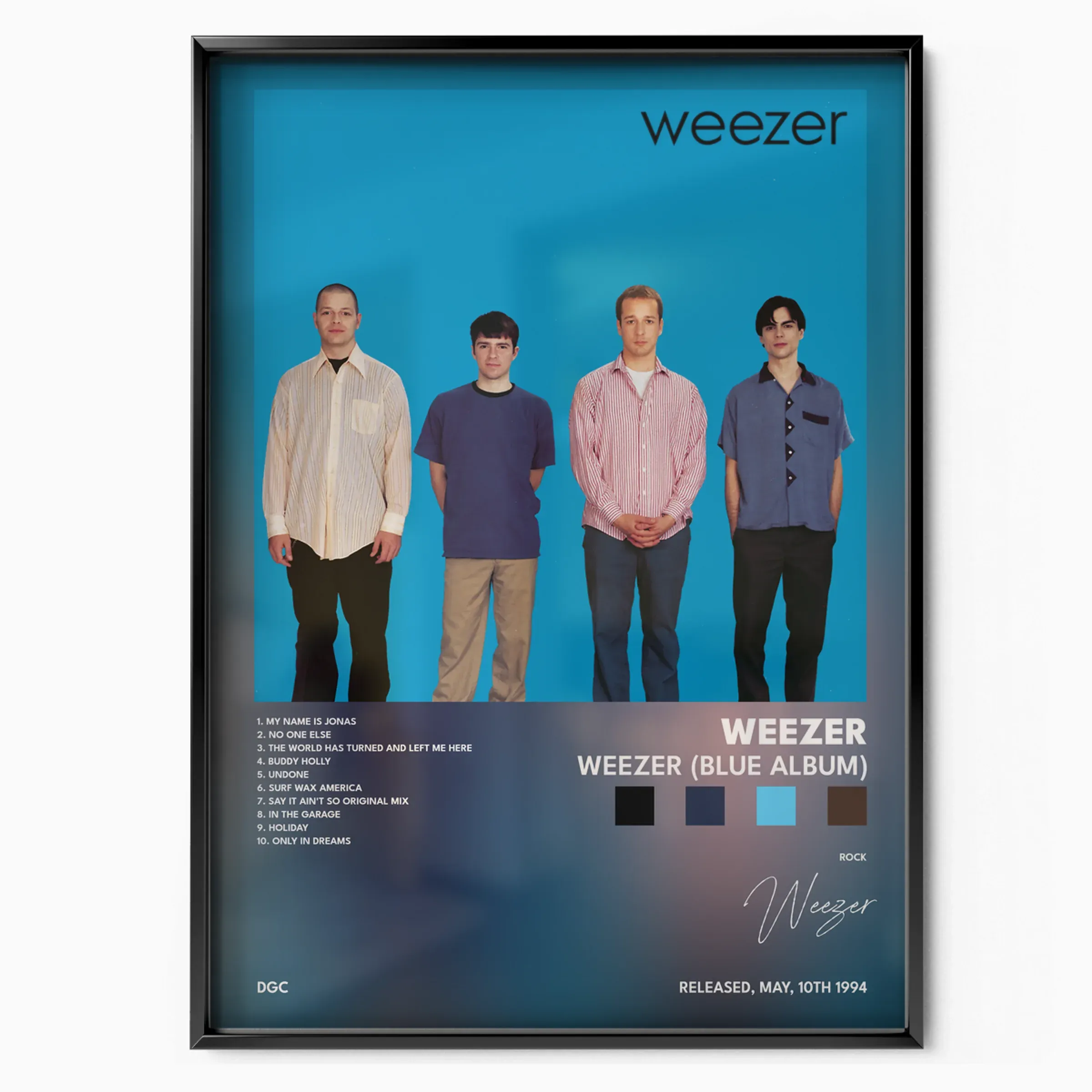
The story starts with the Blue Album, the 1994 debut produced by Ric Ocasek of the Cars and recorded at Electric Lady Studios in New York. It debuted at number 16 on the Billboard 200 and went triple platinum, powered by "Undone - The Sweater Song," "Buddy Holly," and "Say It Ain't So." The Blue Album cover, with its four members lined up against a plain blue wall, is one of the cleanest designs in nineties rock, and it reads beautifully at a large size. Hang it and you are nodding to the Spike Jonze "Buddy Holly" video, the Happy Days homage that swept the 1995 MTV Video Music Awards.
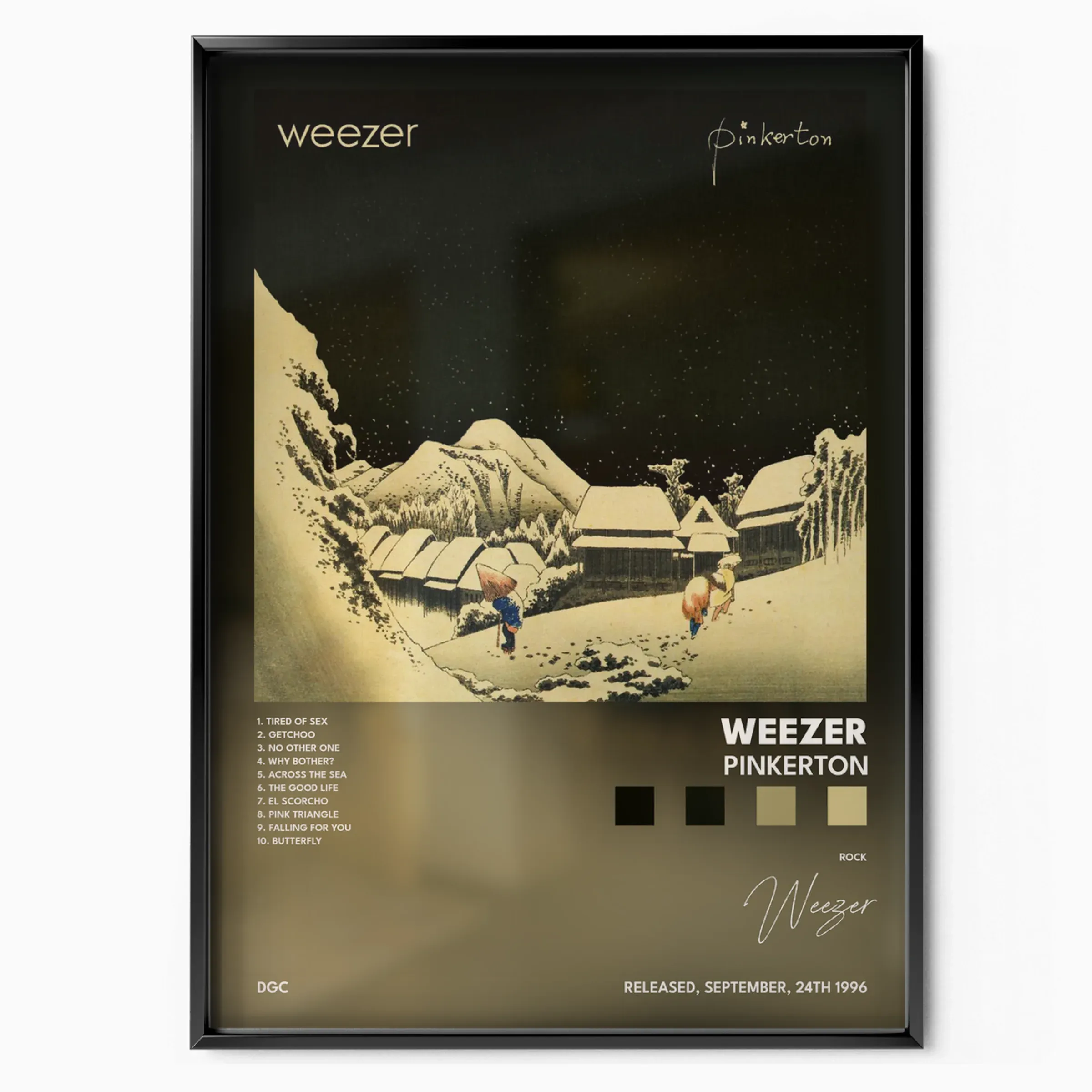
Then came Pinkerton in 1996, the raw, confessional record Cuomo wrote largely while studying at Harvard. Named after a character in Puccini's opera Madama Butterfly, it was savaged on release and later reclaimed as a masterpiece by many of the same critics and fans who once dismissed it. Its Japanese-print inspired sleeve makes a Pinkerton poster the connoisseur's pick, the one that tells visitors you were there for the album's difficult second act. It is the print that starts conversations with the people who read the liner notes twice.
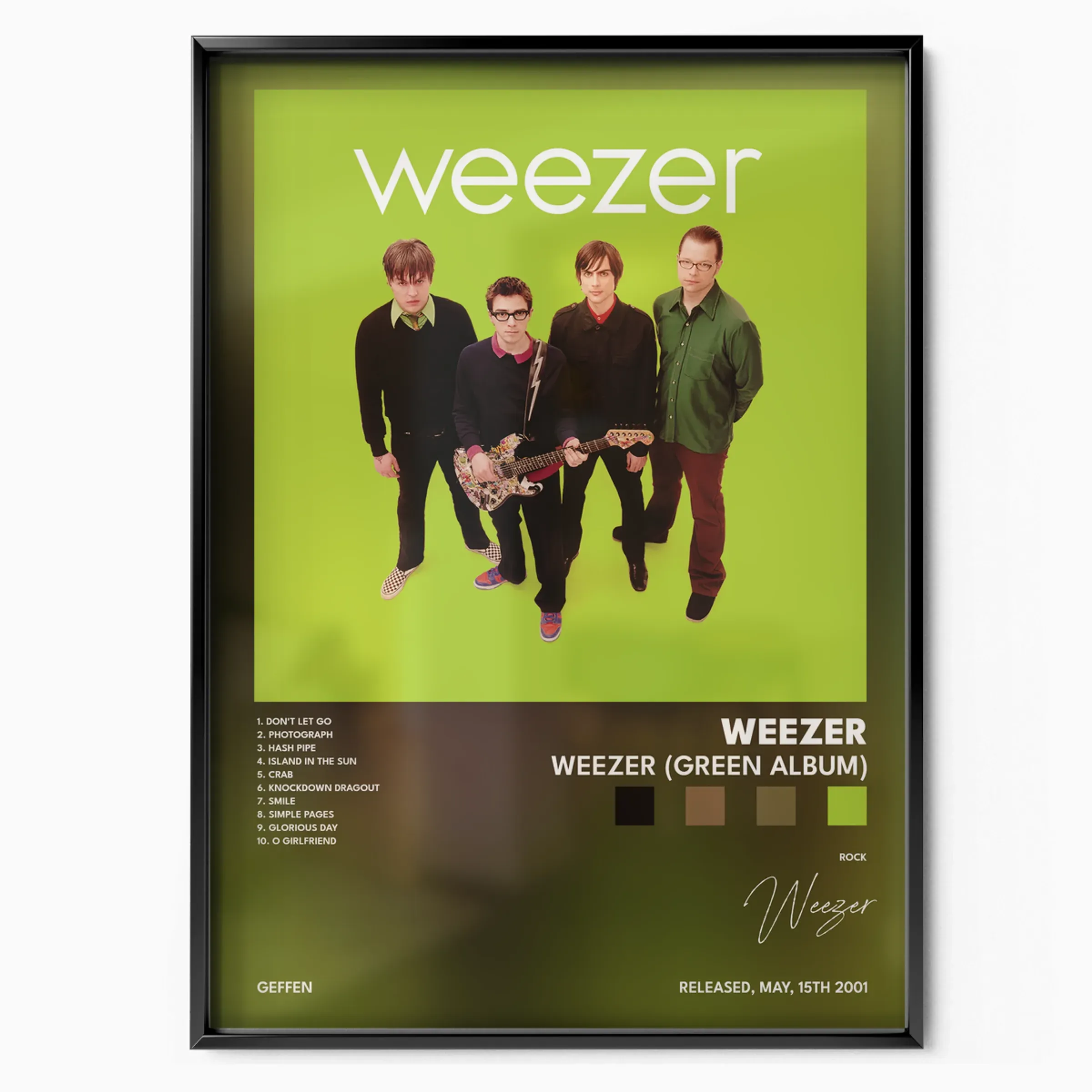
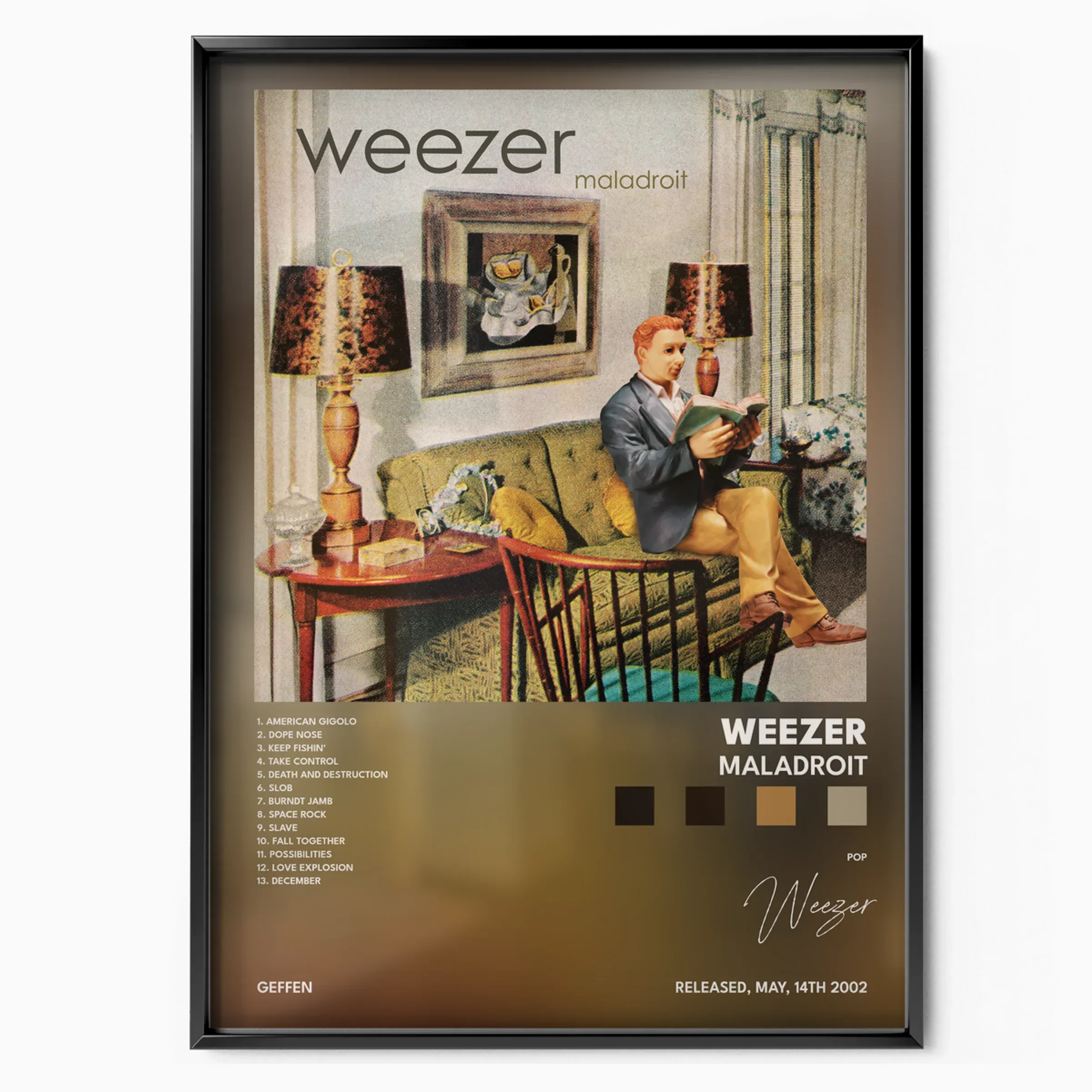
The 2000s brought Weezer roaring back to radio. The Green Album arrived in 2001, again produced by Ocasek, debuting at number 4 on the Billboard 200 with "Hash Pipe" and "Island in the Sun." Its lime-green band shot is the natural companion to the Blue cover, and the two look terrific side by side. Maladroit followed in 2002, a scrappier, guitar-forward record for fans who love the band at its loudest, and a Maladroit print brings a rougher energy to a shelf full of glossier sleeves.
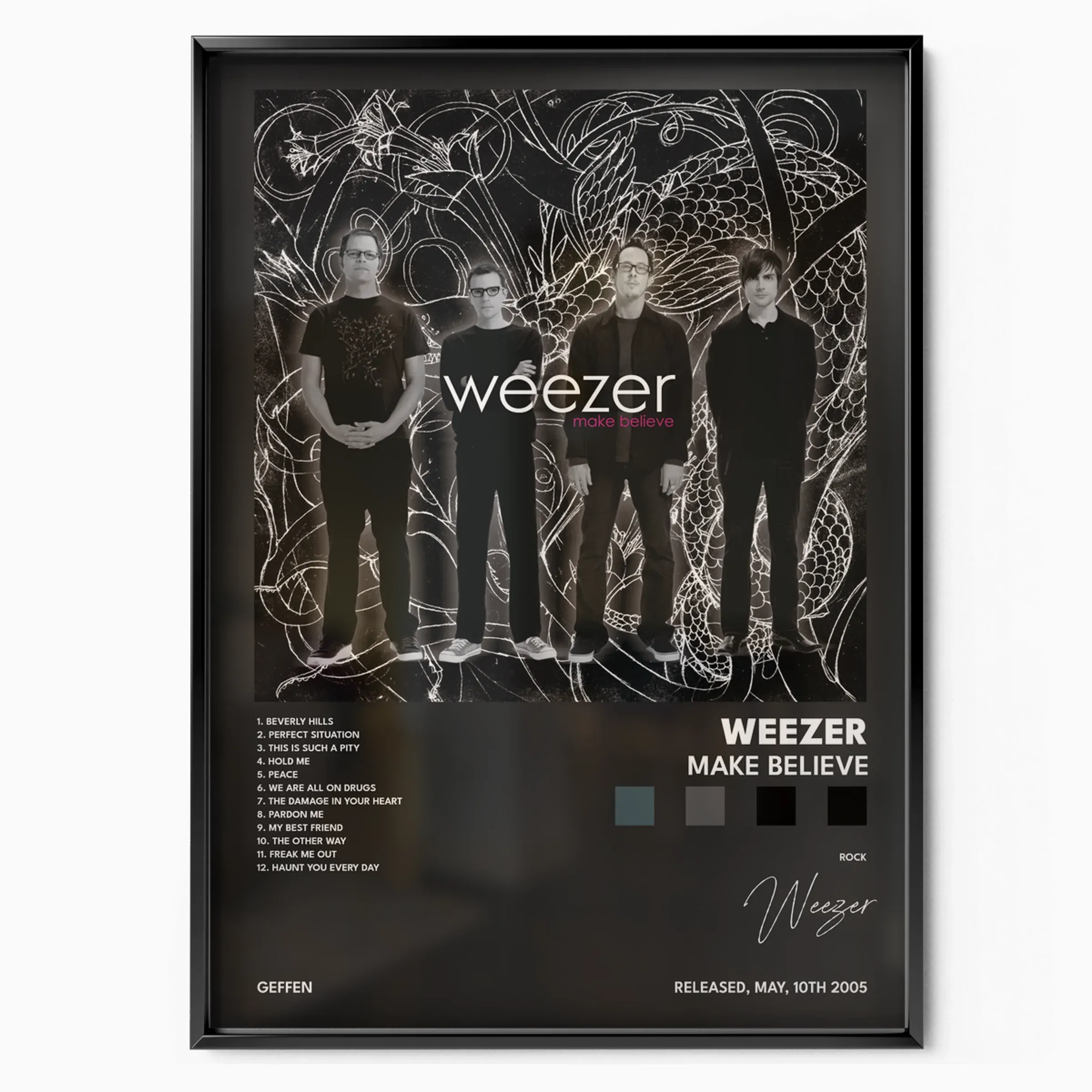
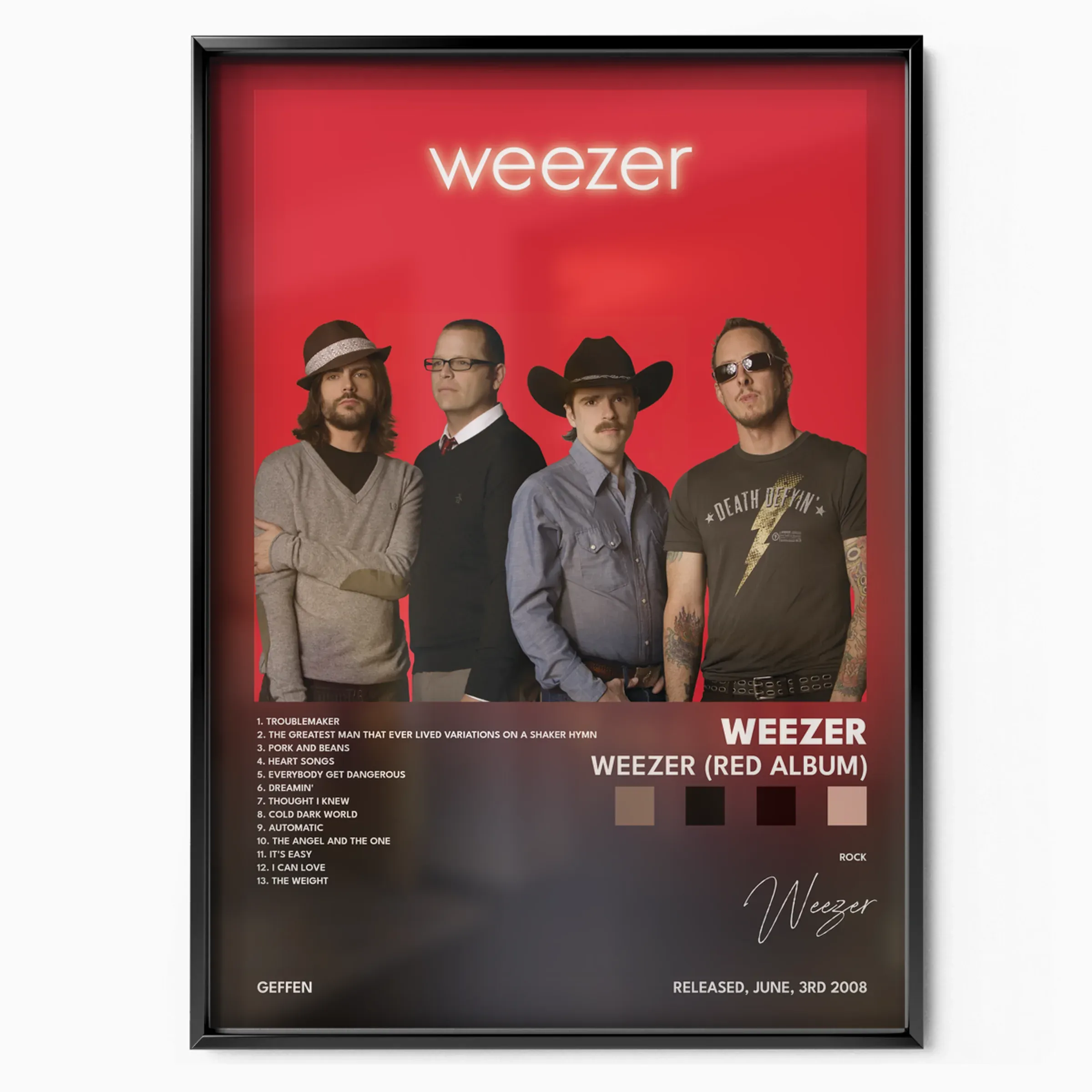
By 2005, Make Believe delivered "Beverly Hills," Weezer's first number one on the Modern Rock chart and a top ten hit on the Billboard Hot 100. The Red Album in 2008 pushed the band into playful, everyone-swaps-instruments territory, and its lead single "Pork and Beans" spent eleven weeks atop the Modern Rock chart with a video stuffed with internet in-jokes. A Red Album poster is a conversation starter for anyone who lived online in the late 2000s, and its warm red palette anchors a wall the way the Blue cover opens one. Together, Make Believe and the Red Album capture the years Weezer was inescapable on rock radio.
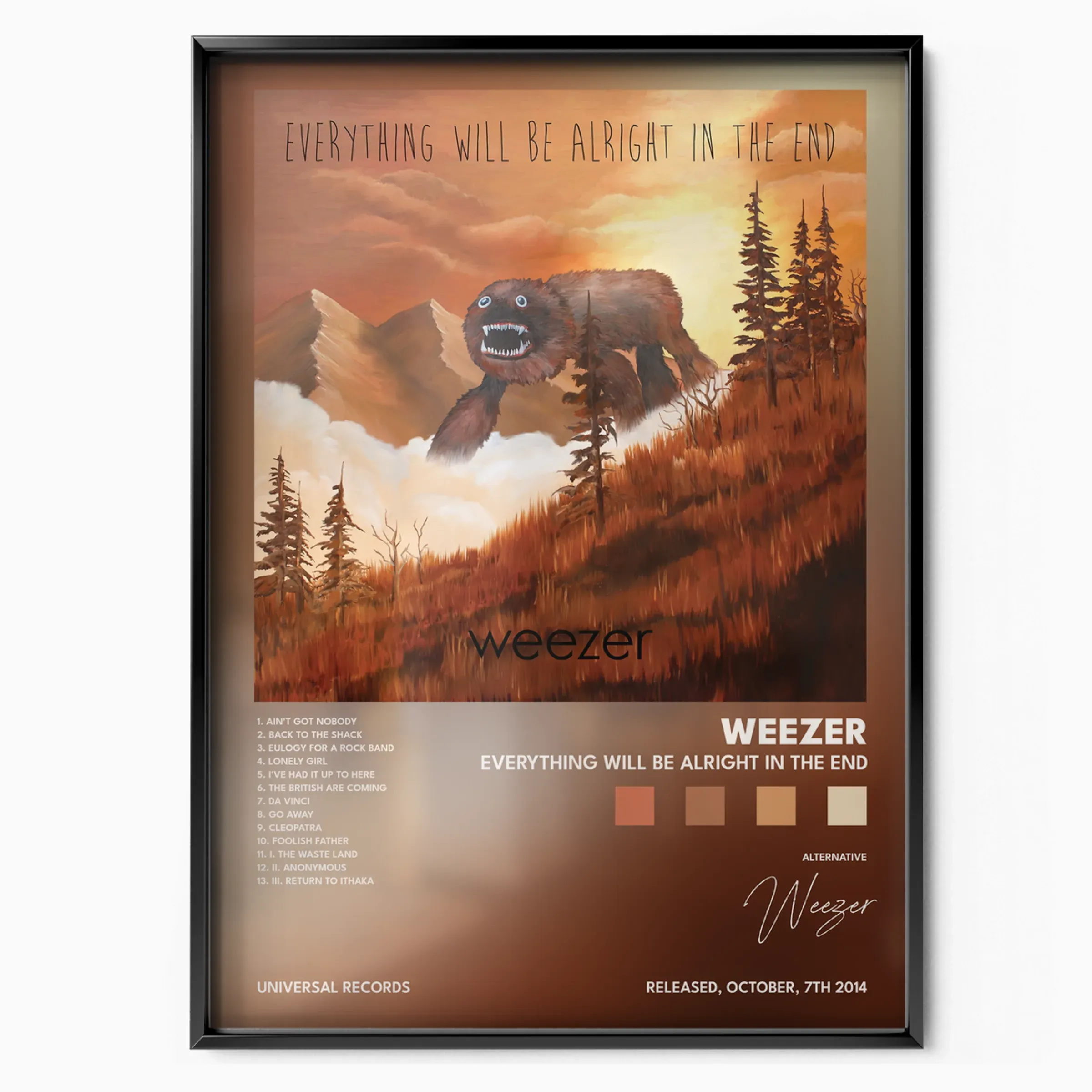
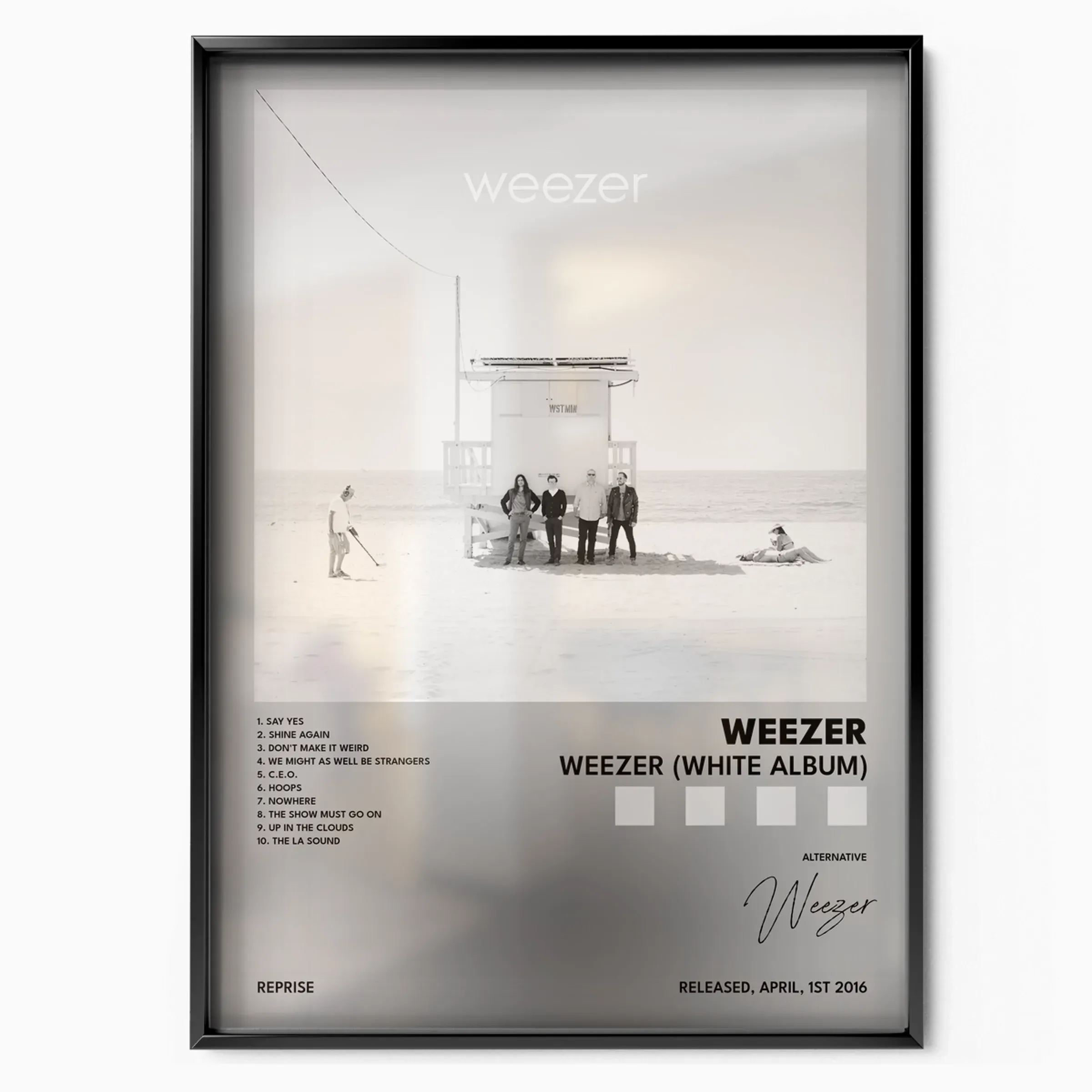
The 2010s revival gave collectors two of the band's most-loved sleeves. Everything Will Be Alright in the End, released in 2014, was hailed as Weezer's best-reviewed album since Pinkerton and returned the band to its guitar roots. Its title alone makes Everything Will Be Alright in the End a poster with a message, perfect above a desk. Two years later the White Album landed in 2016 as a sun-bleached tribute to the Beach Boys, all Santa Monica beach light and pared-back black-and-white photography. The White Album completes the color-coded set that Weezer fans love to line up: Blue, Green, Red, and White. Set the four self-titled sleeves next to a Pinkerton print and you have thirty years of the band on a single wall, from the awkward heartbreak of the nineties to the sunlit hooks of the comeback.
Every Weezer poster here is printed on museum-grade paper and offered in A4, A3, A2, and A1 sizes, so you can go from a small accent print to a full statement piece, framed or unframed to suit your wall. For a gallery-wall tip, lean into the band's color coding: run the self-titled covers in order, Blue Album, Green Album, Red Album, and White Album, in matching frames for a clean grid, then break the rhythm with a Pinkerton print off to one side as the deep-cut anchor. The result reads as a timeline of one of alt-rock's most quietly consistent bands.
However you build it, a Weezer wall is a low-key flex: instantly recognizable to anyone who knows the songs, and quietly graphic to everyone else. Pick the era that means the most to you, or collect the whole run, and give those famous sleeves the scale they deserve.