The Cure formed in Crawley, West Sussex, and played their first gig under that name at The Rocket pub on 9 July 1978. Robert Smith has been the one constant across every lineup since, dark eyeliner, red lipstick, and a crown of jet black hair intact. This collection is honest about its scope: it gathers the band's later catalogue, from the 1989 masterwork forward, rather than the early post punk records. If you came looking for Pornography or Three Imaginary Boys, they are not here yet. What is here is the run of albums where The Cure grew into stadiums, into grief, and into their strange second act.
The mature masterpiece (1989 to 1992)
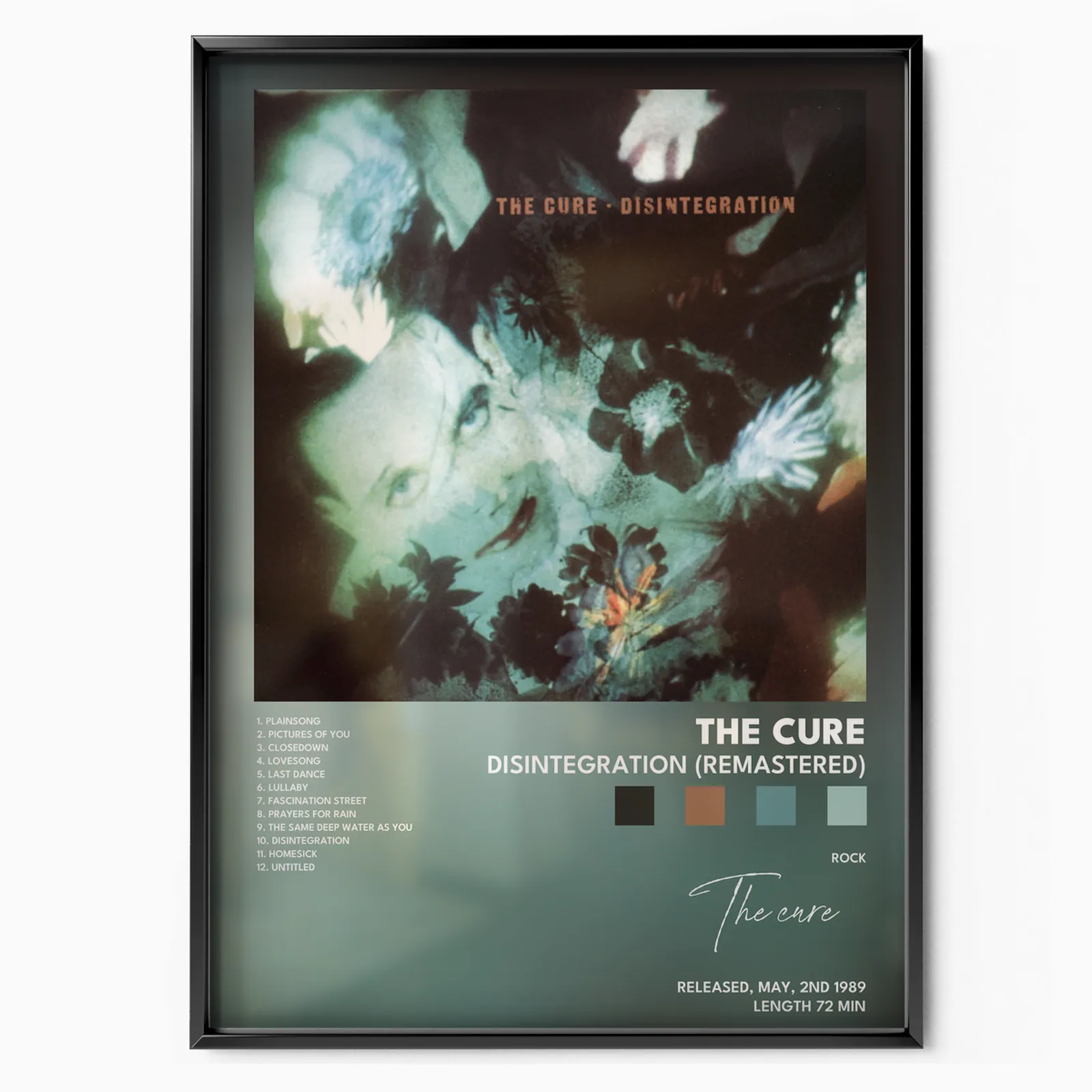
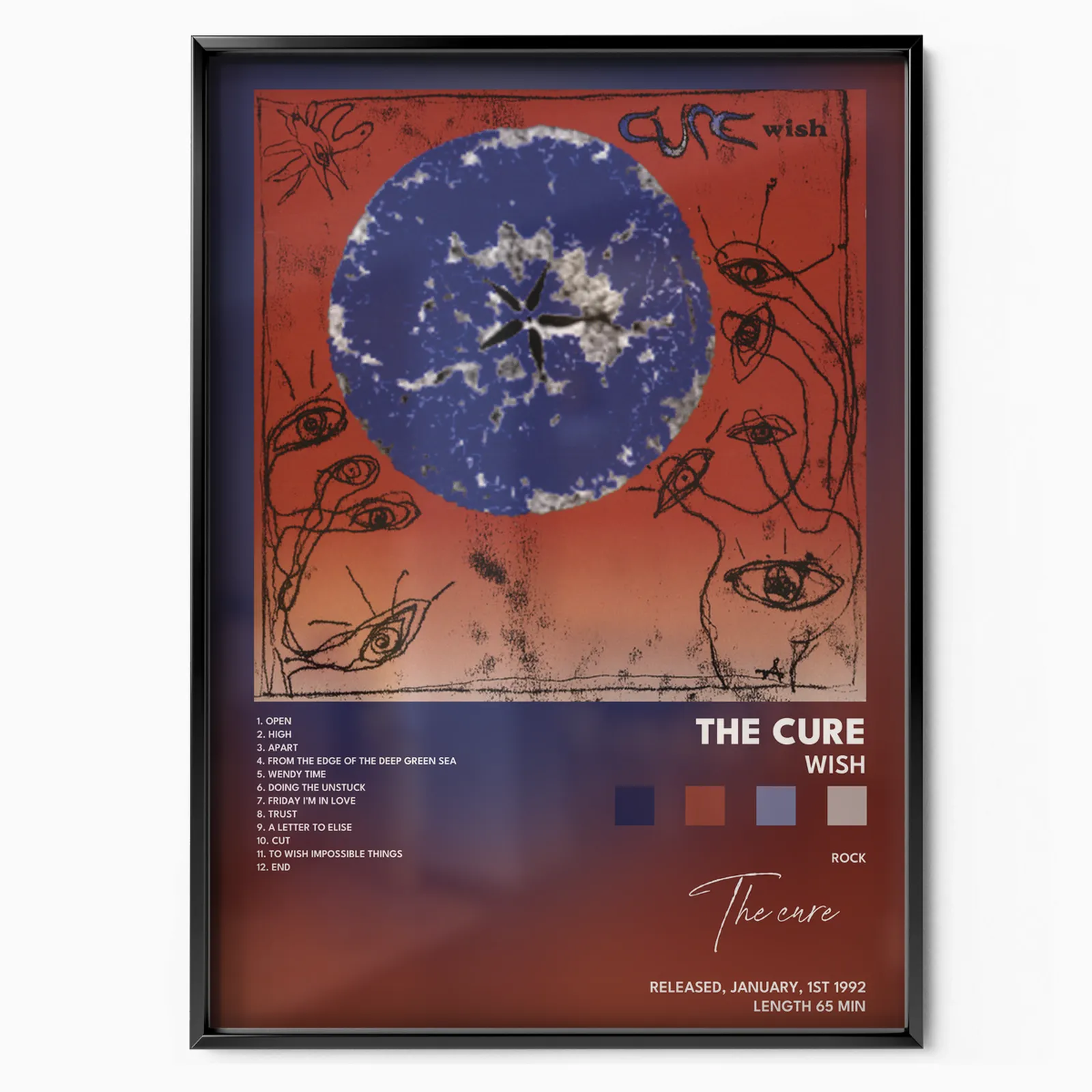
Disintegration is where this collection begins, and where many fans say the band peaked. Recorded at Hookend from late 1988 into early 1989 as Smith neared 30 and recoiled from the group's pop fame, it is a slow, cavernous, lovelorn record built around Lovesong, which Smith wrote as a wedding present for his wife Mary and which climbed to number 2 on the Billboard Hot 100. Three years later Wish answered the gloom with the impossible brightness of Friday I'm in Love, still the band's last American Top 40 hit. Both covers reward being seen large.
The wilderness years (1996 to 2000)
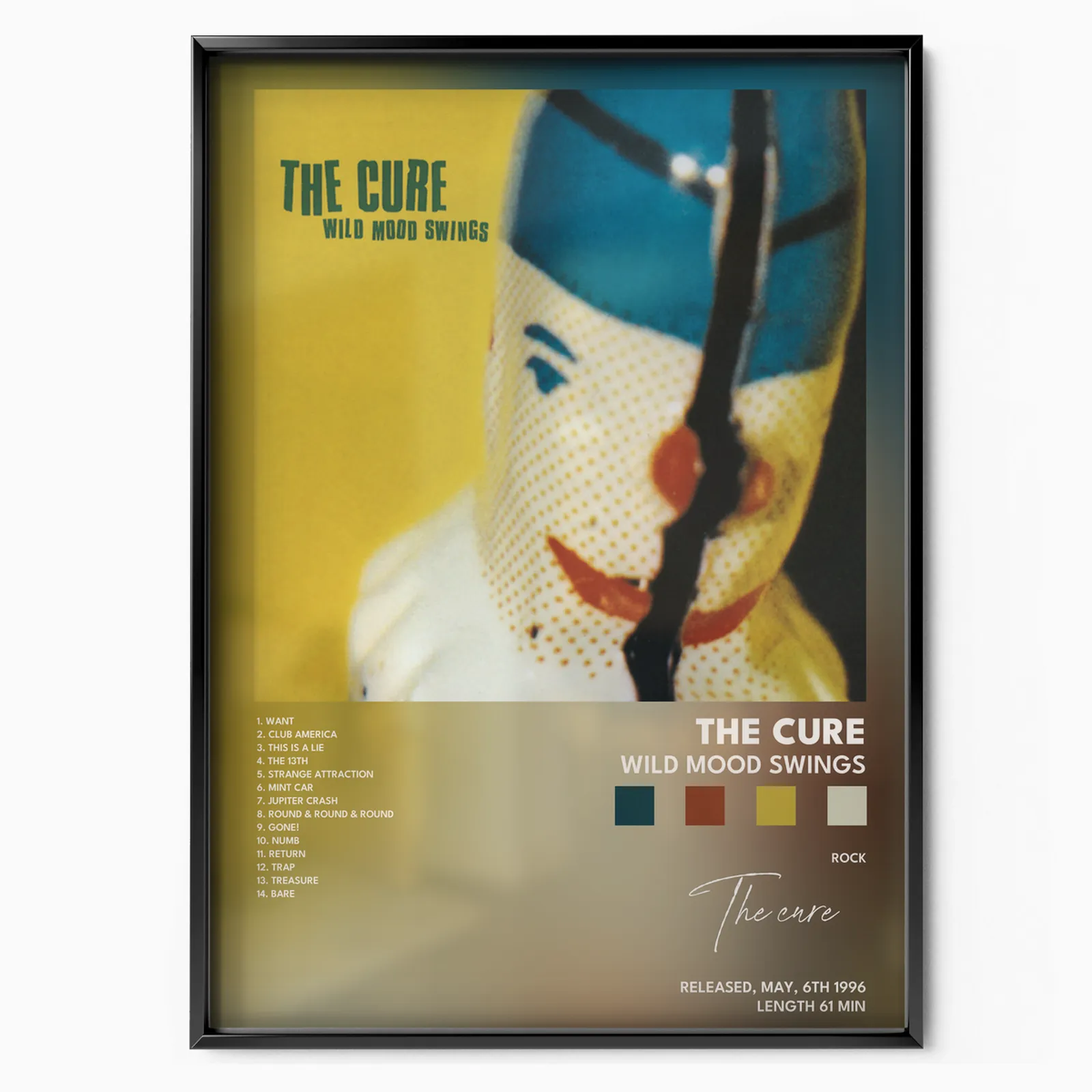
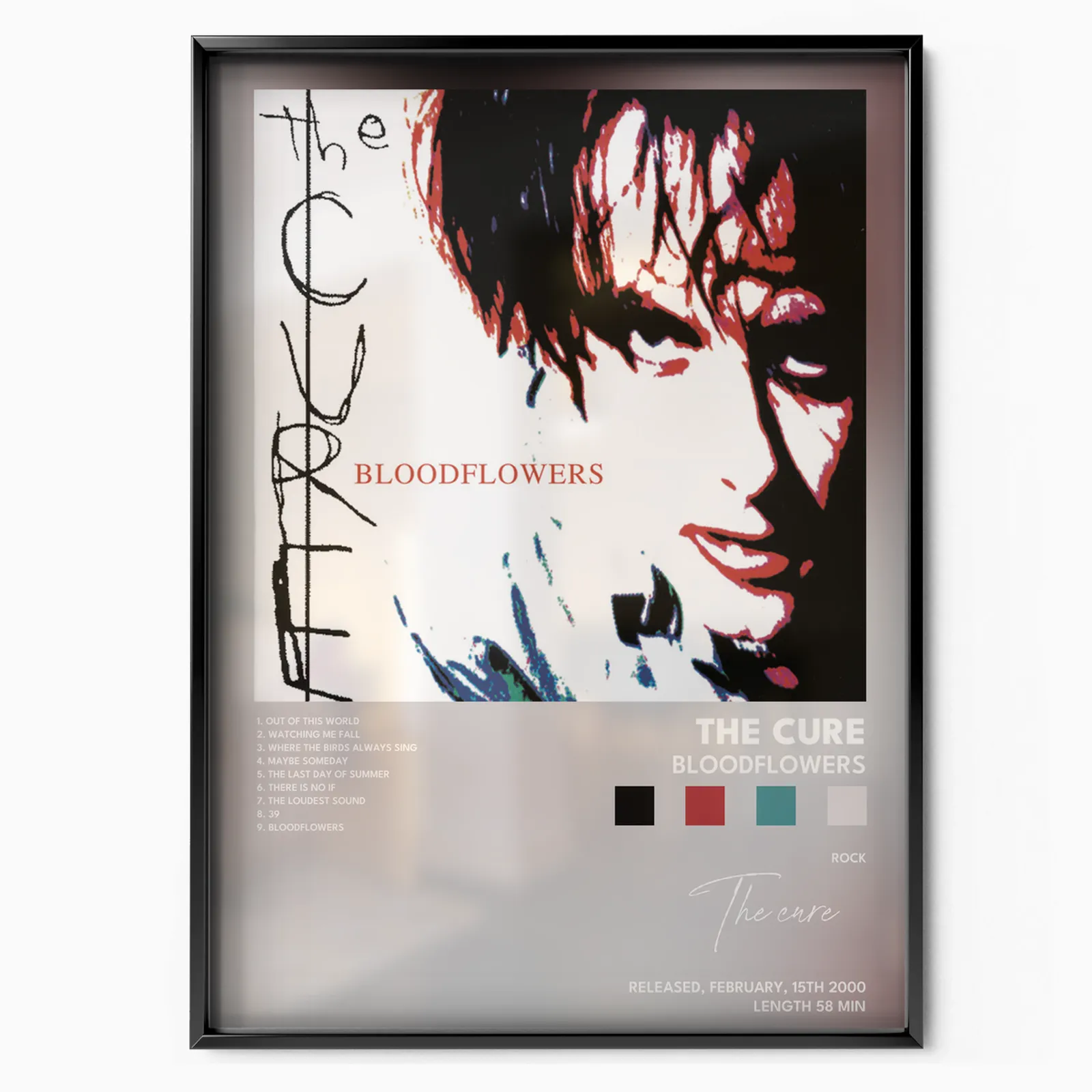
Wild Mood Swings is the divisive one, a restless, genre hopping record from 1996 that swung from mariachi horns to melancholy and sold less than any Cure album in over a decade. Fans who love it love it fiercely. Bloodflowers followed in 2000 and closed the loop: Smith framed it as the final chapter of a trilogy with Pornography and Disintegration, and it earned the band their first Grammy nomination. On a wall these two make a striking contrast, one bright and scattered, one deep and autumnal.
The heavy turn and the long silence (2004 to 2008)
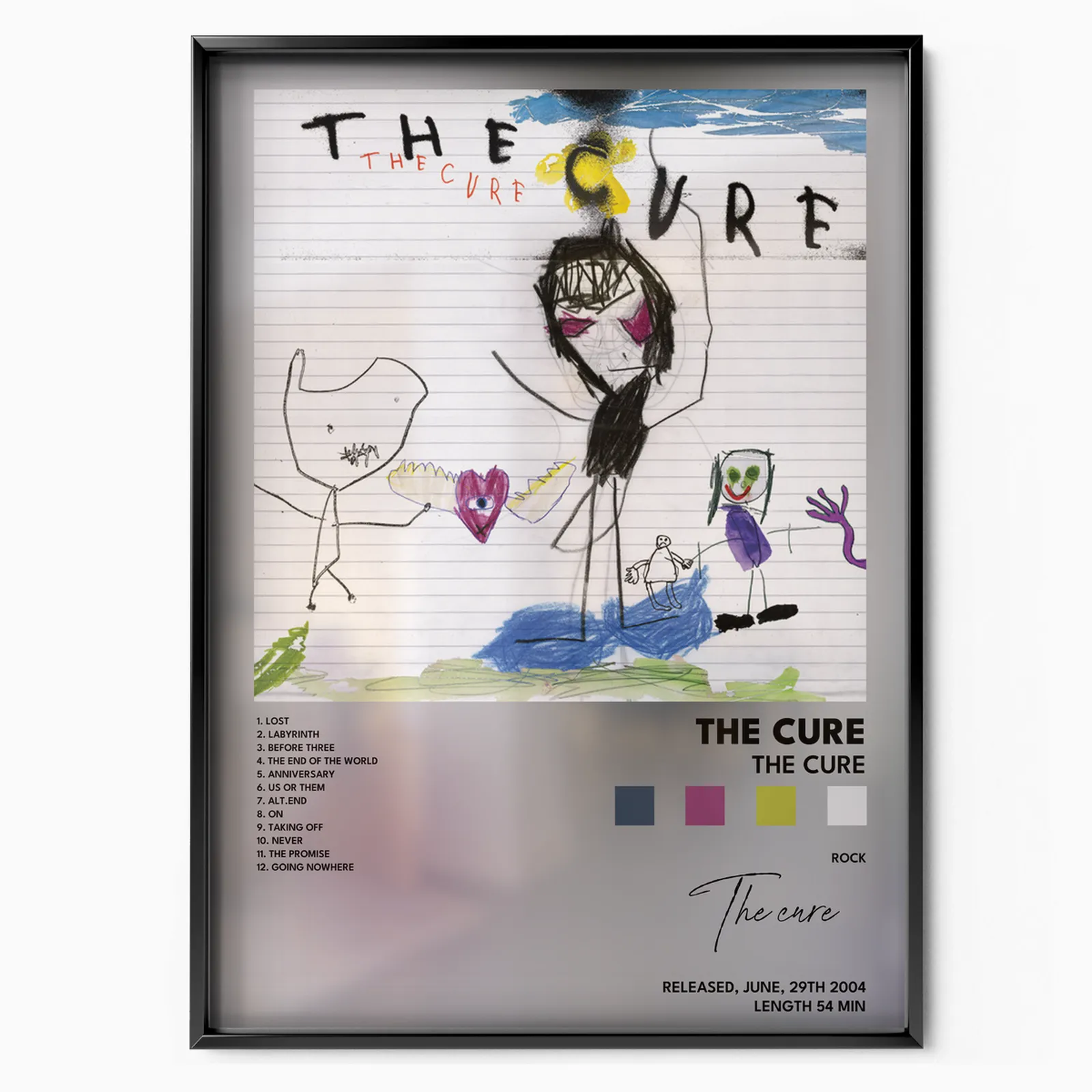
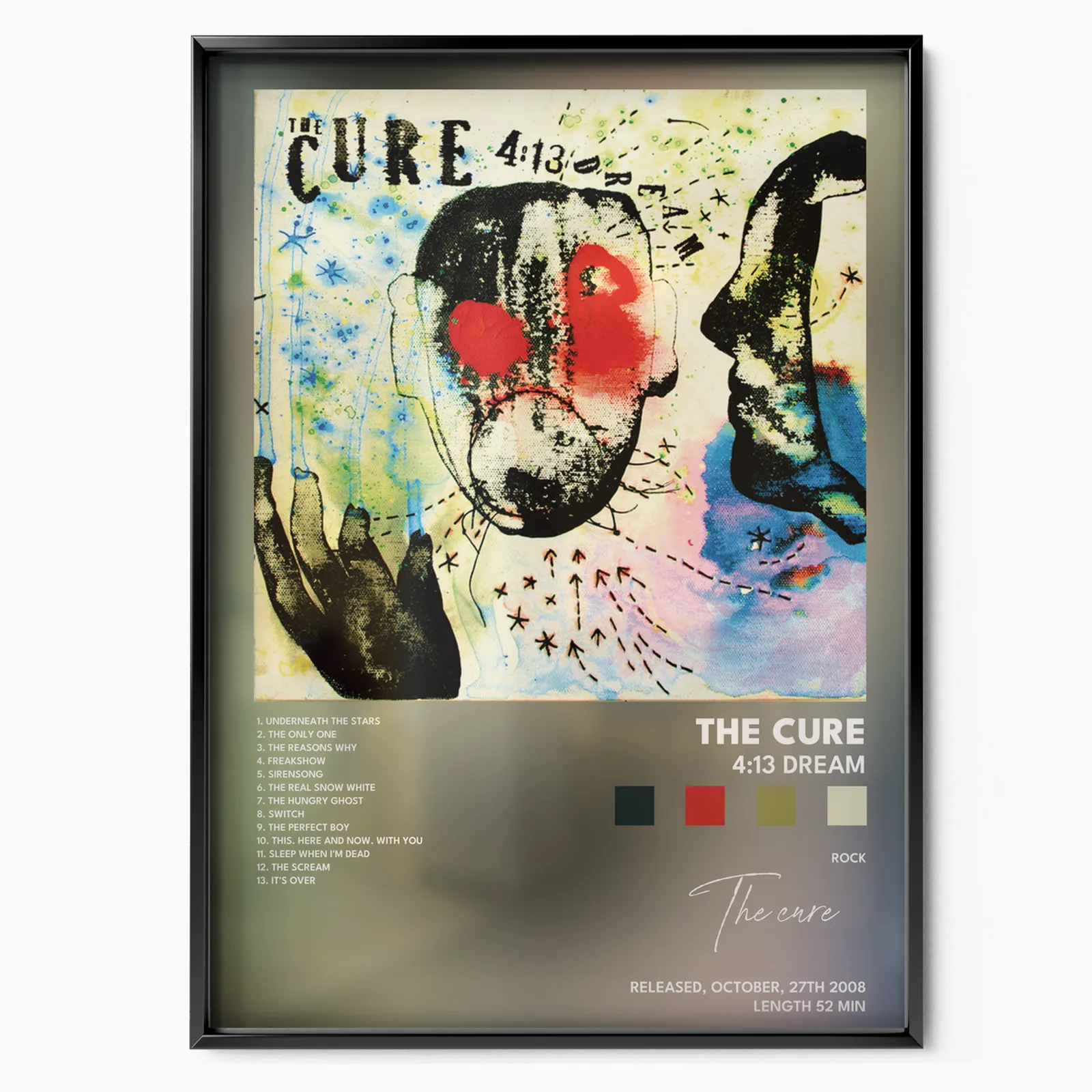
The Cure, the self titled 2004 album, is the outlier, co produced by Ross Robinson of Korn and Slipknot fame, who pushed the band toward something rawer and heavier than anything before it. 4:13 Dream arrived in 2008 with its four singles released on the 13th of consecutive months, then the band went quiet. It would be their last album of new material for 16 years.
The return (2024)
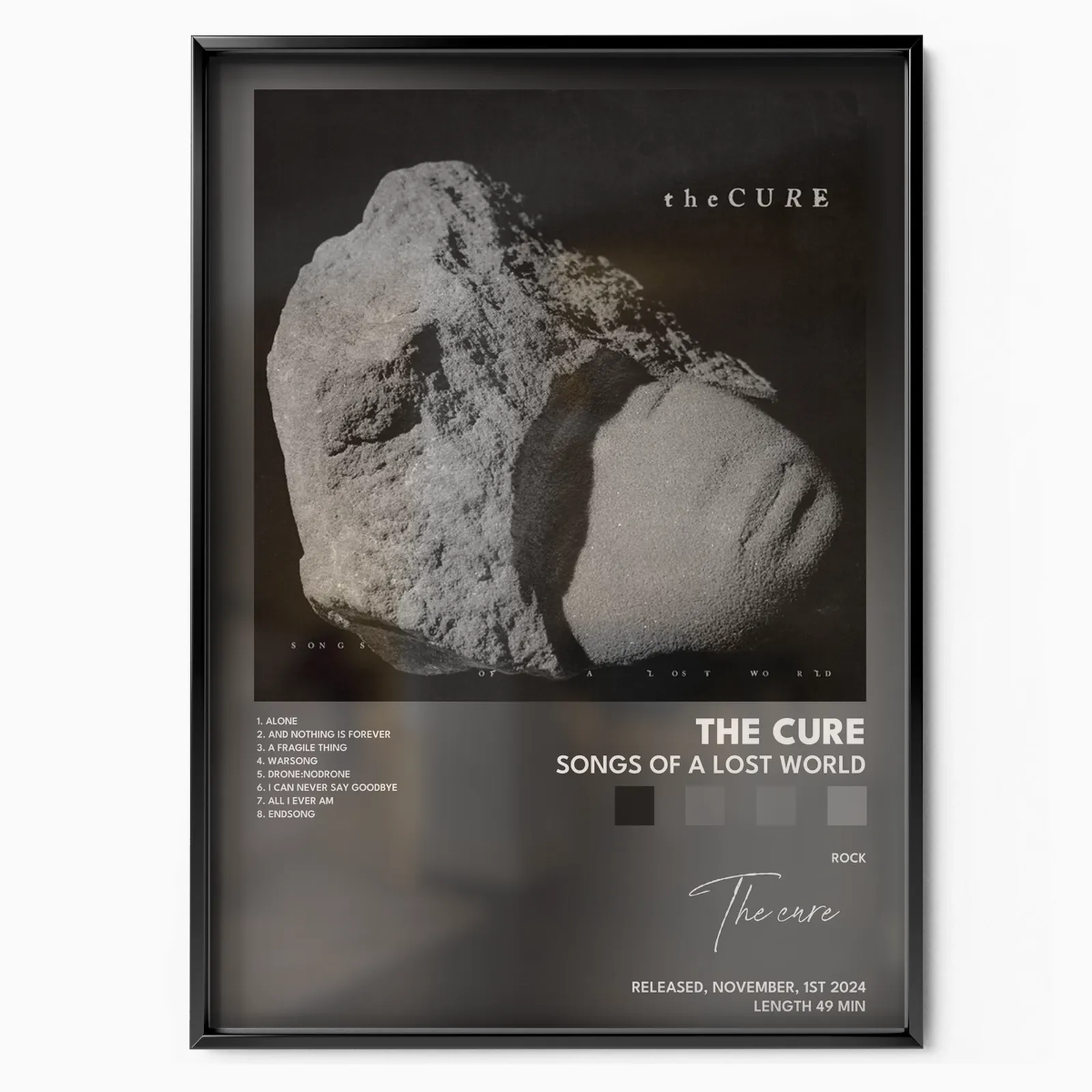
Songs of a Lost World broke that silence in November 2024, the band's first new music in 16 years and a meditation on loss, written after Smith lost his mother, father, and elder brother. Its opener Alone runs three minutes and twenty one seconds before a single word is sung. Critics called it the comeback nobody expected and everybody wanted. As a poster it is quiet, vast, and unmistakably The Cure.
Sizes, framing, and paper
Every poster in this collection prints on heavyweight museum grade stock with a matte finish that holds The Cure's deep blacks and saturated cover art without glare. Choose from A4 for a shelf or desk, up to A1 for a statement wall, with A3 and A2 sitting comfortably in between. Each size is offered framed, in a slim gallery style moulding ready to hang, or unframed if you have your own frames or want to float mount. Colours are printed to match the original sleeve art as closely as modern inks allow.
Building a gallery wall
These covers were made to hang together. A three across row of Disintegration, Wish, and Songs of a Lost World traces the band's whole arc in one glance, from the fog of 1989 to the return of 2024. Mix framed A2 anchors with smaller A3 satellites for depth, keep a consistent frame colour so the eye reads the group as one piece, and let the darker sleeves breathe with a little wall space around them. Start with two or three you love and add more over time. Pair The Cure with kindred spirits from the era for a full post punk corner.