
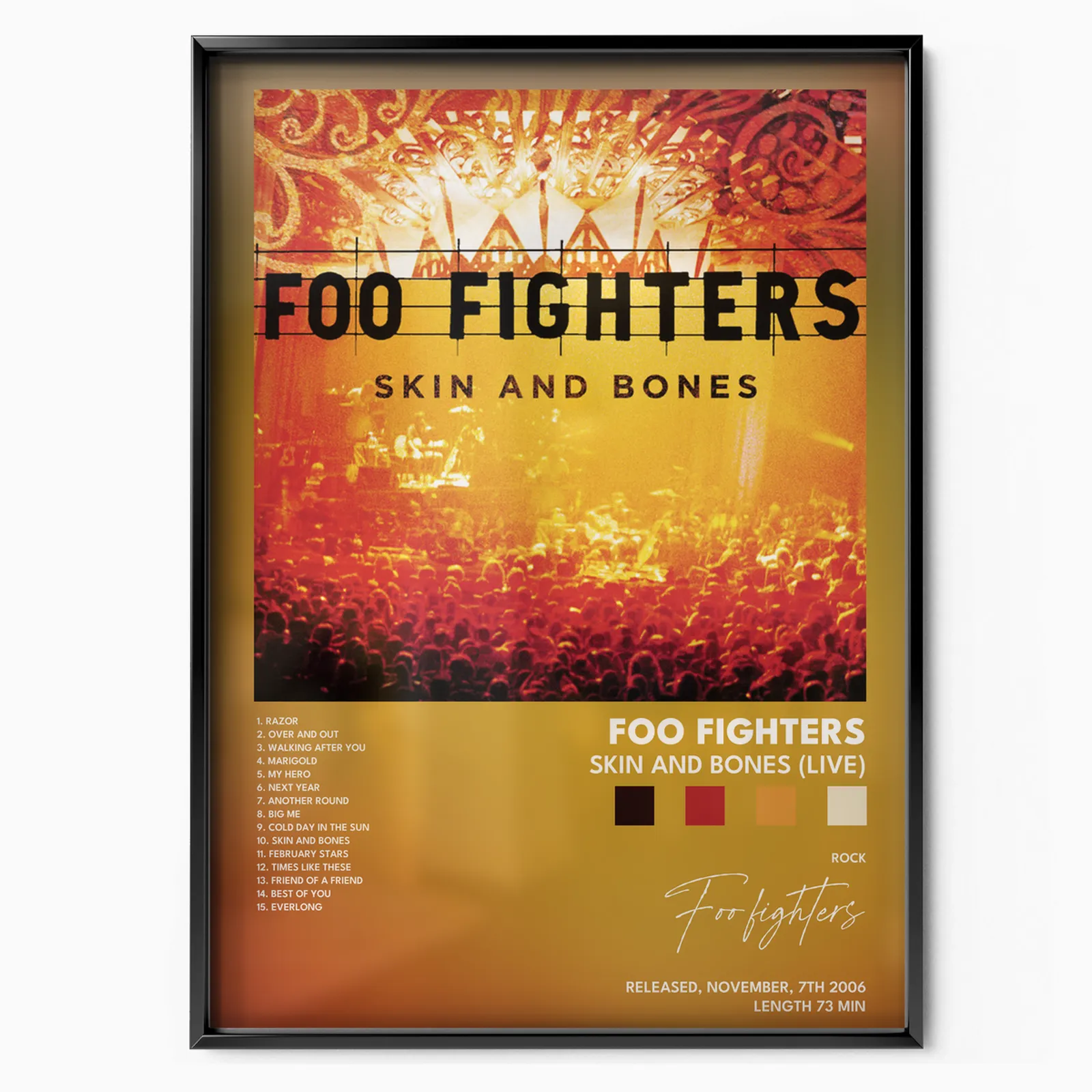
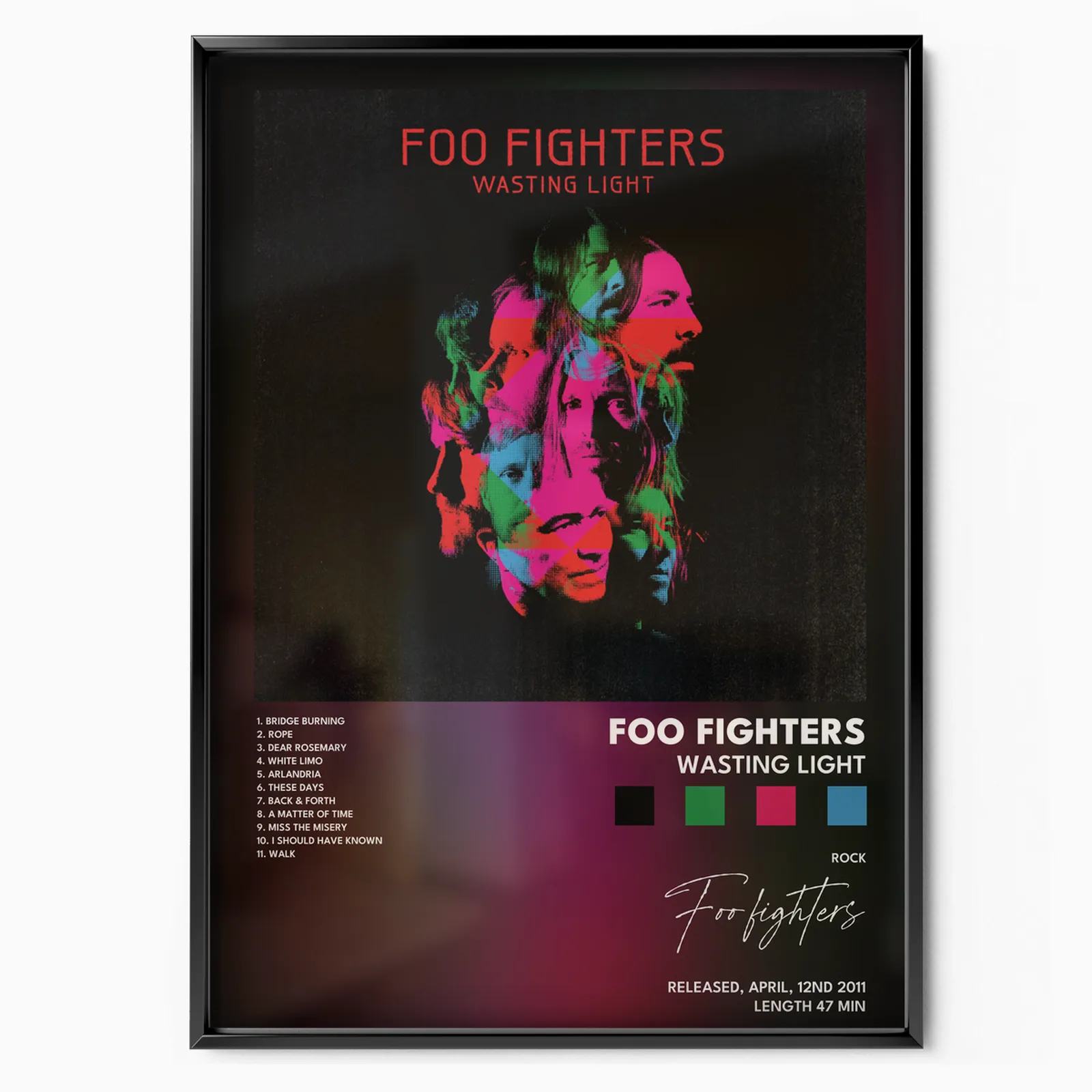
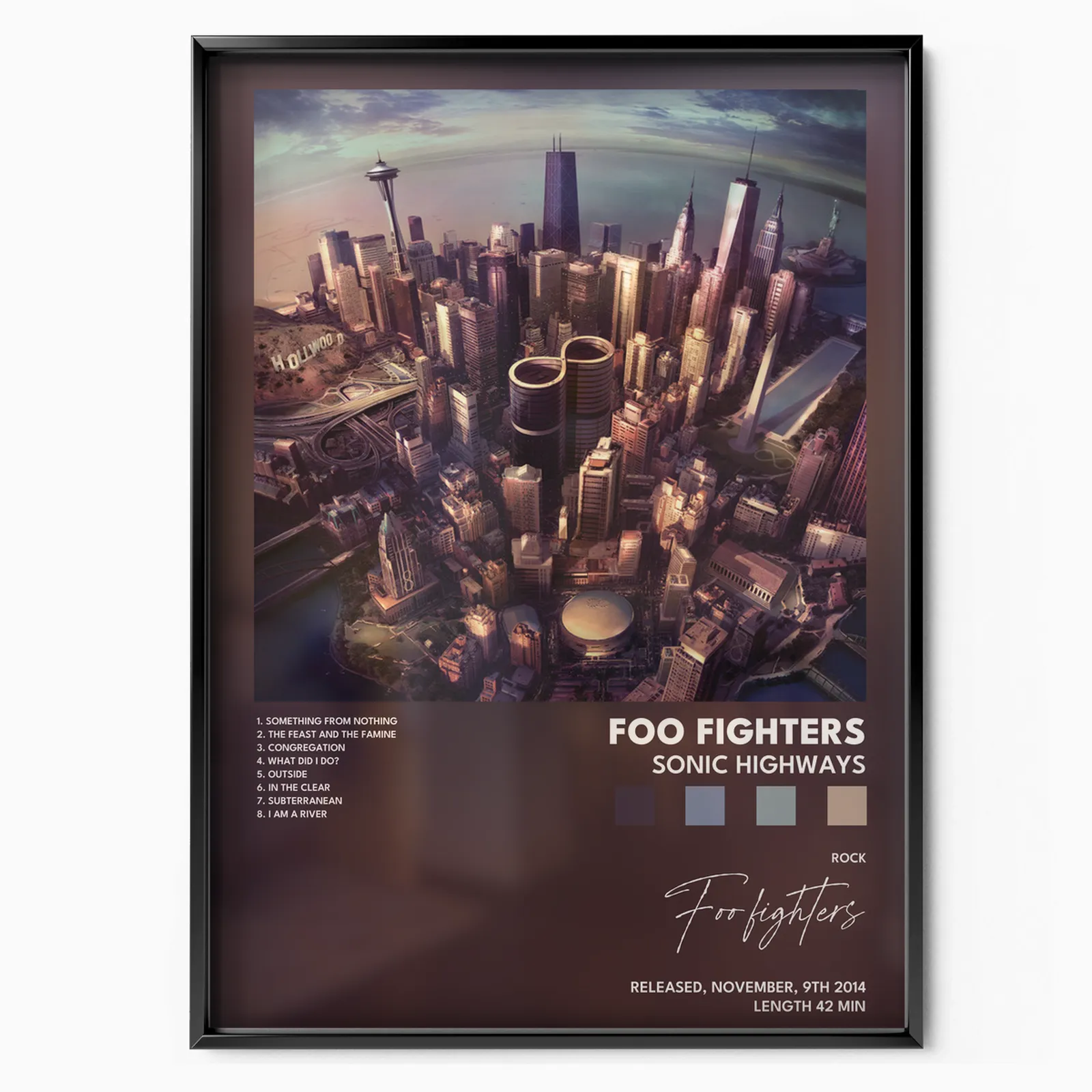
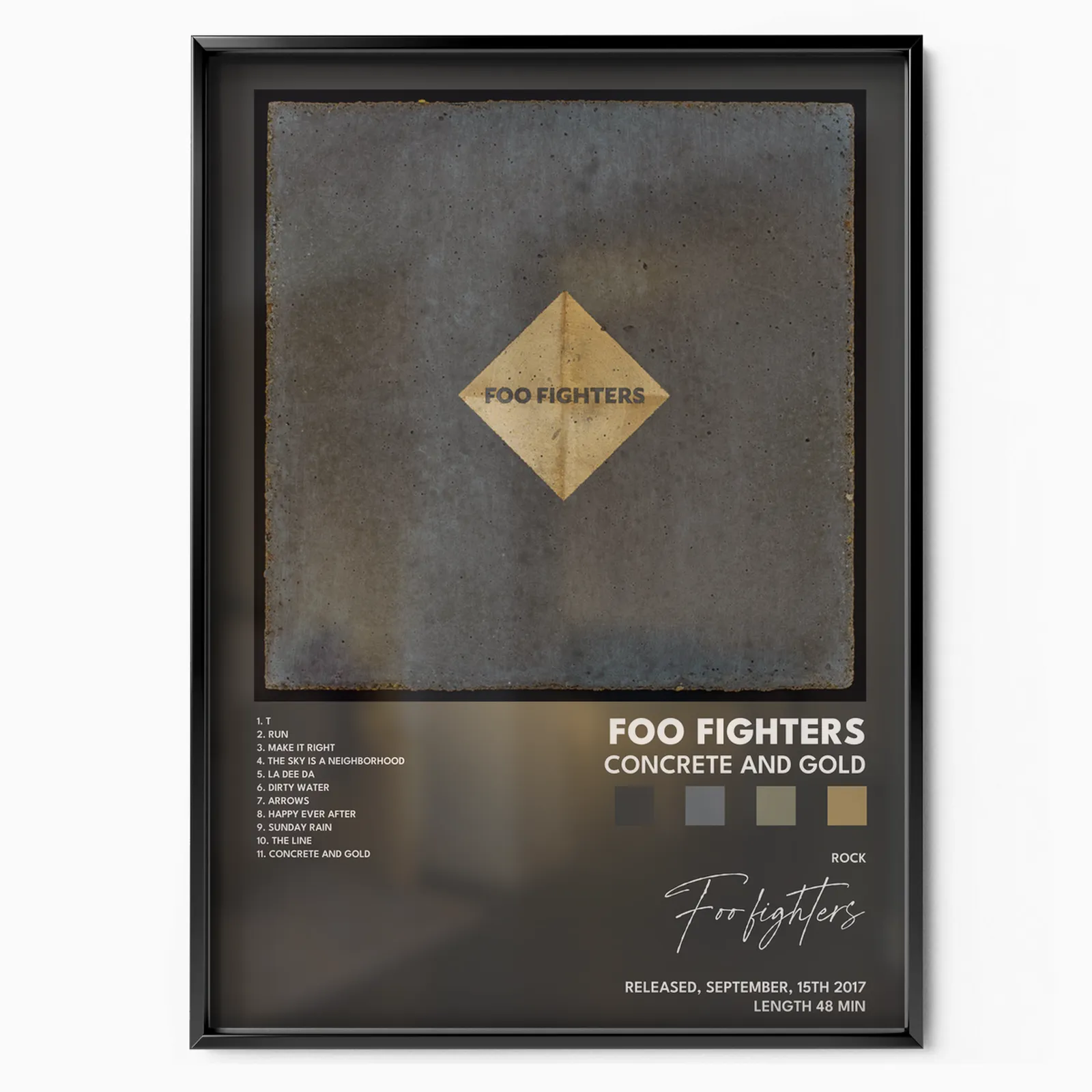
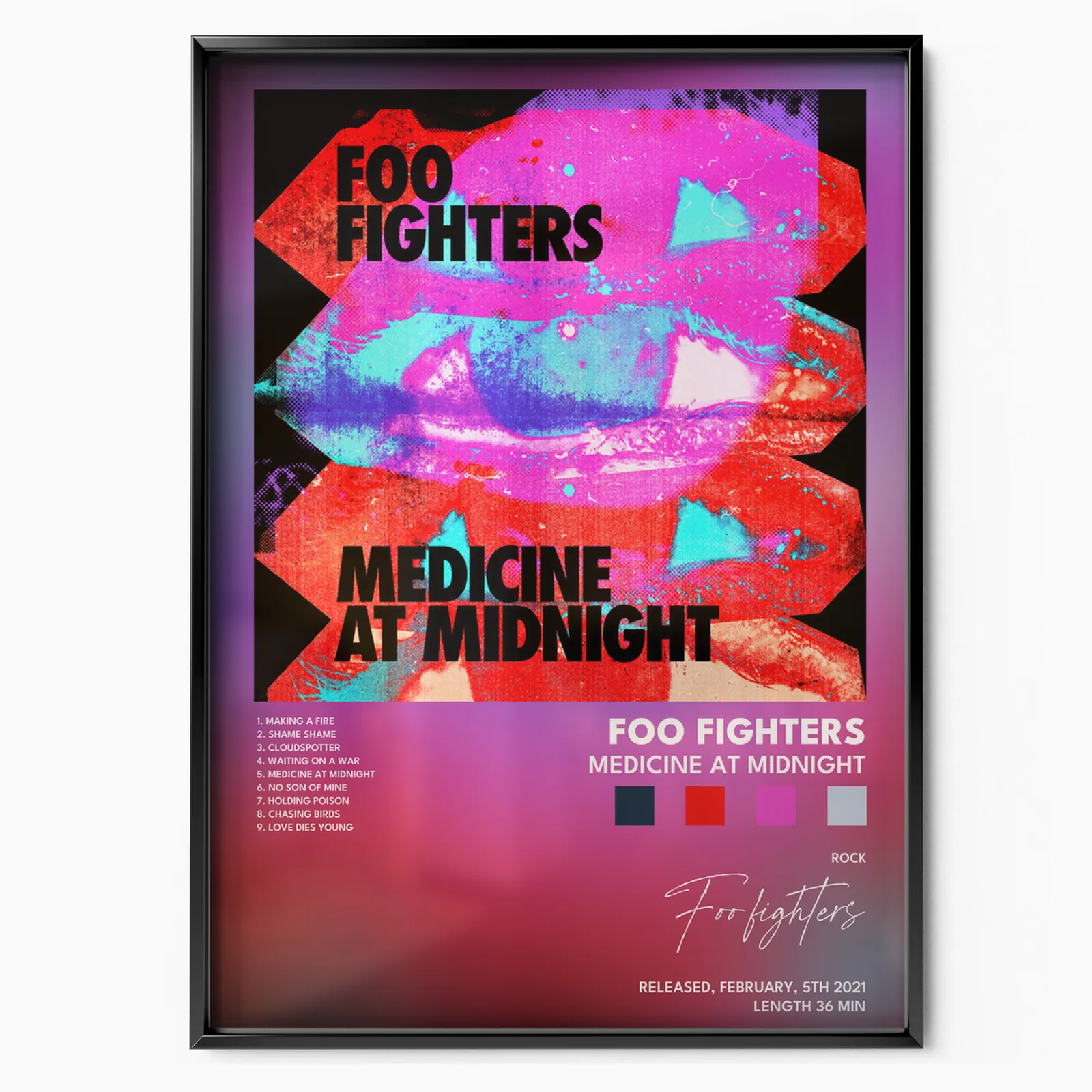
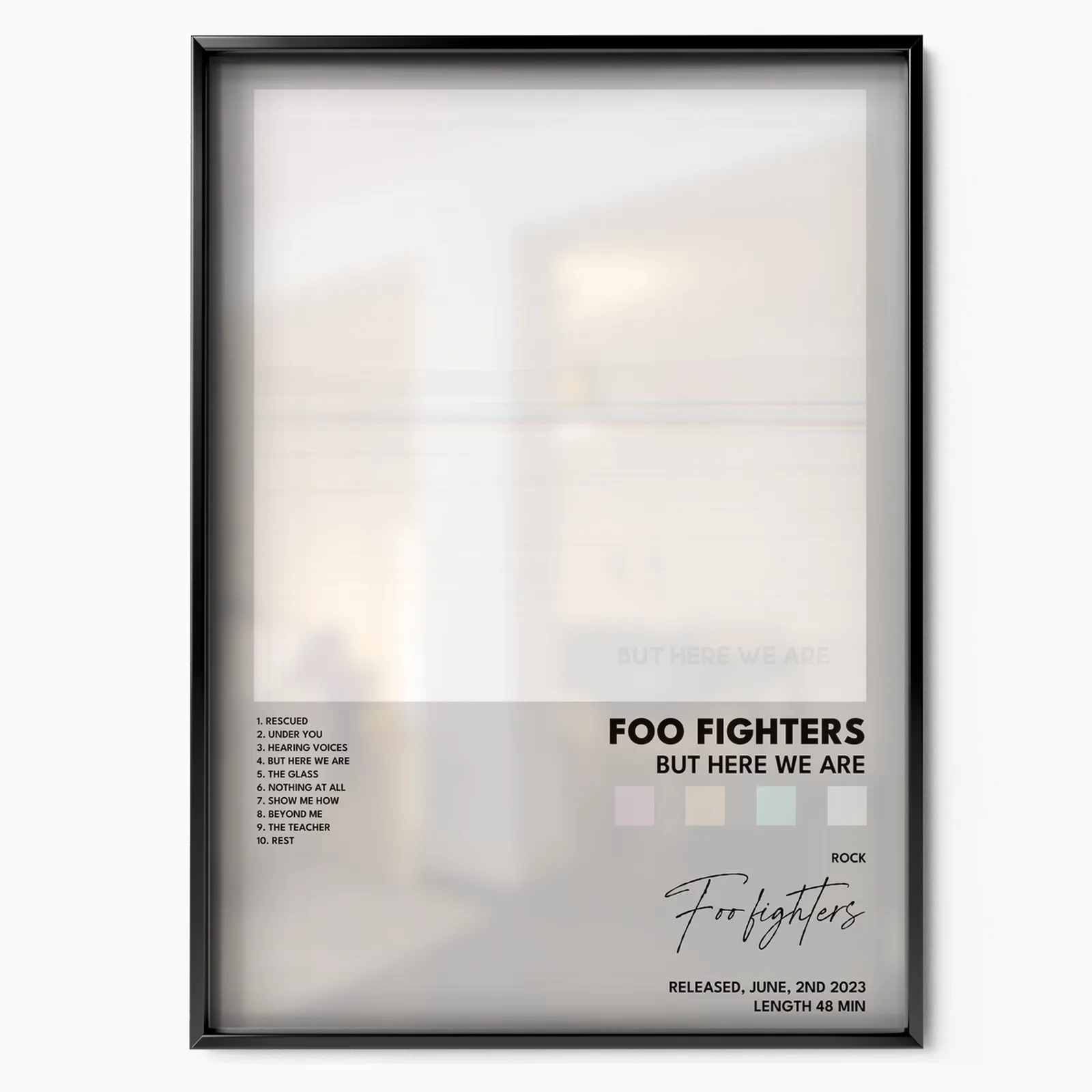
Few bands have turned personal catastrophe into a three-decade career the way Foo Fighters have. What began in 1994 as one grieving man alone in a Seattle studio grew into one of the biggest rock bands on the planet, and every poster in this collection marks a chapter in that unlikely story. Below you will find our full range of Foo Fighters album art, from the 1995 debut through to the raw farewell record of 2023, printed with archival inks for fans who want the music on the wall as well as in their ears.
From the ashes of Nirvana
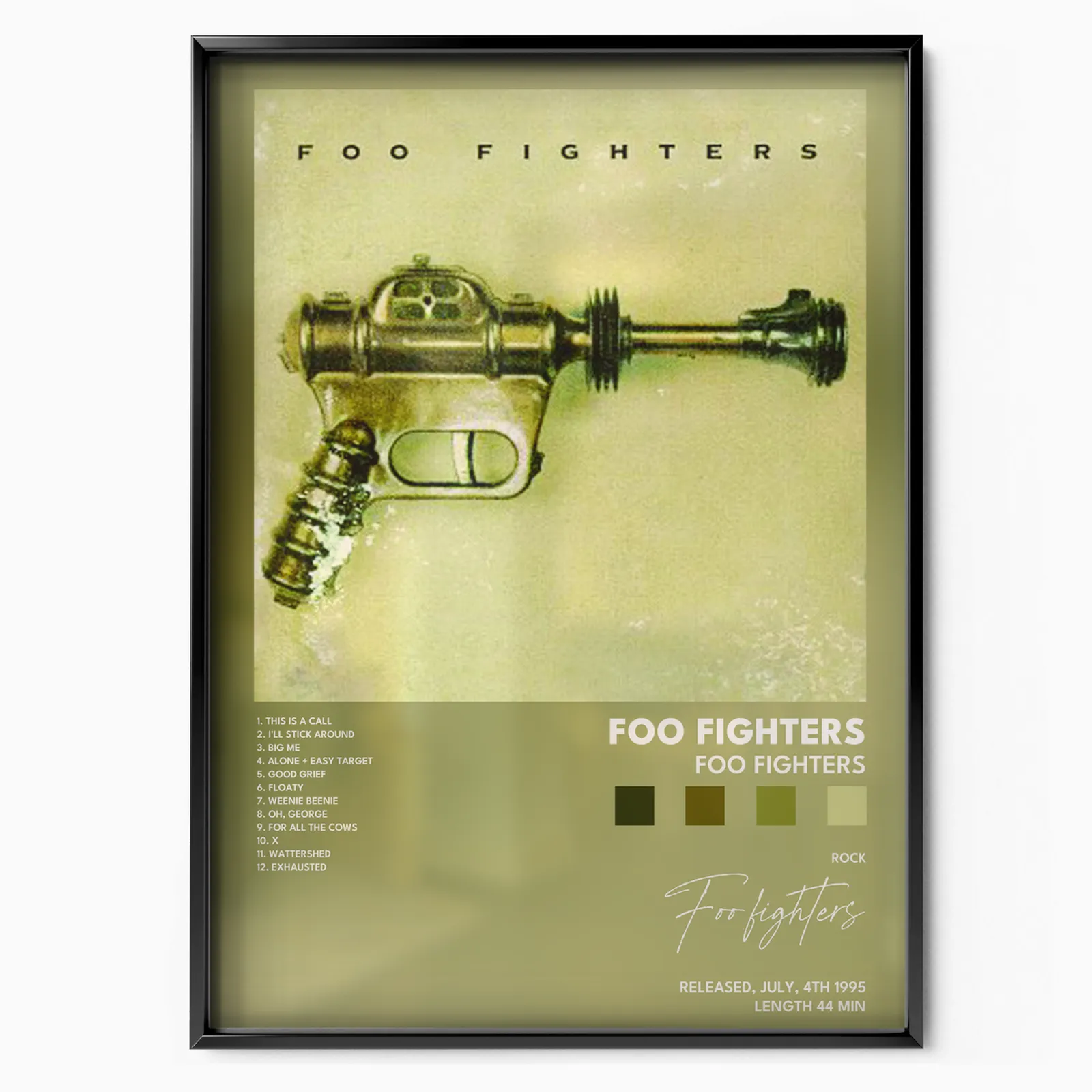
When Kurt Cobain died in April 1994, Dave Grohl was Nirvana's drummer and, by his own account, unsure whether he ever wanted to play again. Instead he booked six days at Robert Lang Studios near Seattle in October 1994 and recorded a full album almost entirely alone, singing every word and playing every instrument himself. He handed cassette copies to friends under the name "Foo Fighters" to hide that it was a one-man project. When labels came calling, Grohl assembled a real band: bassist Nate Mendel and drummer William Goldsmith from Sunny Day Real Estate, plus guitarist Pat Smear, who had toured with Nirvana. Foo Fighters arrived in 1995 and reframed Grohl not as a sideman but as a frontman with songs of his own.
The sound takes shape
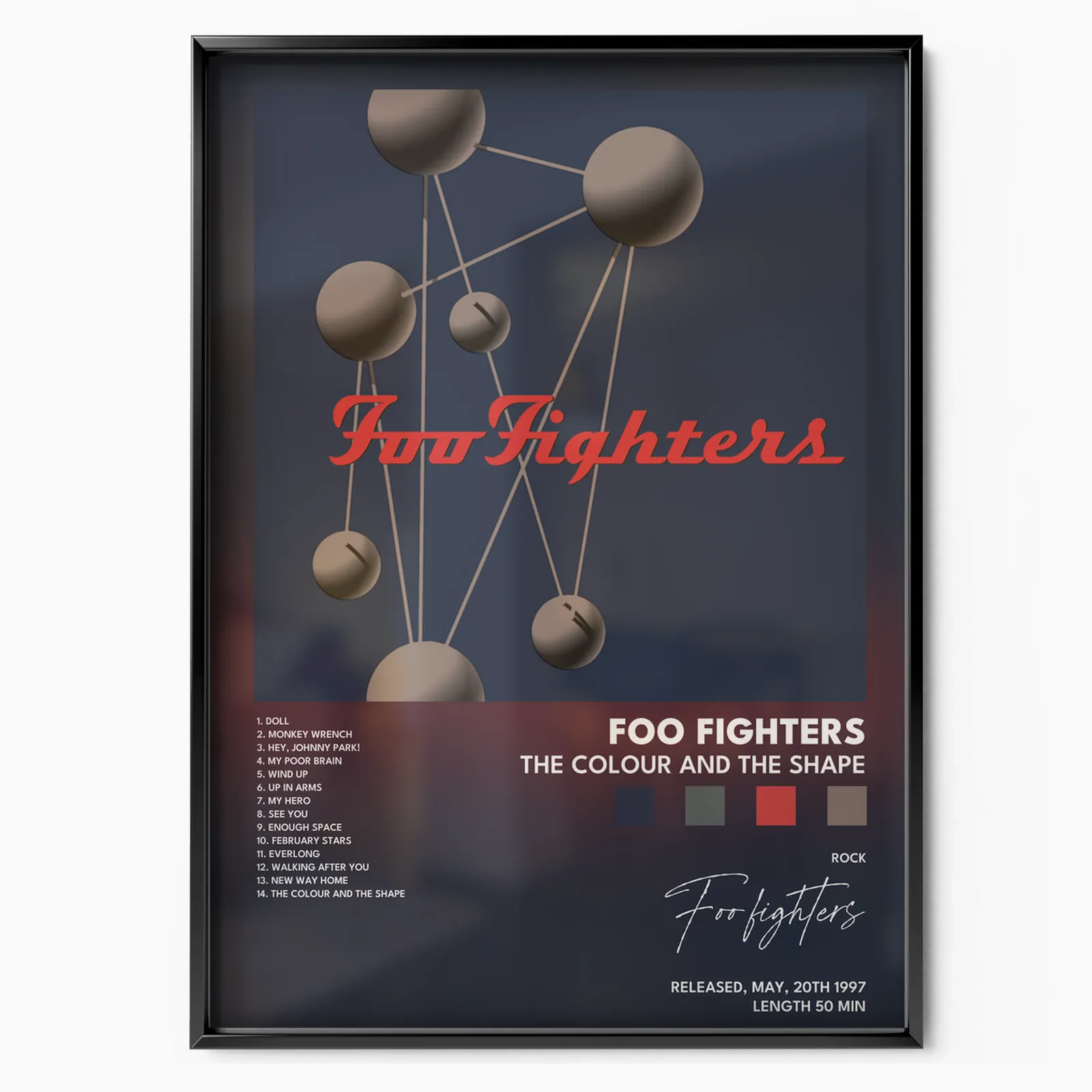
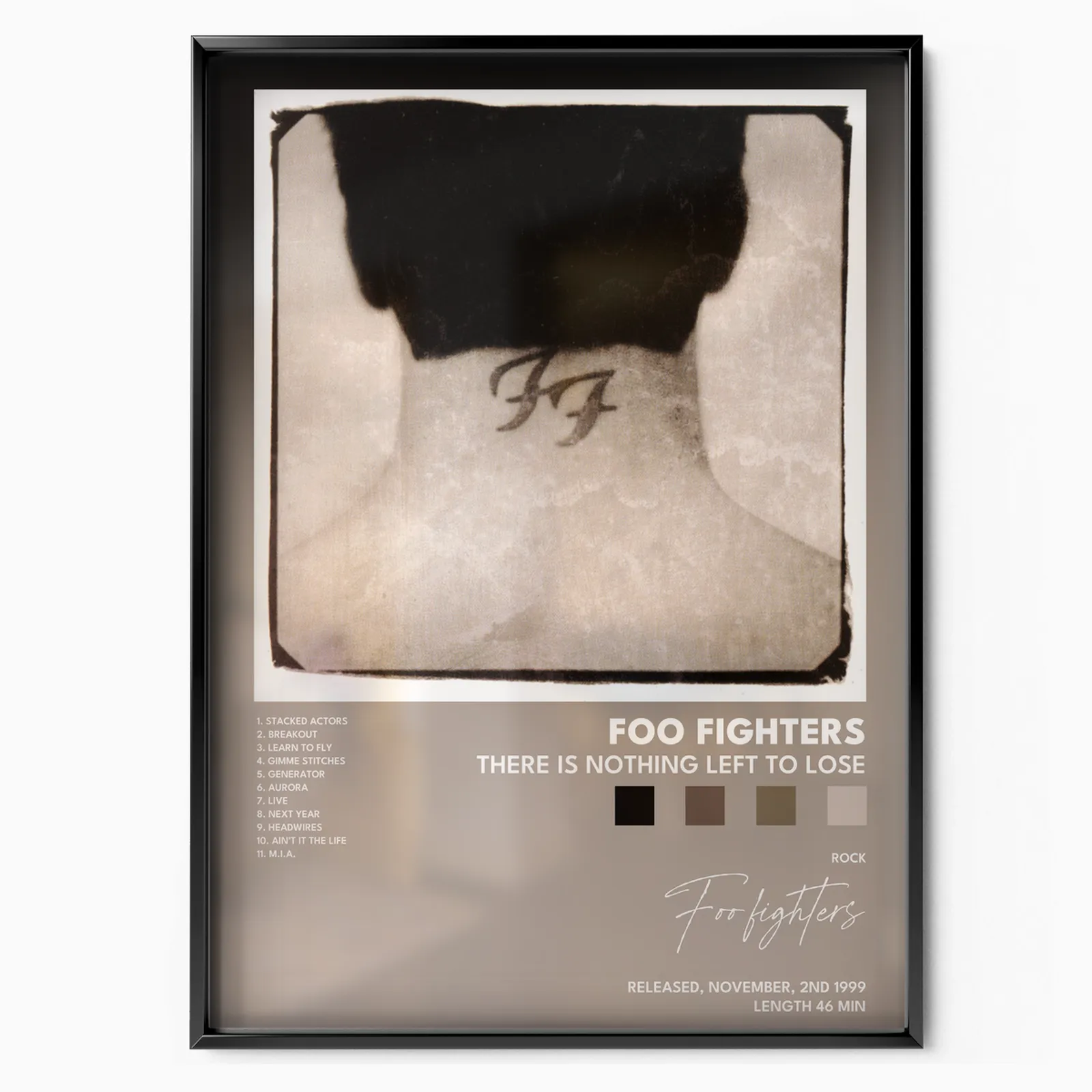
The follow-up is where the project truly became a band. The Colour and the Shape, produced by Gil Norton and released in 1997, gave the world "Everlong," "My Hero" and "Monkey Wrench," and it remains their best-selling US album with more than two million copies sold. It was made through a period of upheaval, including a change of drummer that eventually brought Taylor Hawkins into the fold, and the strain shows in songs that are both bruised and anthemic. "Everlong" in particular grew into the band's signature song, the emotional peak of countless live sets and one of the most beloved rock singles of the decade. Two years later There Is Nothing Left to Lose softened the edges and won the group their first Grammy, for Best Rock Album, proof that the second act had real legs and that Grohl could write for the long haul.
Stadium years and studio experiments
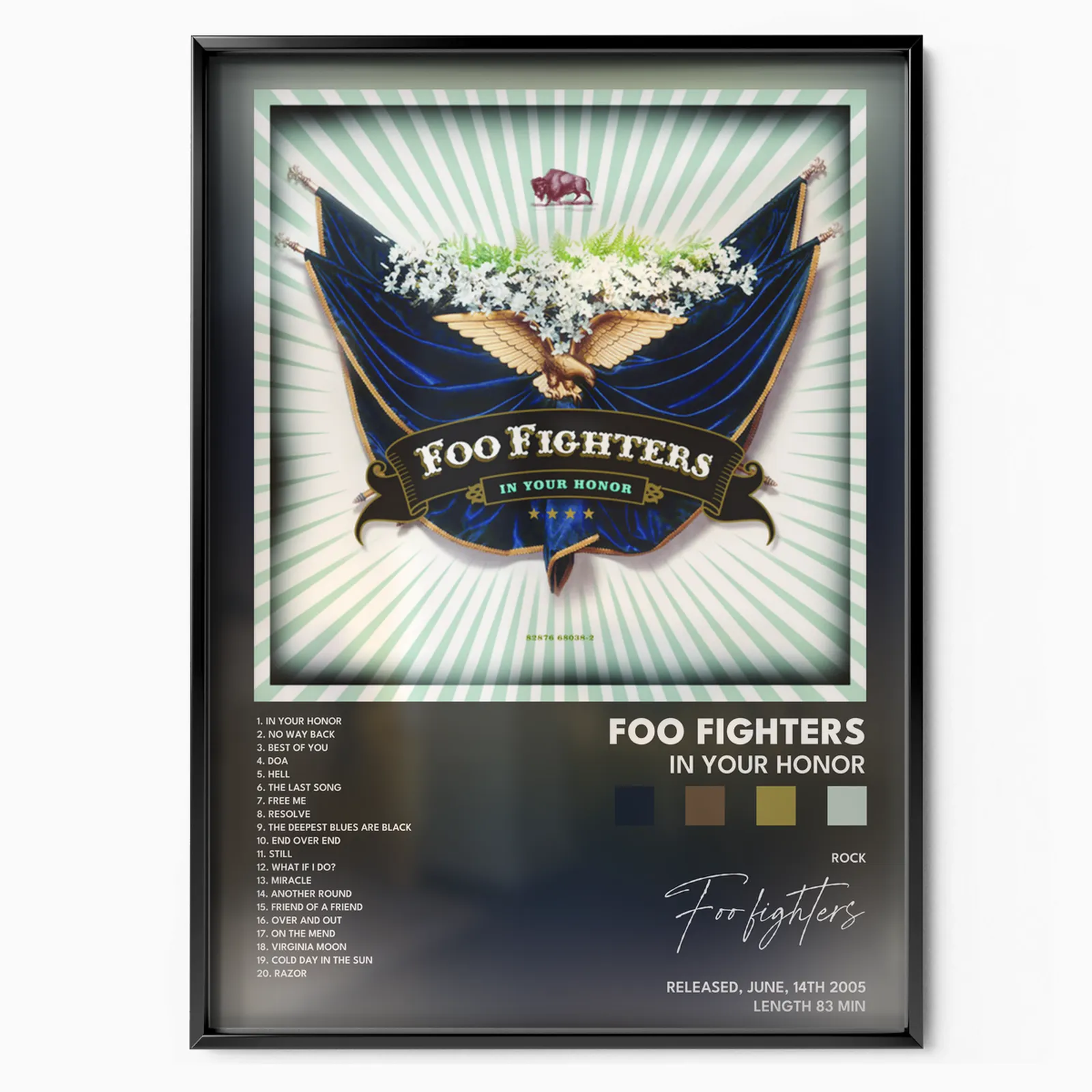
By the mid-2000s Foo Fighters were a headline act, and they used that freedom to take risks. In Your Honor in 2005 was a double album that split a loud rock disc from a quiet acoustic one, and the Skin and Bones live record in 2006 captured that acoustic side on stage. In between, One by One in 2002 and Echoes, Silence, Patience & Grace in 2007 each won the Grammy for Best Rock Album, part of a record four wins in that category. Then came the album many fans hold dearest: Wasting Light, cut entirely to analog tape in Grohl's Encino garage in 2011 with Butch Vig, the producer behind Nirvana's Nevermind. It became the band's first US number one and won the Grammy for Best Rock Album. In 2014 they turned the recording process itself into a story with Sonic Highways, tracked in eight studios across eight American cities for a companion HBO series. Concrete and Gold followed in 2017 and gave them a second US number one.
Loss, and going on anyway
The band's most recent chapter is also its heaviest. Medicine at Midnight, released in early 2021, leaned into a looser, dance-inflected groove and felt like a party record built for a return to the stage. That return was cut short: on 25 March 2022, drummer Taylor Hawkins died in Bogota, Colombia, at the age of 50, and months later Grohl lost his mother, Virginia. But Here We Are, released in 2023, is the sound of a band writing straight through that grief, with Grohl playing the drums himself in Hawkins' absence. It is direct, furious and tender by turns, and it closes this collection on a note of hard-won survival. To carry those songs back to the stage, the band brought in drummer Josh Freese, and their return to touring became a public act of grieving shared with fans around the world.
Across more than a dozen Grammy wins and a catalogue that stretches from garage recordings to arena anthems, Foo Fighters have never stopped sounding like a band that plays because it has to. These posters gather the album covers that carried those songs into the world, so you can pick the era that means the most to you and give it a permanent place on the wall.