
Muse Posters
Every Muse album cover, era by era
The Alternative Rock Breakthrough1999-2001
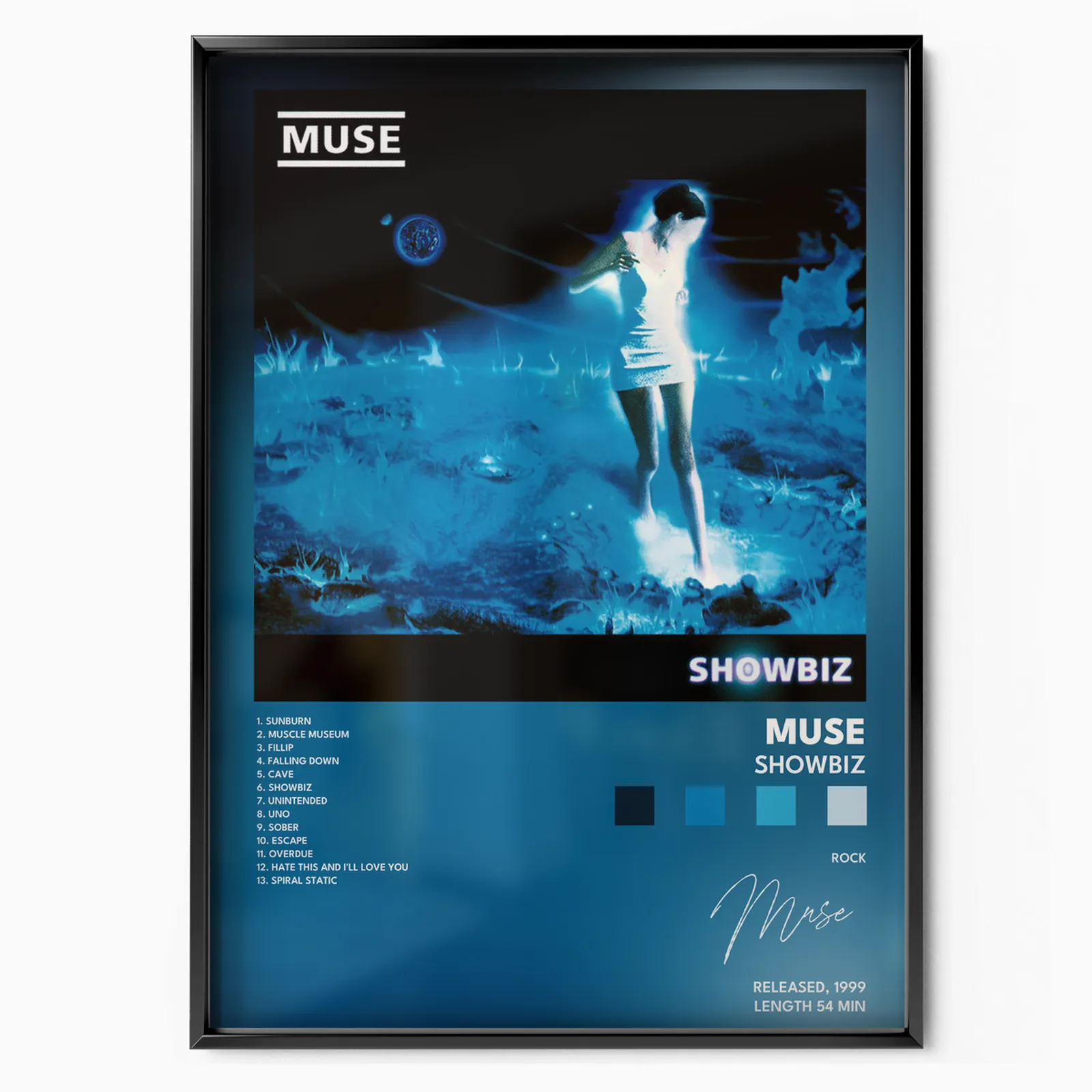
- Showbiz The debut that introduced Bellamy's falsetto and the band's restless, piano-driven angst.
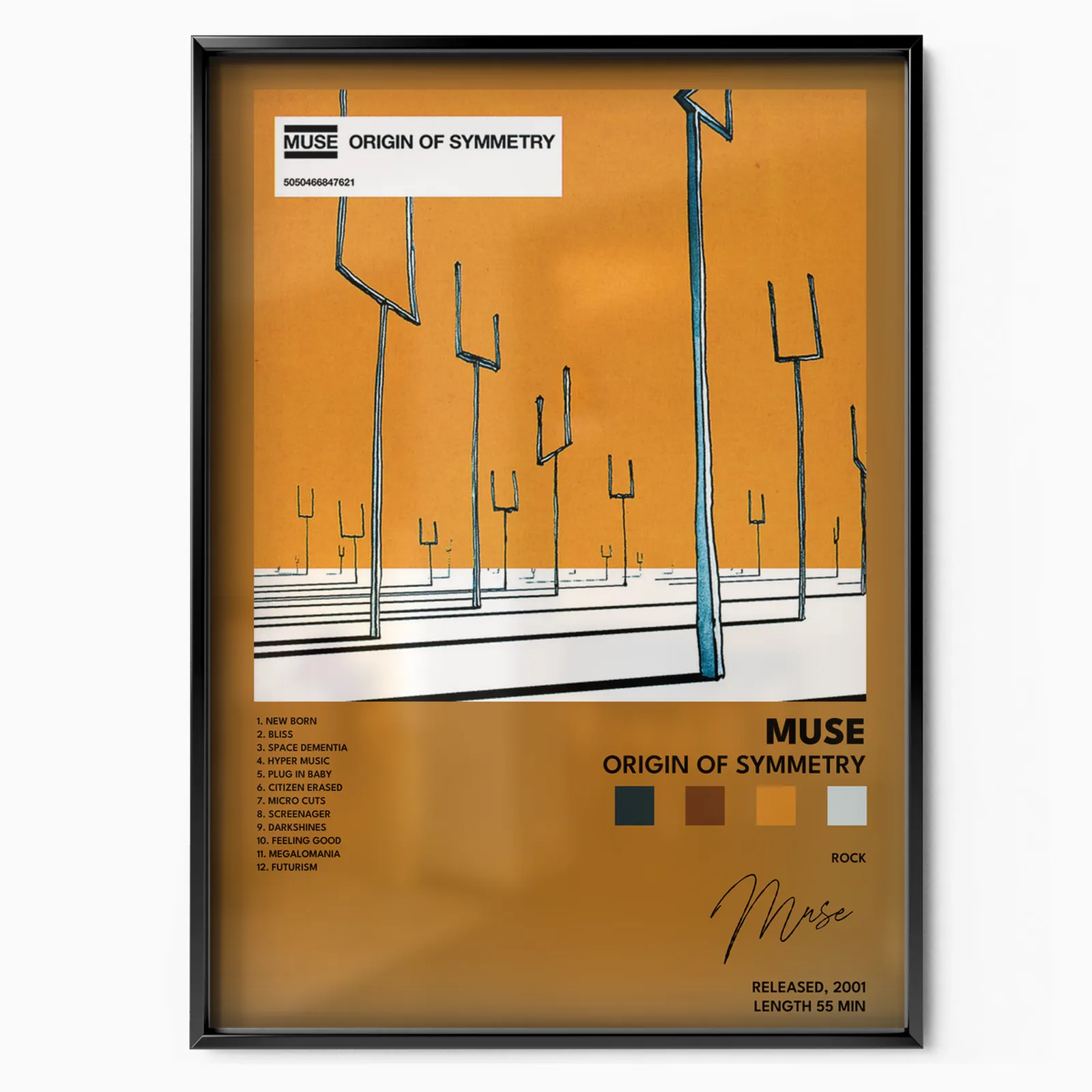
- Origin of Symmetry Sci-fi ambition and a custom pipe organ, with Plug In Baby among the era-defining singles.
Stadium Ascendancy2006-2009
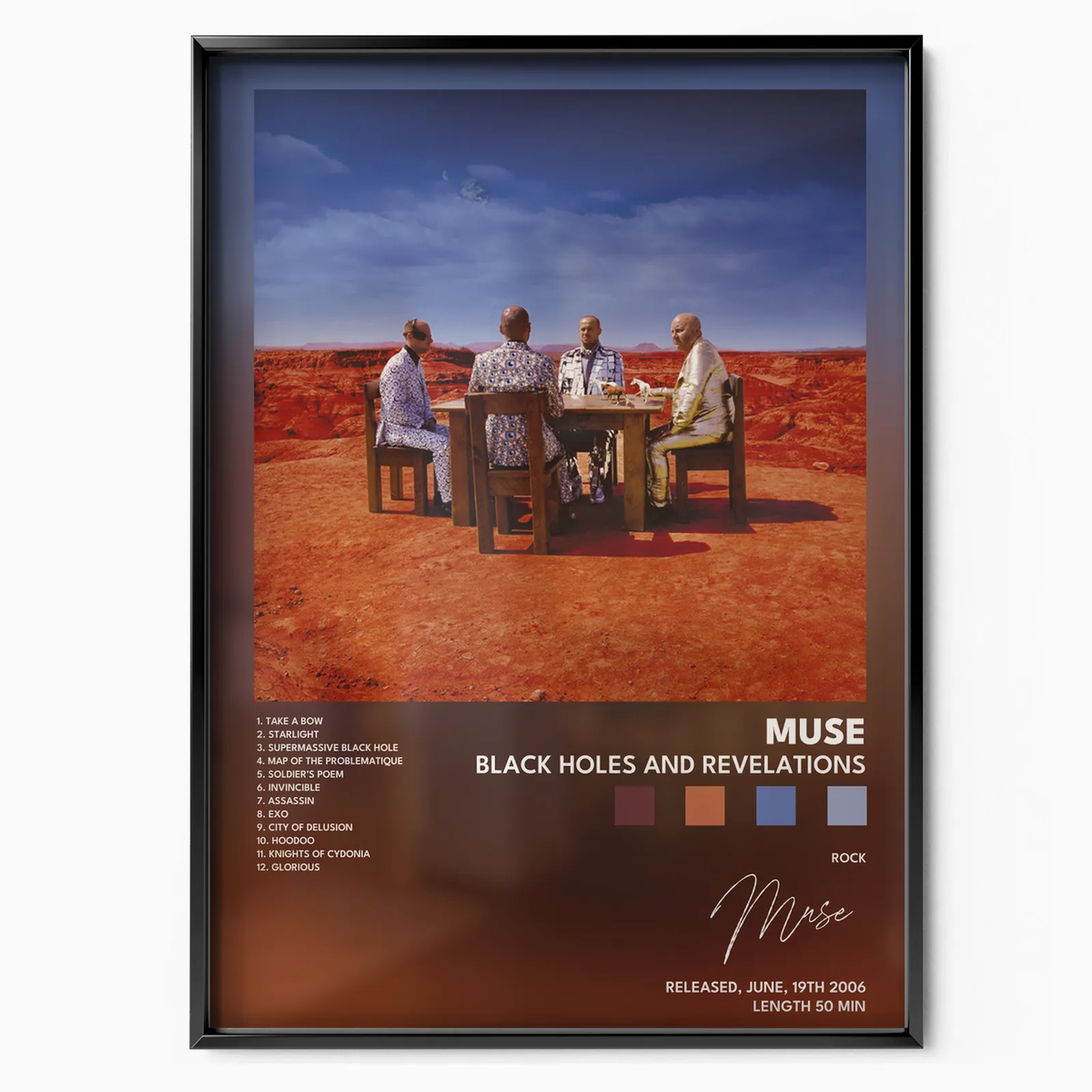
- Black Holes and Revelations Storm Thorgerson's Martian horsemen fronting Supermassive Black Hole and Knights of Cydonia.
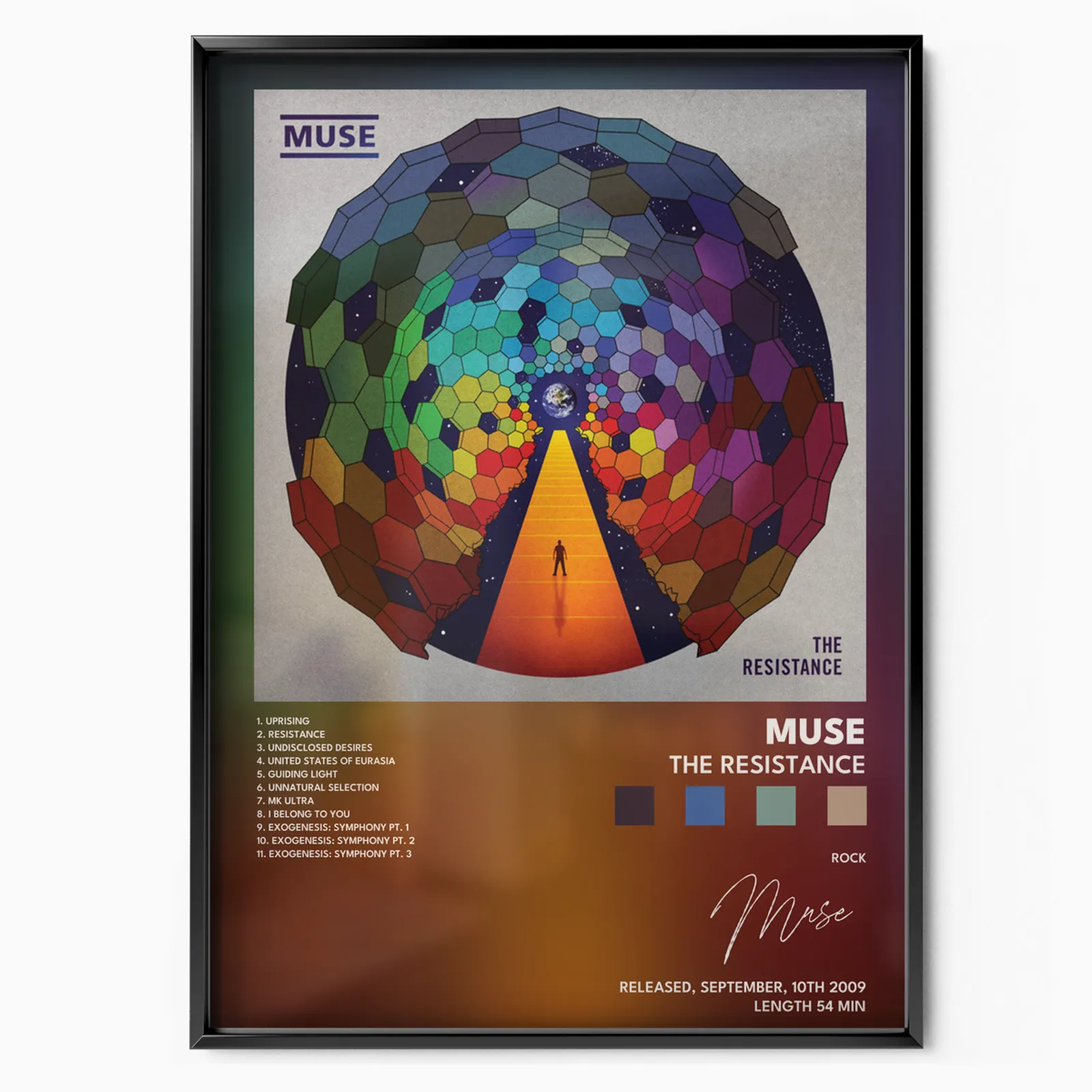
- The Resistance An Orwell-tinged, Grammy-winning epic that ends with the three-part Exogenesis: Symphony.
The Electronic Turn2012-2013
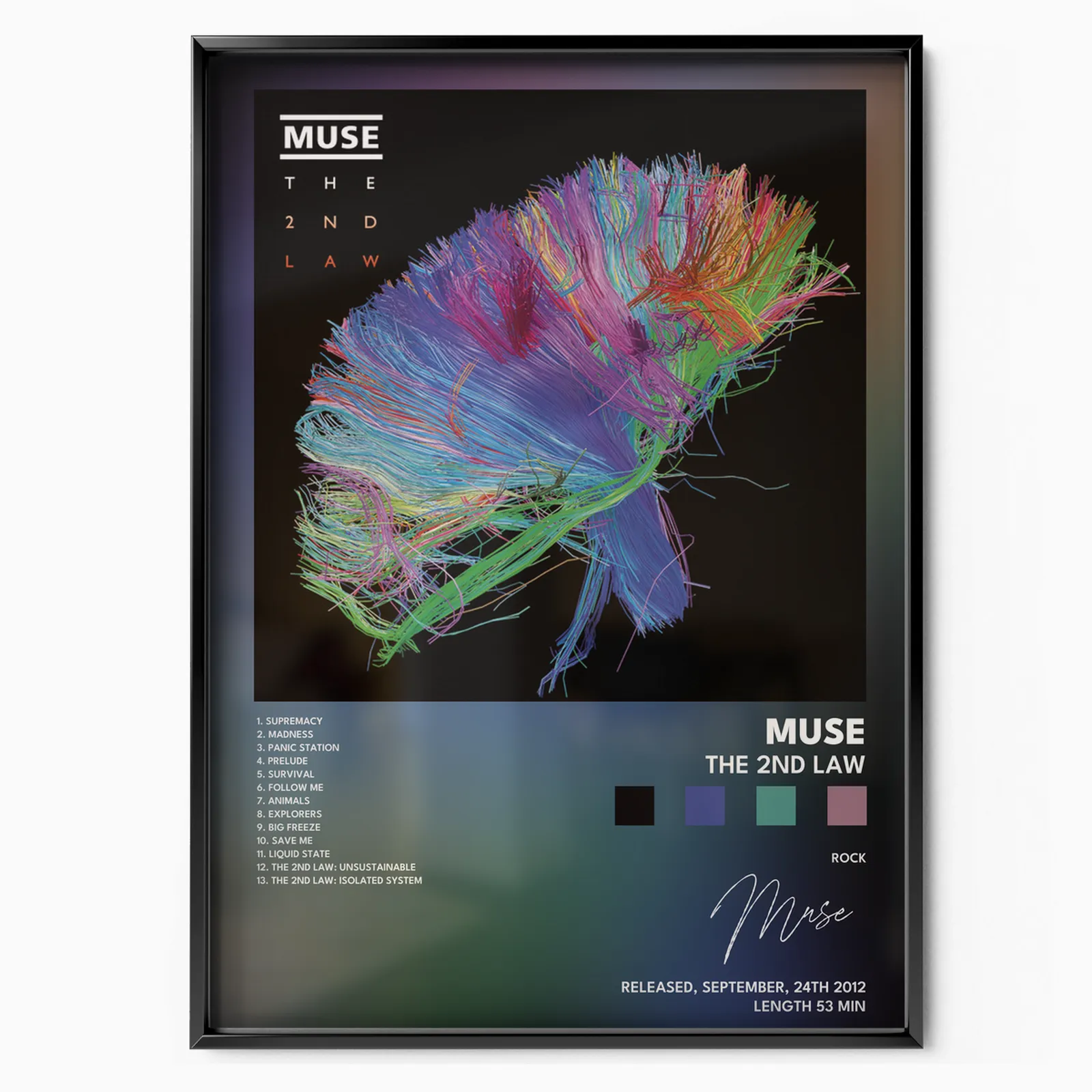
- The 2nd Law Dubstep drops, Madness and Survival, the official song of the 2012 London Olympics.
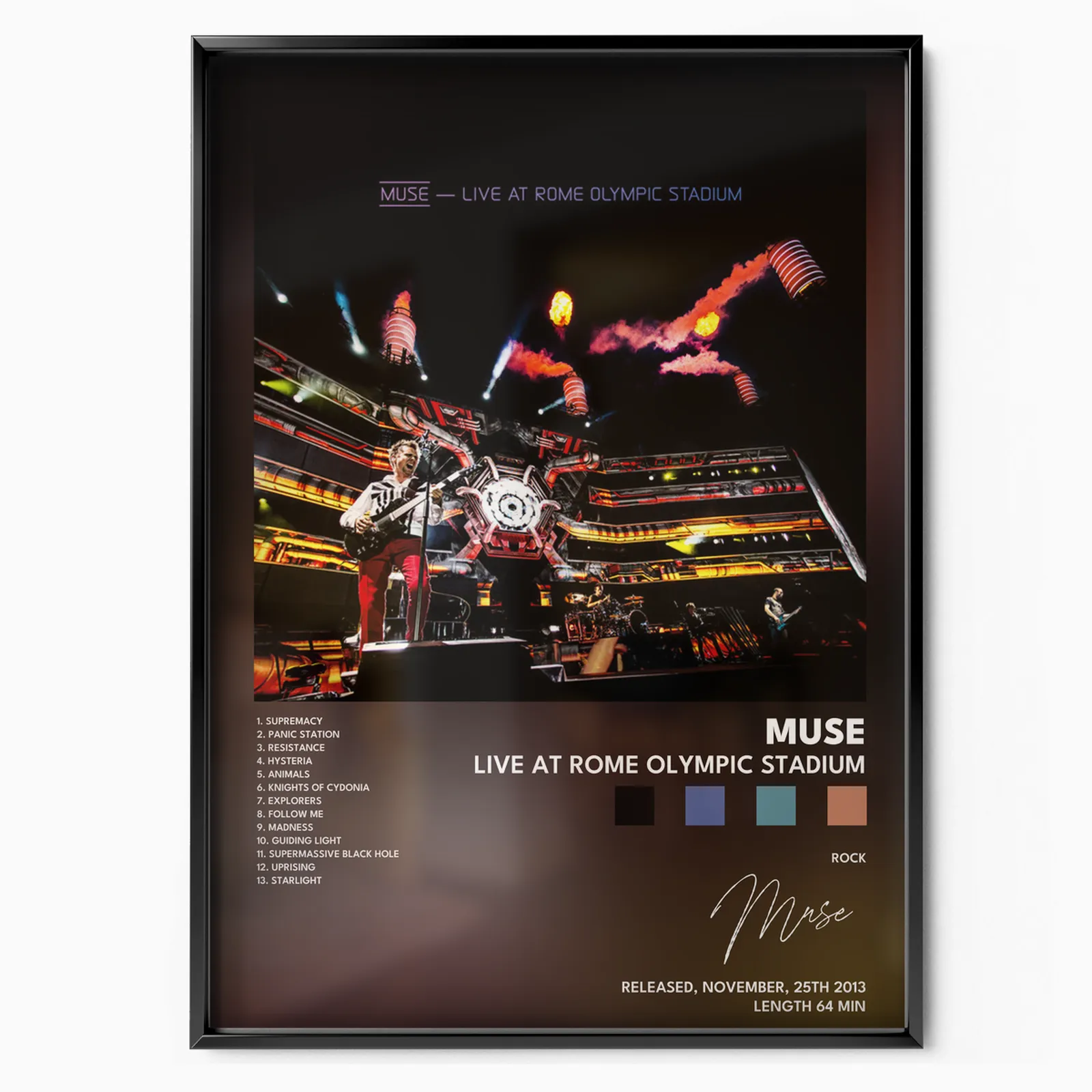
- Live at Rome Olympic Stadium A 60,000-strong Stadio Olimpico night captured as the first concert film shot in 4K.
Concept and Revolt2015-2022
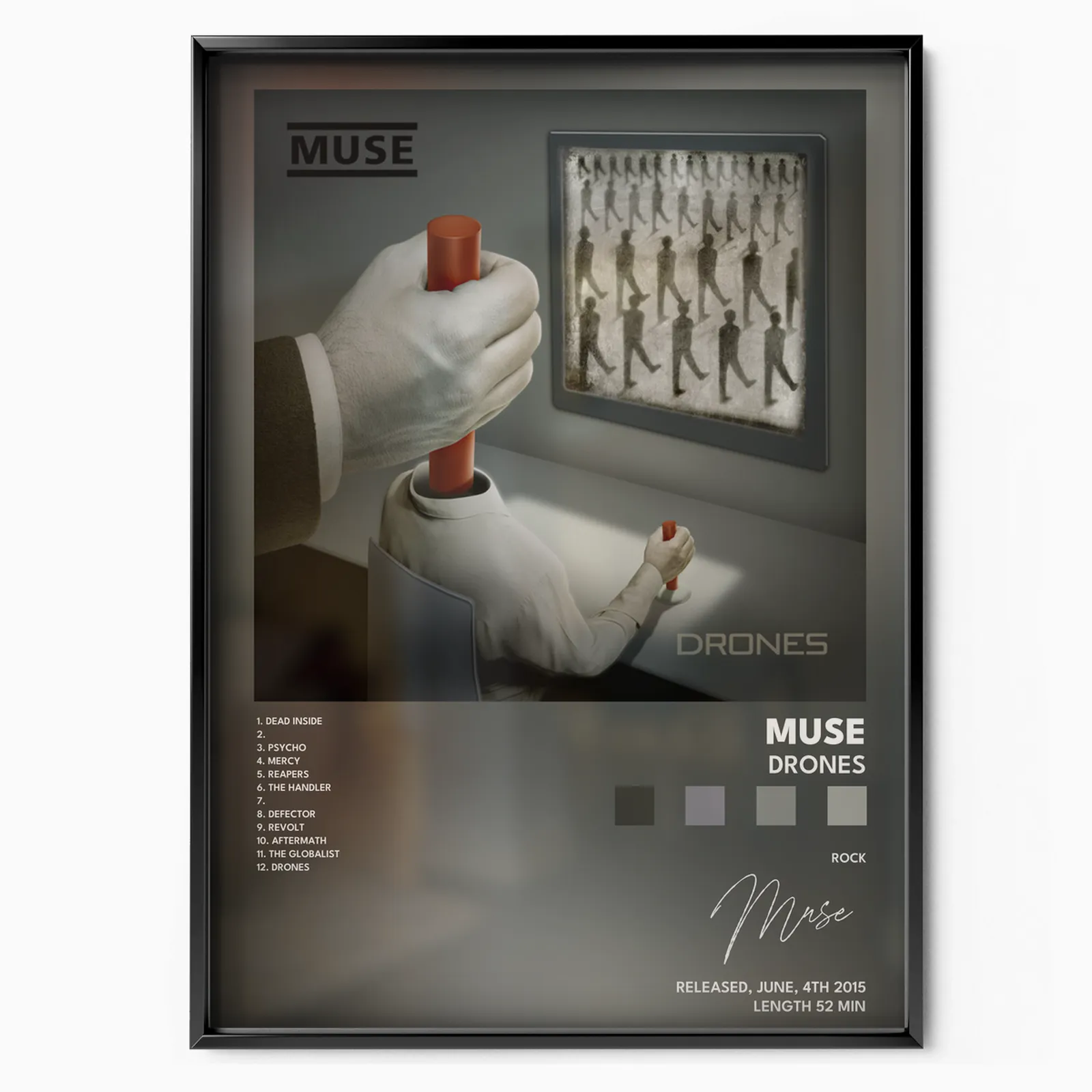
- Drones A Grammy-winning concept album about a soldier turned human drone, number one worldwide.
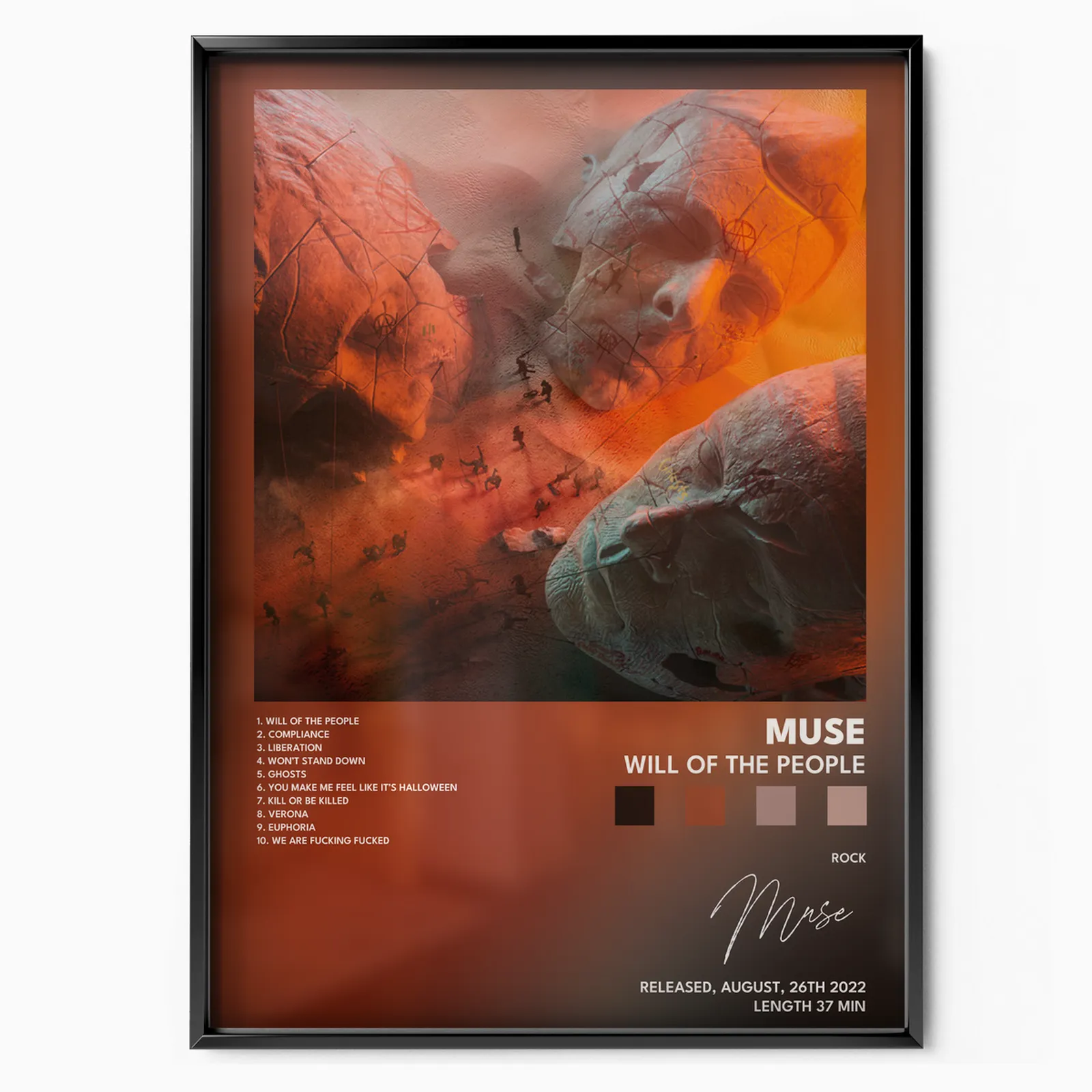
- Will of the People Riot-ready graphics and arena anthems that delivered a seventh UK number one.
Why Muse Belong on the Wall
Muse have always thought bigger than the average rock band. Across three decades the Devon trio of Matt Bellamy, Chris Wolstenholme and Dominic Howard have wrapped their sound in dystopian sci-fi, cosmic physics and political revolt, and their album covers carry every ounce of that ambition. Printed large, they stop reading as record sleeves and start reading as art: surreal, cinematic and built to be stared at. That is exactly what makes a Muse poster work over a sofa, above a desk or beside a stereo, and why the artwork rewards a proper museum-grade print rather than a thumbnail on a screen.
The Covers That Became Art
The centrepiece of any Muse wall is Black Holes and Revelations. It was shot by Storm Thorgerson, the Hipgnosis co-founder who gave Pink Floyd the prism of The Dark Side of the Moon. Thorgerson staged four suited figures around a red table in the Bardenas desert of Spain, colour-filtered into a Martian landscape, a modern take on the four horsemen of the apocalypse. It is one of the most reproduced covers of the 2000s and it hangs like a film still. Origin of Symmetry, photographed by William Eager, is its stranger sibling: an image built around a custom pipe organ, its title borrowed from physicist Michio Kaku, all cold blue geometry and sci-fi unease. Later sleeves lean fully dystopian, from the riot-ready graphics of Will of the People to the drone-swarm concept of Drones.
A Simple Buying Guide
Every design comes museum-grade, so your choice is really about scale and framing. A4 is the pick-and-mix size for a cluster or a shelf lean. A3 is the comfortable single statement above a desk. A2 commands a wall on its own, and A1 is the true centrepiece for a hallway or a large living room. Then choose your finish: a black frame for graphic punch and contrast, a white-chrome frame for a lighter, brighter gallery look, or unframed if you already have your own frames or prefer to clip and pin. Digital editions are there too when you want to print at home.
Building the Gallery Wall
Muse reward a grouped hang because the covers share a palette of deep reds, cold blues and black. Anchor the wall with a large Black Holes and Revelations or The Resistance, then flank it with two or three smaller sizes for rhythm. Mix a Thorgerson desert scene with the electric graphics of the later records and you get contrast without clutter. Keep the frames consistent, leave five to seven centimetres of breathing room between pieces, and hang the centre line at eye level. Whether you are marking a single favourite era or covering the whole run from Teignmouth clubs to sold-out stadiums, a Muse poster brings some of rock's most cinematic artwork straight into the room. Storm Thorgerson, the designer behind Pink Floyd sleeves, framed the Black Holes and Revelations cover as four suited figures seated at a red table on a barren planet, a surreal tableau that rewards the extra scale of a large print and pulls the eye across the room.
Browse every Muse poster in this collection (8)
muse Origin of Symmetry posterFrom A$29.99
muse The Resistance posterFrom A$29.99
muse Showbiz posterFrom A$29.99
muse Black Holes and Revelations posterFrom A$29.99
muse Will Of The People posterFrom A$29.99
muse The 2nd Law posterFrom A$29.99
muse Live at Rome Olympic Stadium posterFrom A$29.99
muse Drones posterFrom A$29.99
From a Devon School Band to the Stadium Circuit
Muse formed in Teignmouth in 1994, three teenagers who met at the local community college and spent years playing pub back rooms before the debut album Showbiz arrived in 1999. What followed was one of rock's great slow-building ascents: bigger songs, bigger ideas and, eventually, some of the biggest stages on earth. Two Grammy wins for Best Rock Album, chart-topping records on both sides of the Atlantic and a live show famous for lasers, drones and orchestral scale turned them into a genuine stadium institution.
That trajectory is exactly why the artwork rewards printing. These are covers made by people who think in widescreen, from Storm Thorgerson's apocalyptic desert to the riot graphics of the 2020s. Pick the record that soundtracked your own story, choose a size from A4 to A1 and a frame that fits the room, and give the artwork the wall space it was always built for. Every print is produced to museum standard, so the colour grading and fine detail hold up close, whether a single poster hangs alone above the sofa or a full set leads a whole gallery of Muse covers down the hall.
Good to know about Muse
- Muse are an English rock trio from Teignmouth, Devon, formed in 1994. Matt Bellamy (vocals, guitar, piano), Chris Wolstenholme (bass) and Dominic Howard (drums) met as teenagers at Teignmouth Community College.
- The covers for Absolution (2003) and Black Holes and Revelations (2006) were created by Storm Thorgerson, co-founder of the design studio Hipgnosis and the artist behind Pink Floyd's The Dark Side of the Moon.
- The Black Holes and Revelations cover was shot in the Bardenas desert of Spain and colour-filtered to resemble a Martian landscape. Its four suited figures at a red table are a modern take on the four horsemen of the apocalypse.
- Knights of Cydonia, from Black Holes and Revelations, is a spaghetti-western style epic complete with harmonica, and its title nods to the Cydonia region on Mars.
- The album title Origin of Symmetry comes from theoretical physicist Michio Kaku's book Hyperspace, and the 2001 cover was photographed by William Eager around a custom-built pipe organ.
- The Resistance (2009) won the Grammy for Best Rock Album in 2011, drew on the dystopia of George Orwell's 1984, and closes with the three-part orchestral suite Exogenesis: Symphony.
- The 2nd Law (2012) marked Muse's electronic and dubstep turn on tracks like Unsustainable and Madness. Its lead single Survival was the official song of the 2012 London Olympics and was performed at the closing ceremony.
- Drones (2015) is a concept album following a soldier indoctrinated as a human drone. It topped both the UK and US charts and won the Grammy for Best Rock Album in 2016.
- Will of the People (2022) gave Muse their seventh UK number one album, extending one of British rock's most consistent chart records.
- Live at Rome Olympic Stadium captures Muse's 6 July 2013 show at the Stadio Olimpico in front of 60,963 fans, and was the first concert film ever presented in 4K.