
Few bands turned the record sleeve into a manifesto the way The Smiths did. Between 1982 and 1987 the Manchester quartet of Morrissey, Johnny Marr, Andy Rourke and Mike Joyce built a catalogue that sounds unmistakable and looks even more so. Morrissey almost never put the band on a cover. Instead he pulled a single, arresting figure from cinema, theatre or forgotten photography, tinted it, and let that face carry the mood of the songs. That is exactly why these posters work on a wall: each one is a piece of pop-culture history before you even reach the music.
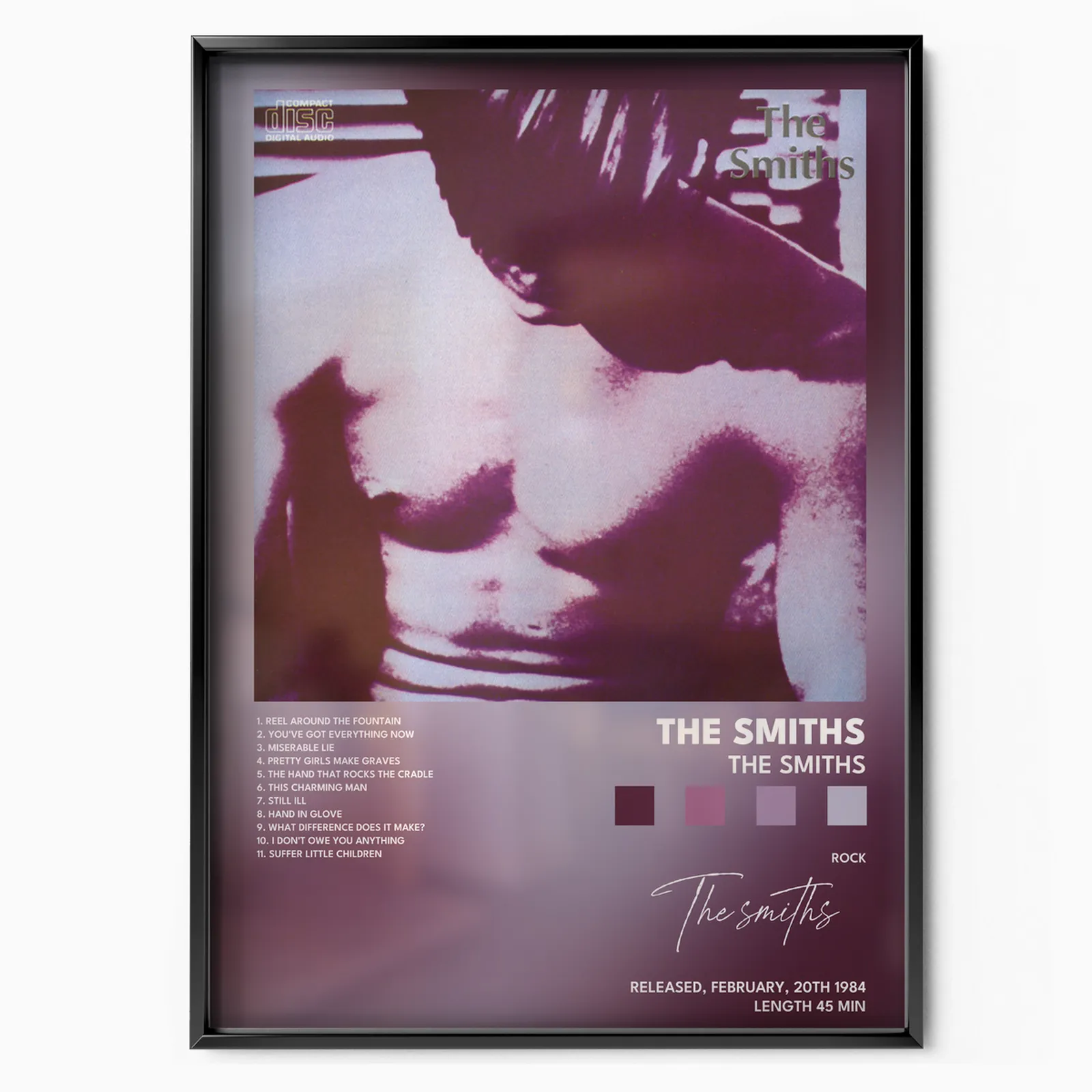
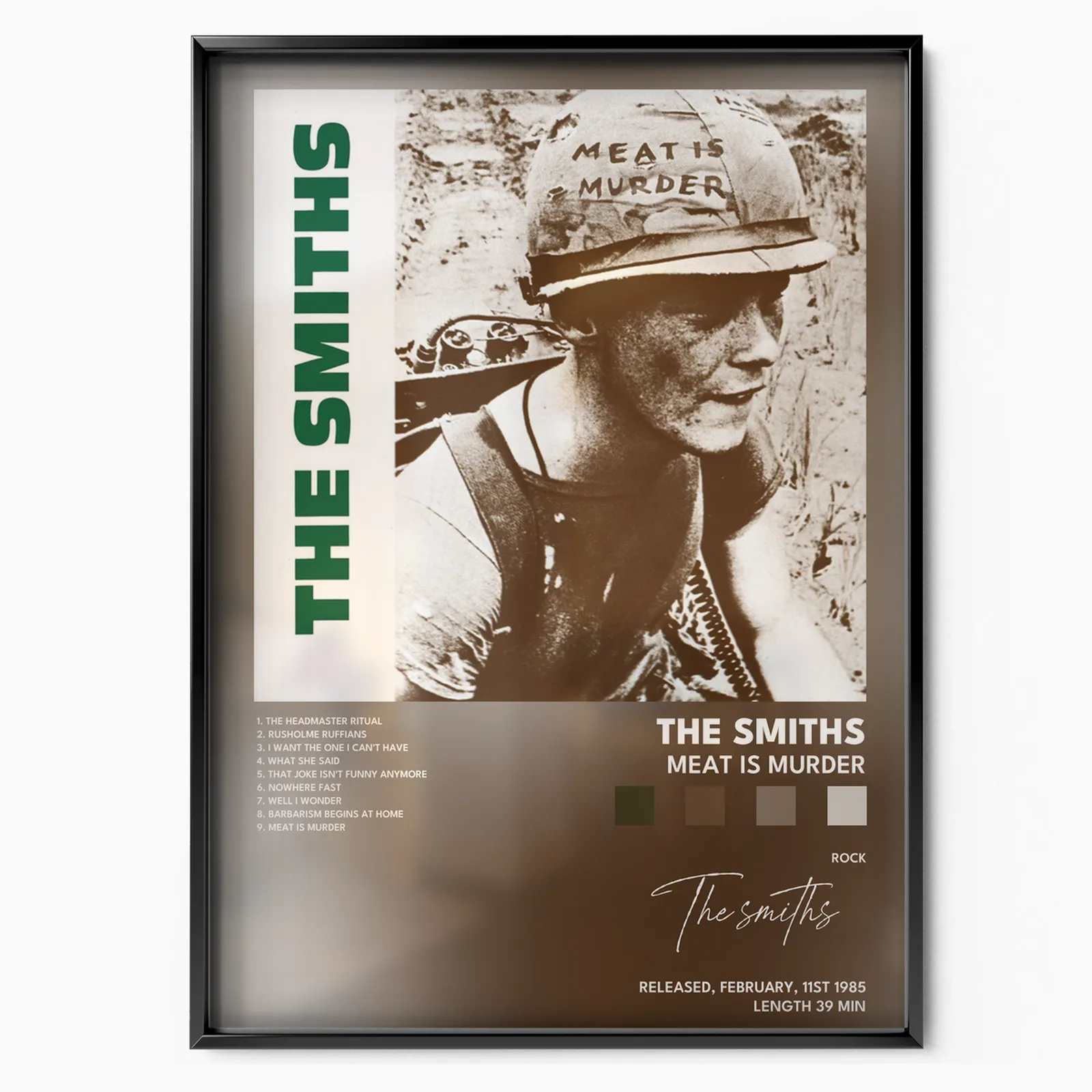
Start with the record that began everything. The Smiths, released on Rough Trade in February 1984, crops a still of American actor Joe Dallesandro taken from Andy Warhol's 1968 film Flesh. It set the template at once: no band photo, just an icon and a feeling. A year later came Meat Is Murder, the group's second album and the only studio LP to reach number one on the UK chart. Its cover reworks a 1967 press photograph of a US Marine in Vietnam, with the helmet slogan changed to read as the album title. It is a poster that argues a point, which was the whole idea.
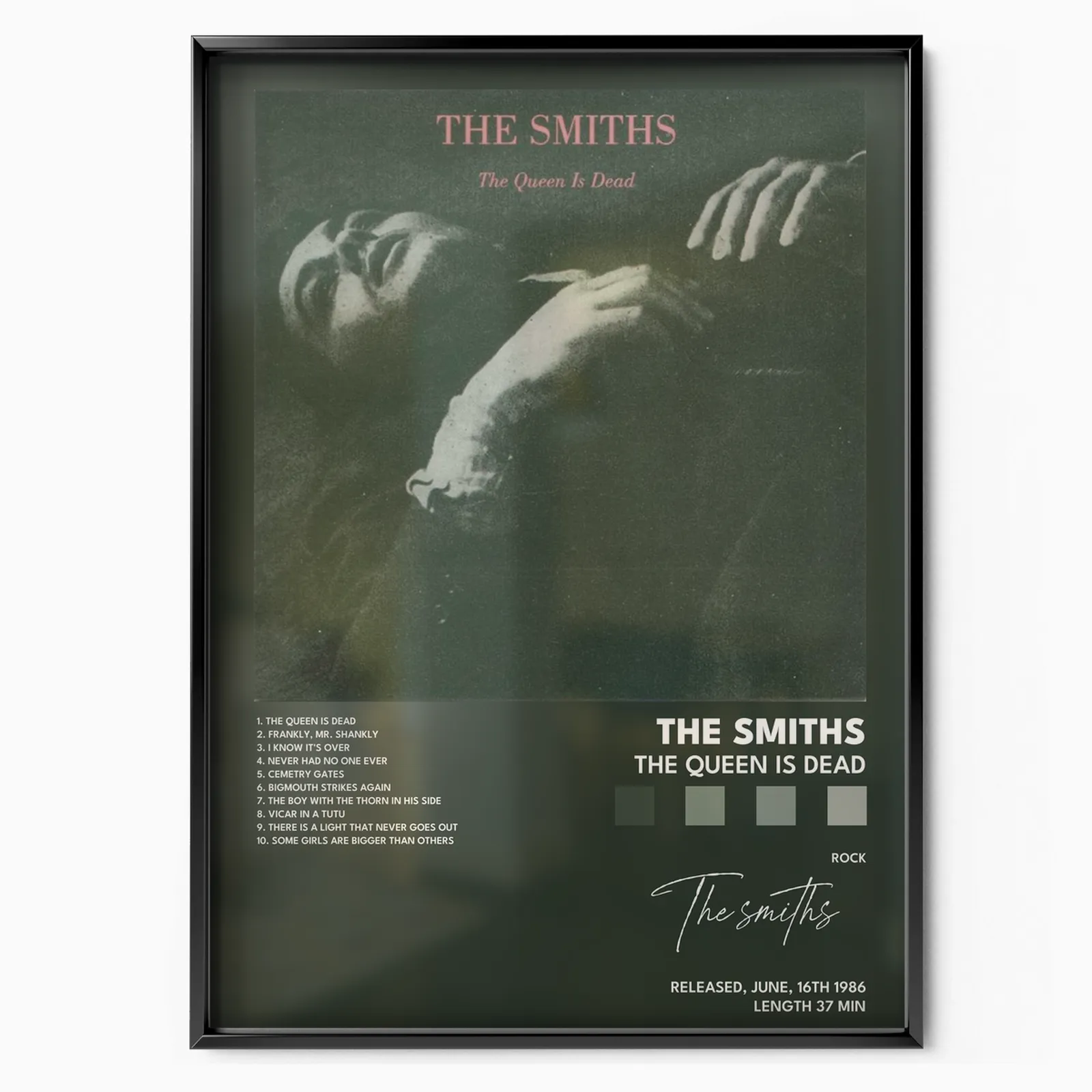
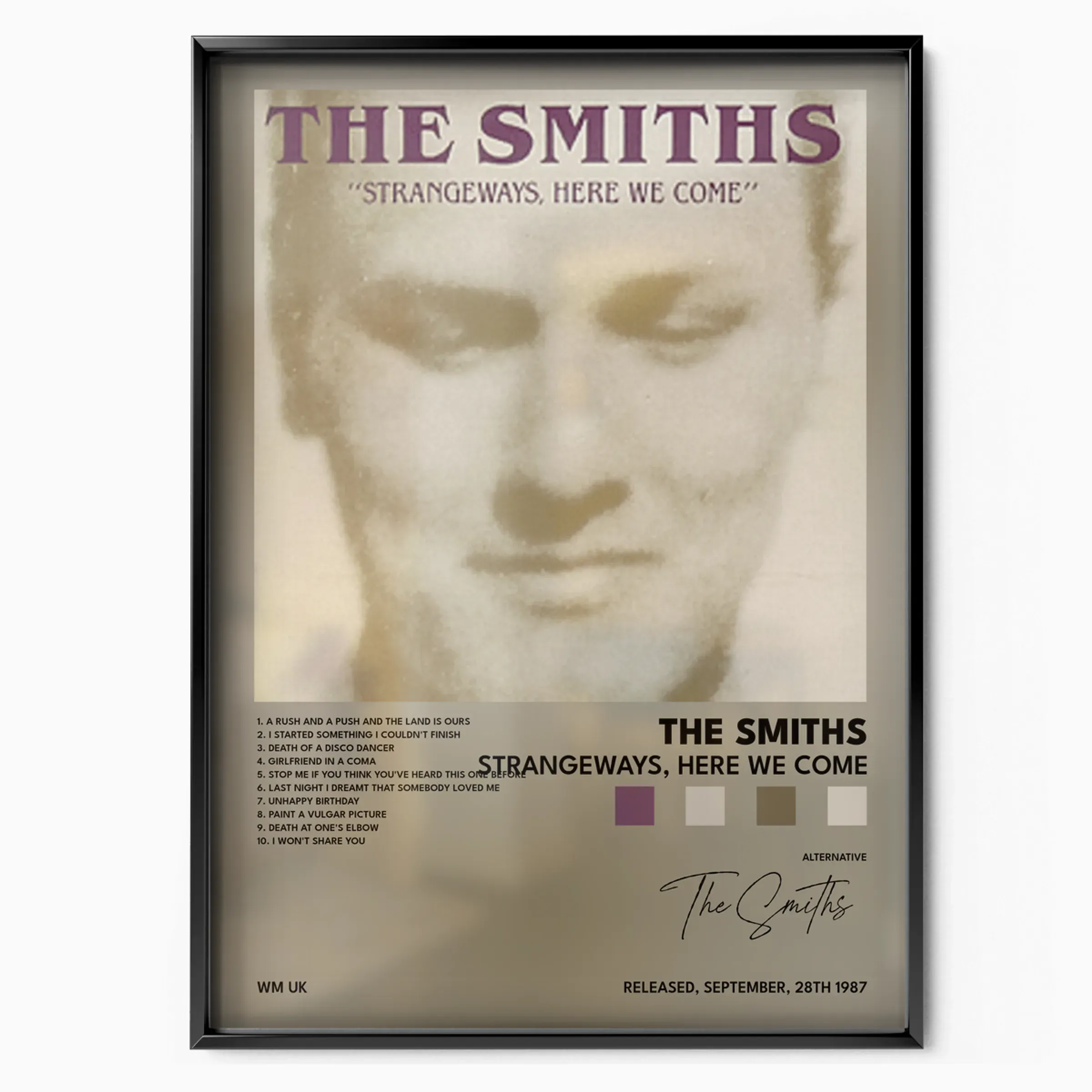
Then comes the crown. The Queen Is Dead from 1986 lifts a green-tinted frame of French actor Alain Delon lying still in the 1964 film L'Insoumis. In 2013 NME voted it the greatest album of all time, and its sleeve is arguably the most recognisable in the band's whole run. The story then closed with Strangeways, Here We Come, the fourth and final studio album, released in September 1987 just after the group split. Its cover star is Richard Davalos, who played opposite James Dean in East of Eden, and all four members have named it their finest record. It also carried the band's final single, the aching Last Night I Dreamt That Somebody Loved Me, which Morrissey and Marr have both called their favourite Smiths song.
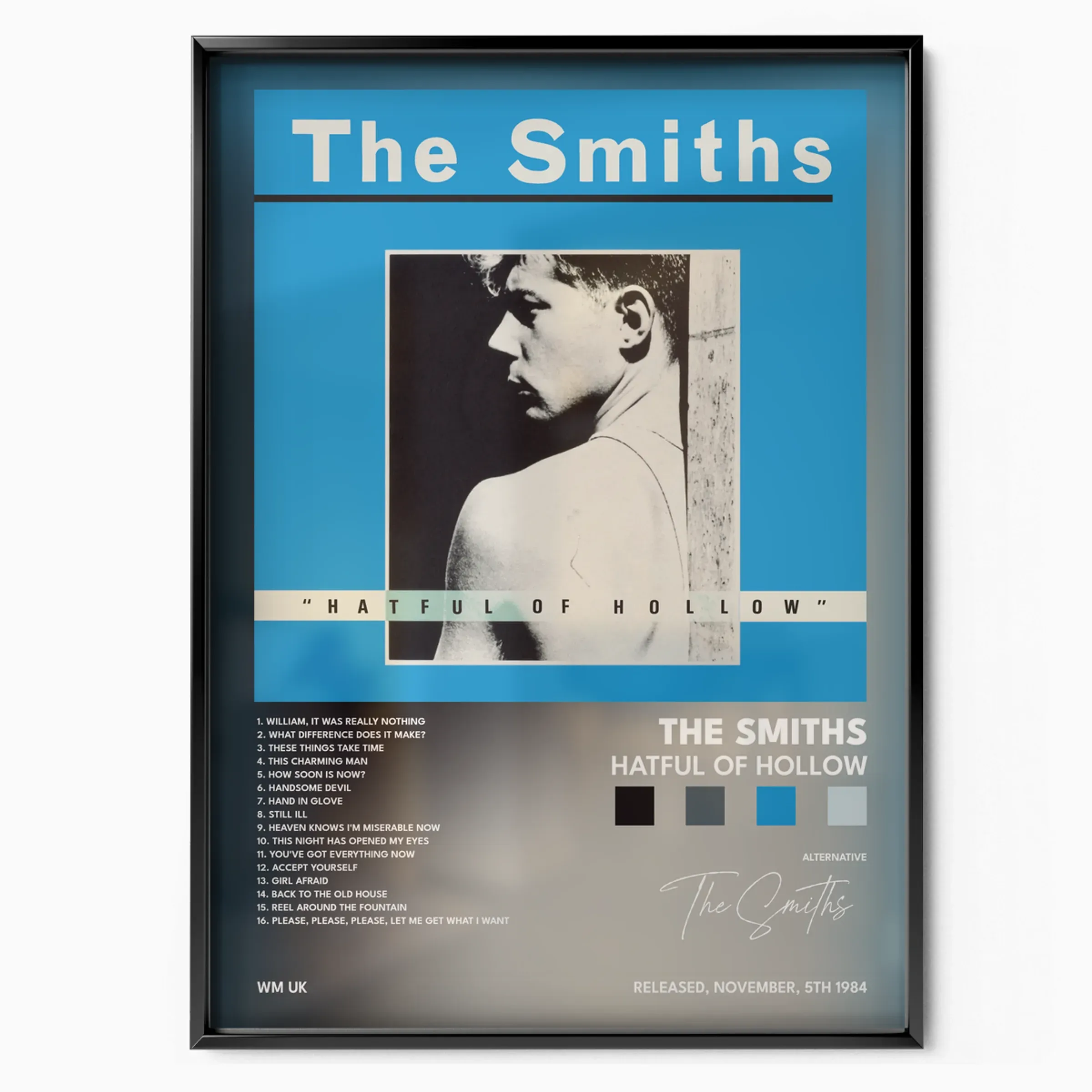
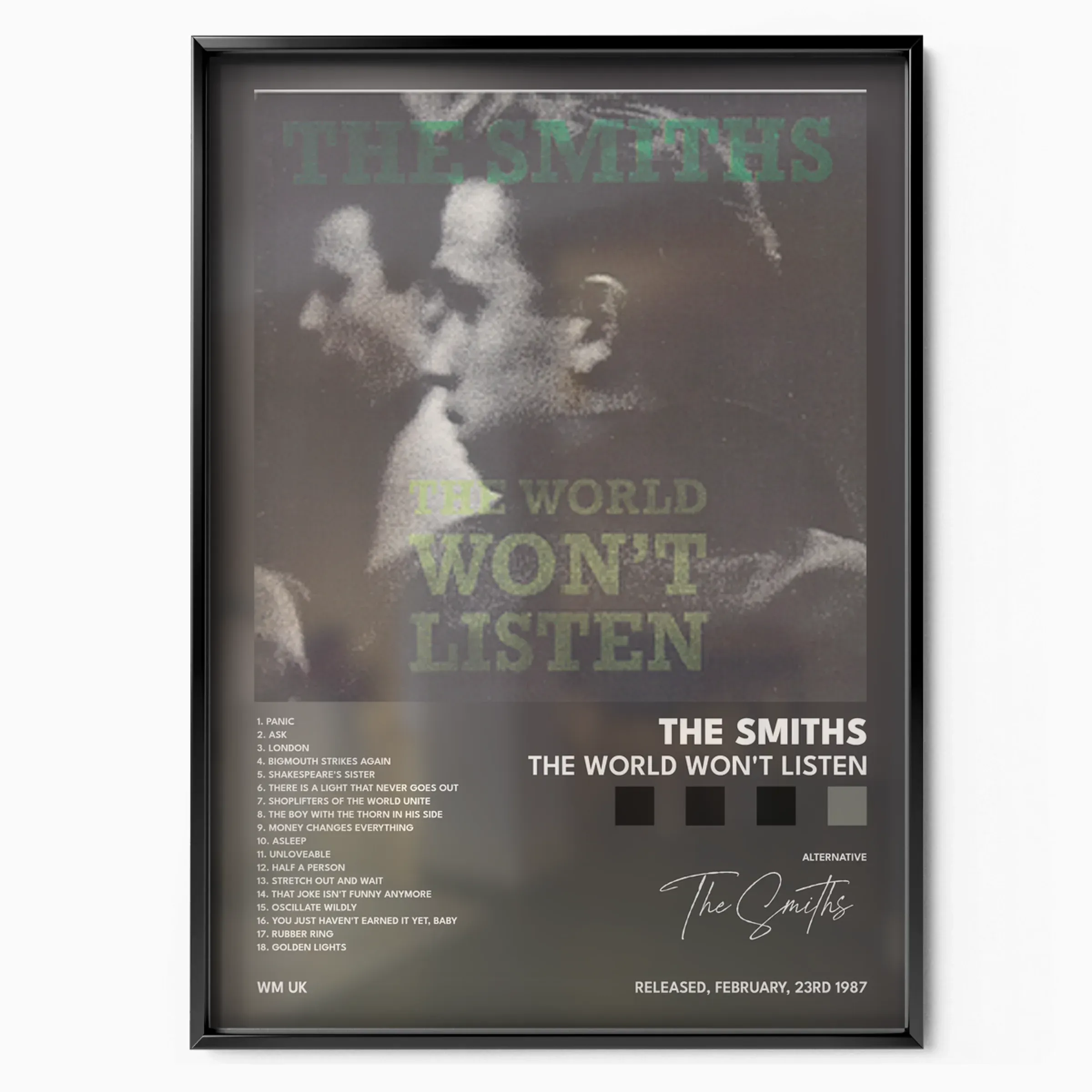
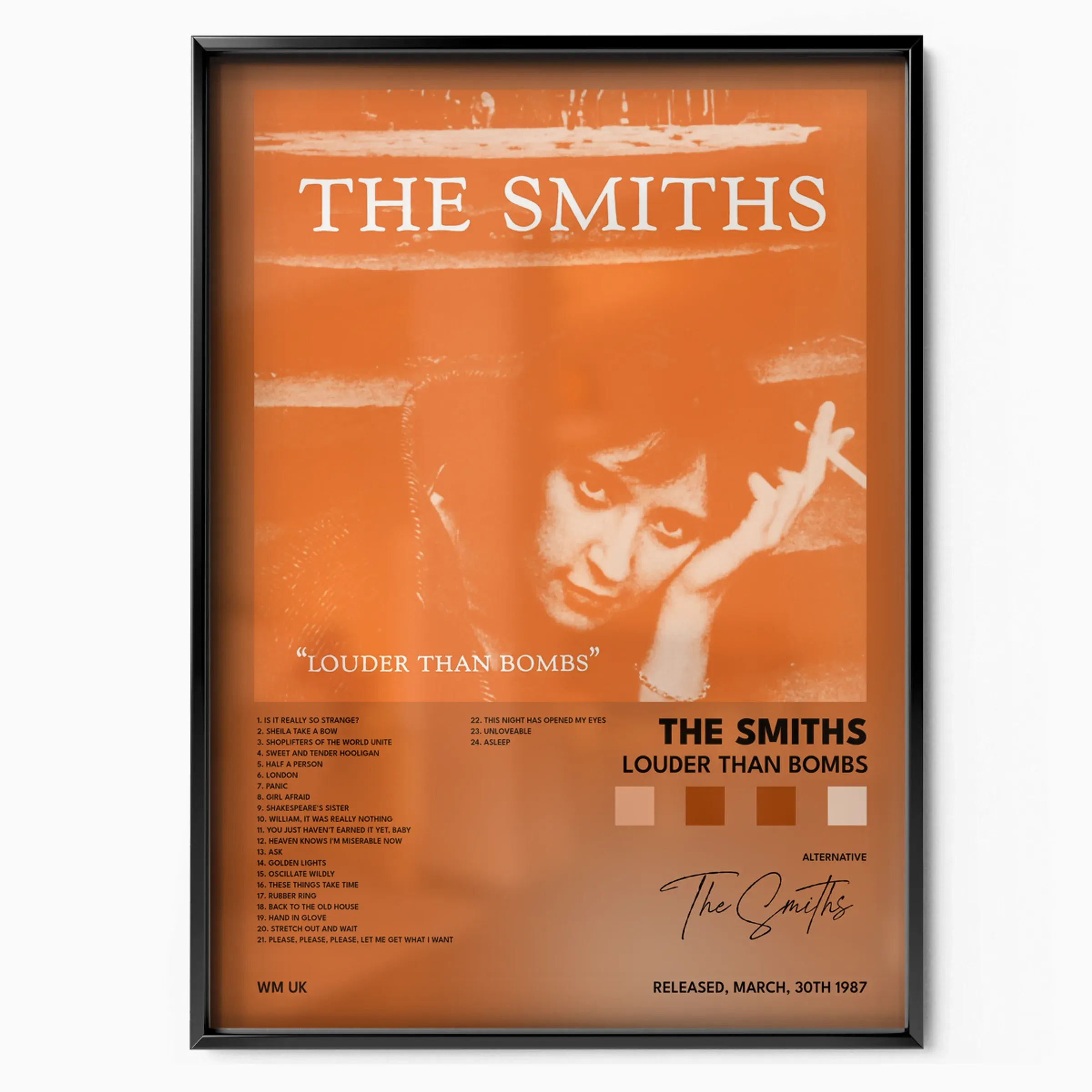
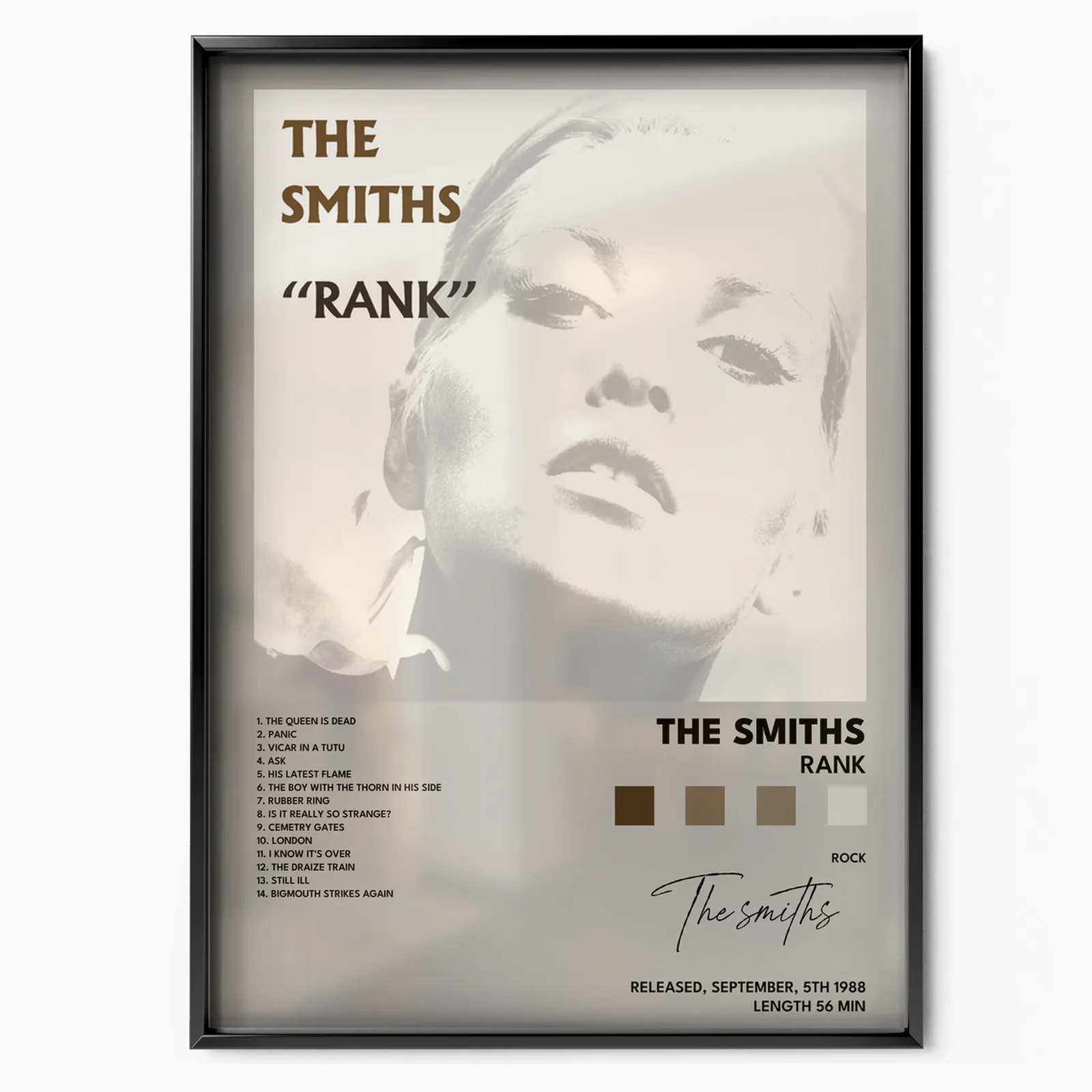
The compilations are just as collectable. Hatful of Hollow, gathered from BBC Radio 1 sessions and singles in late 1984, carries a striking portrait whose tattoo nods to the artist Jean Cocteau. The World Won't Listen from 1987 uses a Jurgen Vollmer photograph of young women at a fairground, an image Morrissey felt mirrored the band itself. The American double album Louder Than Bombs, issued the same year to stand in for the two UK compilations, honours Salford playwright Shelagh Delaney, whose work Morrissey adored. And for the stage there is Rank, the band's only official live album, recorded in London in 1986 and fronted by actress Alexandra Bastedo in a sleeve Morrissey designed himself.
Hung together, these covers read as a single visual language: 1960s film stills, black-and-white glamour and a rebel gaze, all filtered through Morrissey's eye. That consistency is what makes a Smiths wall so satisfying. You can build a chronological run from the self-titled debut through Meat Is Murder and The Queen Is Dead to Strangeways, Here We Come, or mix the studio albums with a compilation like Louder Than Bombs for a fuller portrait of a band that burned bright and brief.
Every poster is printed on heavyweight matte stock in four sizes: A4, A3, A2 and A1. That range lets you scale a single statement piece up to A1, or keep a tighter cluster in A3 and A4. Choose your print unframed, or add a black frame or a chromed white frame to suit your room; the monochrome and tinted covers look especially sharp behind glass, where the deep contrast really comes forward.
For a gallery wall, a simple rule keeps it looking intentional. Hang three posters at the same size in a row with an even gap of a few centimetres, keep the largest print at eye level, and let the different cover stars face one another across the arrangement so the whole grouping feels like one piece. A grid of four studio sleeves also works beautifully above a sofa or a record player, turning the discography into a timeline you can read at a glance.
Collectors often start with one favourite and grow the set over time, and the shared visual language of the covers means new additions always feel at home next to the old ones. Because Morrissey sourced almost every image from cinema, theatre and vintage photography, each poster doubles as a small window onto the artists and eras he loved, from Warhol's downtown New York to the kitchen-sink drama of Salford. That layered backstory is part of the appeal: the sleeves reward a second look long after the novelty of a new print has settled in.
Whether you came for the songs of Morrissey and Marr or for the sleeves that framed them, these prints turn a favourite era into a wall you will keep coming back to. The band was short-lived, and the recordings still feel urgent decades on, but the images have never dated. Pick the cover that means the most to you and give it the space it deserves.