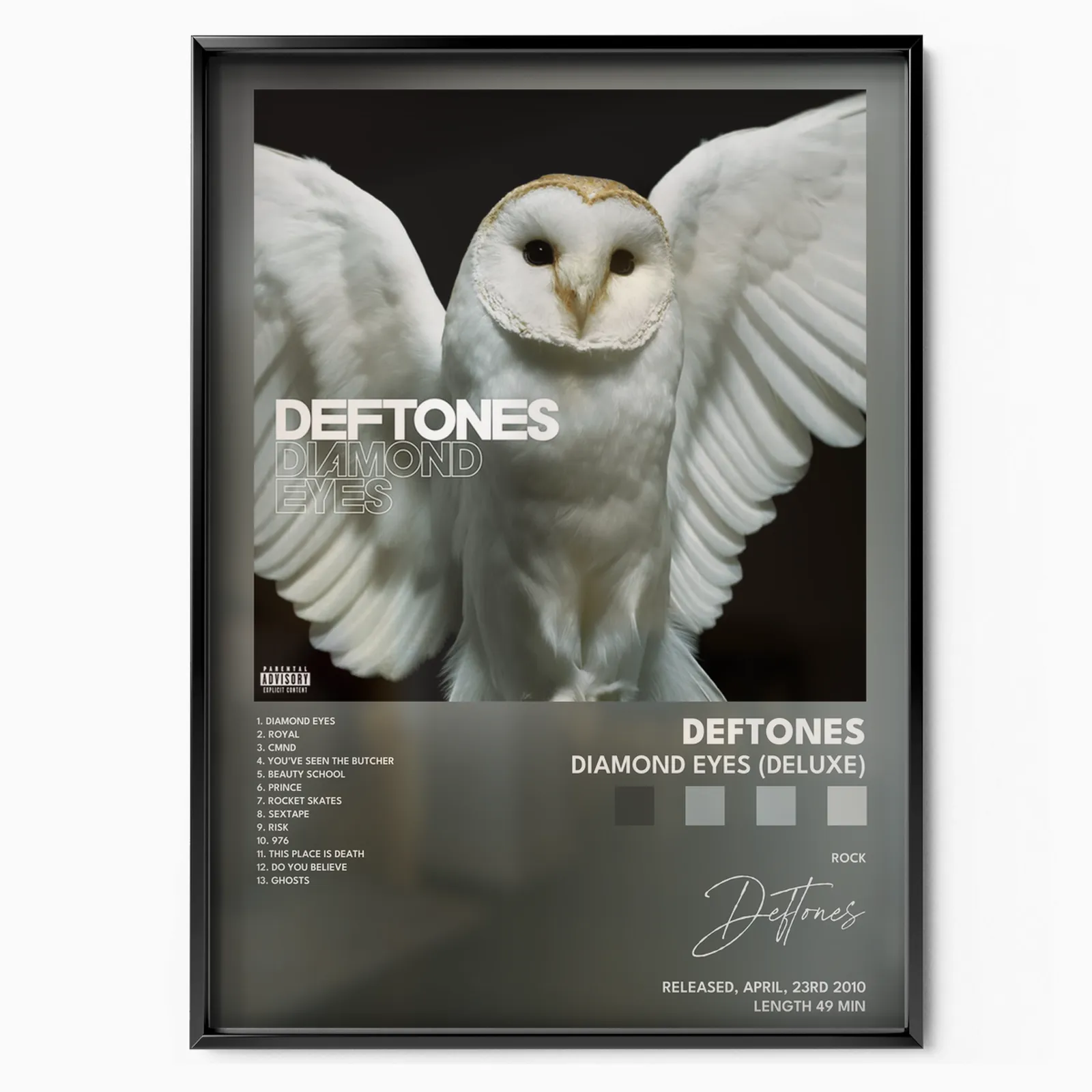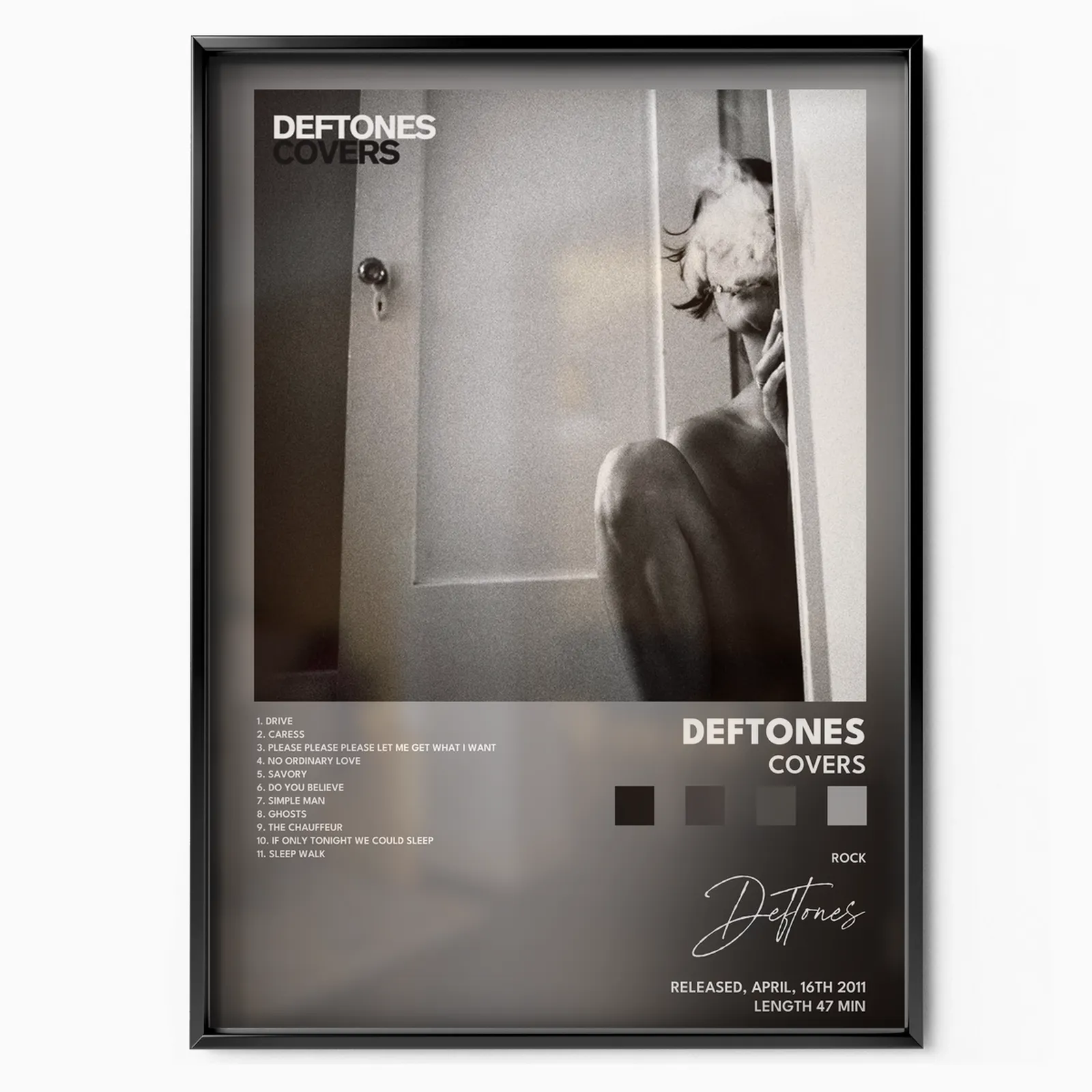
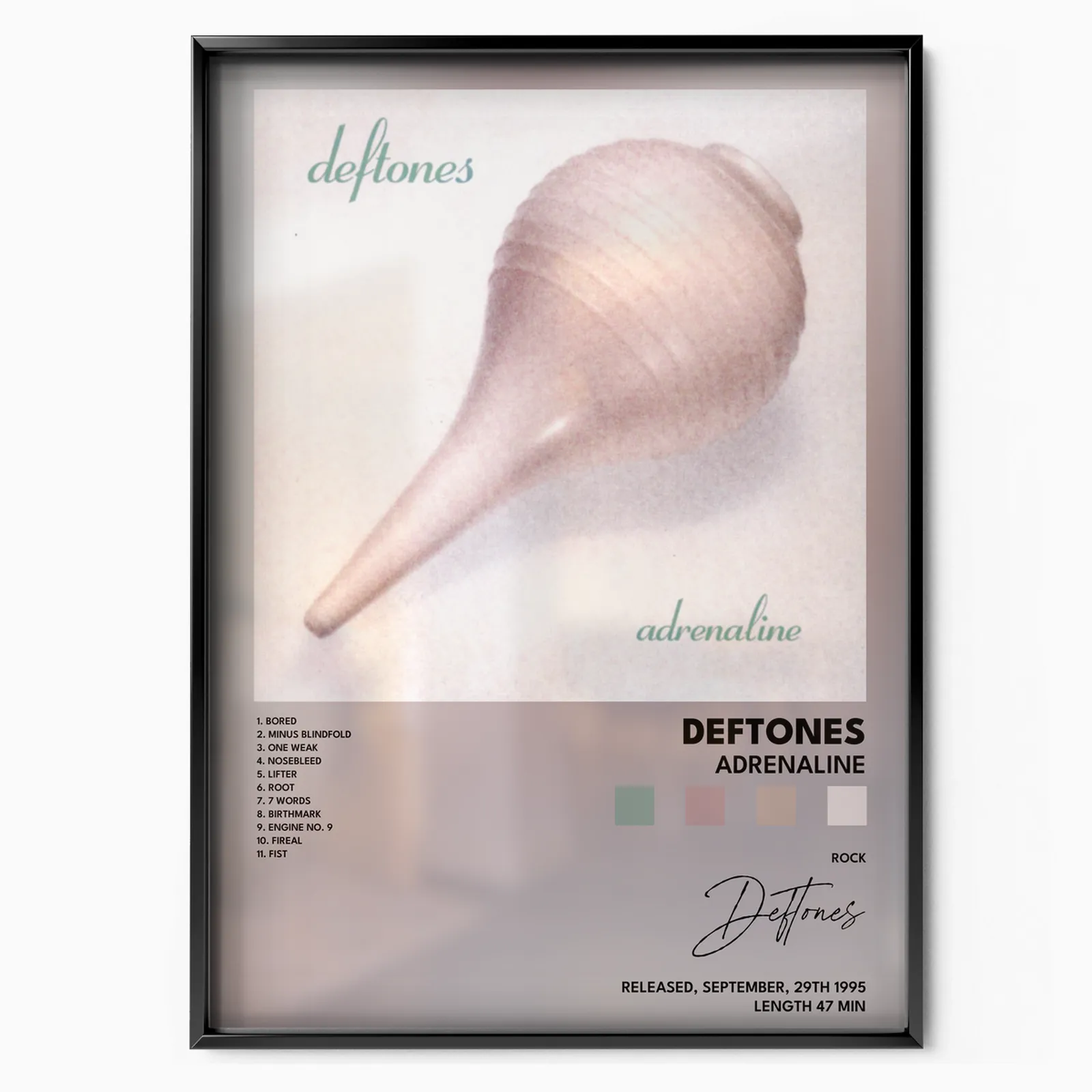
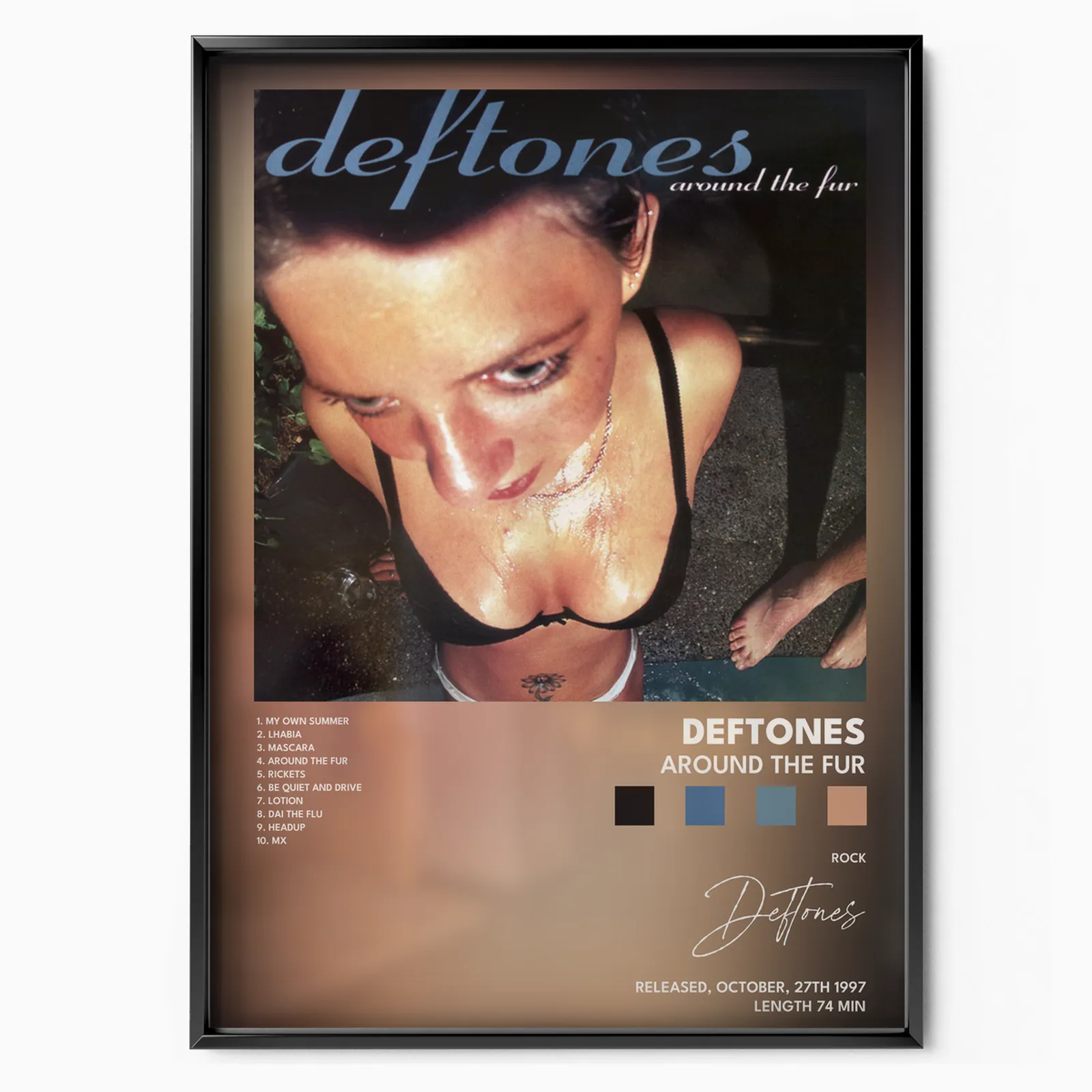
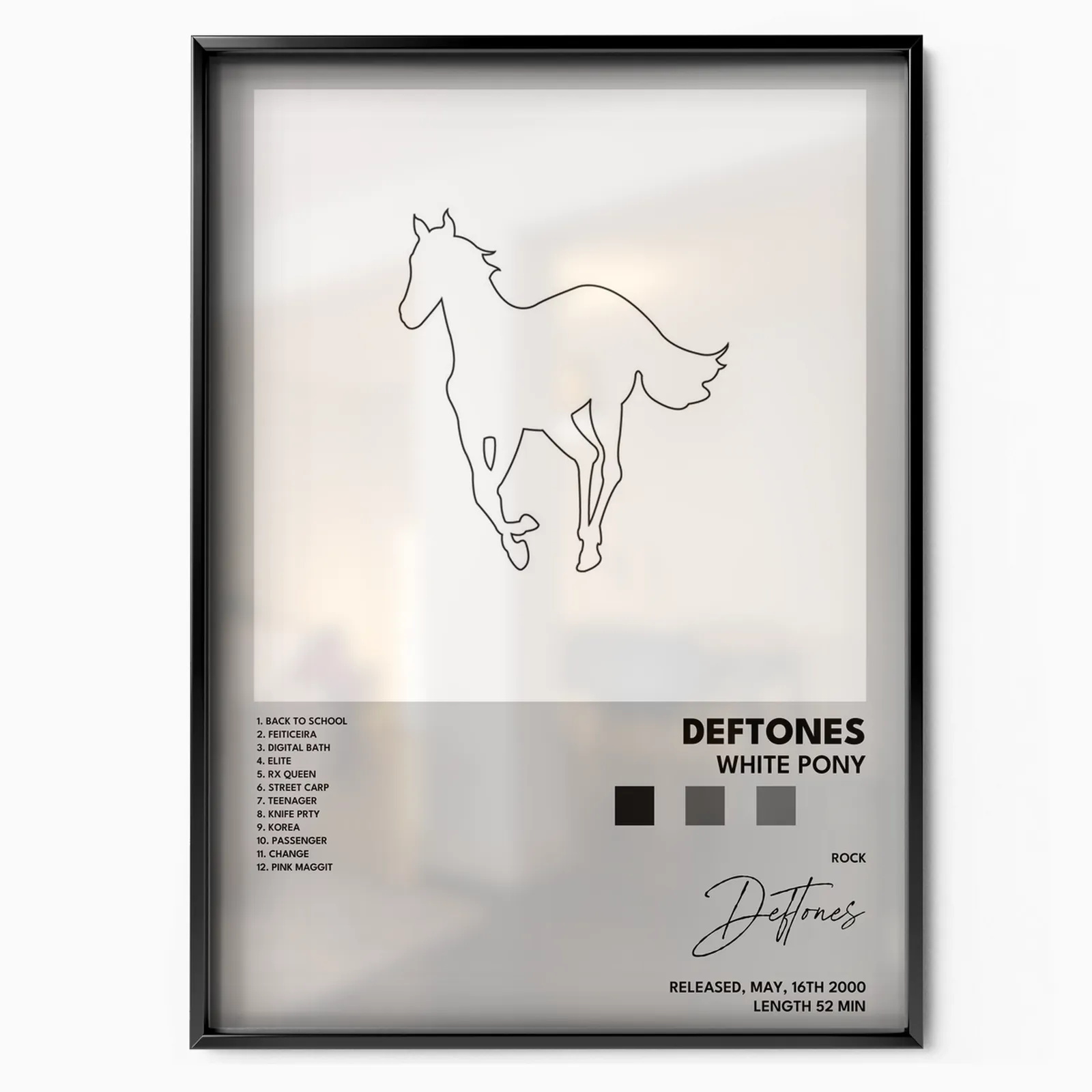
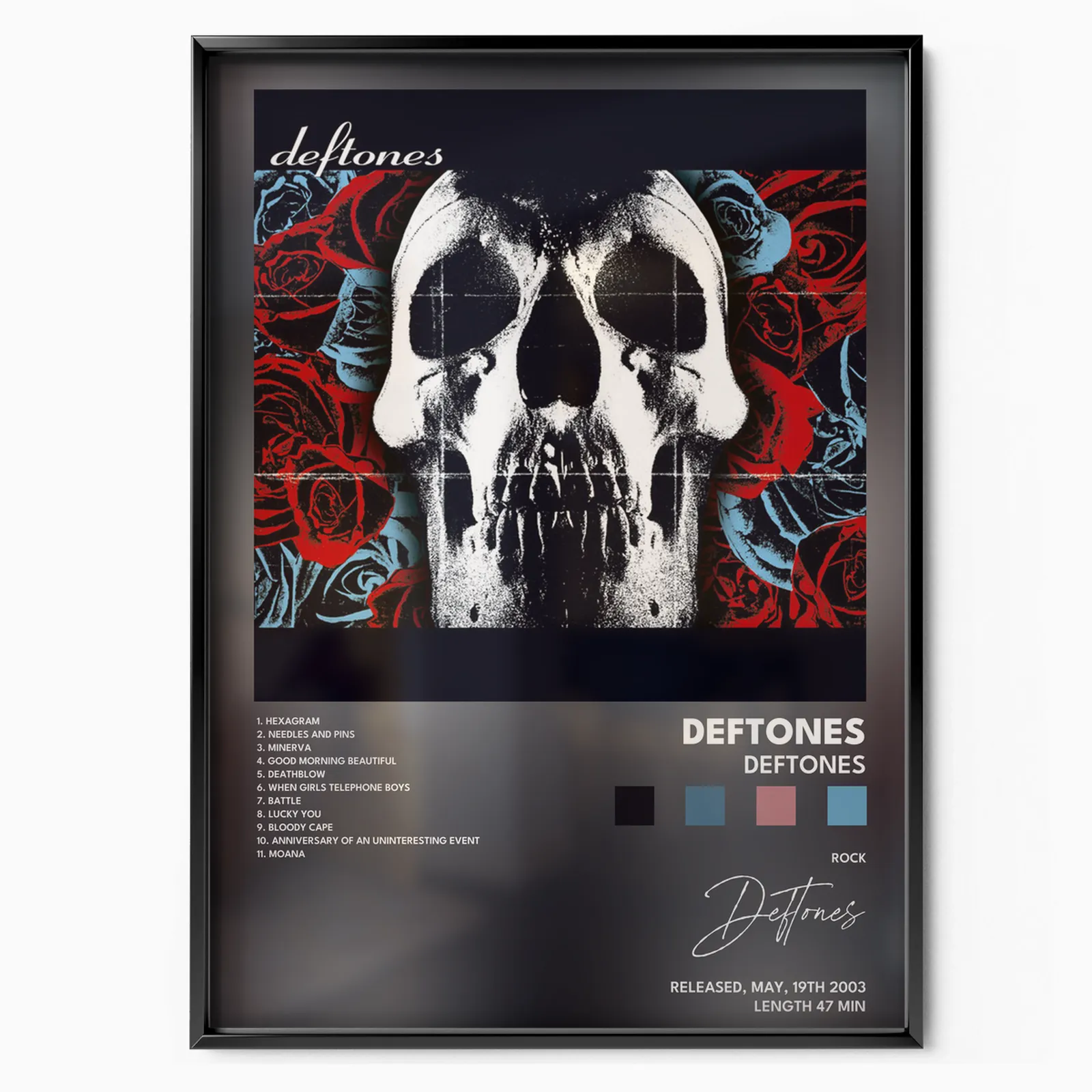
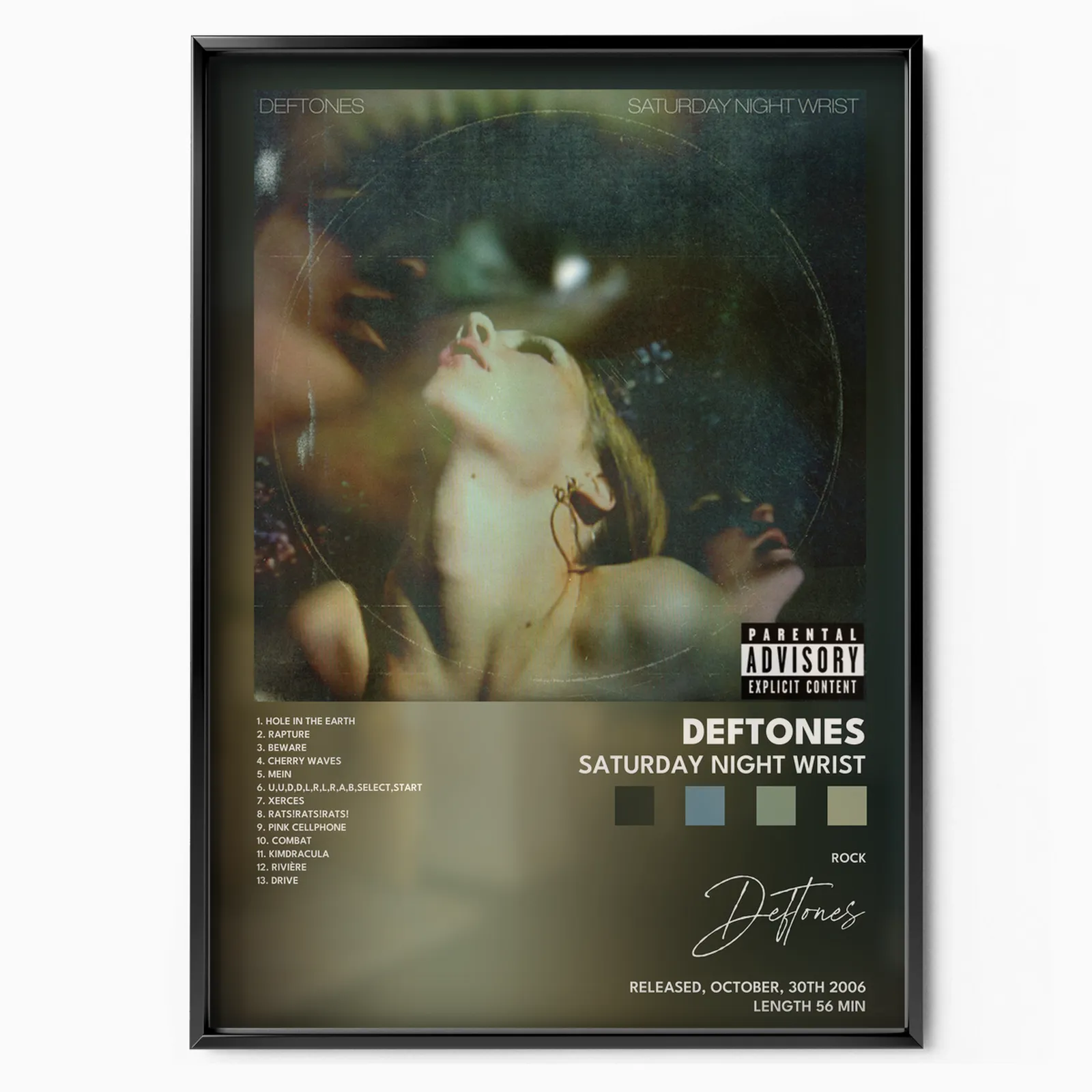
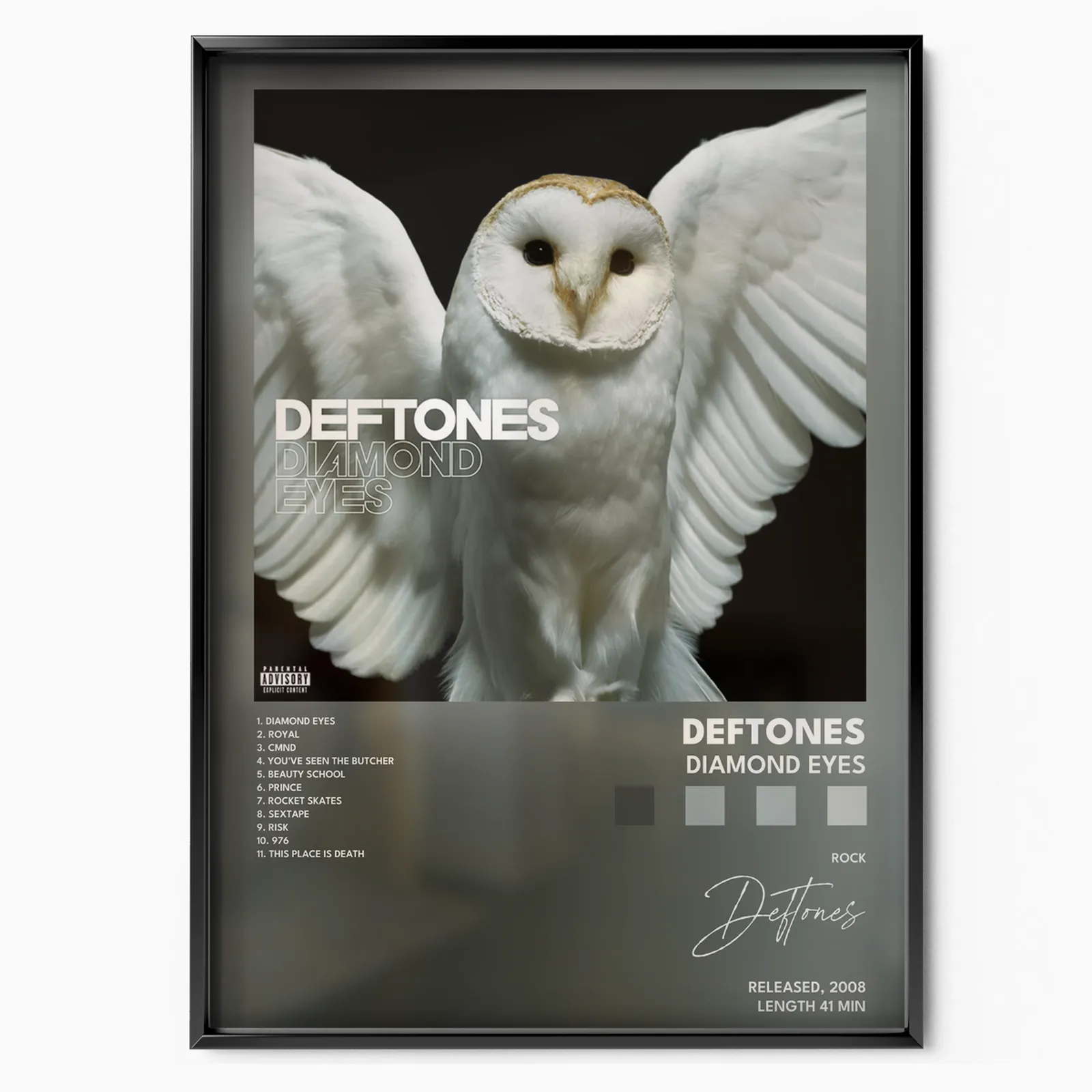
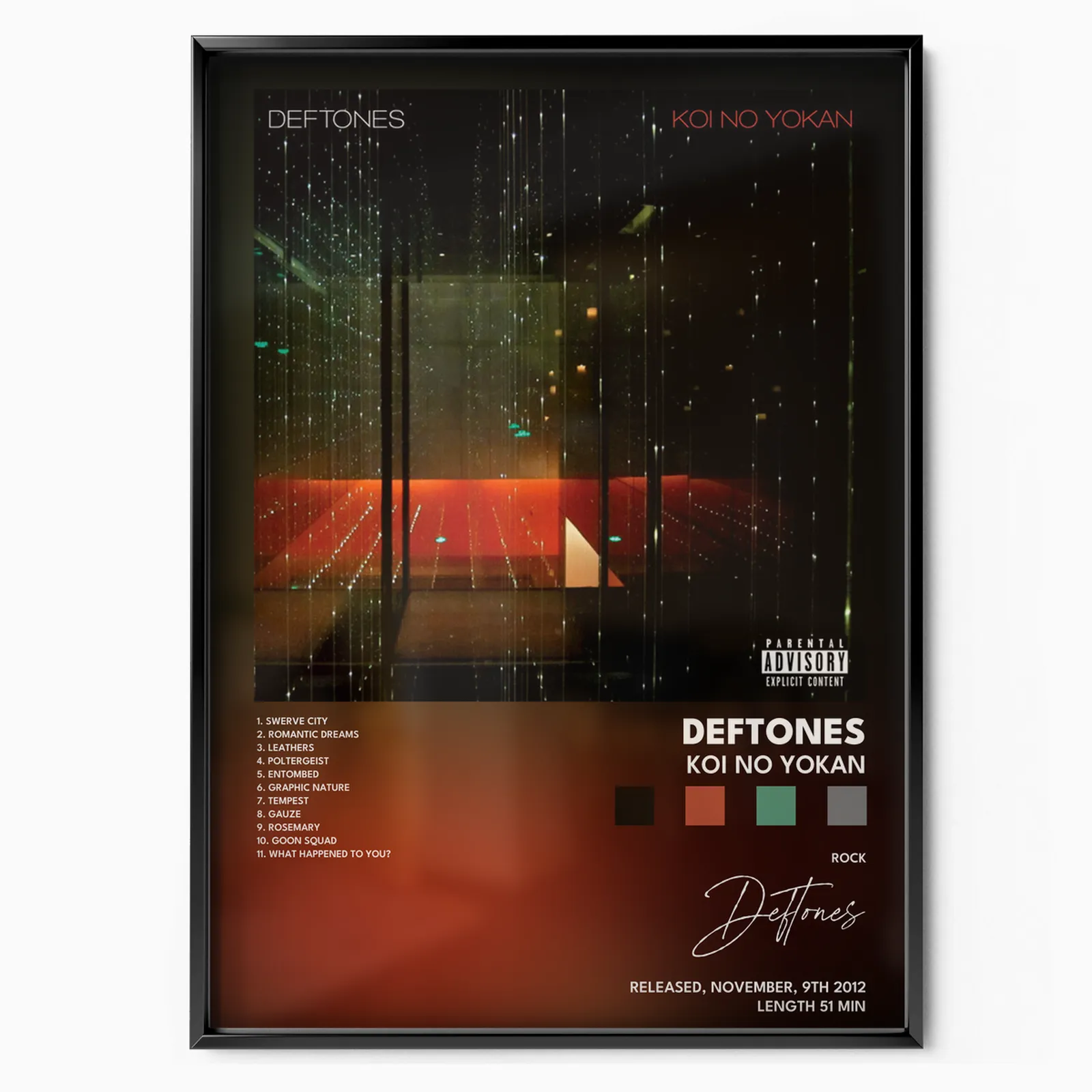
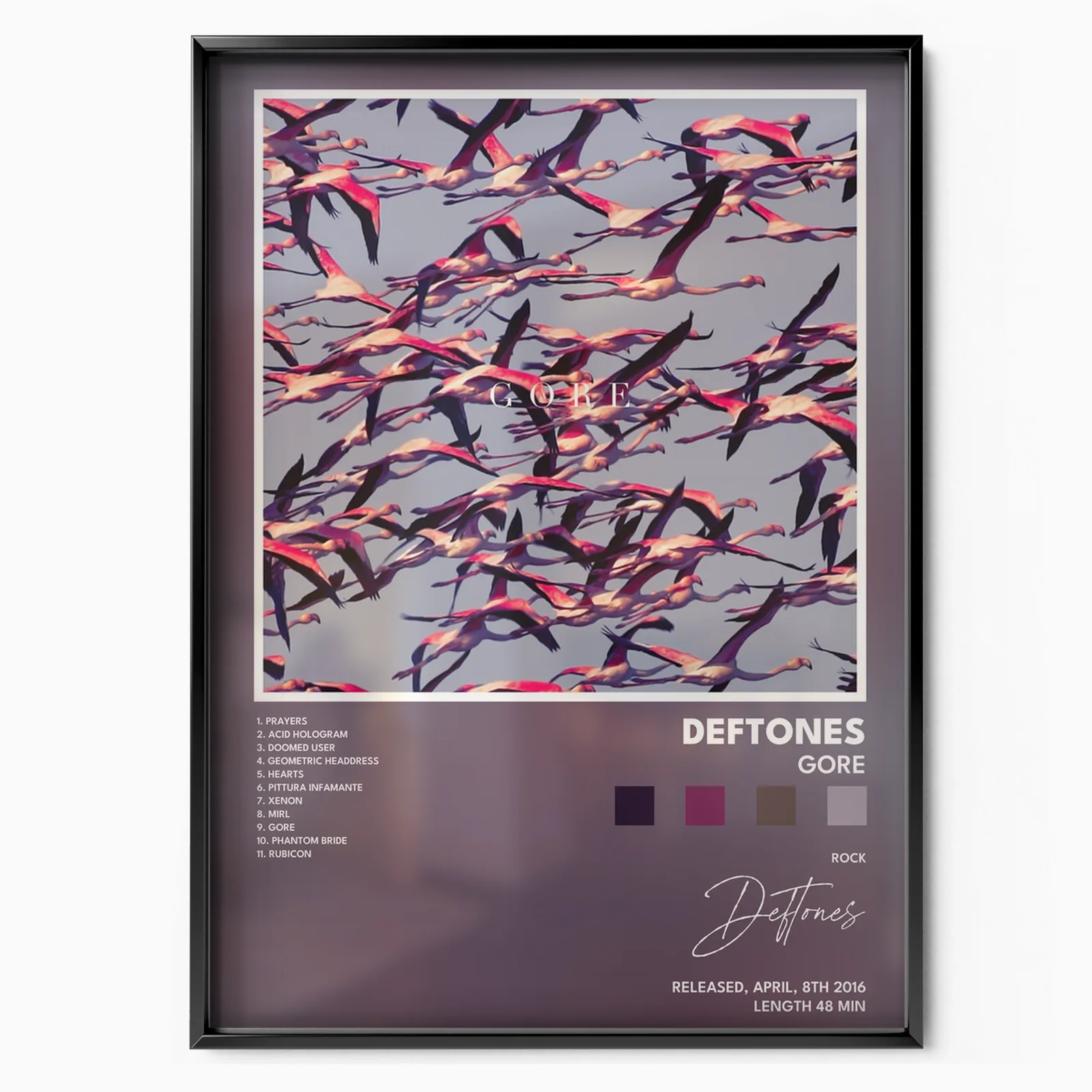
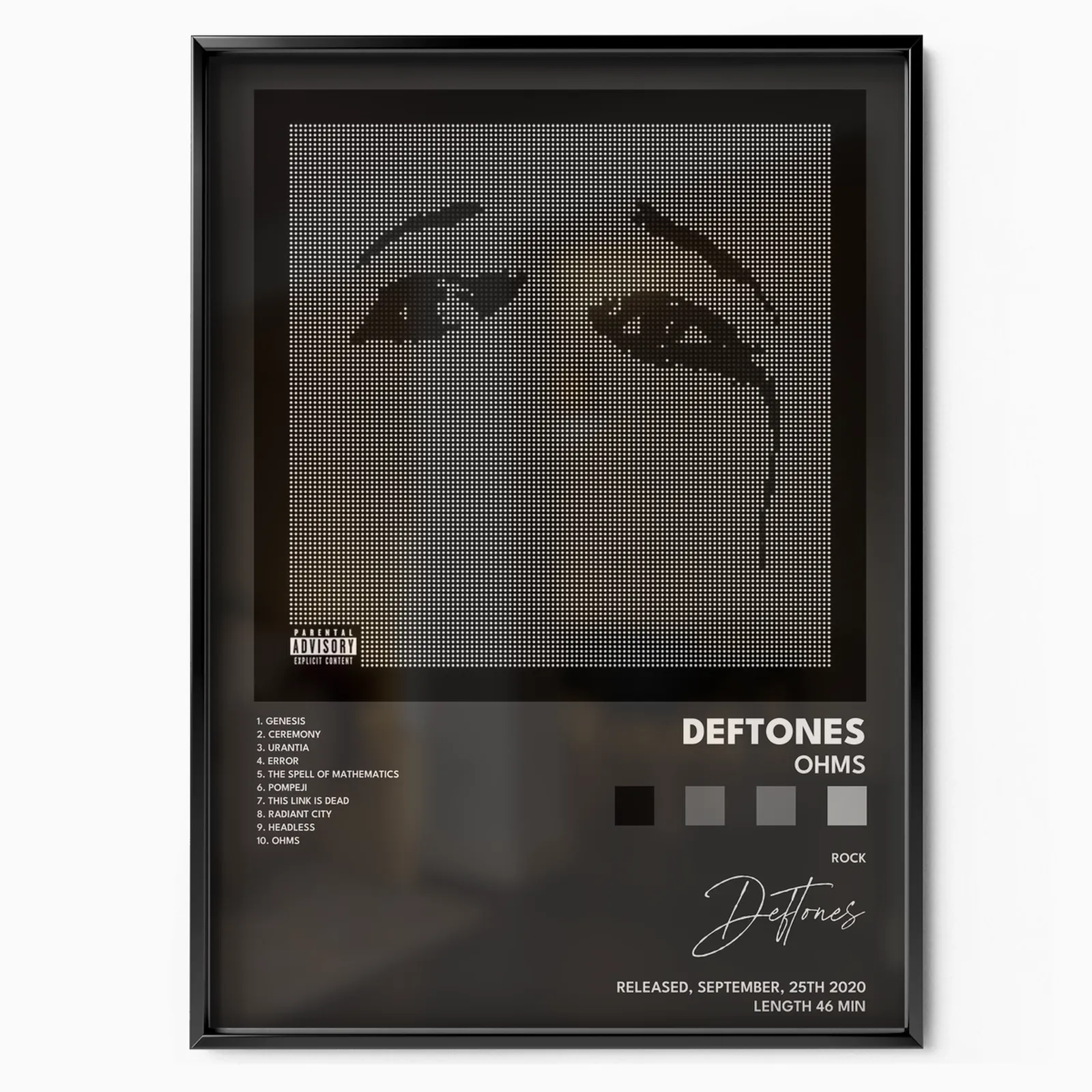
Few heavy bands have balanced brutality and beauty as gracefully as Deftones. Formed in Sacramento, California, in 1988 by high-school friends Chino Moreno, Stephen Carpenter, and Abe Cunningham, they came of age during the nu-metal era yet always reached past it, folding shoegaze haze, dream-pop melody, and hip-hop rhythm into crushing, downtuned guitar work. The result is a sound that can turn from a whisper to a scream inside a single bar. This collection traces that thirty-year arc through the artwork itself, offering every Deftones studio album cover as gallery-grade wall art you can frame, hang, and live with for years. Each print is reproduced faithfully so the detail that made these sleeves iconic survives at full scale.
The Sacramento Years
The story begins with Adrenaline, released on October 3, 1995 through Maverick Records and produced by Terry Date, the studio hand who would shape the band's sound across their most important years. It is a raw, coiled debut, all downtuned tension, tribal drumming, and Moreno's throat-shredding delivery, with a hidden track called "Fist" produced by Ross Robinson. Two years later Around the Fur arrived on October 28, 1997 and pushed the group toward the mainstream on the strength of "My Own Summer (Shove It)" and the aching "Be Quiet and Drive (Far Away)". The songwriting was sharper, the dynamics wider, and the quiet-loud interplay that would define the band was fully in focus. Together these two records document a group already restless inside the genre it was lumped into.
The White Pony Breakthrough
Everything changed with White Pony. Released on June 20, 2000, again with Terry Date and now featuring Frank Delgado's turntables and keyboards as a full member, it debuted at number 3 on the Billboard 200 with roughly 178,000 copies sold in its opening week. Widely regarded as the band's masterpiece, it fused metal weight with shoegaze atmosphere and art-rock ambition, and welcomed a guest vocal from Tool's Maynard James Keenan on "Passenger". The single "Elite" won the 2001 Grammy Award for Best Metal Performance at the 43rd Grammy Awards, still the band's first and only Grammy win. Three years later the self-titled Deftones followed on May 20, 2003, debuting at number 2 and leaning even further into trip-hop and shoegaze textures on singles such as "Minerva" and "Hexagram". It cemented a run of gold and platinum records and confirmed that the band's appetite for atmosphere was only growing.
Loss, Rebirth, and Sergio Vega
Saturday Night Wrist, released October 31, 2006 and produced by Bob Ezrin with former Far guitarist Shaun Lopez, emerged from sessions so fraught they nearly ended the band. Harder times followed. In November 2008 bassist Chi Cheng was gravely injured in a car accident and fell into a coma, and he died on April 13, 2013 at the age of 42. Rather than disband, Deftones shelved an unfinished album called Eros, regrouped with former Quicksand bassist Sergio Vega, and channeled their grief into Diamond Eyes in 2010. Produced by Nick Raskulinecz, it was leaner, brighter, and strangely hopeful. Raskulinecz returned for Koi No Yokan in 2012, a patient and expansive record whose title loosely evokes the sense that you will inevitably fall in love, and many fans rank it right alongside White Pony.
The Late Period Renaissance
Gore arrived in 2016, co-produced by Matt Hyde and debuting at number 2 on the Billboard 200, a divisive but adventurous set that foregrounded Carpenter's layered guitar textures and Moreno's dreamier instincts. Then came Ohms in 2020, released through Reprise Records as a reunion with Terry Date and the final album to feature Sergio Vega, its cover designed by longtime collaborator Frank Maddocks from thousands of tiny dots. Ohms closed a chapter and reopened debate about where the band would go next, yet it proved their instinct for tension and release remained undimmed after twenty-five years. Across every era the band's visual identity has been as deliberate as its music, from stark portraits to abstract color fields, which is exactly why these covers reward being printed large and framed.
Hung together, the nine covers read like a diary of reinvention, from the tribal thump of the debut to the shimmering density of Ohms. Hung on their own, each one anchors a room. Whether you gravitate toward the early fury of the Sacramento years or the widescreen grandeur of the late period, this collection lets you build a timeline of one of alternative metal's most singular and influential bands, one poster at a time.