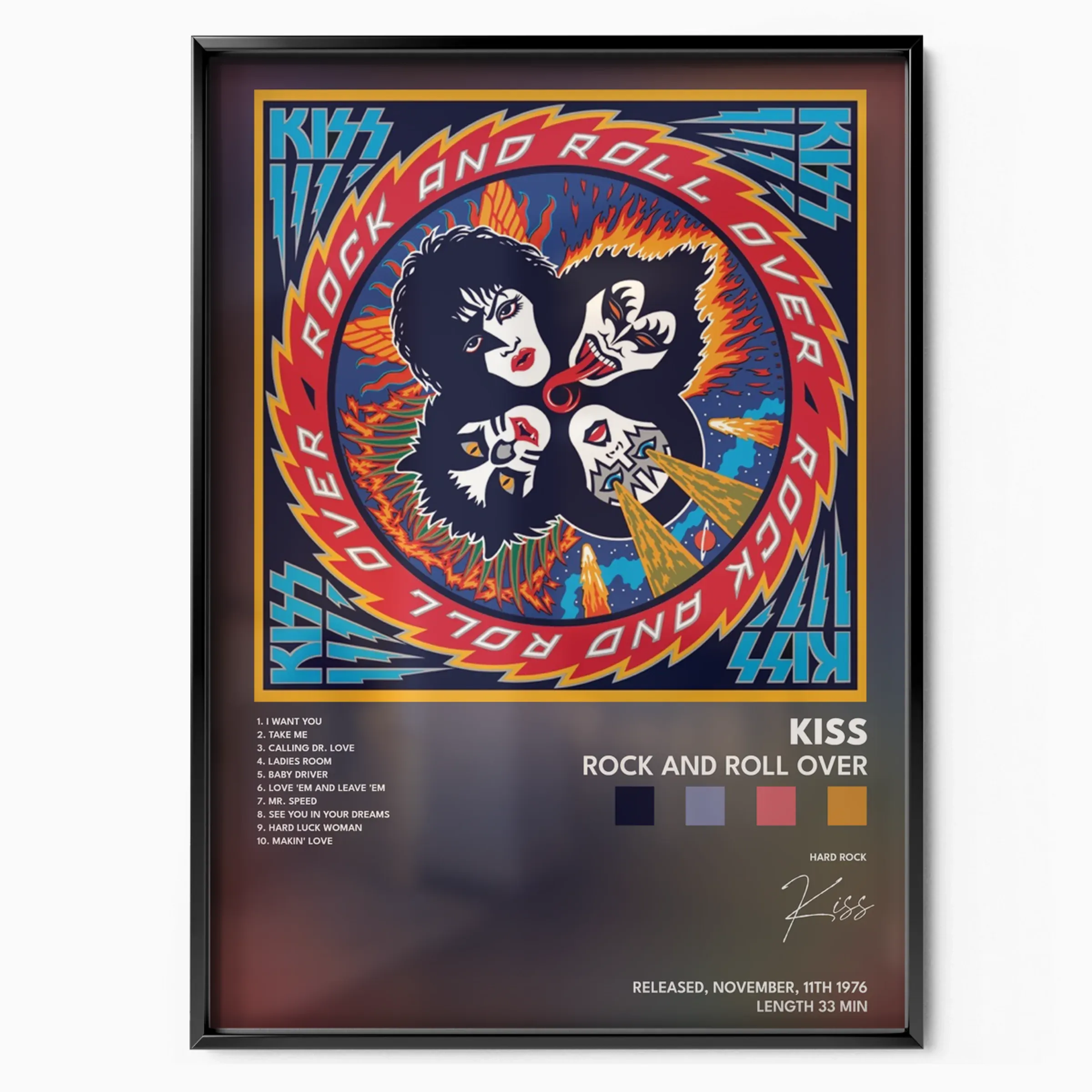
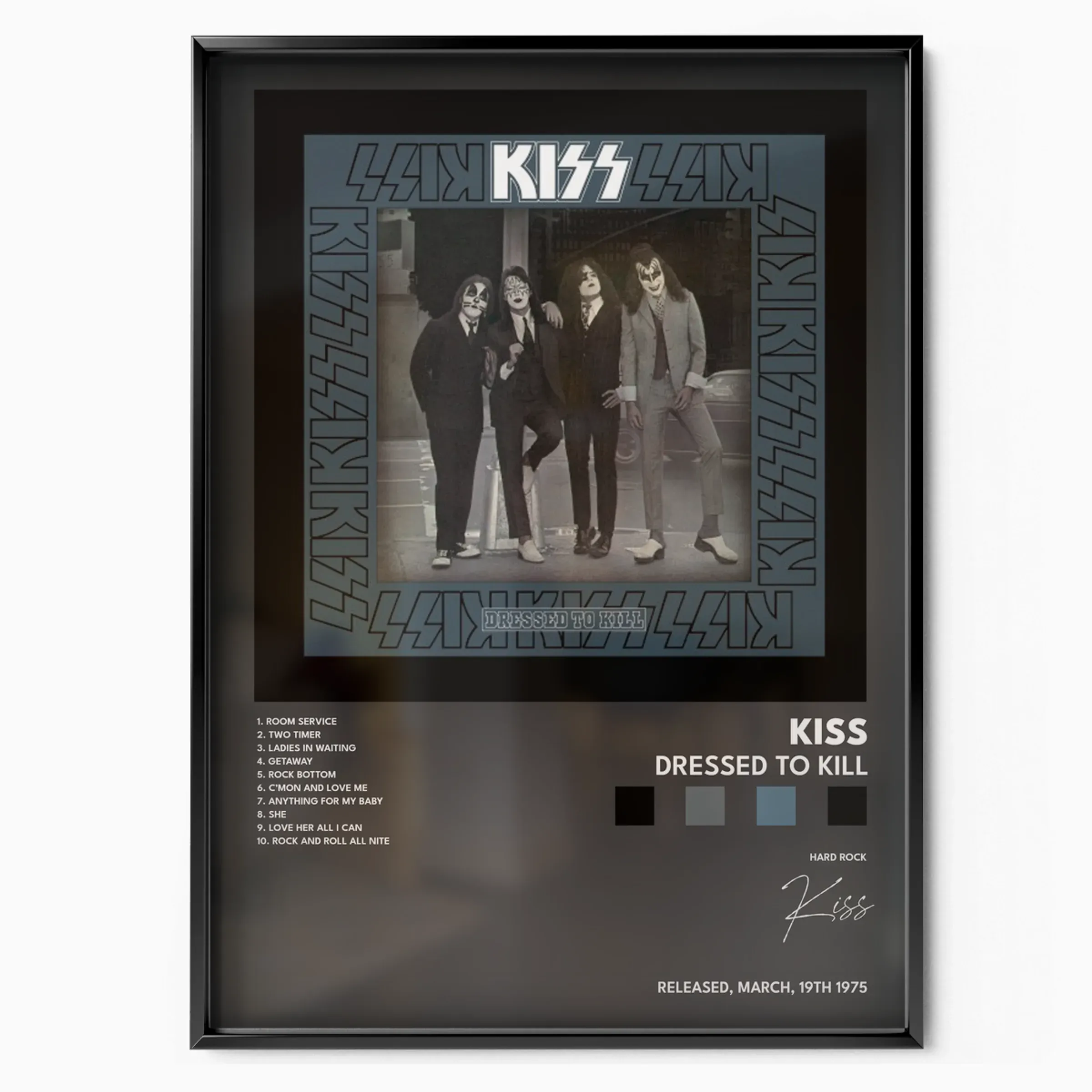
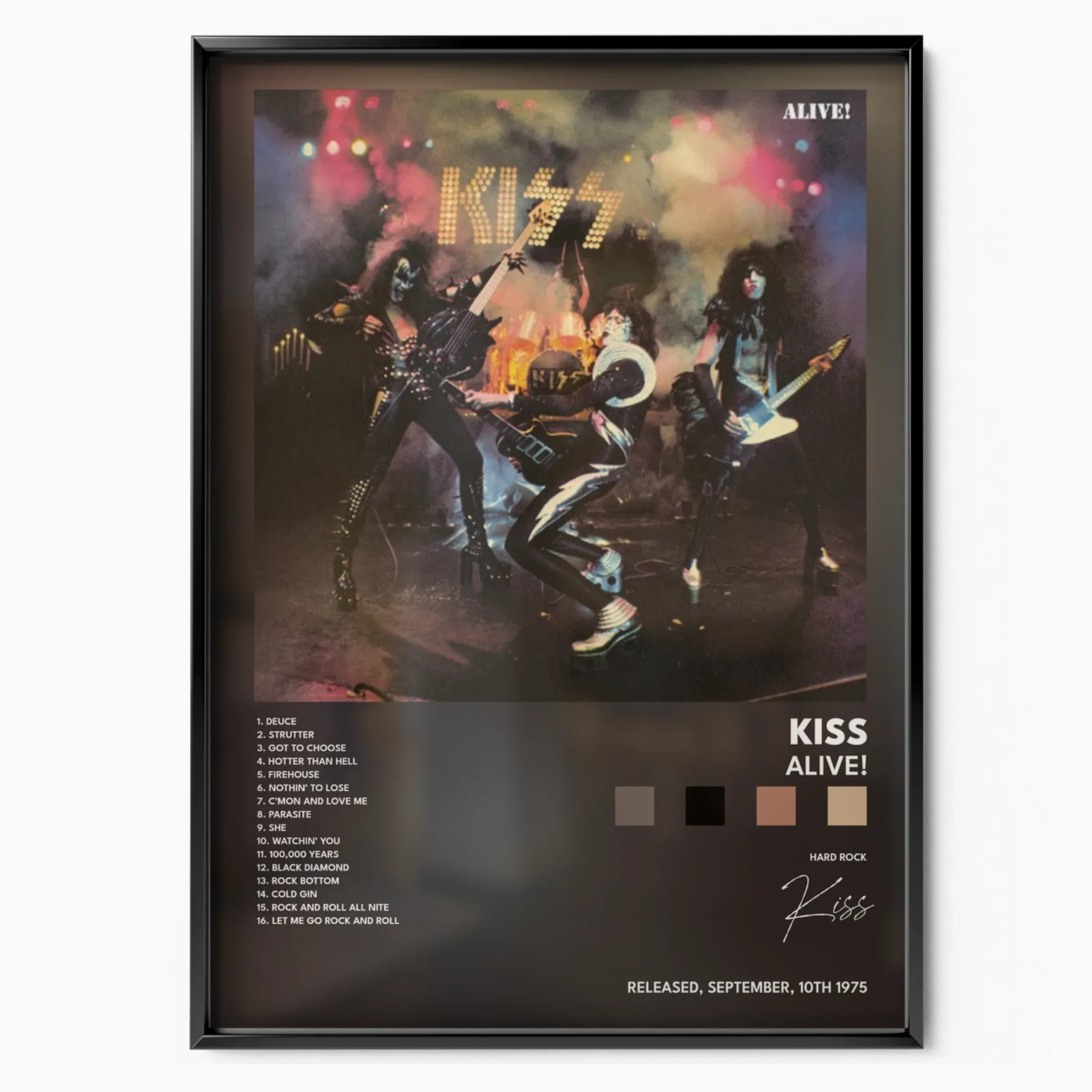
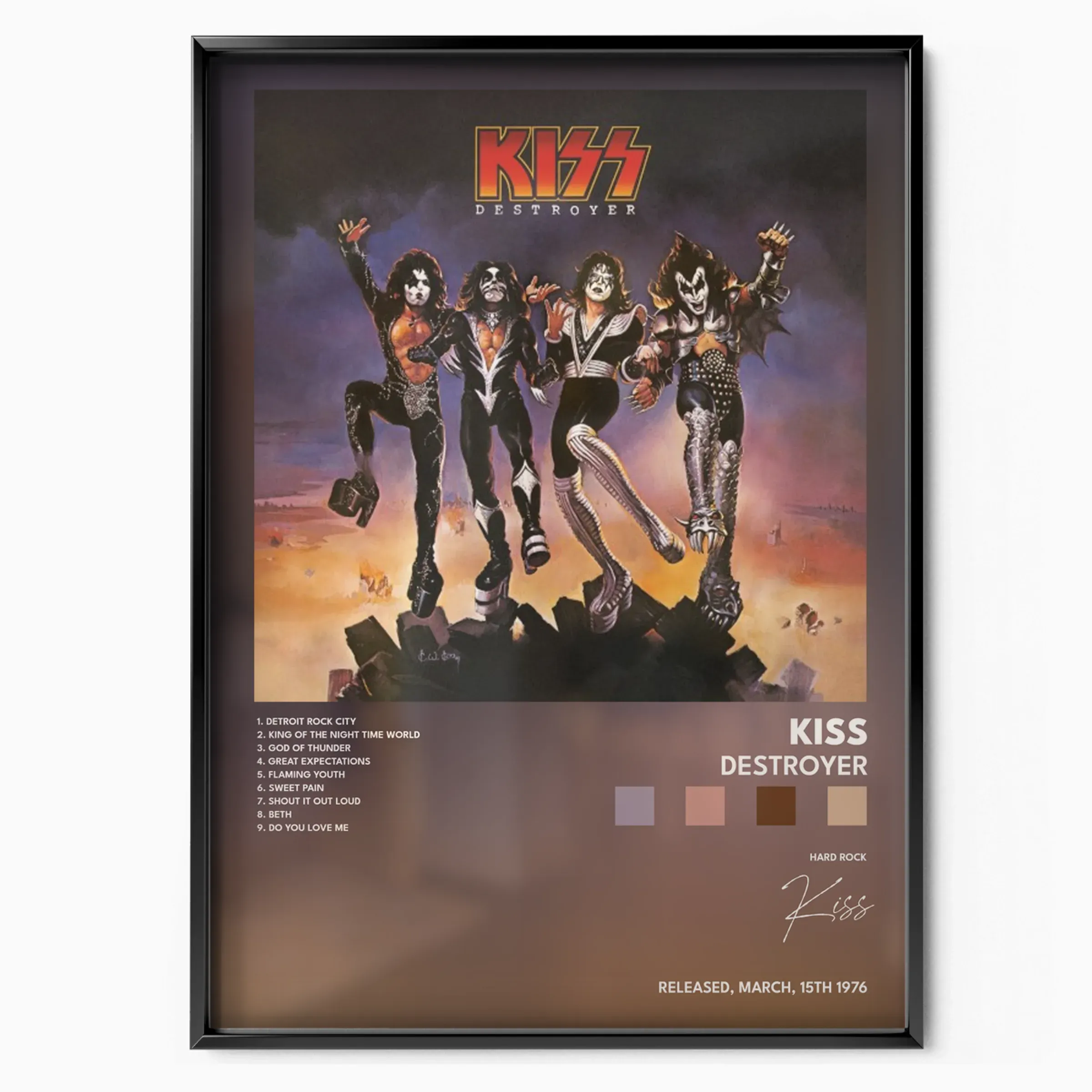
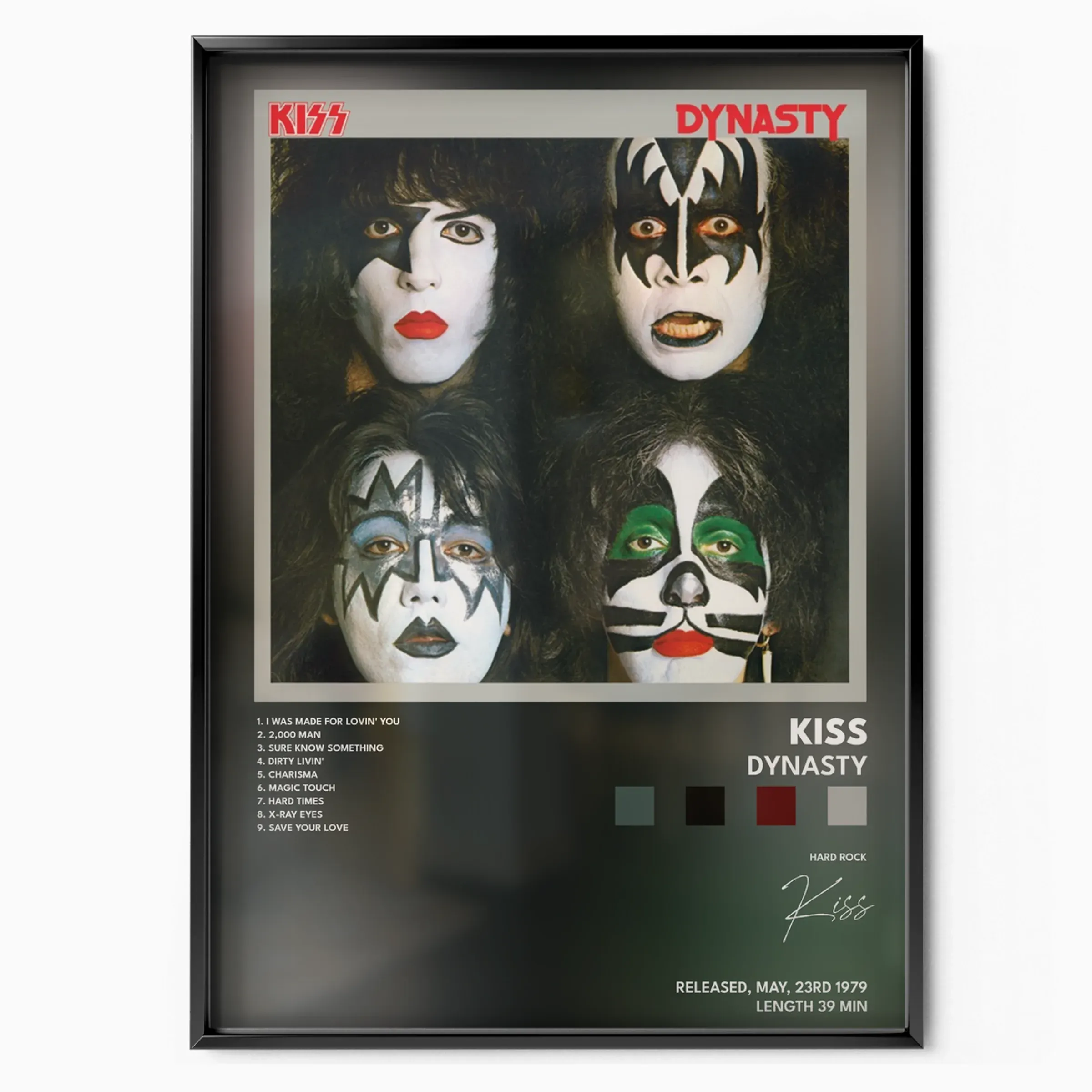
Kiss posters are independent, museum grade art prints, not official or licensed merchandise. Every classic Kiss album cover, from the painted debut to Love Gun, reborn as museum-grade wall art. Each print is produced on 200 gsm matte paper with archival inks, offered A4 to A1, framed or unframed.
- Formed
- New York City, 1973
- Founding members
- Gene Simmons, Paul Stanley, Ace Frehley, Peter Criss
- Known for
- Face paint personas and theatrical live shows
- Destroyer album
- Released 1976, cover art by Ken Kelly
- Signature song
- Rock and Roll All Nite (1975)
- Paper
- Museum-grade 200gsm matte
- Sizes
- A4 to A1
- Offer
- Buy 2 Get 1 Free
01Four Faces, One Legend
Few rock bands ever turned an album cover into a full mythology the way Kiss did. Formed in New York City in 1973, the band gave each member a painted comic-book identity: Paul Stanley as the Starchild, Gene Simmons as the Demon, Ace Frehley as the Spaceman, and Peter Criss as the Catman. Those four faces, printed large and hung on a wall, read instantly from across a room. That is exactly why Kiss sleeves make such powerful art prints. The imagery was always built to be iconic, poster-sized, and impossible to forget.
02Why the Covers Are Wall-Worthy
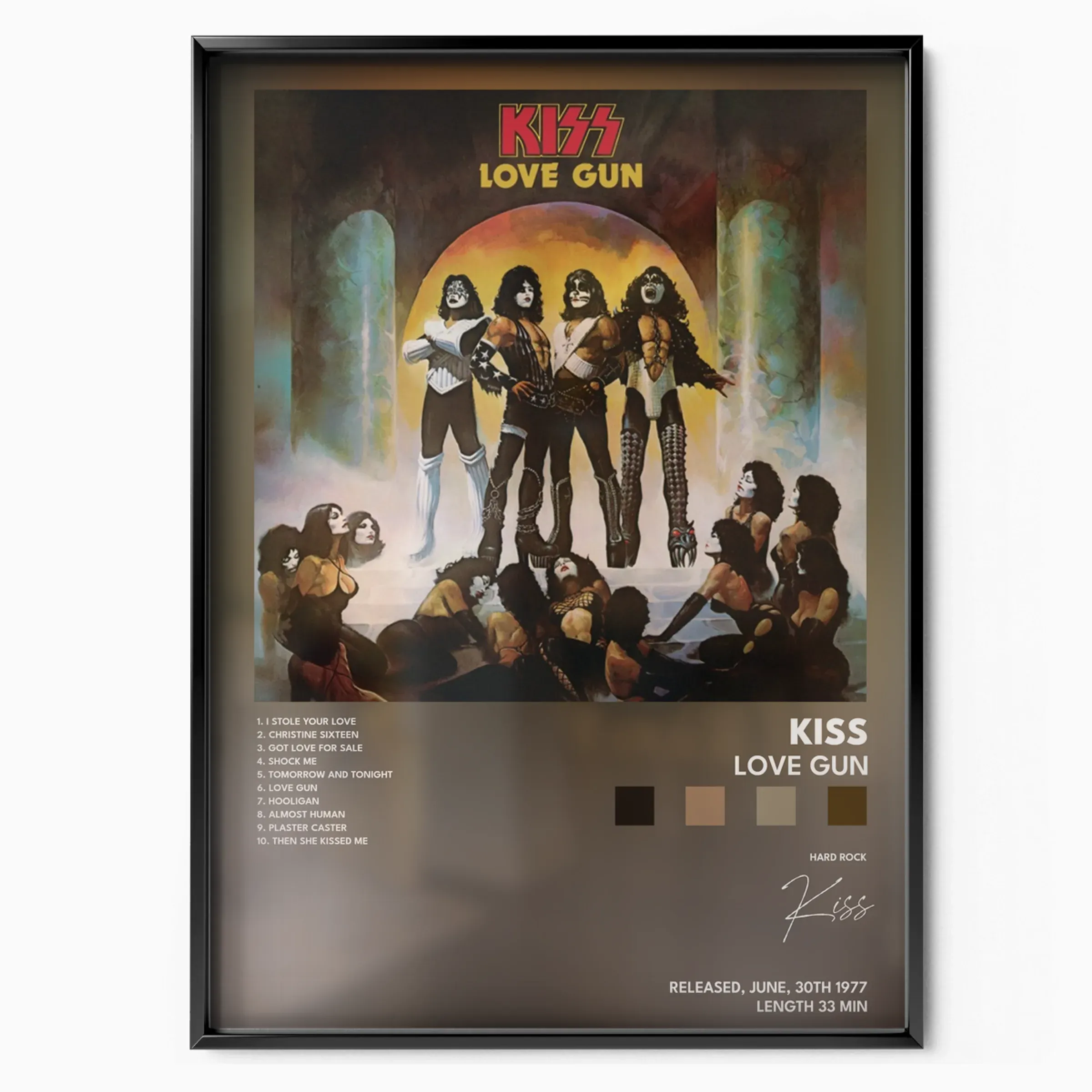
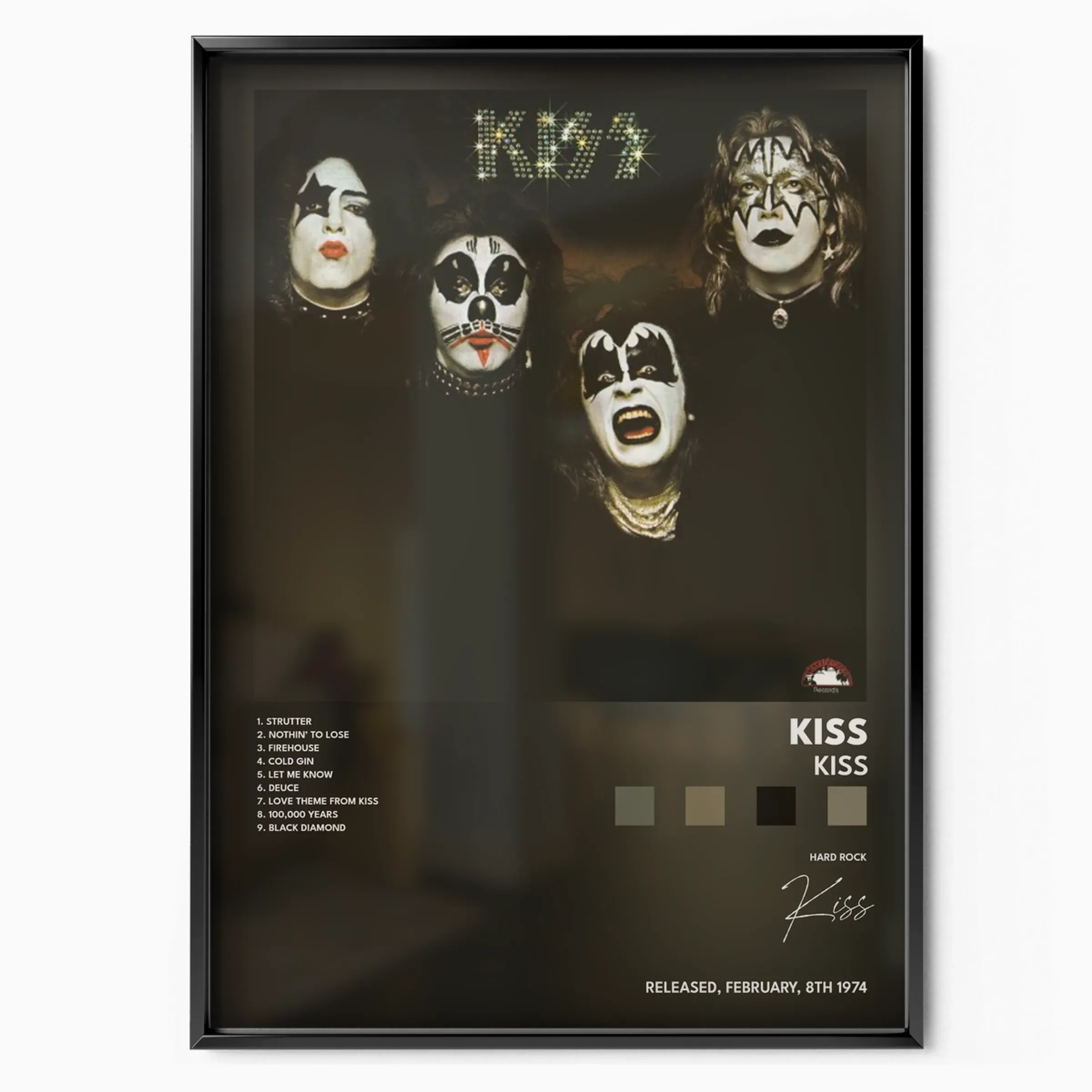
The 1974 debut set the template: four greasepainted faces glowing out of pure black, shot by Joel Brodsky with a deliberate nod to Meet the Beatles. From there the visuals only grew bolder. Destroyer traded photography for a full fantasy painting by Ken Kelly, the band striding out of the flames like conquering heroes. Love Gun doubled down on Kelly's comic-book heroics, the four figures towering over a sea of adoring fans. Alive! captured the live-banner spectacle that broke the band nationwide, while Rock and Roll Over turned the members into cartoon heads ringed by lightning, designed by Michael Doret. Each cover is a different flavor of spectacle, and each one earns its place on a wall.
03How to Choose Your Print
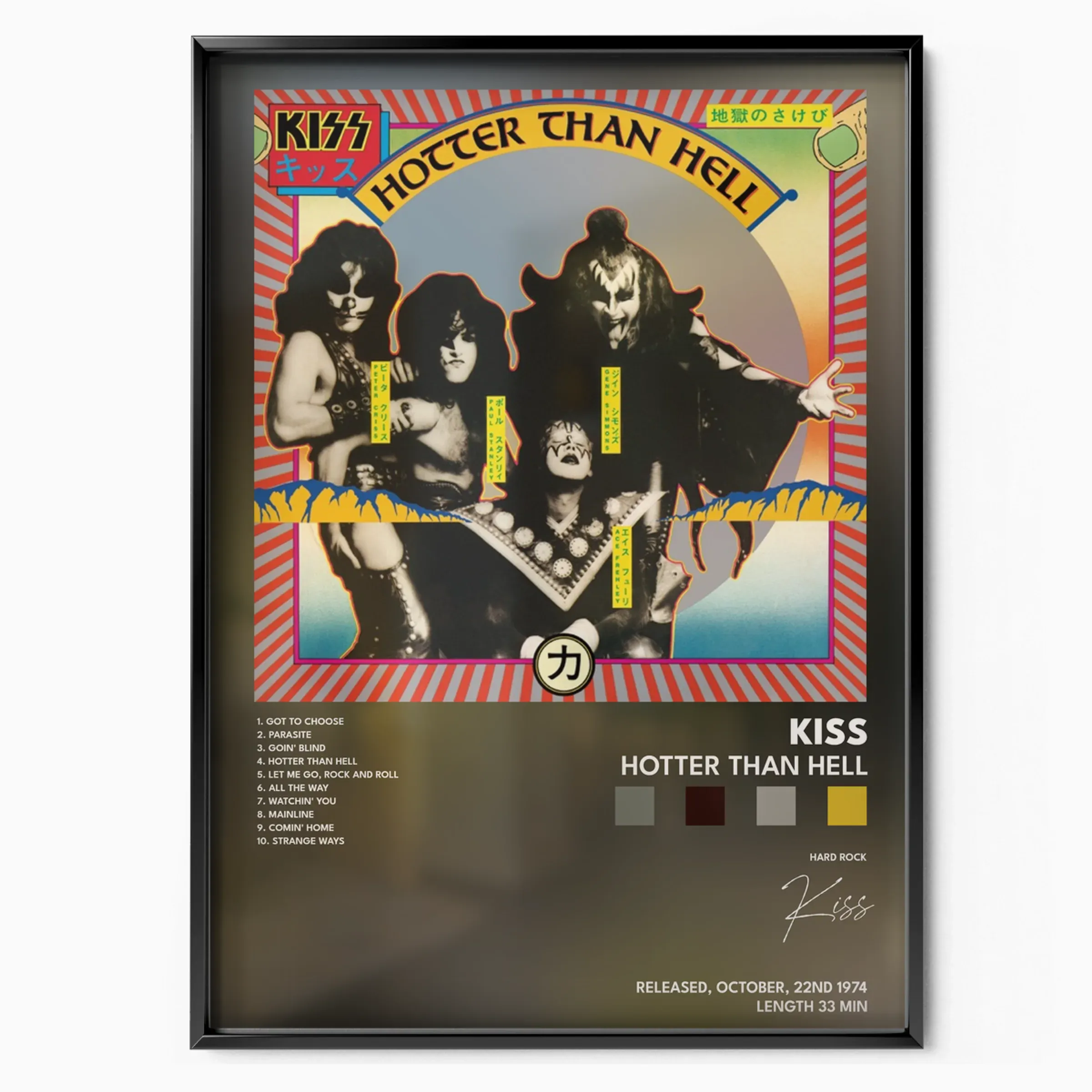
Every poster comes in four sizes. A4 suits a desk, a shelf ledge, or a tight cluster of frames. A3 is the everyday favorite for bedrooms and studios. A2 makes a bold single statement above a couch or a bed. A1 is the gallery centerpiece for anyone who wants the artwork to dominate the room. Go unframed if you already own frames or plan to float-mount the print yourself. Choose the black frame for a classic gallery finish that flatters the darker sleeves such as Hotter Than Hell, or pick the white-chrome frame to lift the brighter, high-contrast covers and let the face paint pop.
04Build a Kiss Gallery Wall
Kiss art almost begs to be grouped. Because the covers share a visual language of face paint, fire, and comic-book energy, three or four prints hung together read as one coherent installation rather than a random mix. A popular arrangement pairs the painted fantasy of Destroyer and Love Gun with the raw live power of Alive!, then anchors the trio with an early classic like the self-titled debut. Keep the frame color consistent for a museum feel, or mix black and white-chrome so each piece breathes on its own. Space the frames evenly, hang the center of the group around eye level, and let the boldest cover lead. However you arrange them, these are prints built to be seen from across the room and studied up close, the same way the band always wanted their audience to experience the show. Start with one hero cover, live with it for a while, then add pieces around it as your collection grows.