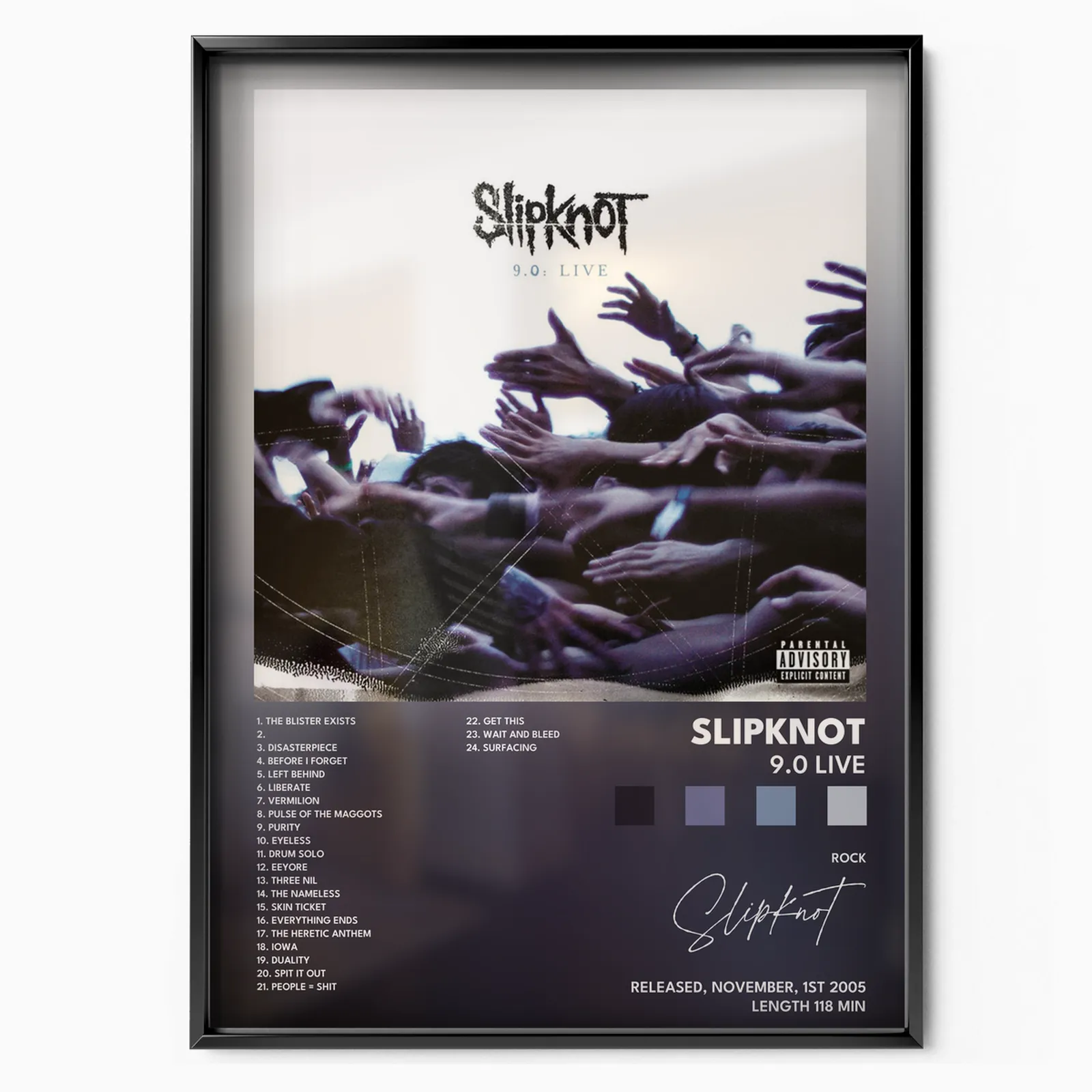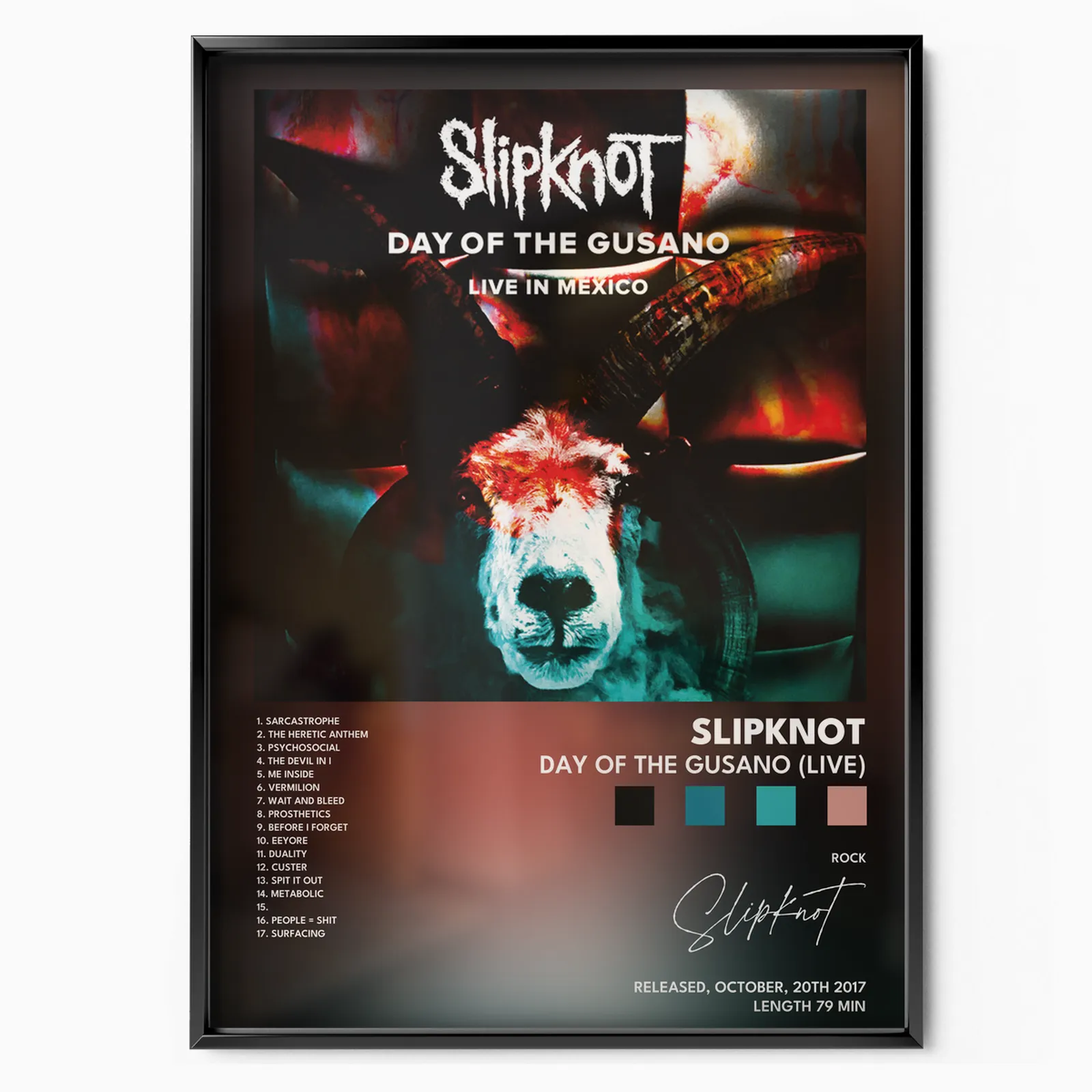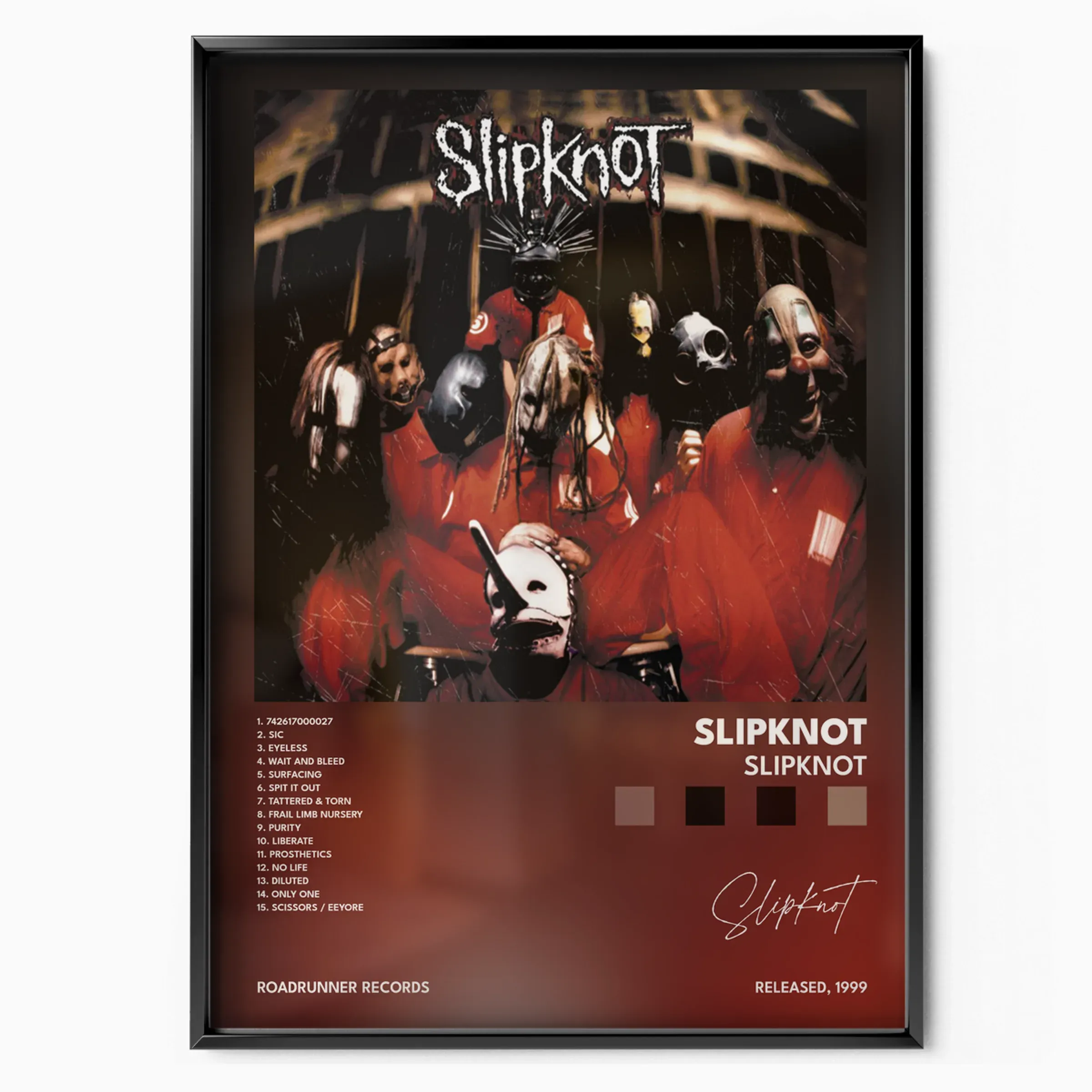
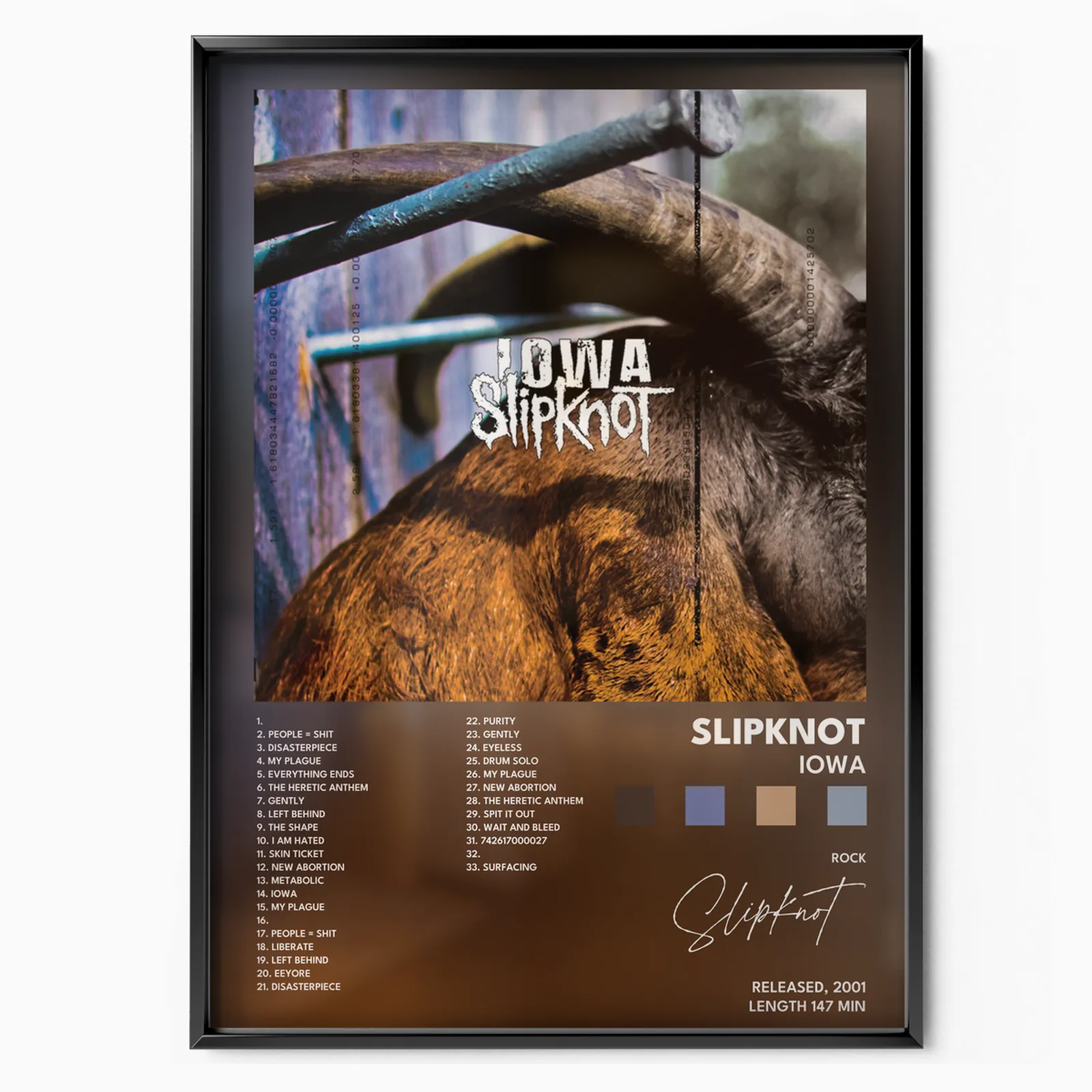
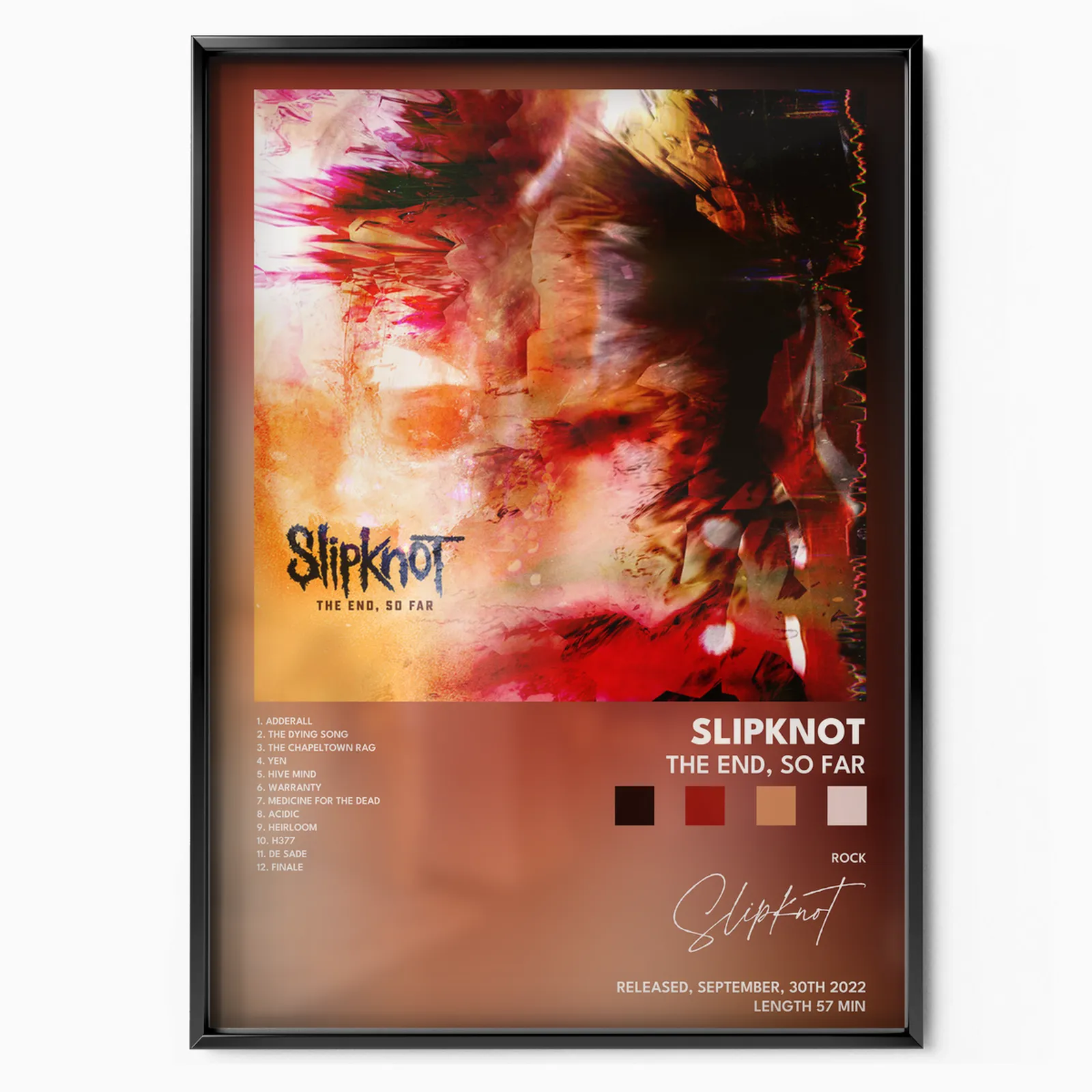
Few bands look and sound like Slipknot, and that is exactly the point. Formed in Des Moines, Iowa, in 1995 by percussionist Shawn "Clown" Crahan, drummer Joey Jordison, and bassist Paul Gray, the group turned a landlocked Midwest city with no metal scene to speak of into the launch pad for one of the most extreme acts ever to reach the mainstream. Nine men in matching boiler suits and grotesque, hand-built masks, each assigned a number from 0 to 8, made anonymity itself into a spectacle. This collection gathers our Slipknot album art posters, tracing the band from a self-financed debut to back-to-back chart-topping records and a global festival empire.
From the cornfields of Des Moines
Slipknot did not arrive fully formed. The lineup churned through its early years before settling into the nine-piece that fans came to know: vocalist Corey Taylor, guitarists Mick Thomson and Jim Root, bassist Paul Gray, sampler Craig Jones, turntablist Sid Wilson, percussionists Shawn Crahan and Chris Fehn, and drummer Joey Jordison. With no record deal in hand, the band self-financed their early recording at SR Audio in their hometown, work that reportedly cost around $40,000. That do-it-yourself grit fed straight into Slipknot, the self-titled 1999 debut that fused turntables, samplers, and rap-metal cadence with sheer aggression and announced a band unlike anything else on the shelf. It was a critical and commercial success, and it gave metal a new template for chaos. Crucially, the band emerged with no metal scene at home to lean on, which forced them to invent their own world of imagery, ritual, and sound from the ground up.
Nine masks, nine numbers
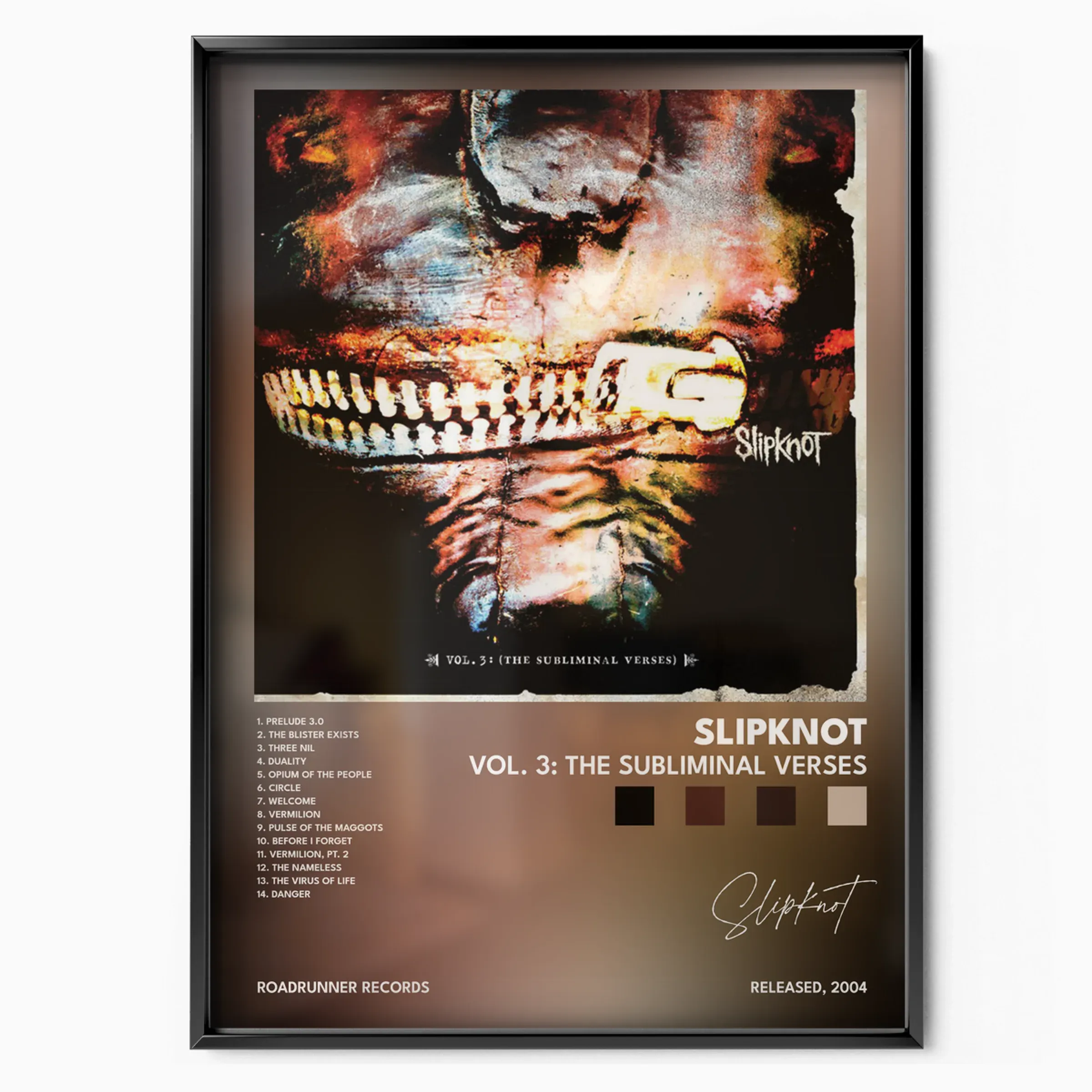
The visual identity was never a gimmick tacked on afterward. The boiler suits and masks stripped away individual ego and forced listeners to confront the noise rather than the personalities behind it. Each member carried a number, running from #0 Sid Wilson through #8 Corey Taylor, and the masks evolved album to album, becoming a running visual diary of the band's state of mind. That deliberate design language is exactly why Slipknot artwork translates so powerfully to the wall: the barcodes, the nonagram, the goat's head, and the shifting masks are as recognizable as any logo in heavy music. Explore Iowa and Vol. 3: The Subliminal Verses to see how the aesthetic sharpened and darkened across eras.
Iowa and the extreme-metal reckoning
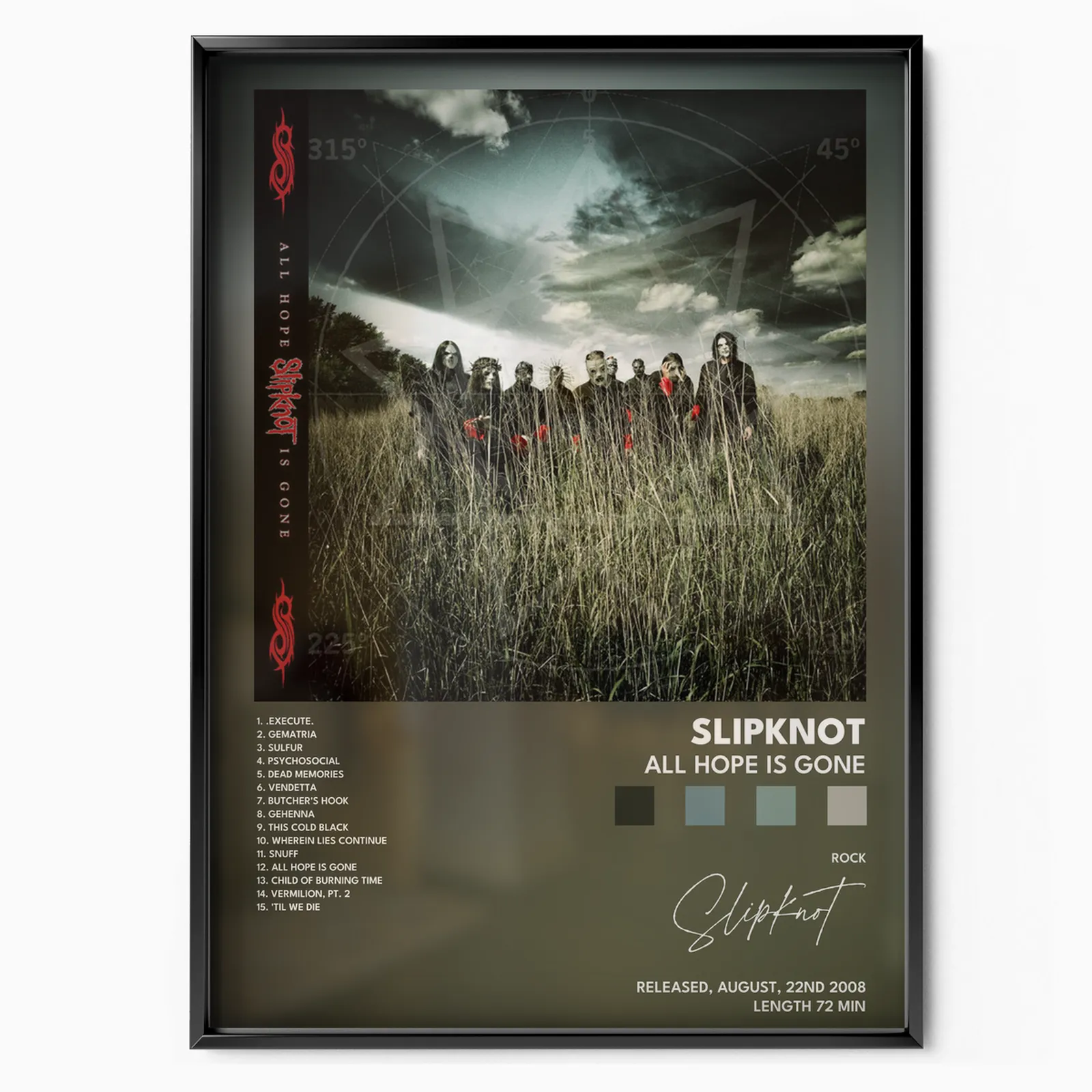
If the debut kicked the door in, 2001's Iowa tore the whole house down. Recorded by a band under enormous pressure and open internal tension, it went straight to Number 1 on the UK Official Albums Chart, and it is still cited as one of the heaviest records ever to top that chart. Almost pure riff and blast beat, longer and grimmer than the debut, it endures as a genuine landmark in extreme metal. The band then pivoted on 2004's Vol. 3: The Subliminal Verses, their only album produced by Rick Rubin, which folded in melody, acoustic textures, and guitar solos without draining the venom. That record delivered "Duality" and "Before I Forget," the latter winning the Grammy for Best Metal Performance in February 2006. By 2008, All Hope Is Gone became the band's first album to top the US Billboard 200, a run of records that moved Slipknot from underground shock to genuine chart dominance without ever softening the assault.
Loss, legacy, and the maggots
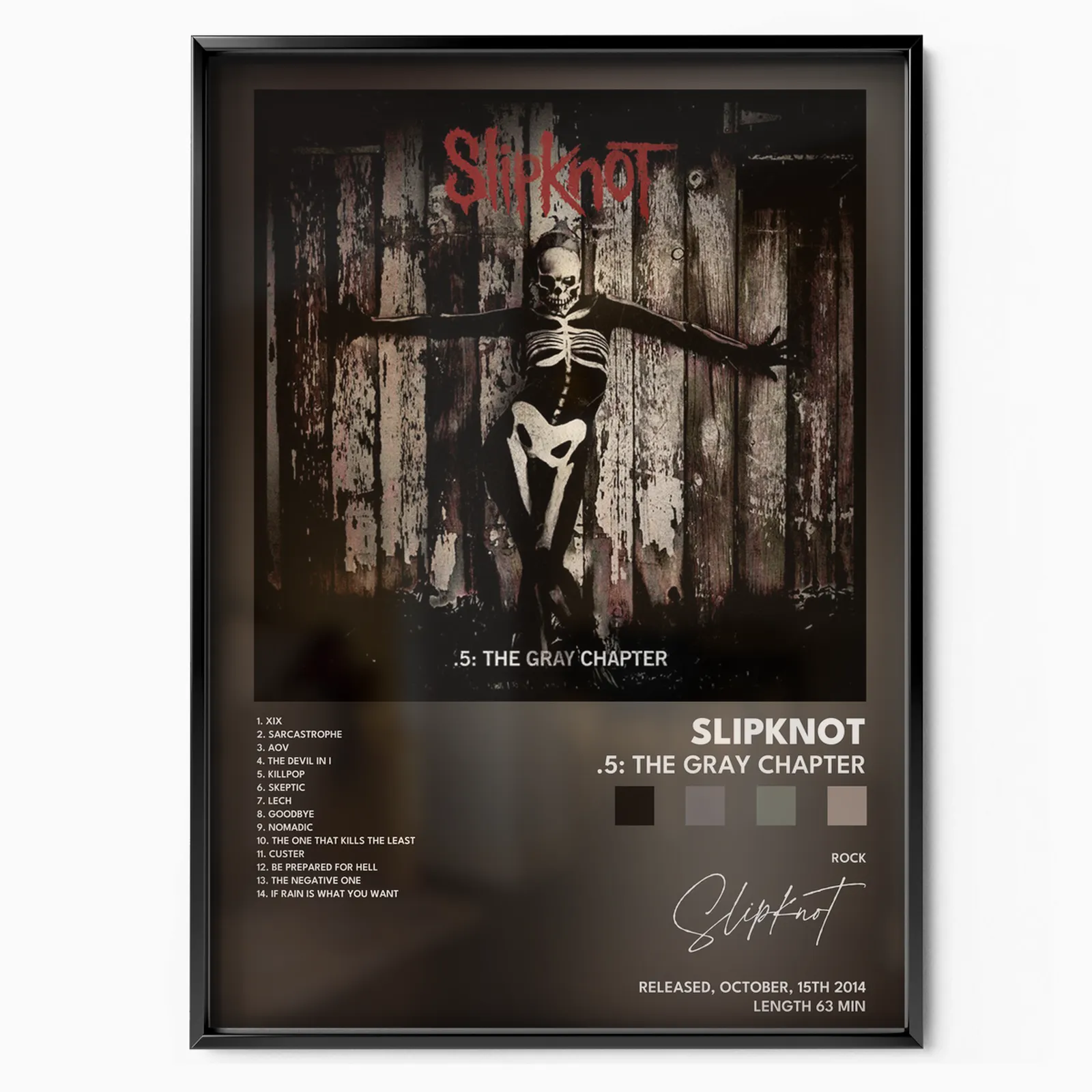
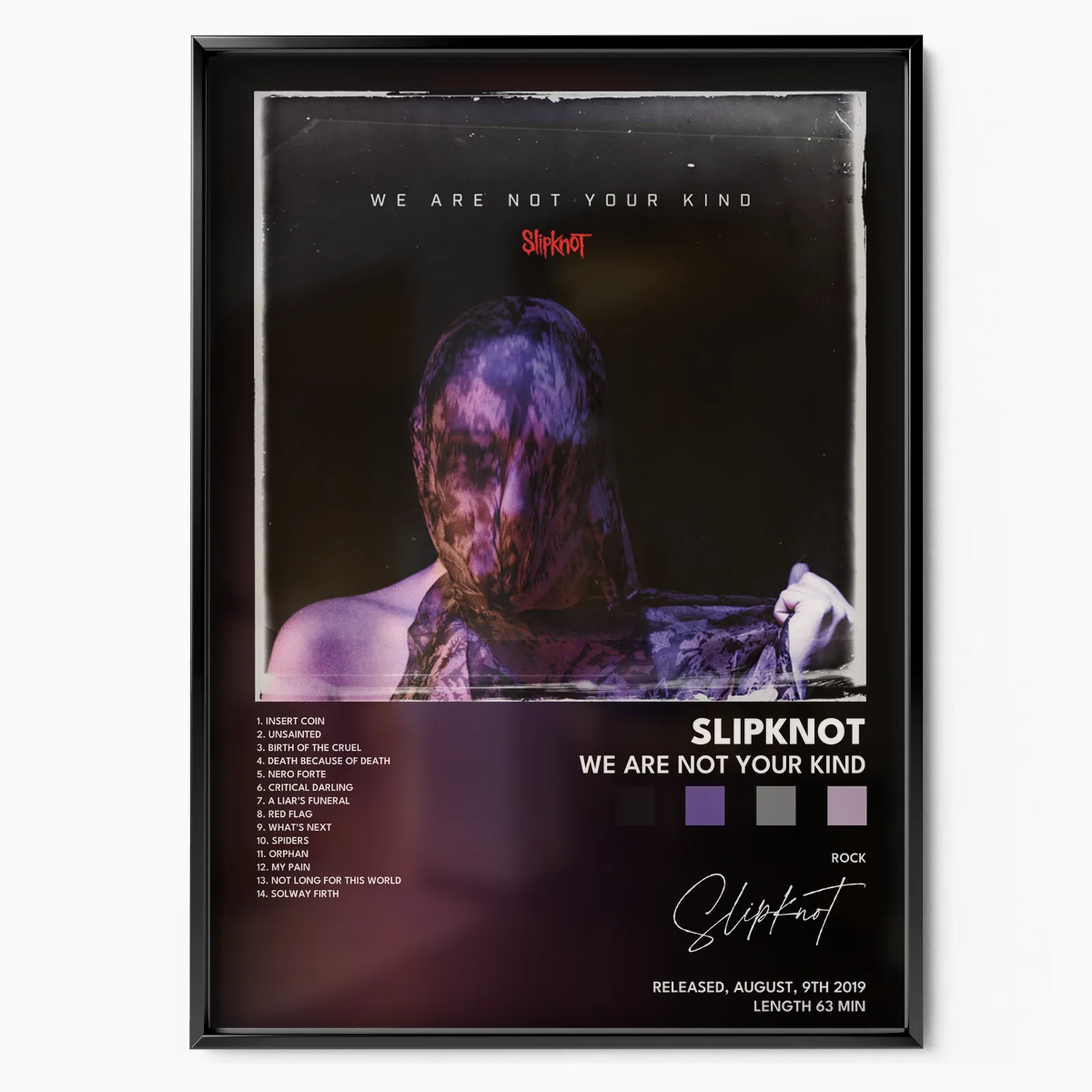
Slipknot's story is inseparable from tragedy carried with real weight. Founding bassist Paul Gray died in May 2010 at 38, and the band poured their grief into 2014's .5: The Gray Chapter, whose title and several songs honor him directly. Founding drummer Joey Jordison, the engine behind the band's early rise, died in July 2021 at 46. Through all of it the devoted fanbase, known as maggots, kept the circle unbroken, and the band's own festival, Knotfest, launched in 2012, grew into a worldwide institution. The later albums proved the fire never dimmed: We Are Not Your Kind debuted at Number 1 in both the US and the UK in 2019, and The End, So Far followed in 2022.
Why these Slipknot posters
Every print in this collection is drawn from the band's official album art, so the goat, the masks, and the era-defining color palettes read exactly as they were designed. We print on heavy museum-grade stock with archival inks, sized to sit as the centerpiece of a music room, studio, or gig-battered practice space. Whether you started with the self-titled debut or came in through Knotfest, there is a piece here to mark two and a half decades of controlled chaos.