
Few artists ever fused sound and image as completely as Prince Rogers Nelson. Born in Minneapolis on June 7, 1958, he wrote, produced, and played nearly every instrument on his records, famously handling all 27 instruments on his 1978 debut For You. That total control extended to his album covers, which is exactly why a Prince poster hangs so well on a wall: each sleeve is a self-portrait of a shape-shifting genius. This collection gathers his most iconic covers, spanning the raw new wave funk of 1980 to the glossy pop-soul of the early 1990s, and every sleeve carries the mark of an artist who signed off on every detail himself.
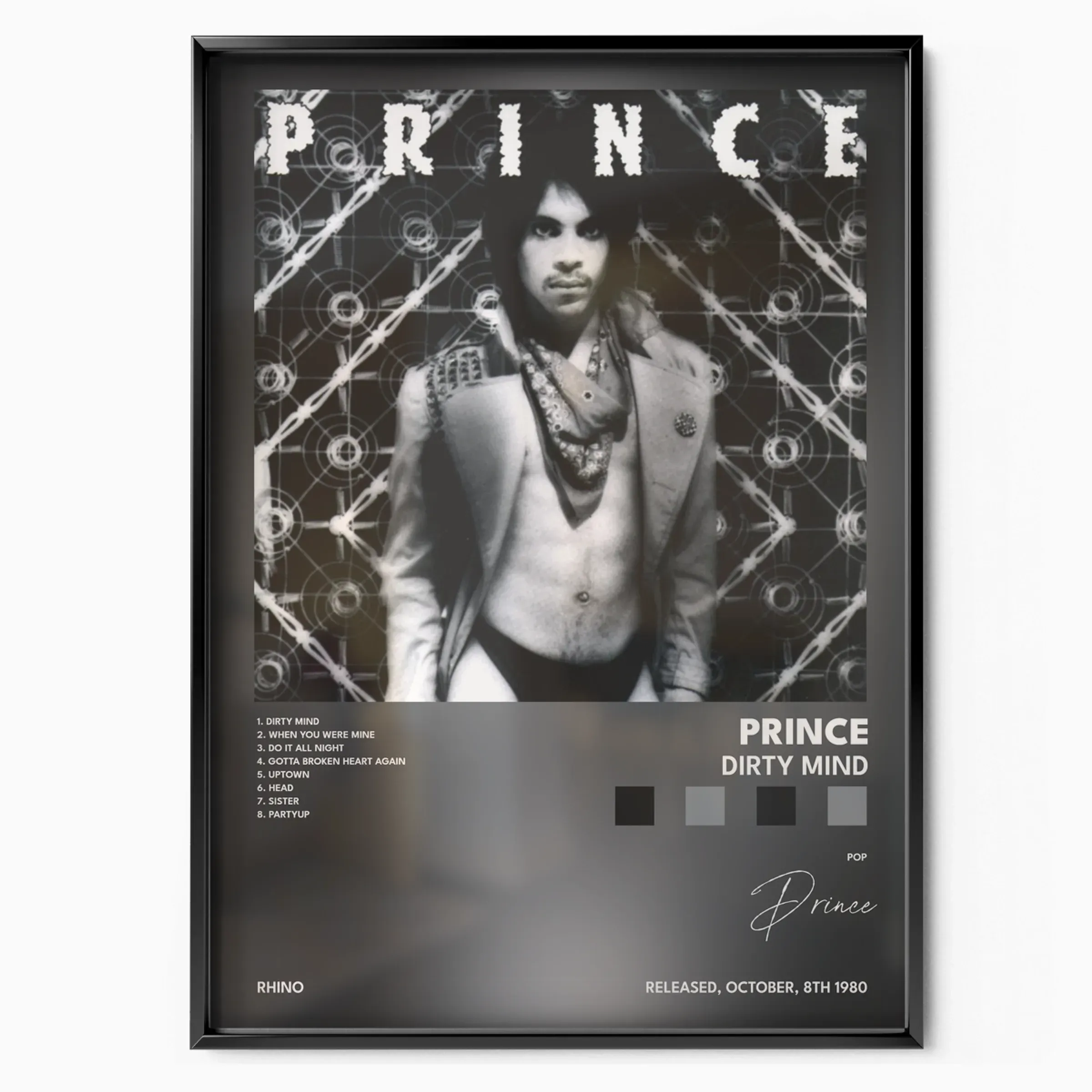
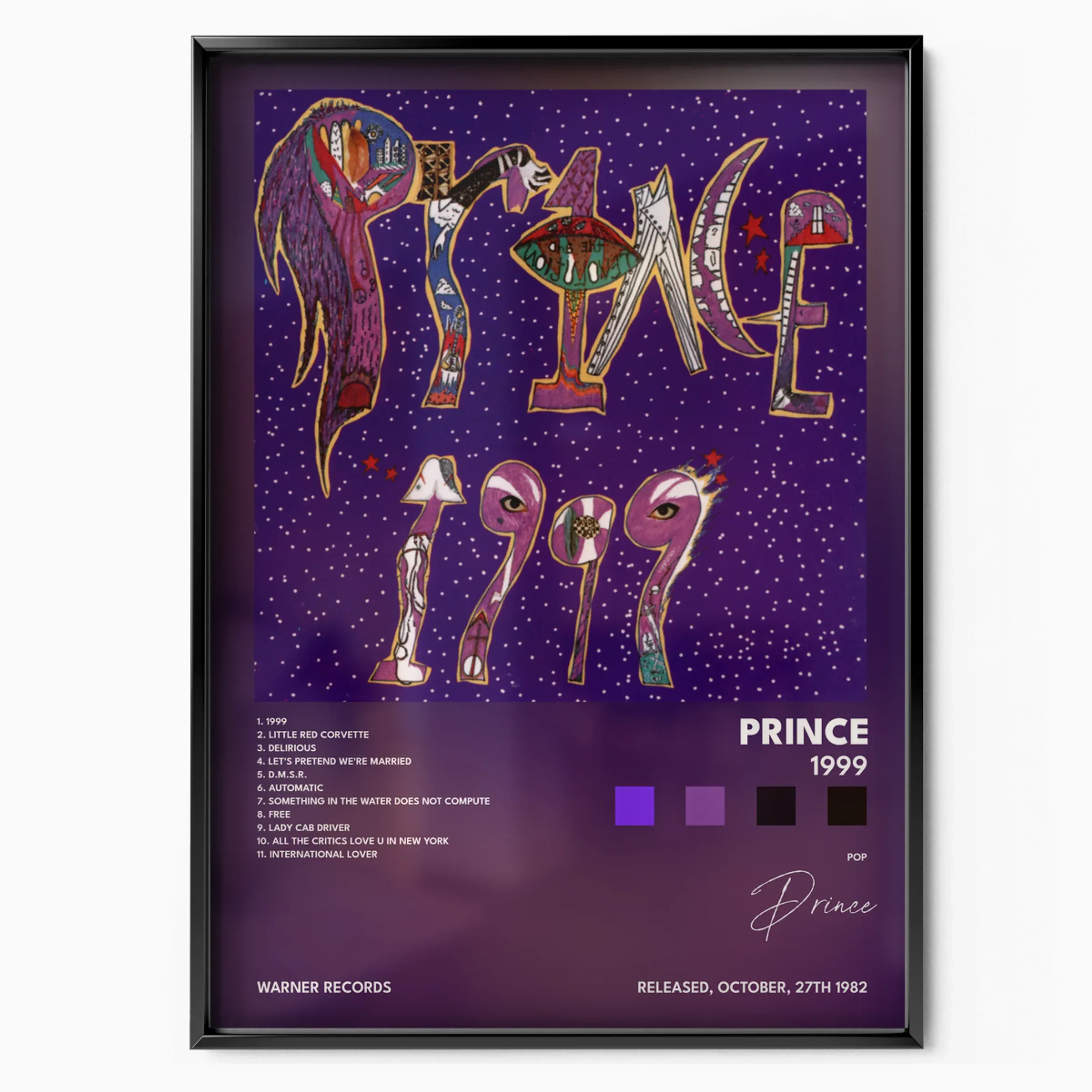
The early breakthrough begins with Dirty Mind, the 1980 record that traded polite R&B for stripped-down, sexually frank rock and an androgynous look that shocked and thrilled in equal measure. Its cover, all trench coat and defiant stare, announced a performer who would spend the next decade rewriting the rules of what a pop star could look like. Two years later he delivered 1999, the sprawling 1982 double album whose apocalyptic dance-funk title track and 'Little Red Corvette' pushed him toward the mainstream and gave him his first real crossover hits. The neon lettering of the 1999 sleeve remains one of the most instantly readable images in his catalog. Hang Dirty Mind and 1999 side by side and you can watch an artist figuring out, in real time, how to be enormous.
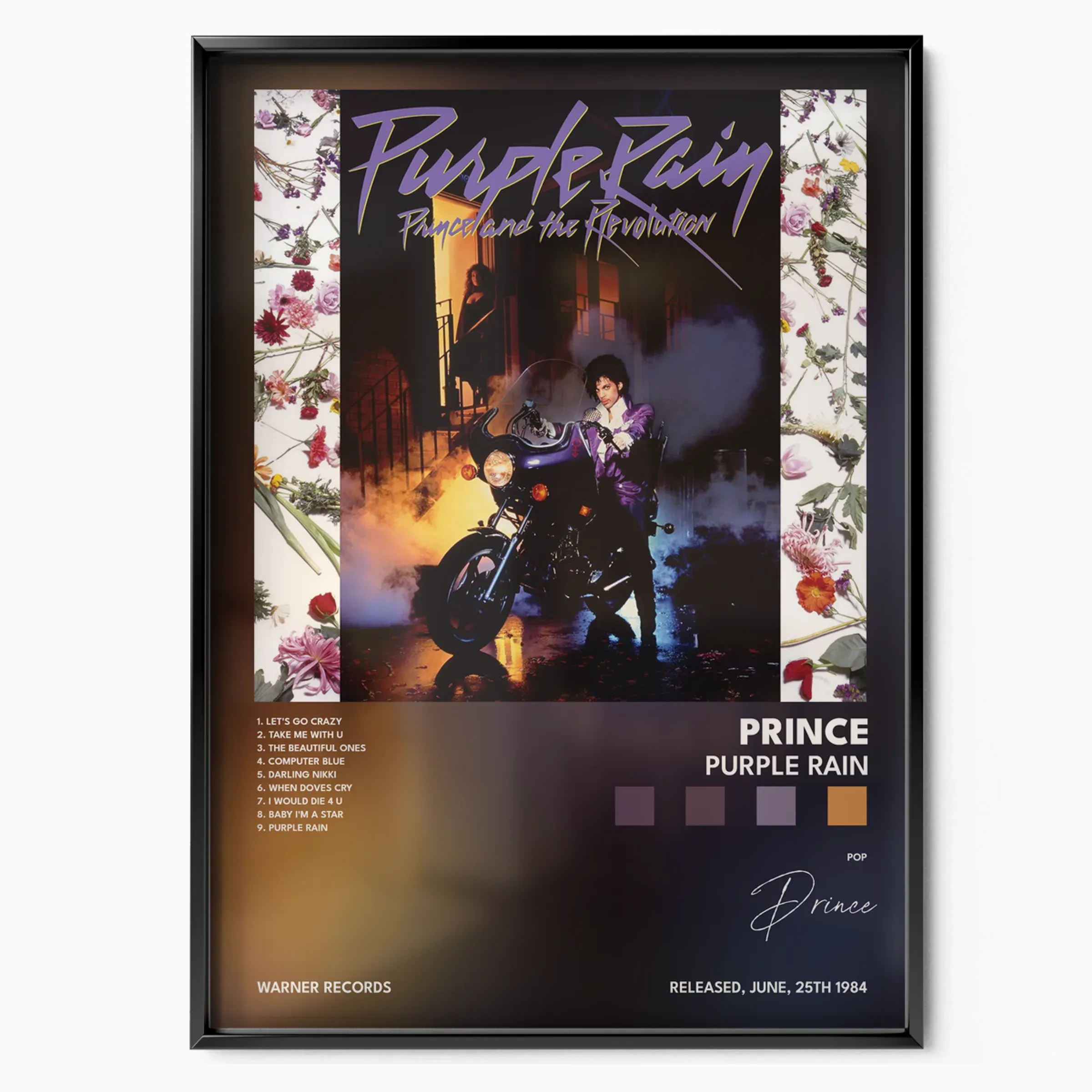
Then came the peak. Purple Rain, the 1984 soundtrack to his own film, is the album that made Prince a global superstar. It spent 24 consecutive weeks at number one on the Billboard 200, sold more than 13 million copies in the United States, and won two Grammy Awards plus an Academy Award for Best Original Song Score. Its lead single 'When Doves Cry' topped the Hot 100 with no bass line at all, a choice Prince made after stripping the bass from the final mix. A Purple Rain poster is the centerpiece of any music room, all smoke, motorcycle, and violet light, and it is the print most fans reach for first.
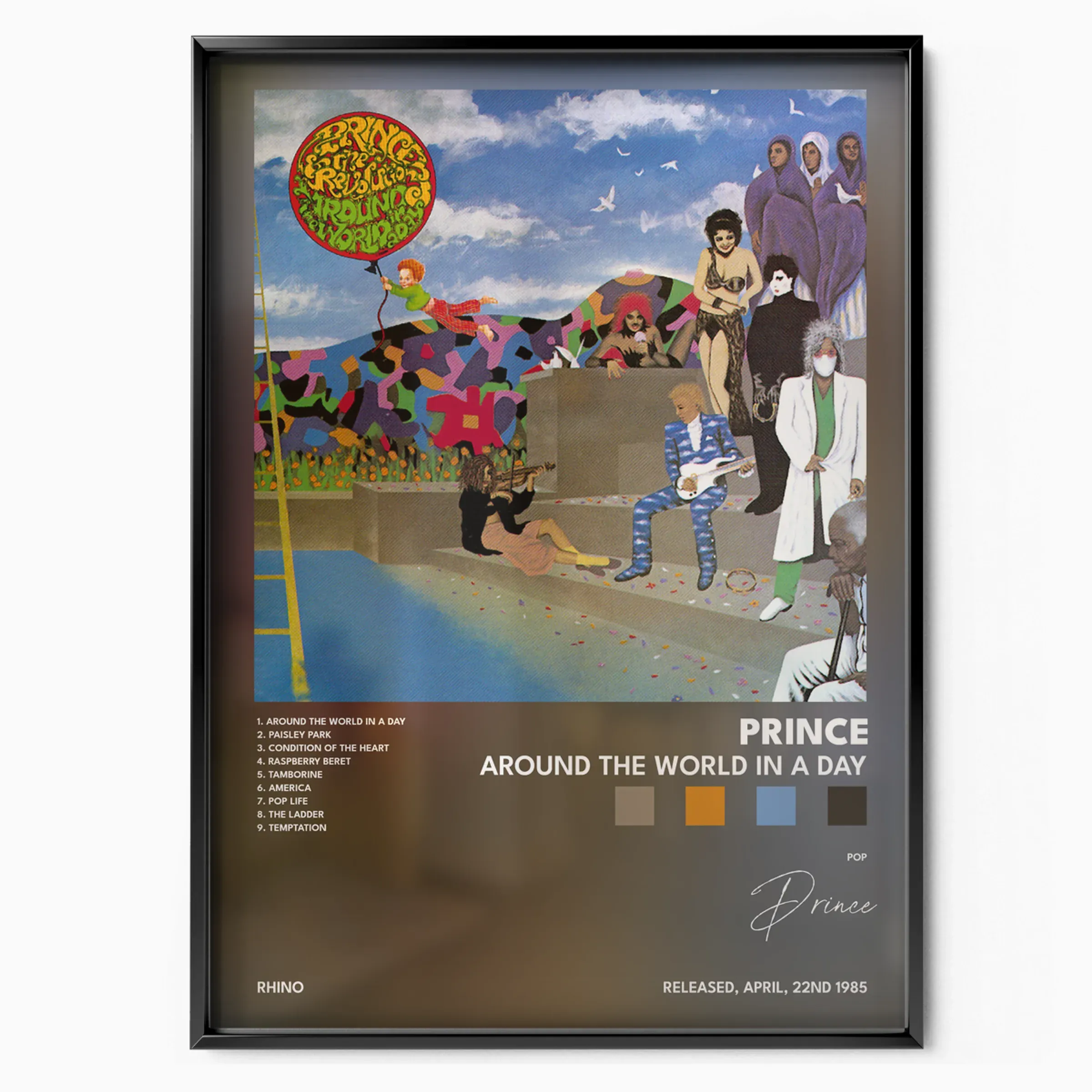
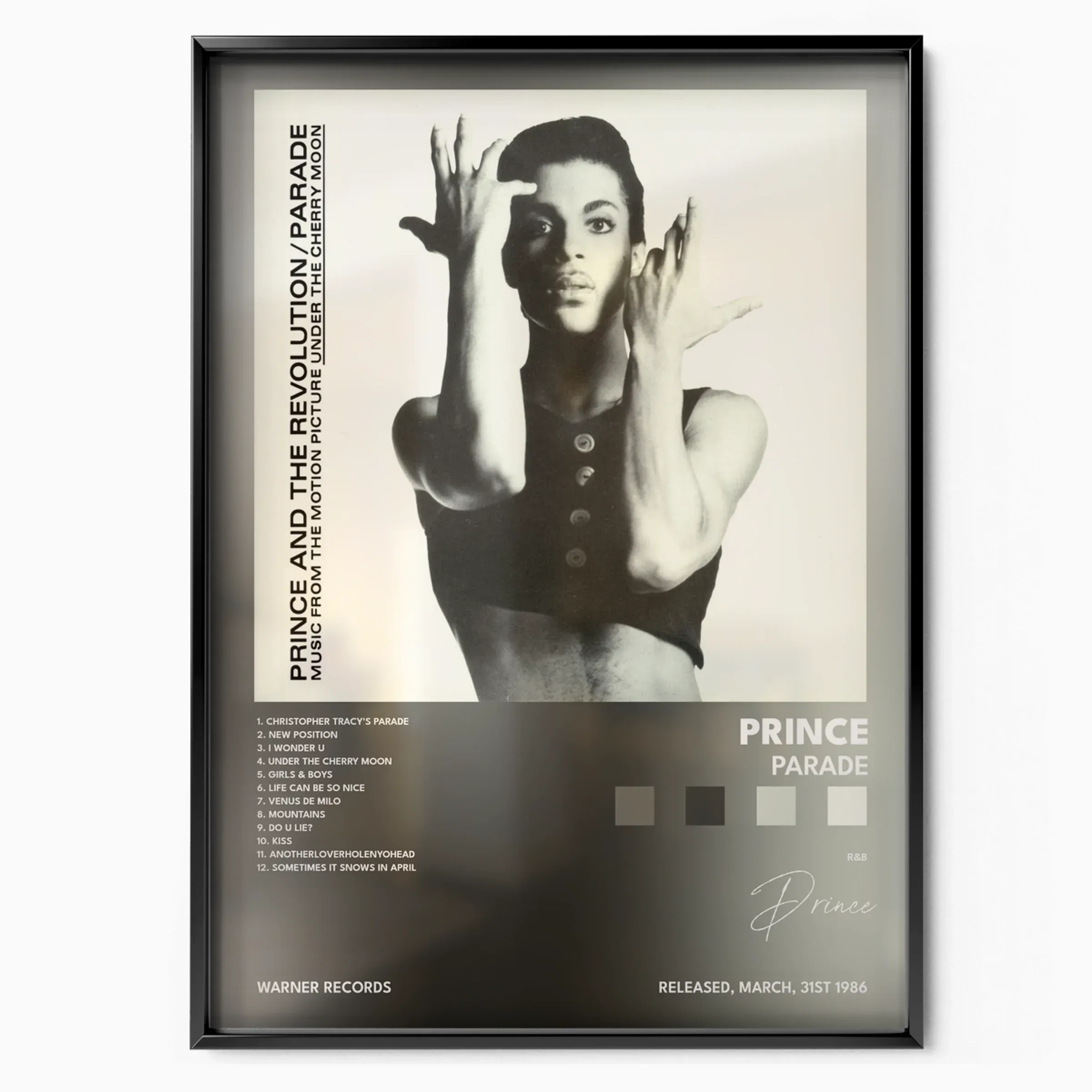
Prince refused to repeat himself. Around the World in a Day, released in 1985, swerved into psychedelic pop and paisley color just as the world begged for another Purple Rain. He followed it with Parade in 1986, the soundtrack to the film Under the Cherry Moon, whose minimalist single 'Kiss' hit number one while 'Manic Monday', which he wrote for the Bangles, sat at number two. Those two 1980s sleeves, Around the World in a Day and Parade, bring warmth and playfulness to a gallery wall.
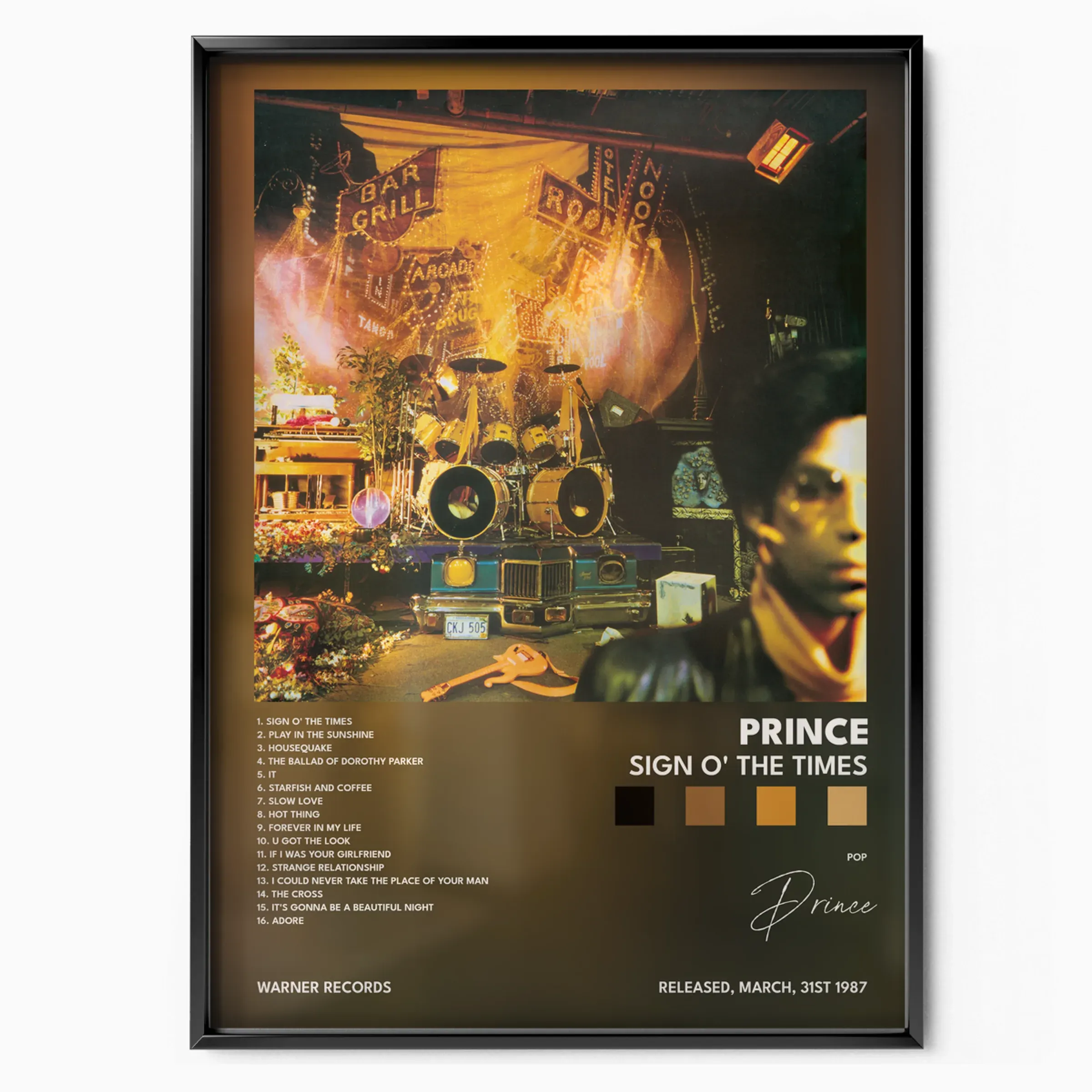
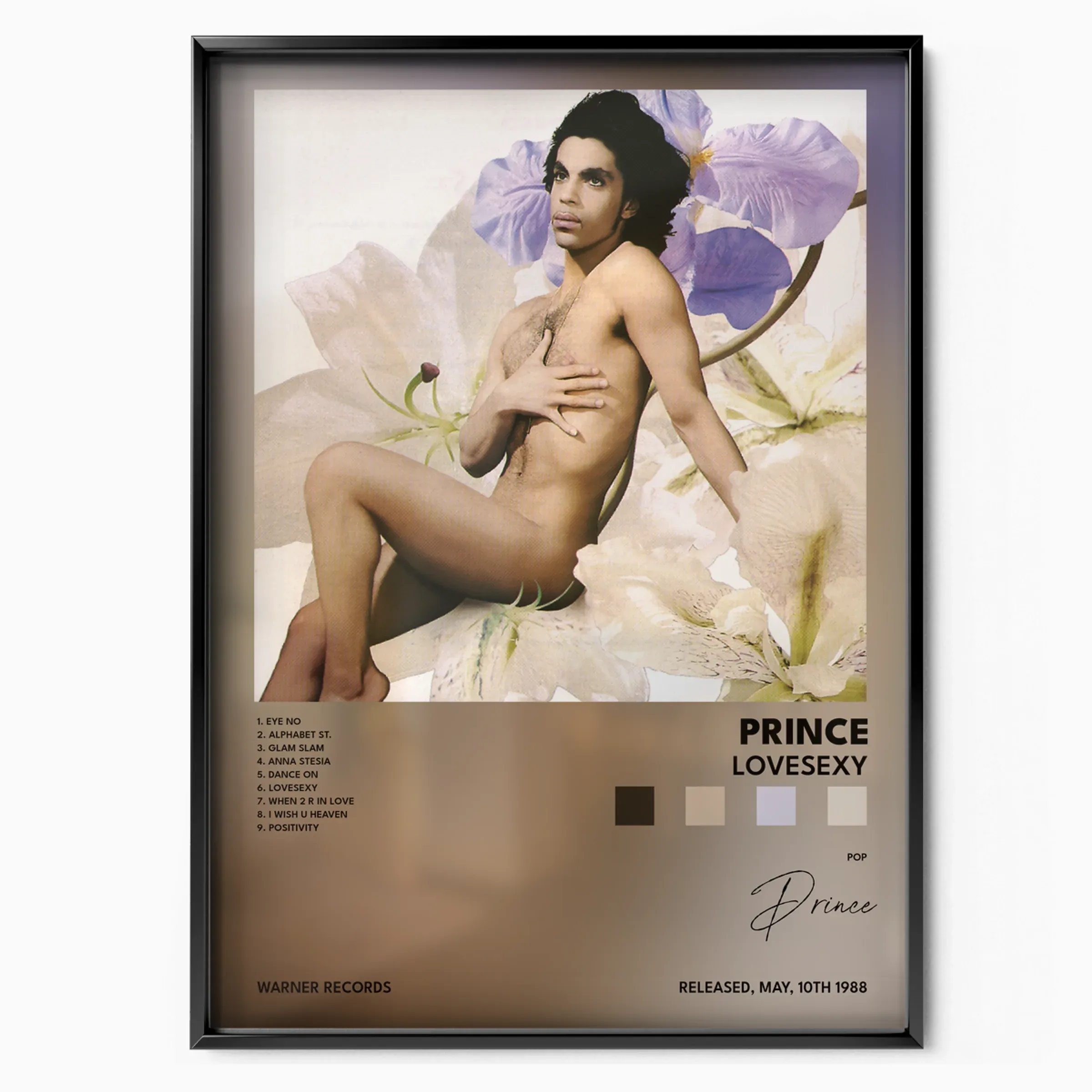
The late 1980s hold his most acclaimed work. Sign o' the Times, the 1987 double album, is widely regarded as his masterpiece, topping the Pazz & Jop critics poll and earning an Album of the Year Grammy nomination. It was his first solo record after disbanding the Revolution, salvaged from aborted projects called Dream Factory, Camille, and Crystal Ball. A year later he issued Lovesexy, the 1988 album recorded in roughly seven weeks at his new Paisley Park Studios after he shelved the notorious Black Album at the last minute. Its bright, floral cover was a deliberate about-face from the shadowy record it replaced, and it remains one of his most striking sleeves.
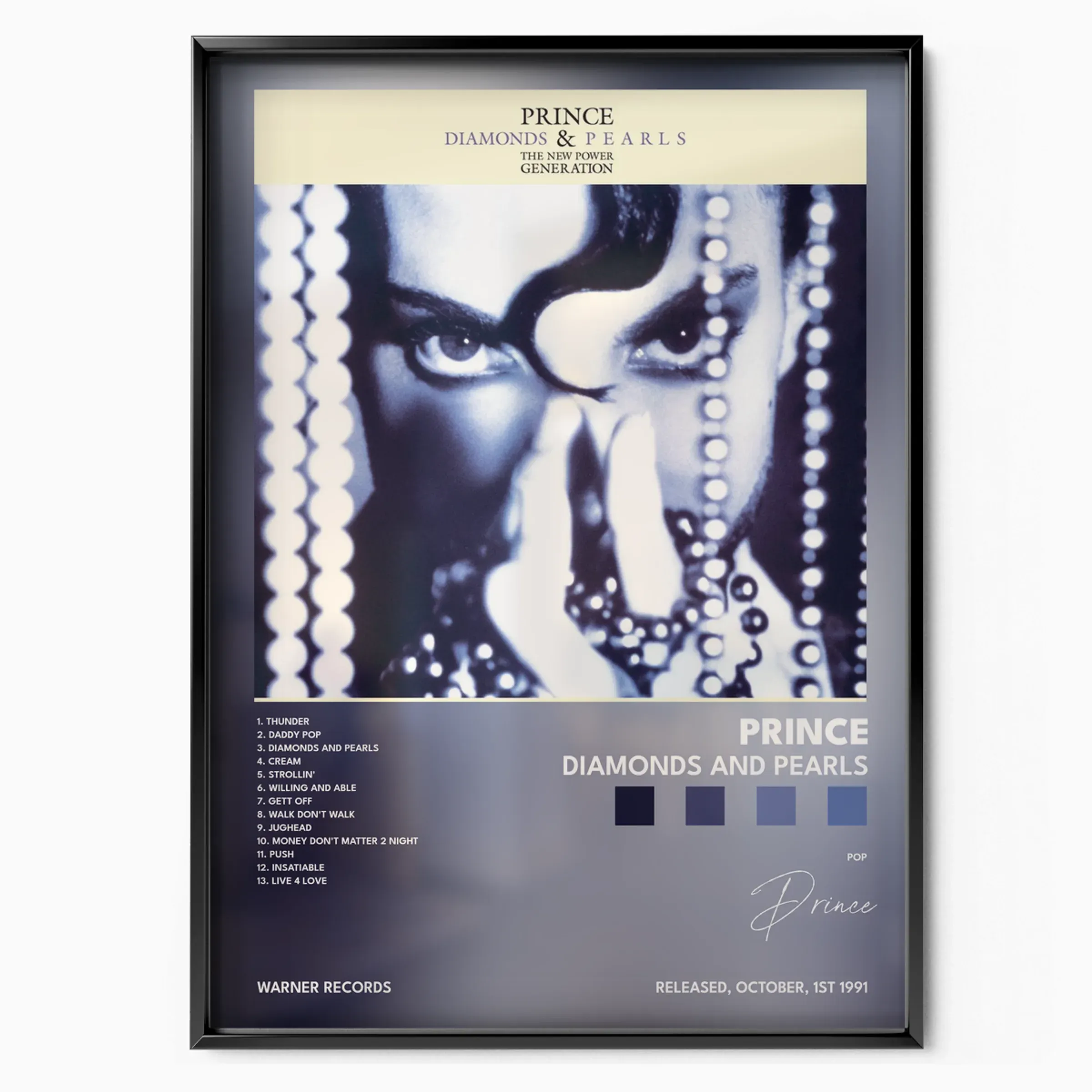
By the 1990s Prince reset again with a new band, the New Power Generation, on Diamonds and Pearls. The 1991 album delivered 'Cream', his fifth and final number-one single on the Hot 100, and proved he could glam up the new decade on his own terms while the title track climbed to number three. A Diamonds and Pearls print closes the collection with pure early-90s shine.
Every poster here is printed on museum-grade paper in four sizes, A4, A3, A2, and A1, so you can slot a single sleeve into a shelf nook or blow Purple Rain up to statement scale, and each is available unframed or in a black or white chrome frame. For a gallery wall, pin your era anchors first: run Dirty Mind, Purple Rain, and Sign o' the Times across the center line at matching A2, then fill above and below with smaller A3 prints so the eye travels the decade left to right.
Prince was inducted into the Rock and Roll Hall of Fame in 2004, in his first year of eligibility, and remained restlessly creative until his death at Paisley Park on April 21, 2016, at age 57. What lasts, beyond the chart-toppers and the platinum plaques, is the imagery: the purple, the symbol, the fearless self-invention. These posters let that story live on your wall, one bold sleeve at a time.