US Rap and Hip-Hop Posters, Printed for the Culture
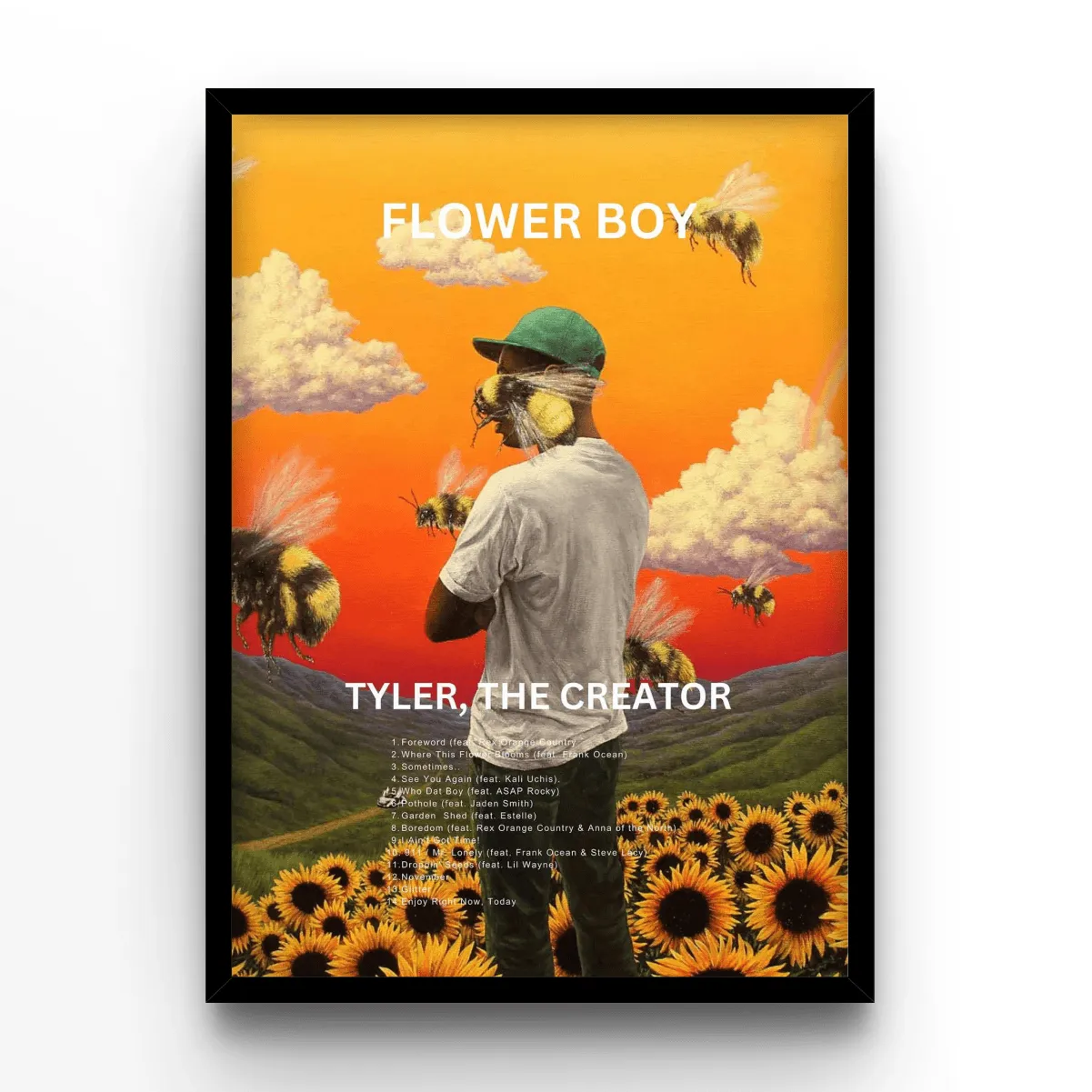
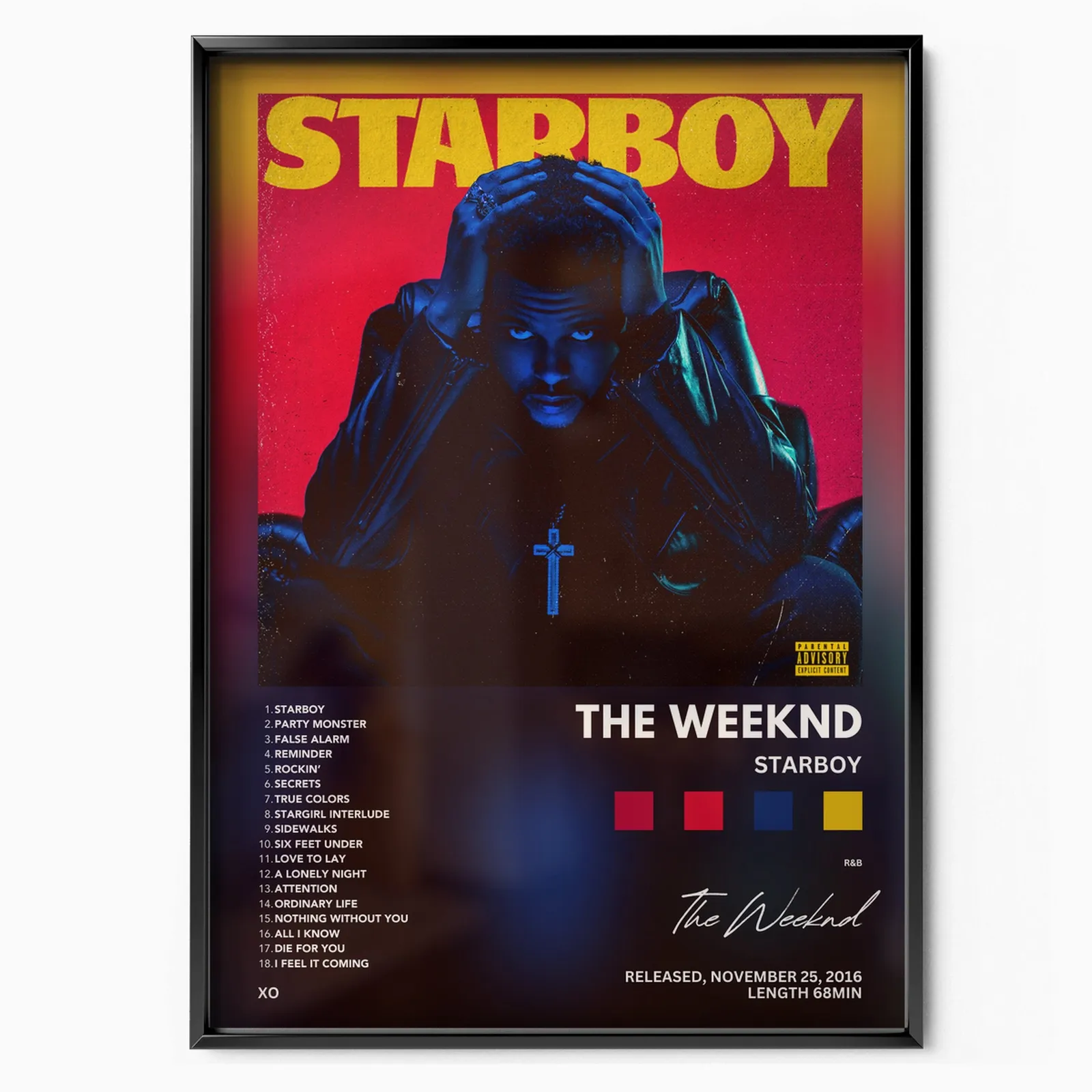
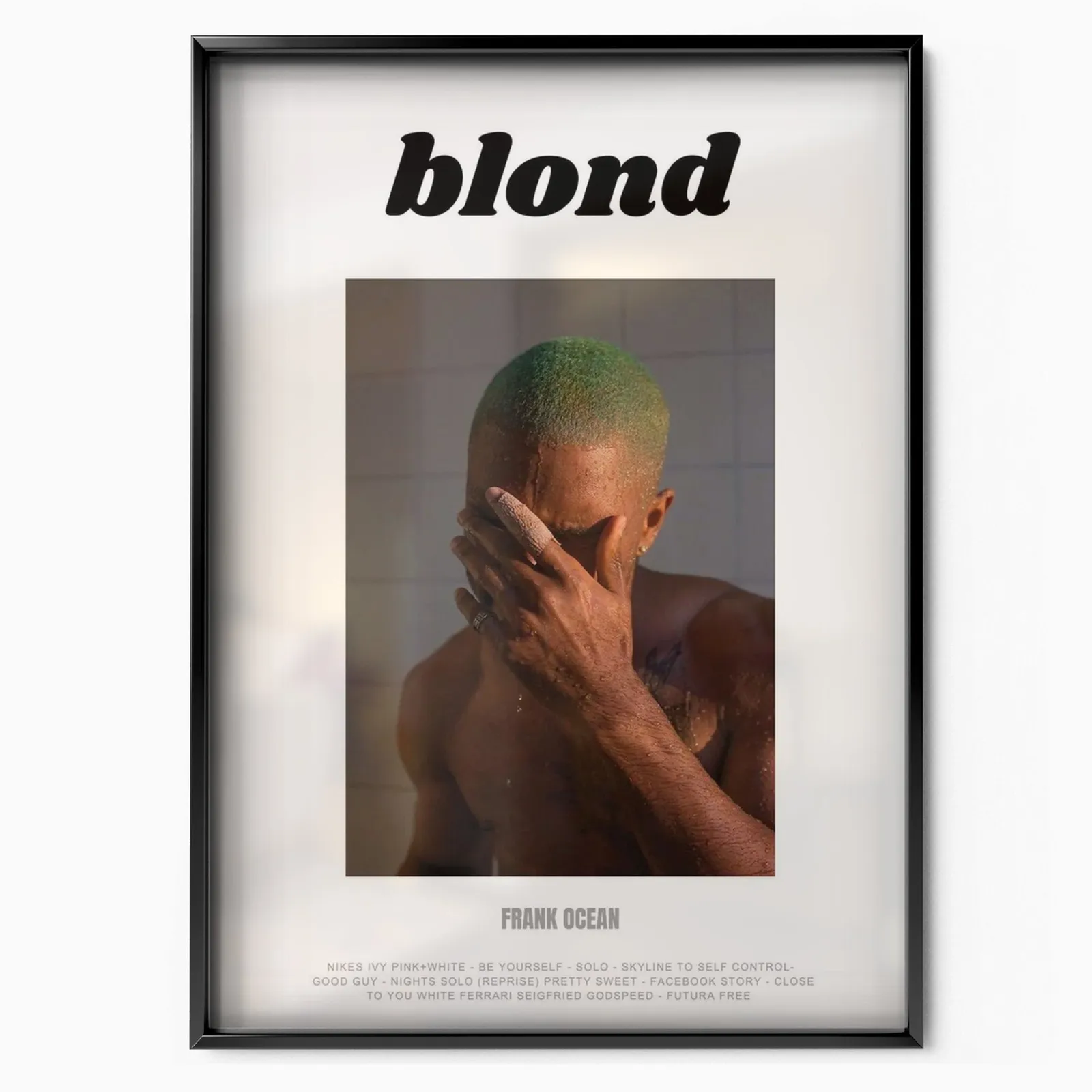
US hip-hop is barely fifty years old and it already runs the sound of the planet, from a Bronx block party in the 1970s to the streaming charts of today. Our Rap US collection gathers 336 designs that trace the whole arc of the genre, from the West Coast gangsta era and the East Coast golden age to the Kanye West revolution, the Kendrick and Drake decade, and the SoundCloud generation that grew up online. Every print is produced on museum-grade 200gsm matte stock and offered from A4 up to poster-sized A1, framed in black or chrome white or shipped unframed. Whether you rate lyricism above everything or you just want the cover of To Pimp a Butterfly glowing on your wall, there is a piece here for your bedroom, your studio or your gift list. Because the full range runs on Buy 2 Get 1 Free, filling a wall with the records that shaped the genre costs less than a single festival ticket.
Below is a guide to the eras and artists collectors reach for most, grouped the way the music actually moved: decade by decade, coast by coast, movement by movement. Everything we mention is a real product in this collection, so you can click straight through to the sleeve you want.
The 1990s: West Coast, East Coast and the golden age
The genre found its first golden age in the early 1990s, and the collection opens there. On the West Coast, Ice Cube left N.W.A and released the incendiary AmeriKKKa's Most Wanted in 1990, then Death Certificate and The Predator, while Eazy-Duz-It carried the raw energy of the crew that started it all. In New York, a 20-year-old Nas dropped Illmatic on 19 April 1994, and The Source handed it a perfect five-mic rating, a score the magazine had never given a debut before. Two years later 2Pac made history with All Eyez on Me, released on 13 February 1996 as the first double-length solo studio album in hip-hop; it later went Diamond. His earlier Me Against the World and the raw West Coast portrait sit alongside it. The decade closed with Dr. Dre's 2001 in 1999, the album that codified G-funk and launched a young Eminem, and with the Atlanta futurism of Outkast, the duo that pulled the South into the centre of the map.
Eminem and the 2000s crossover
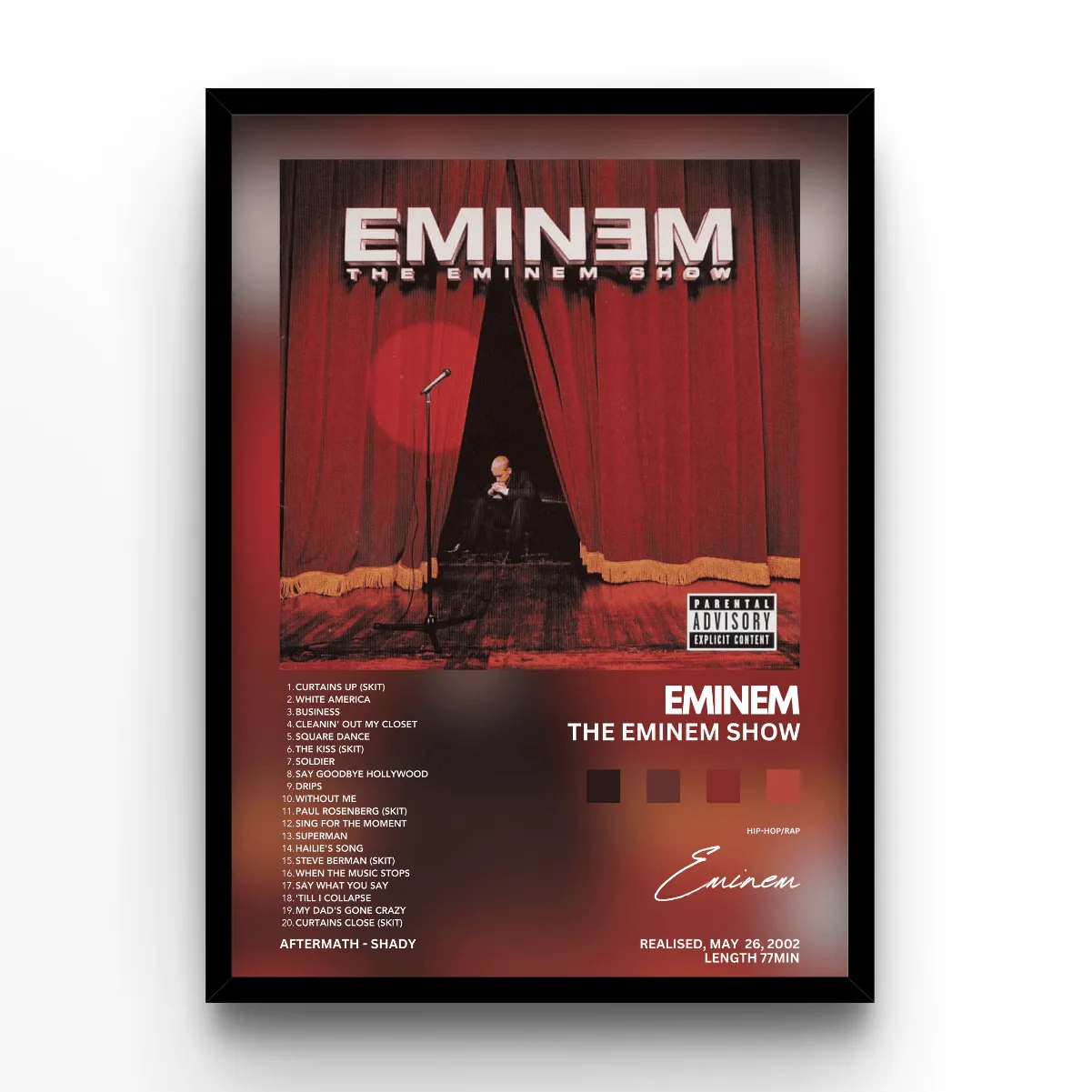
The 2000s turned rap into the biggest genre in pop, and no one embodied that leap like Eminem. The Marshall Mathers LP, released in 2000, sold more than 1.7 million copies in its first week and remains the fastest-selling solo rap album ever, later certified Diamond. The collection carries his run in full, from the breakout Slim Shady LP and The Eminem Show to Encore, Recovery and the later Kamikaze. Around him, 50 Cent turned street mythology into a blockbuster with Get Rich or Die Tryin' in 2003, and Lil Wayne cemented his claim as the era's most prolific voice with Tha Carter III in 2008. That same year, a grieving Kanye West rewrote the rulebook with the auto-tuned 808s and Heartbreak, an album whose melancholy DNA runs straight through the next fifteen years of the genre.
Kanye West and the sound of Chicago
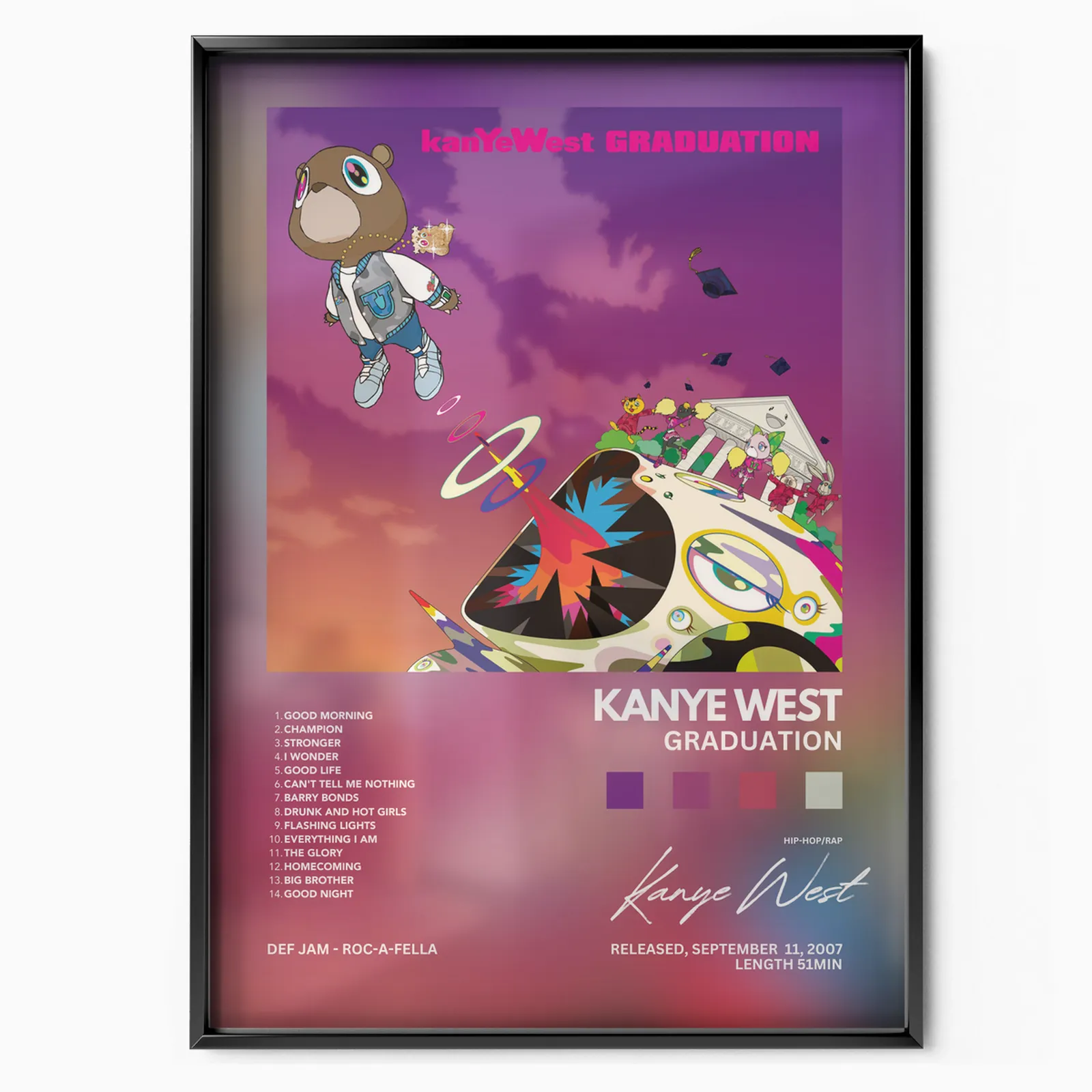
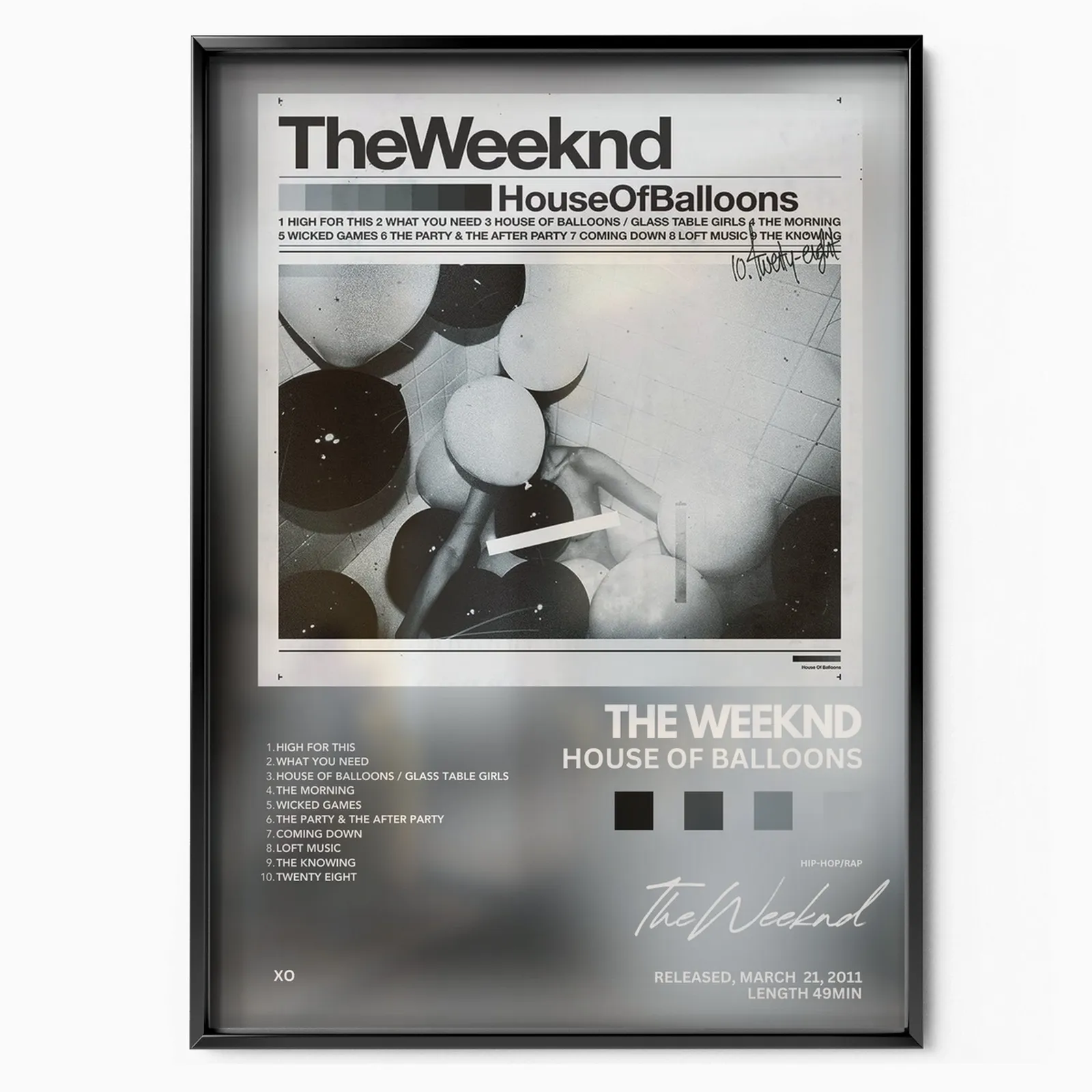
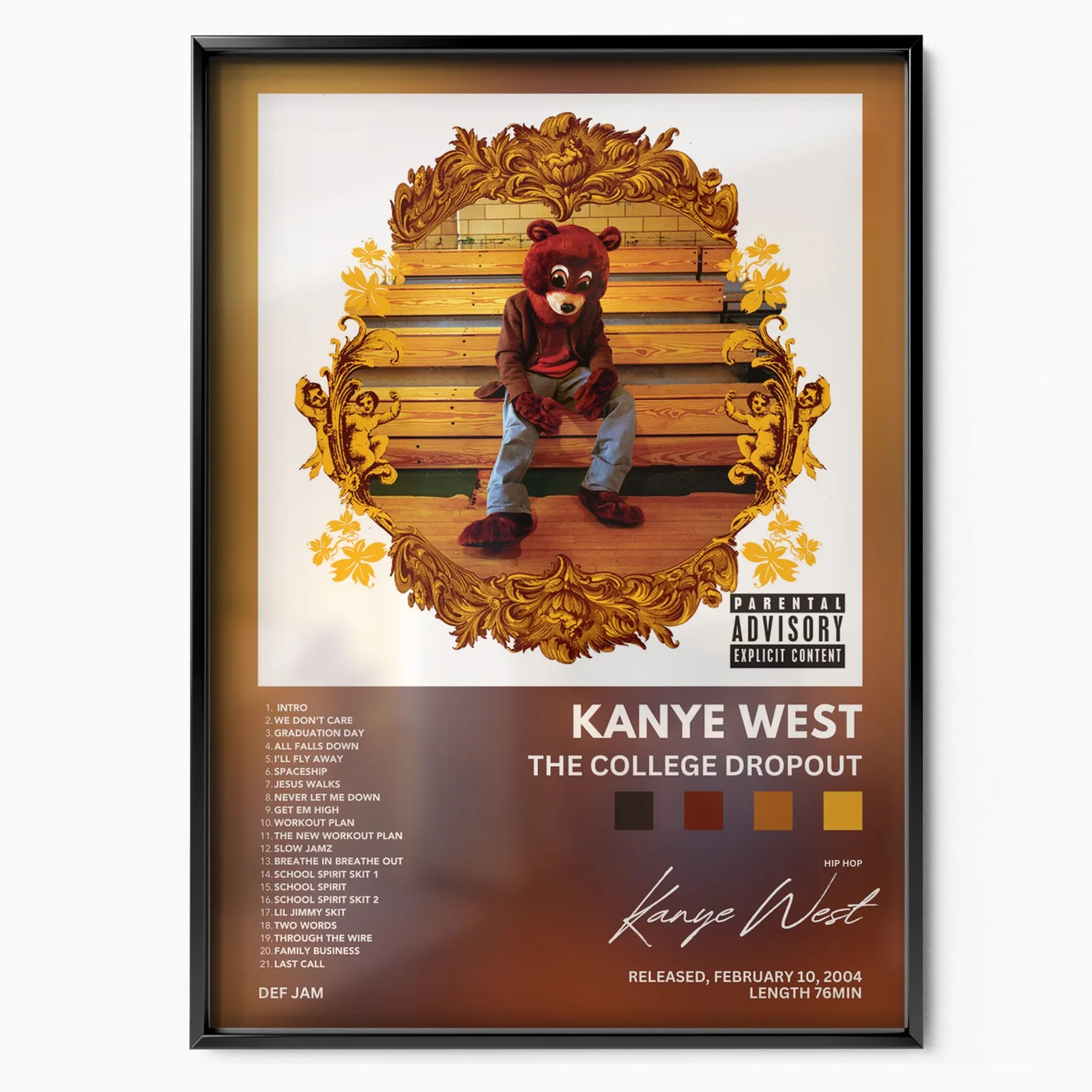
Few artists reshaped hip-hop as often as Kanye West, and the collection follows every turn. It begins with the soul-sampling College Dropout in 2004 and the orchestral Late Registration, climbs to the stadium synths of Graduation, then reaches the maximalist peak of My Beautiful Dark Twisted Fantasy. From there it splinters into the abrasive Yeezus, the ever-changing The Life of Pablo, the minimalist Ye, the gospel of Jesus Is King, the cathedral-scale Donda and the recent Vultures. Hung as a grid, the sleeves read like a timeline of one artist restlessly chasing a new sound every album.
Kendrick, Drake and the streaming decade
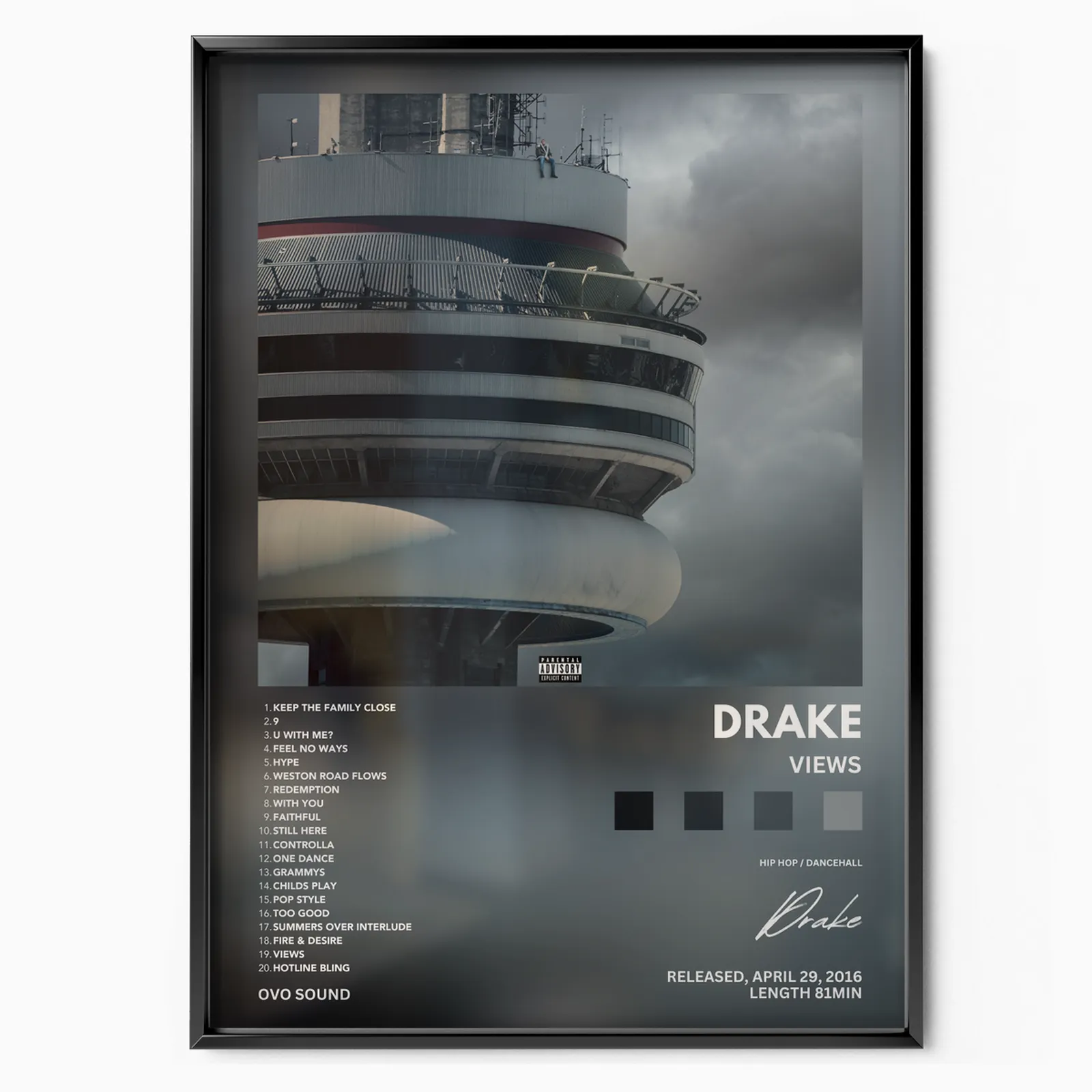
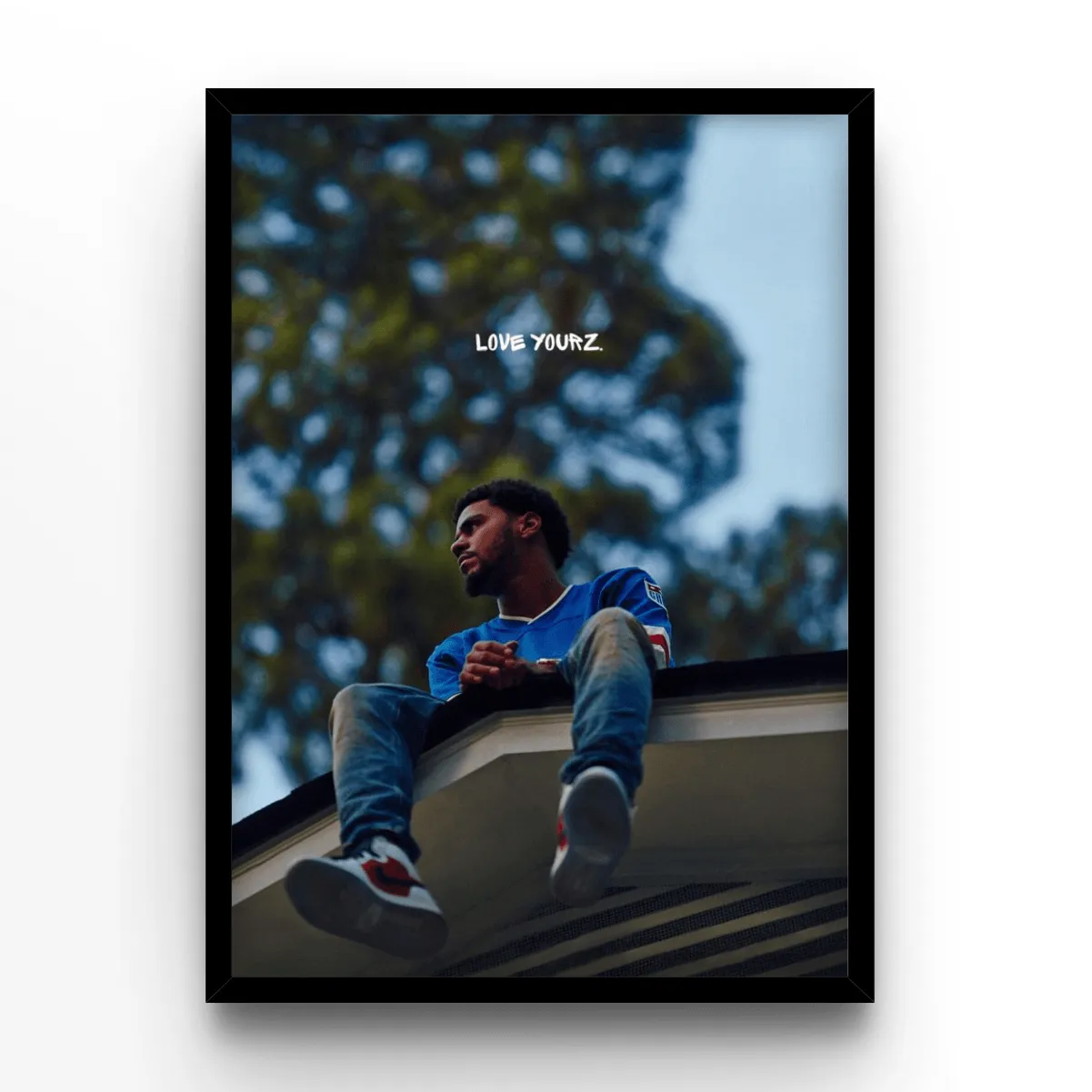
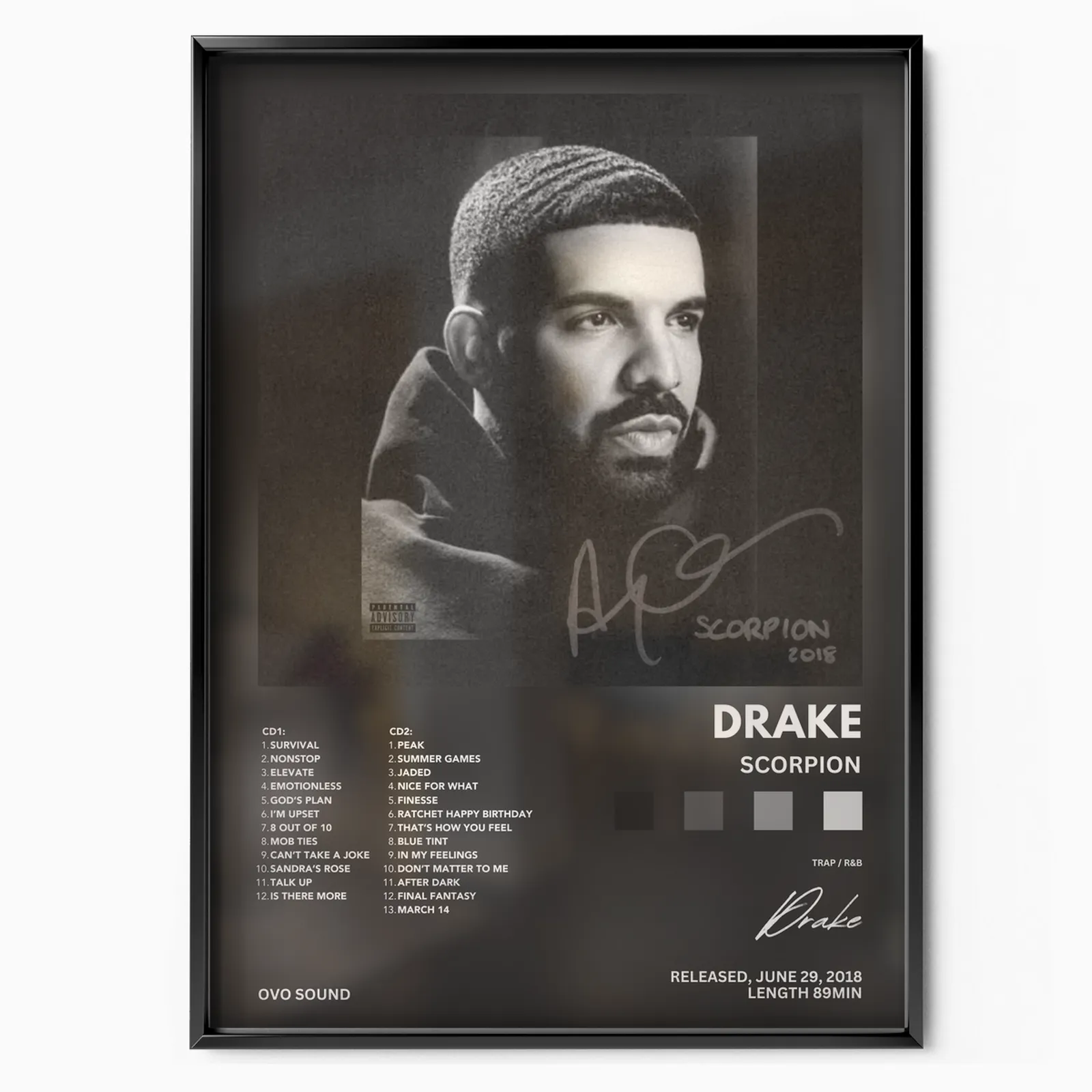
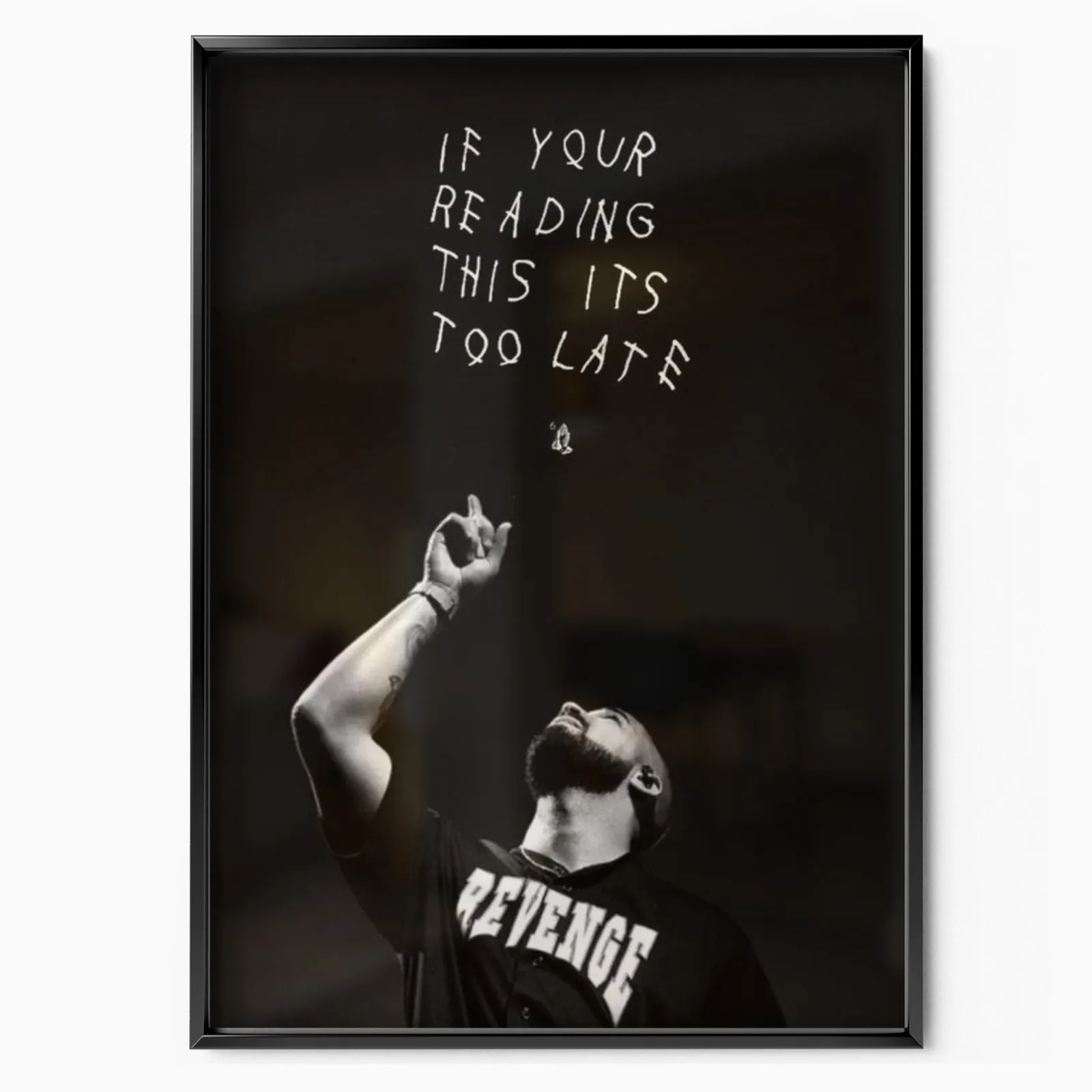
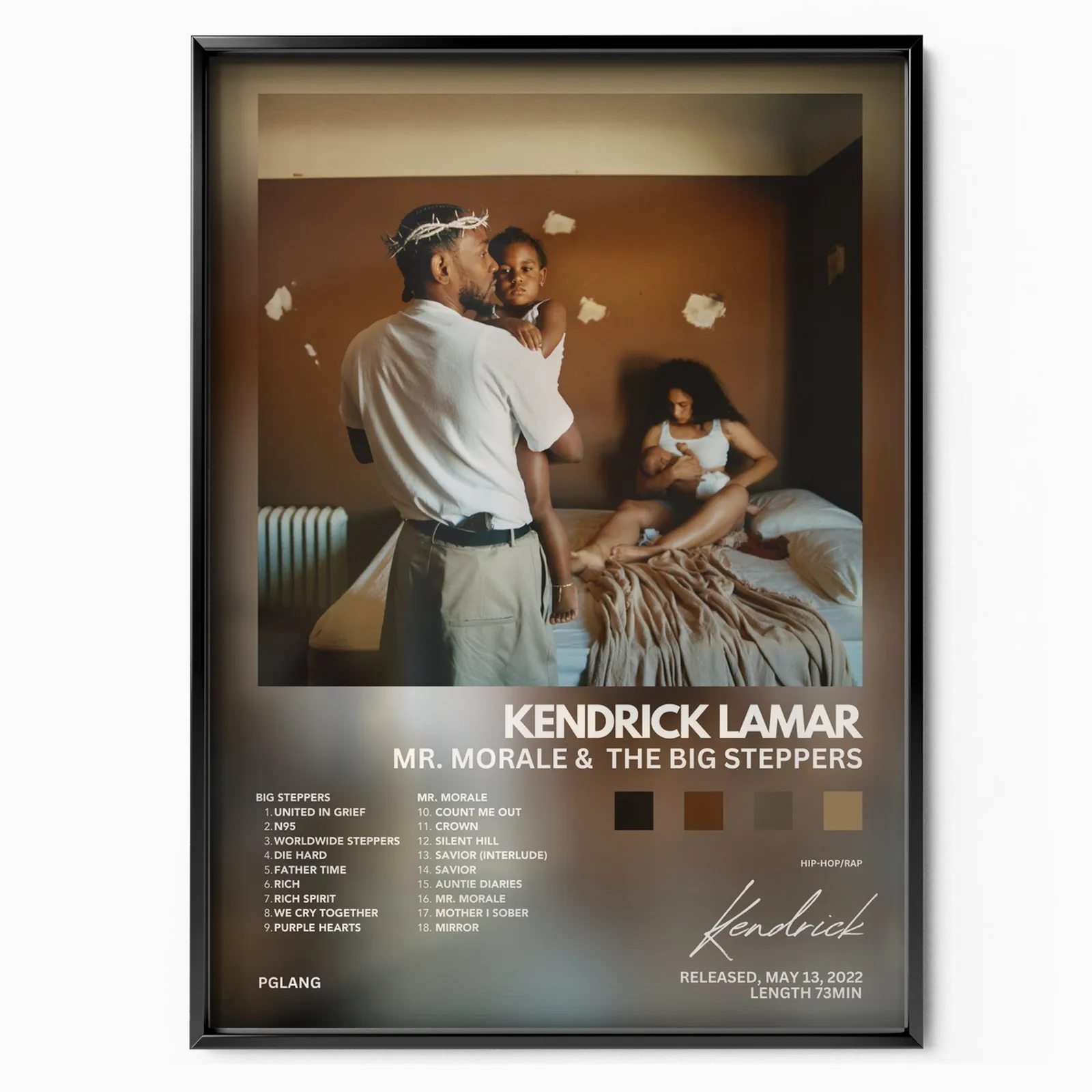
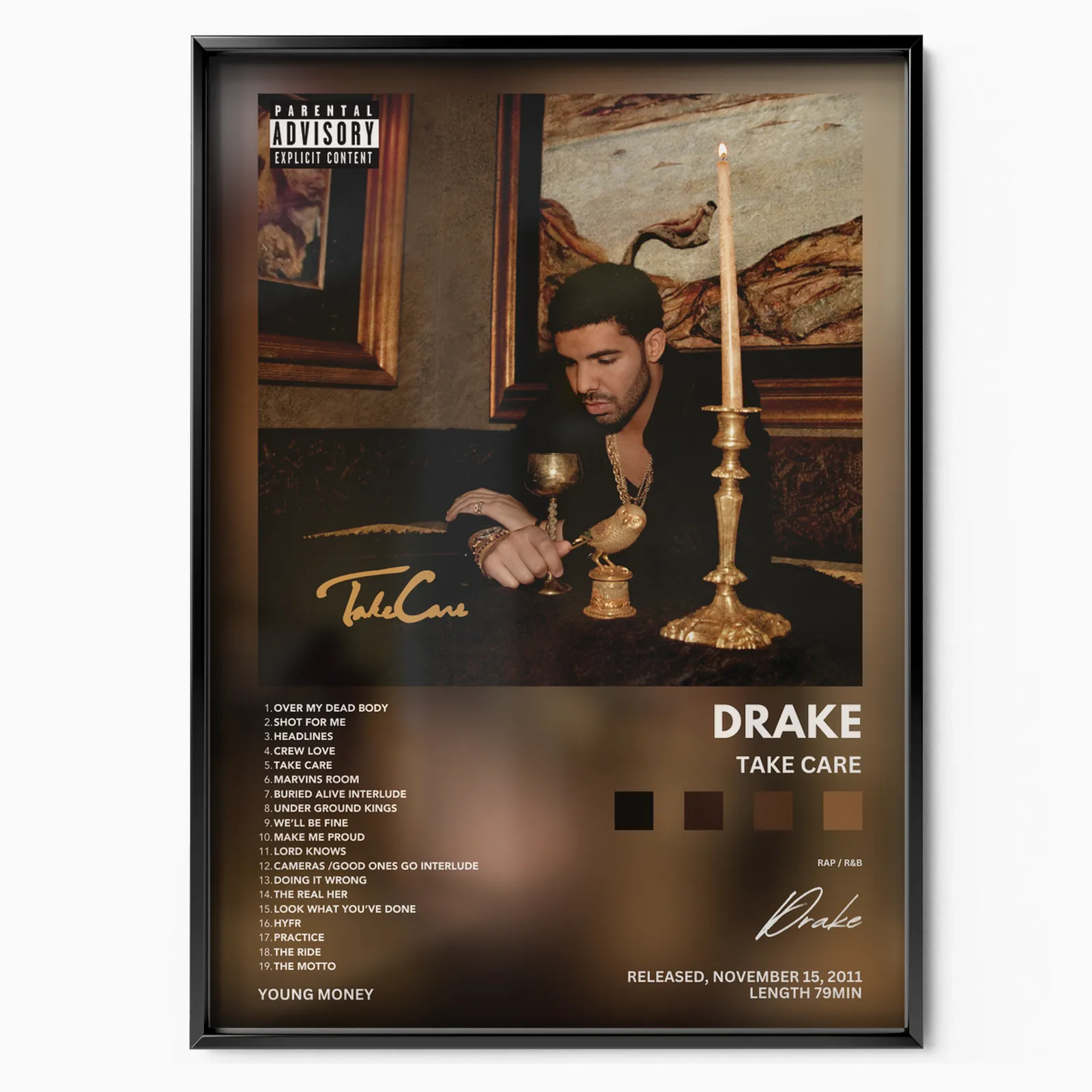
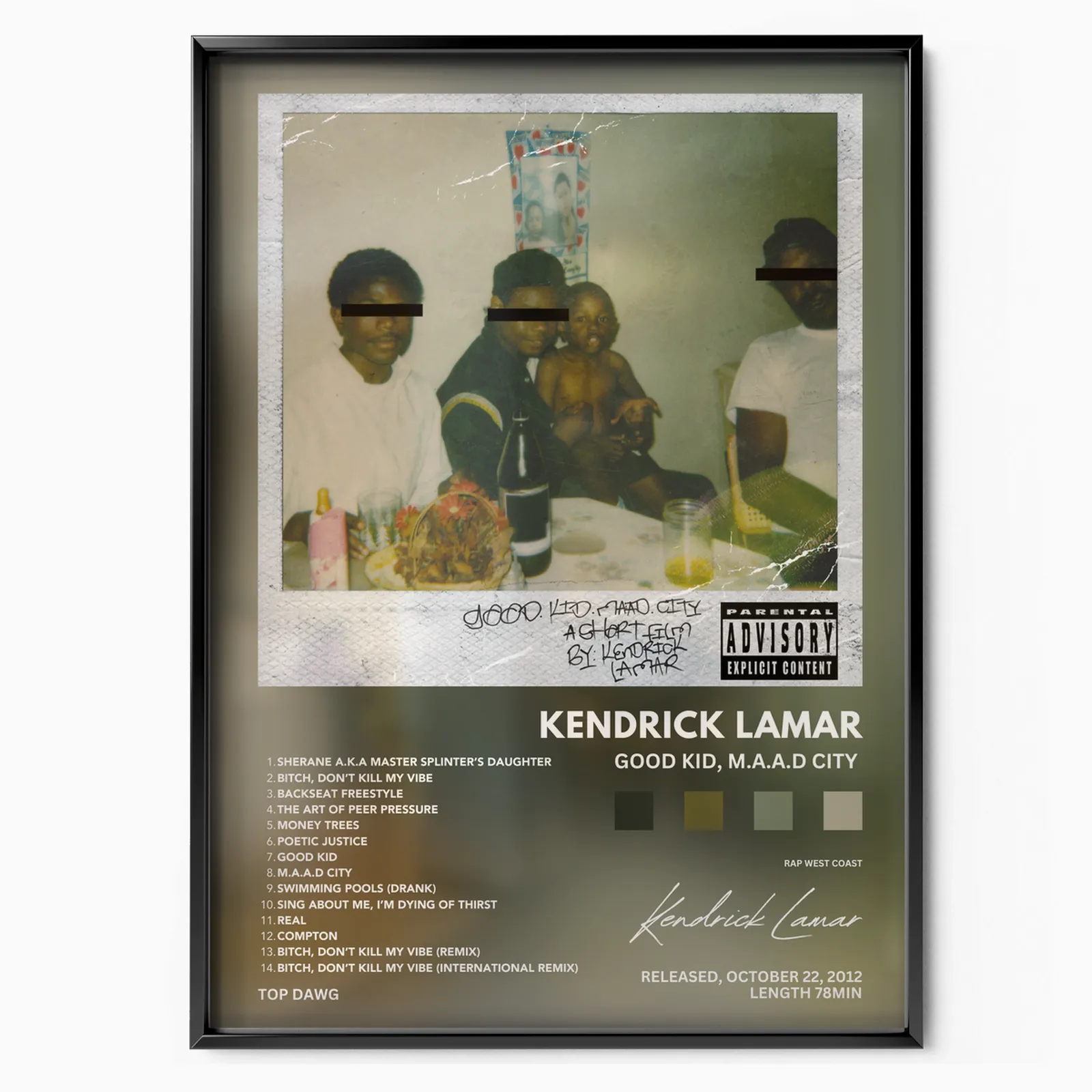
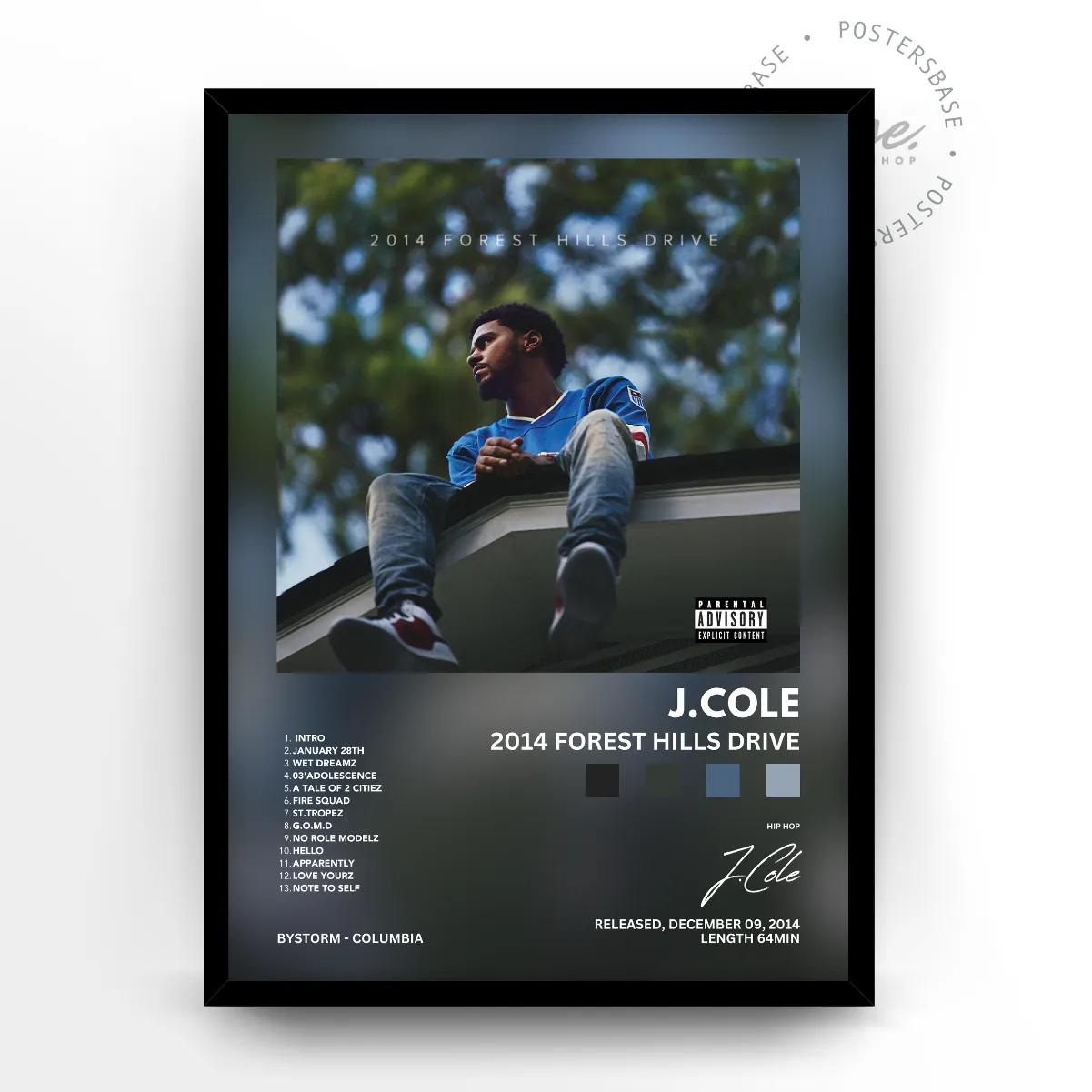
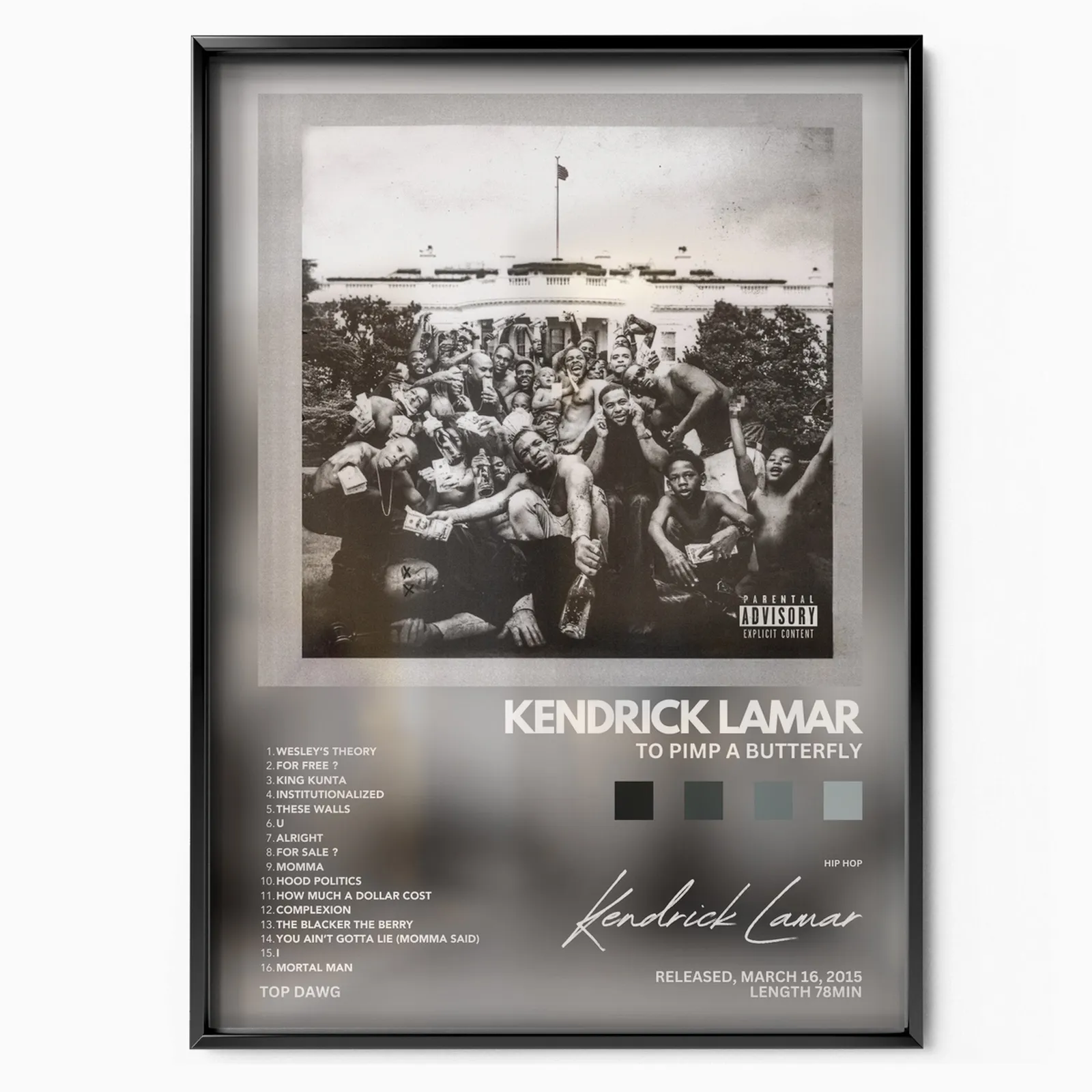
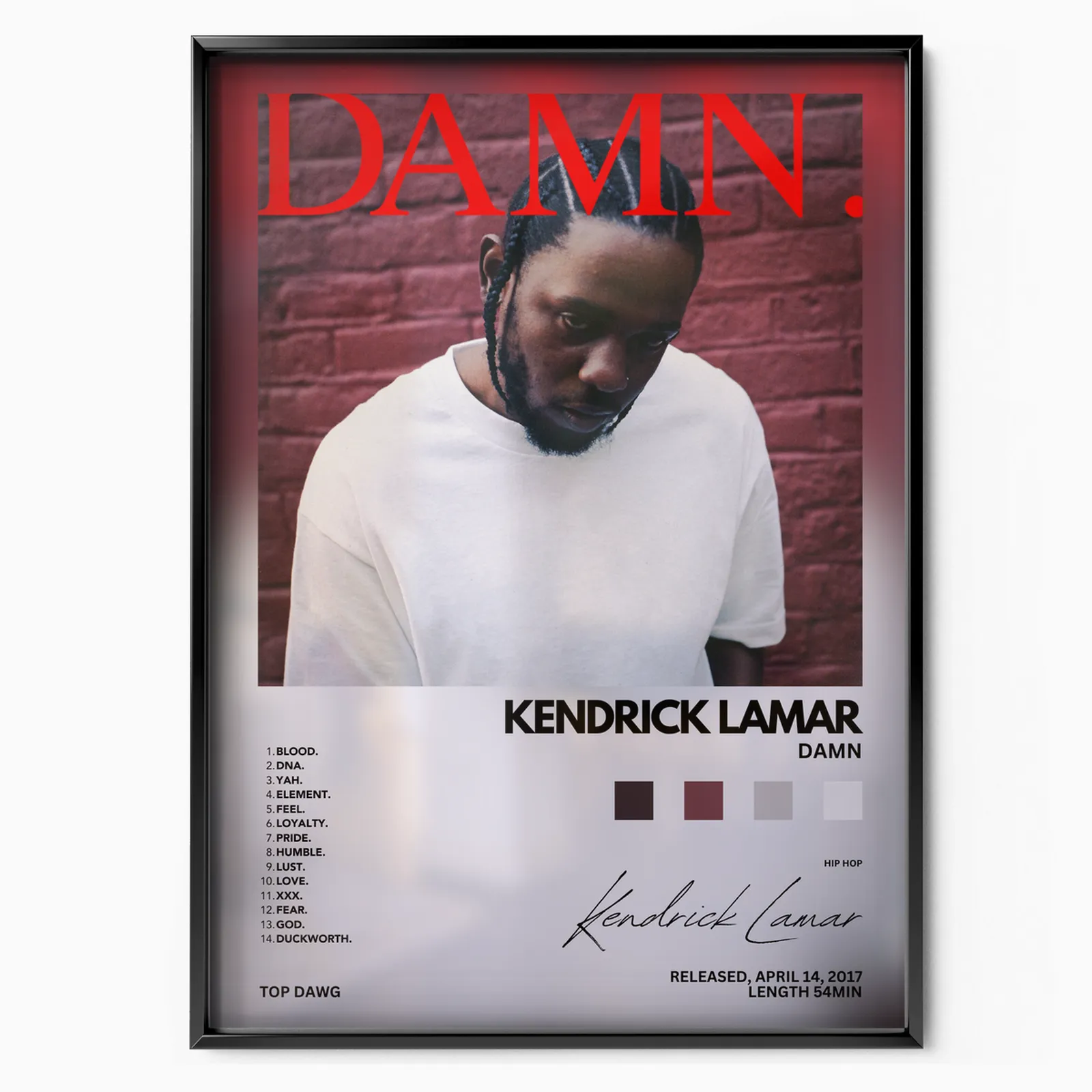
The 2010s belonged to two poles: the lyricist and the hitmaker. Kendrick Lamar arrived with the cinematic good kid, m.A.A.d city in 2012, delivered the jazz-funk statement of To Pimp a Butterfly in 2015, then won the 2018 Pulitzer Prize for Music with DAMN., the first non-classical, non-jazz record ever to take the award. His TDE labelmate SZA broke through with Ctrl and later SOS. On the Dreamville side, J. Cole went platinum with no features on 2014 Forest Hills Drive, followed by 4 Your Eyez Only and KOD. Meanwhile Drake turned Toronto into a hip-hop capital and rewrote the streaming record books, from the confessional Take Care and Nothing Was the Same to the chart-dominating Views, Scorpion and the playlist-era More Life.
Trap, Cactus Jack and the SoundCloud generation
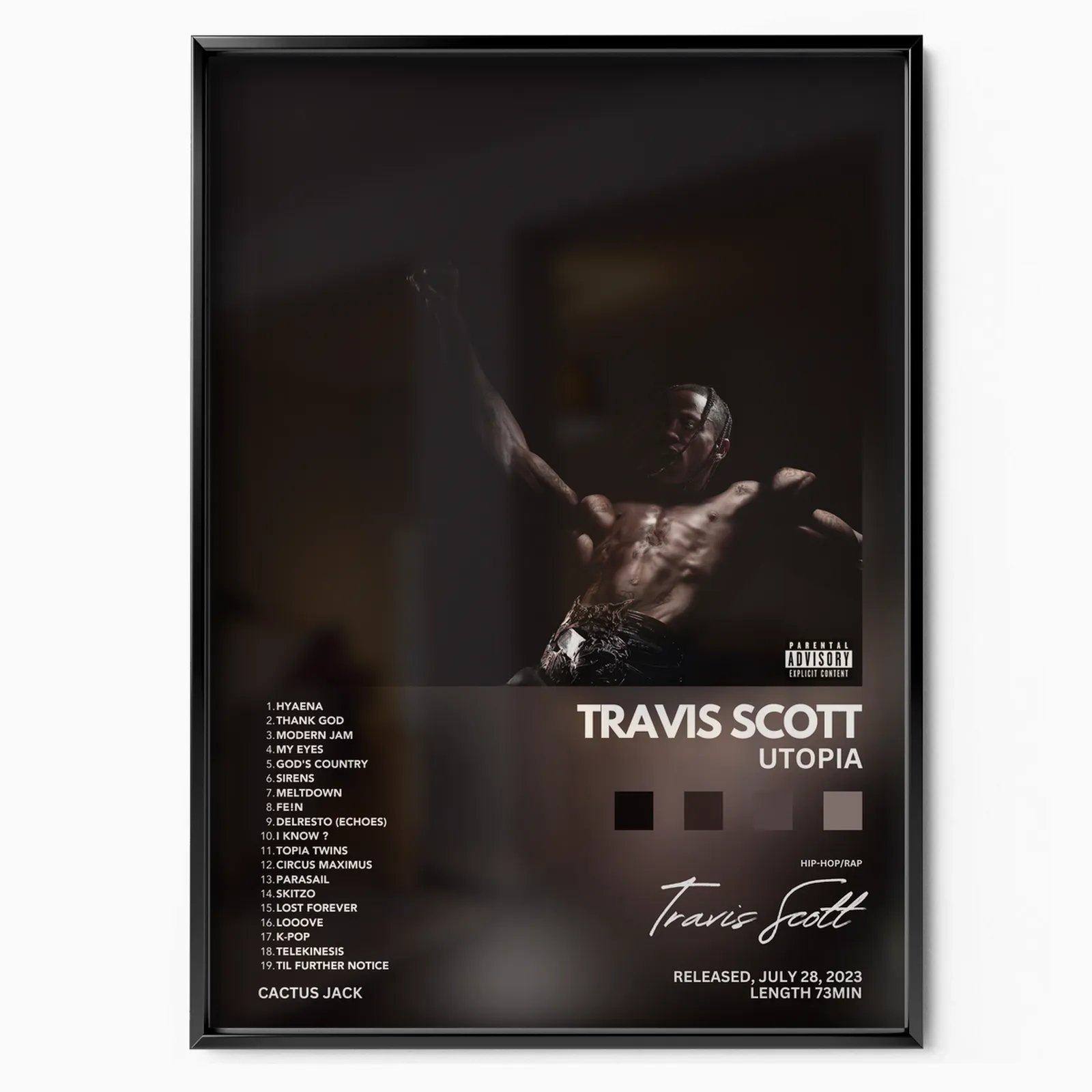
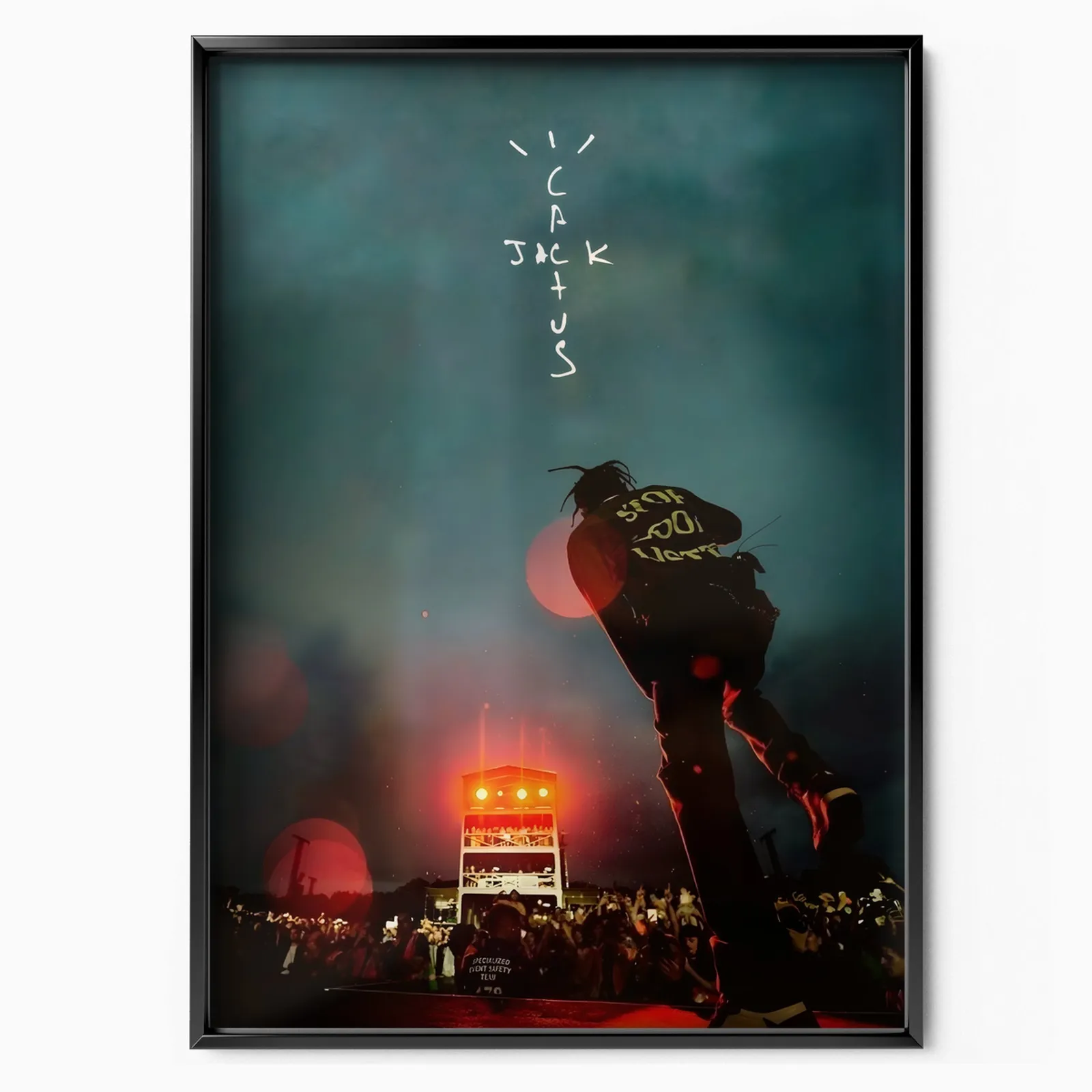
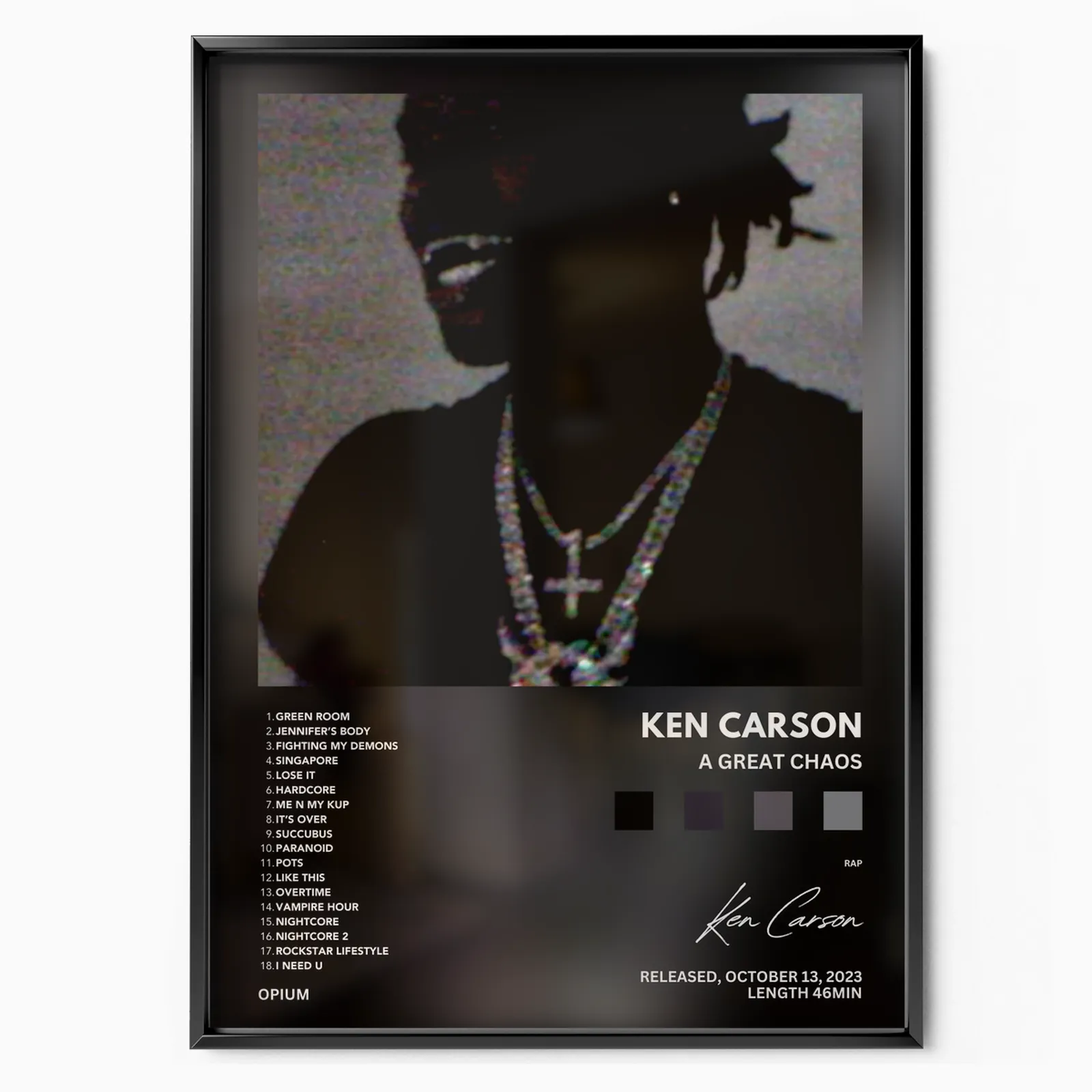
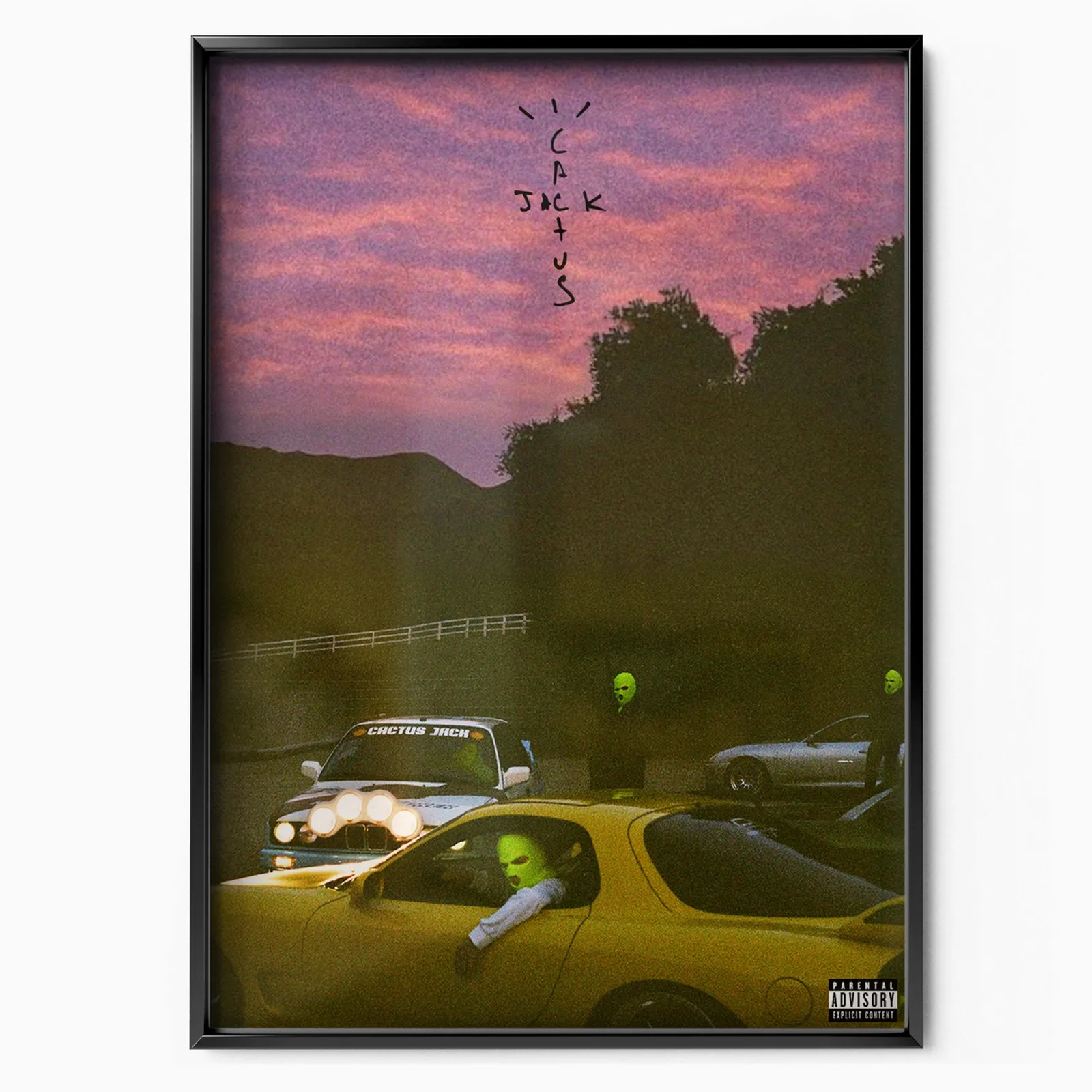
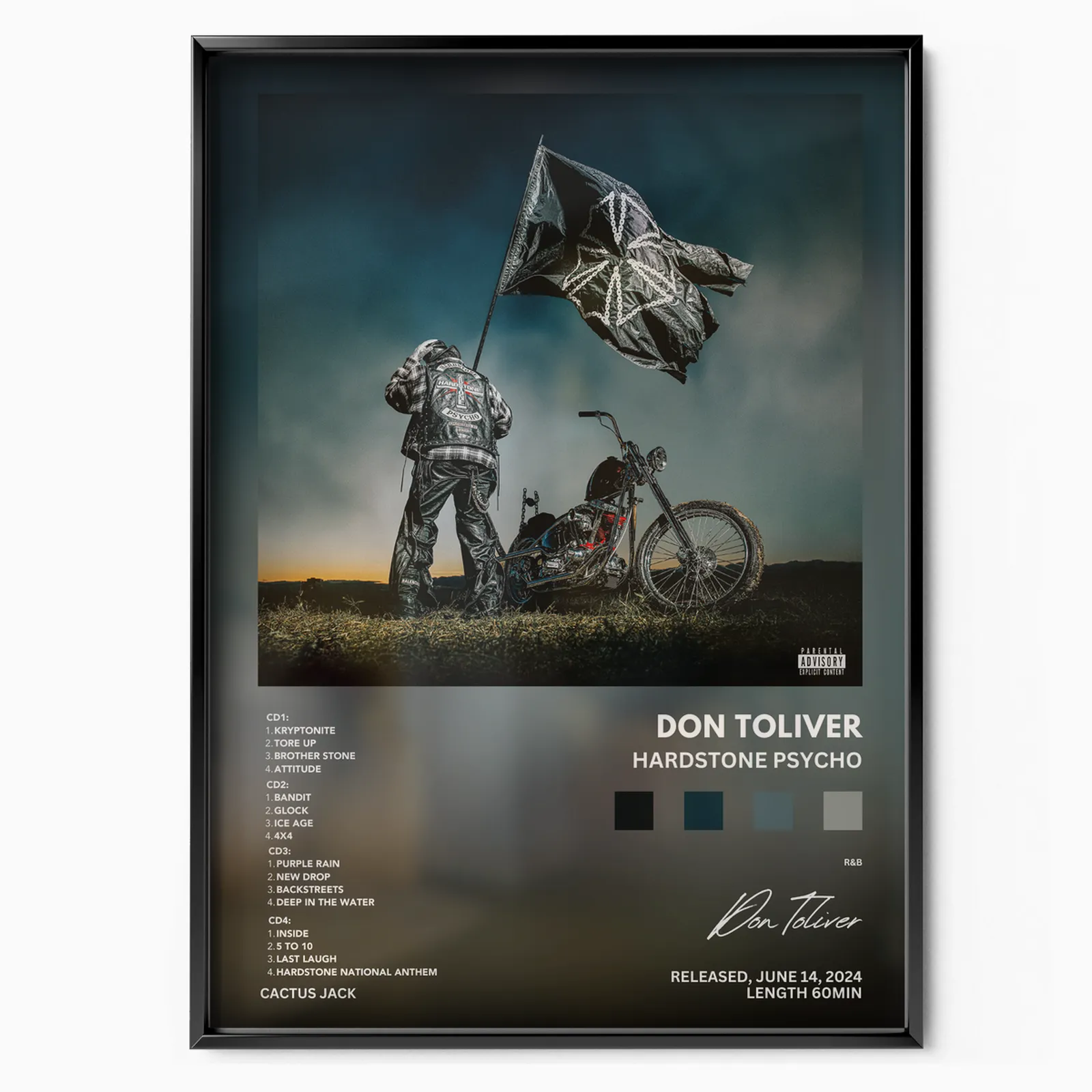
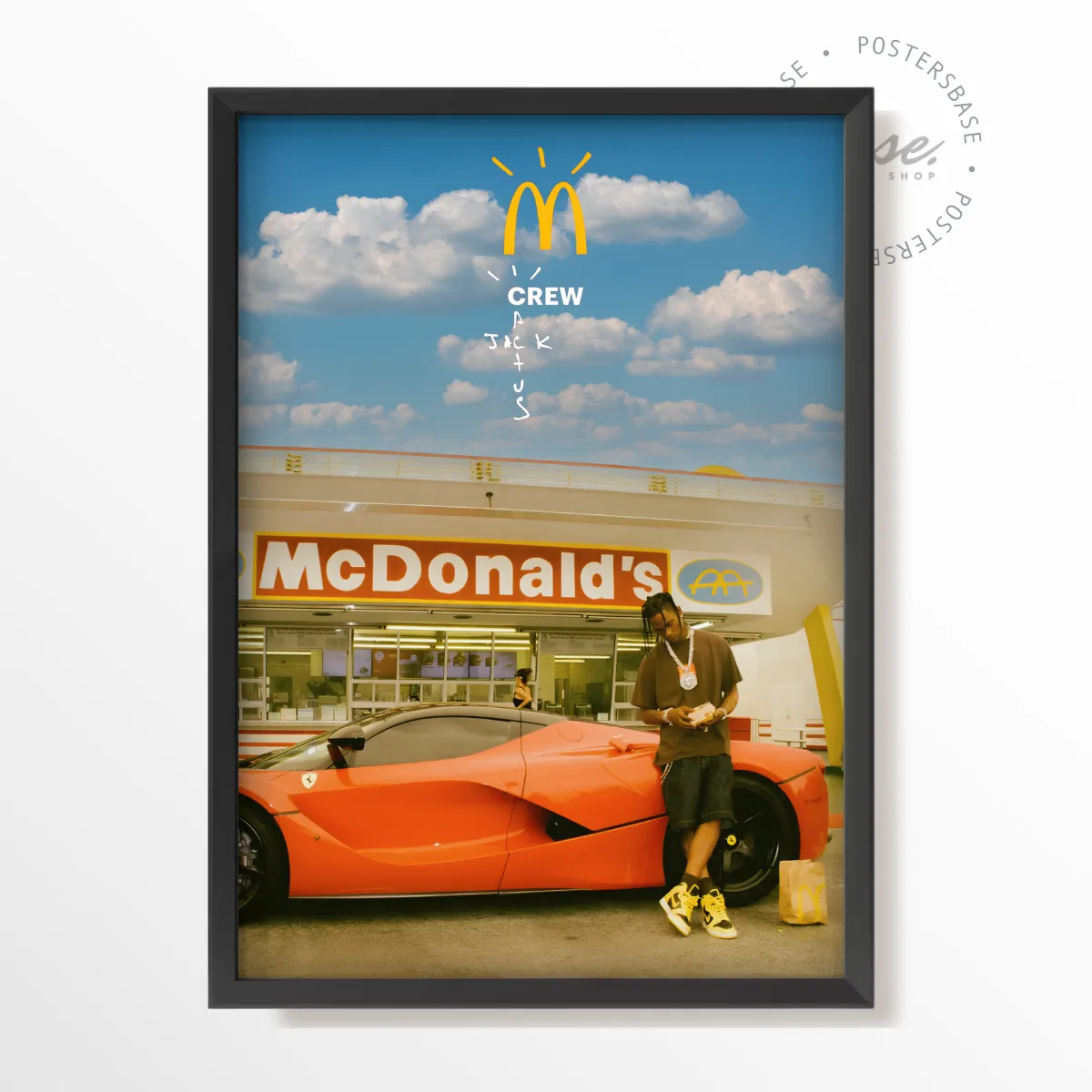
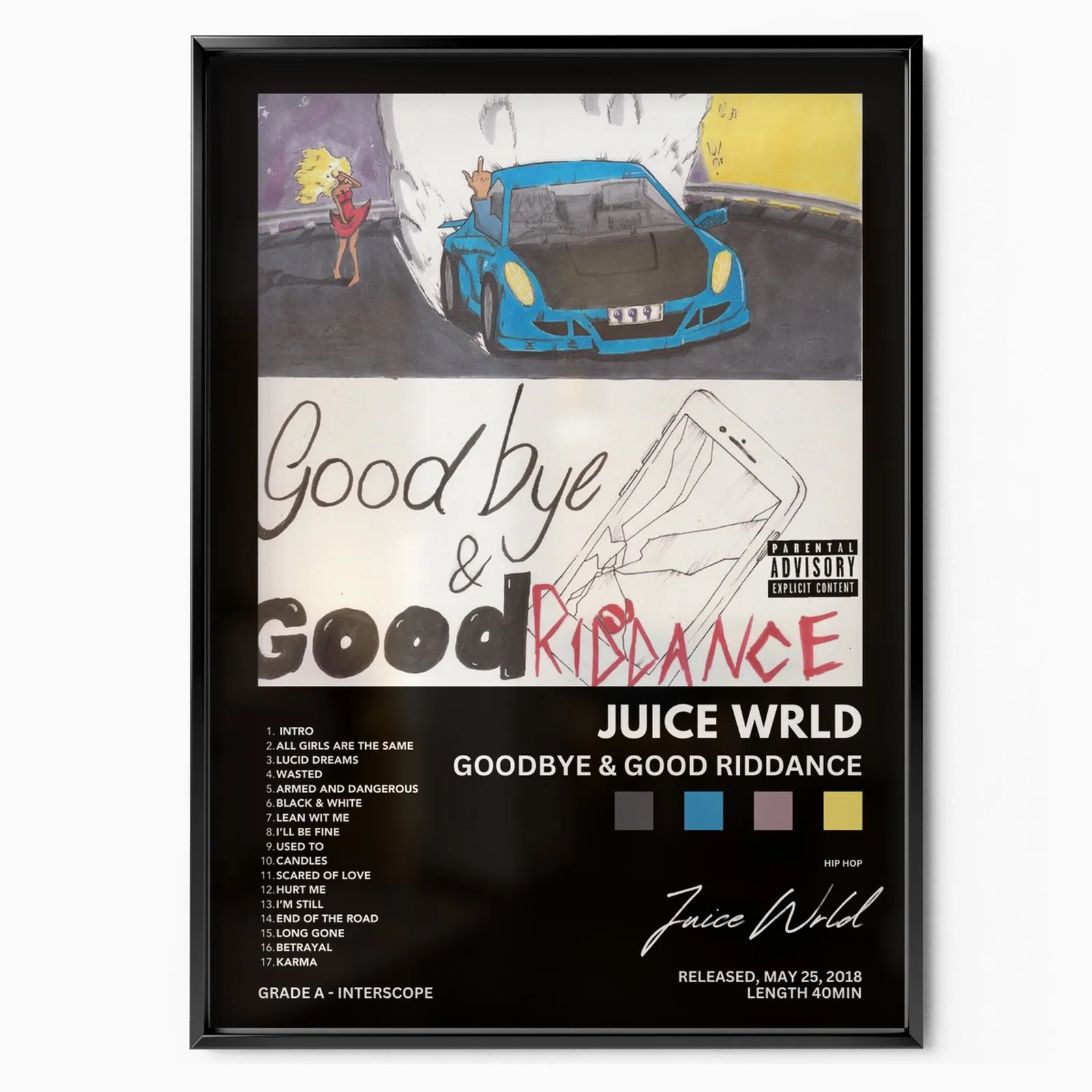
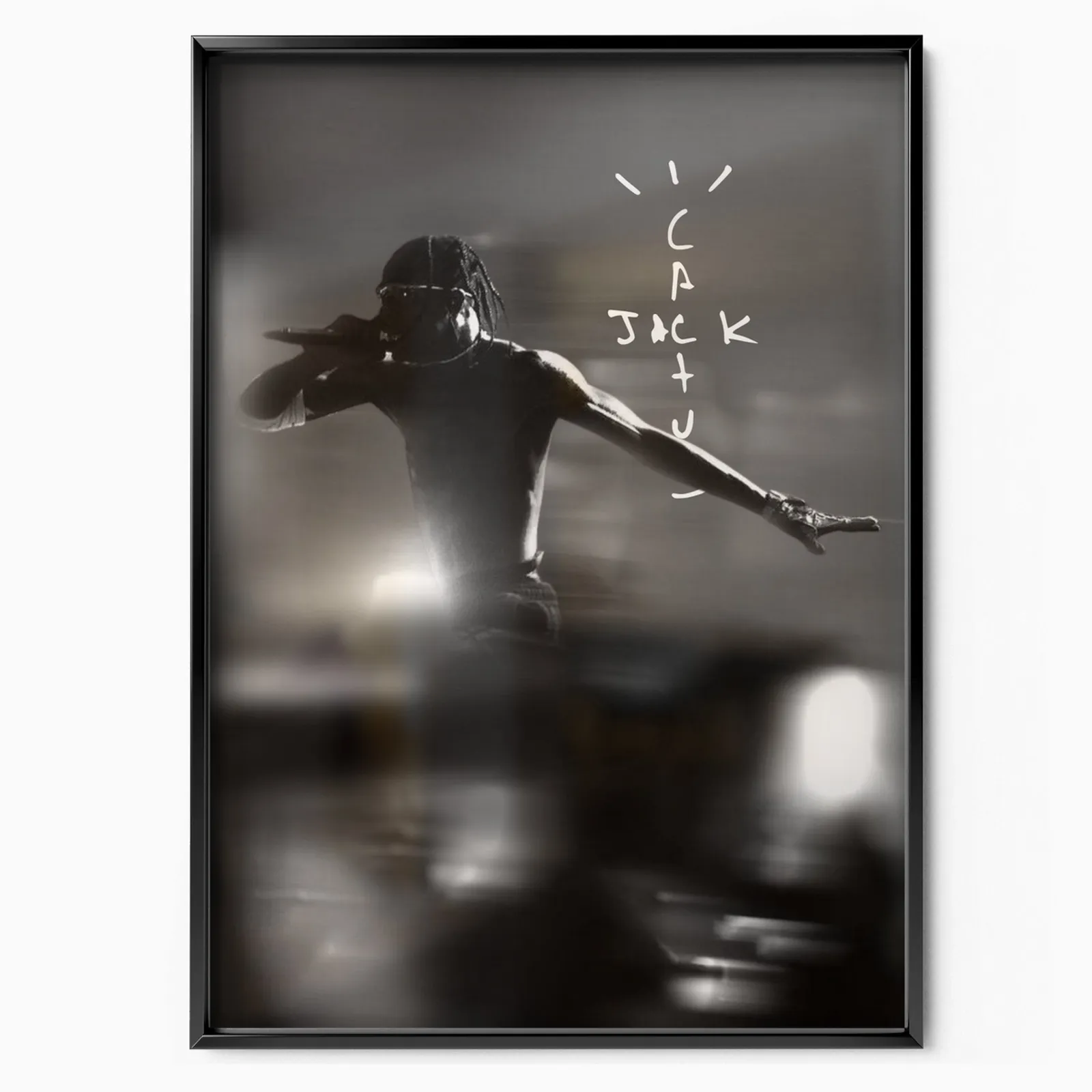
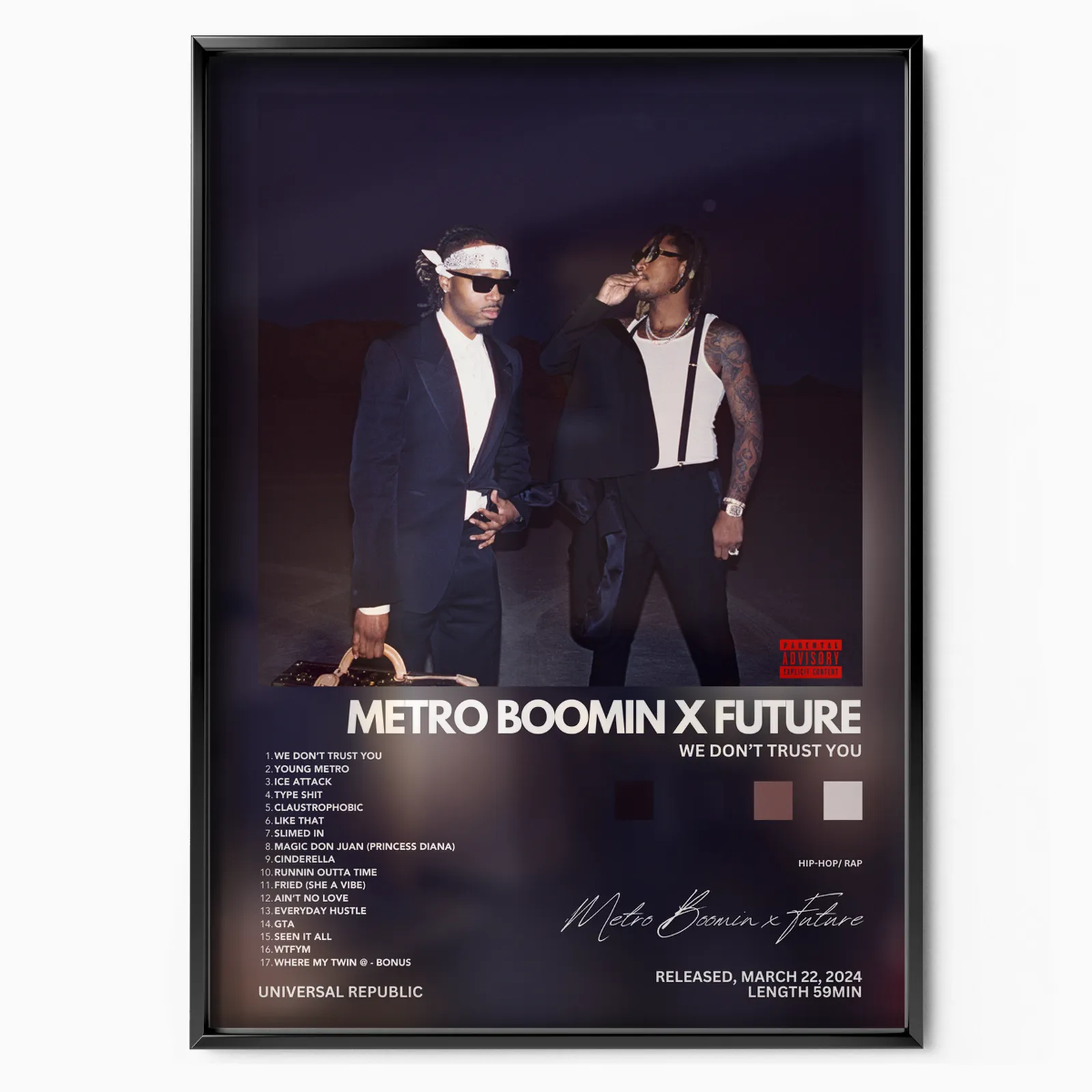
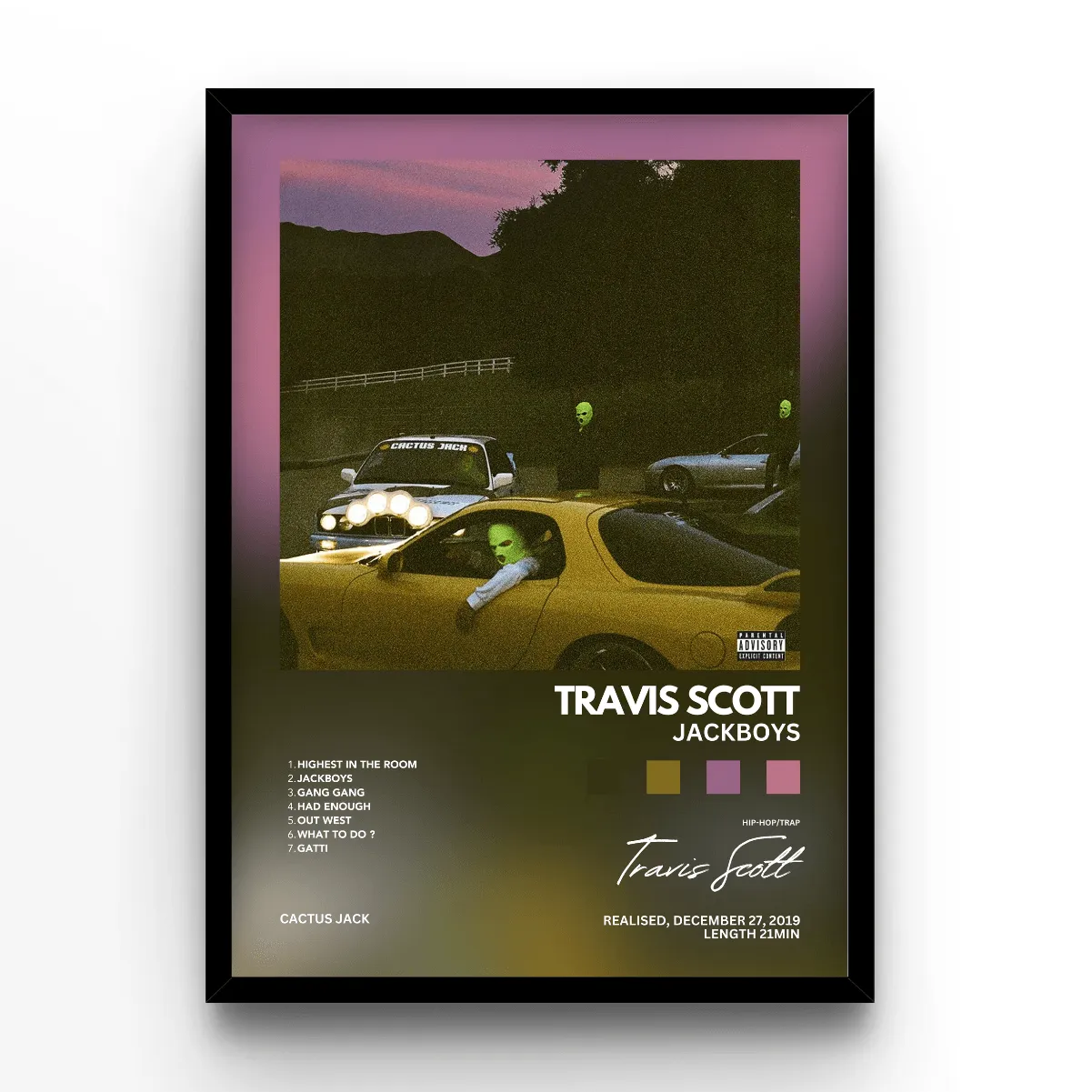
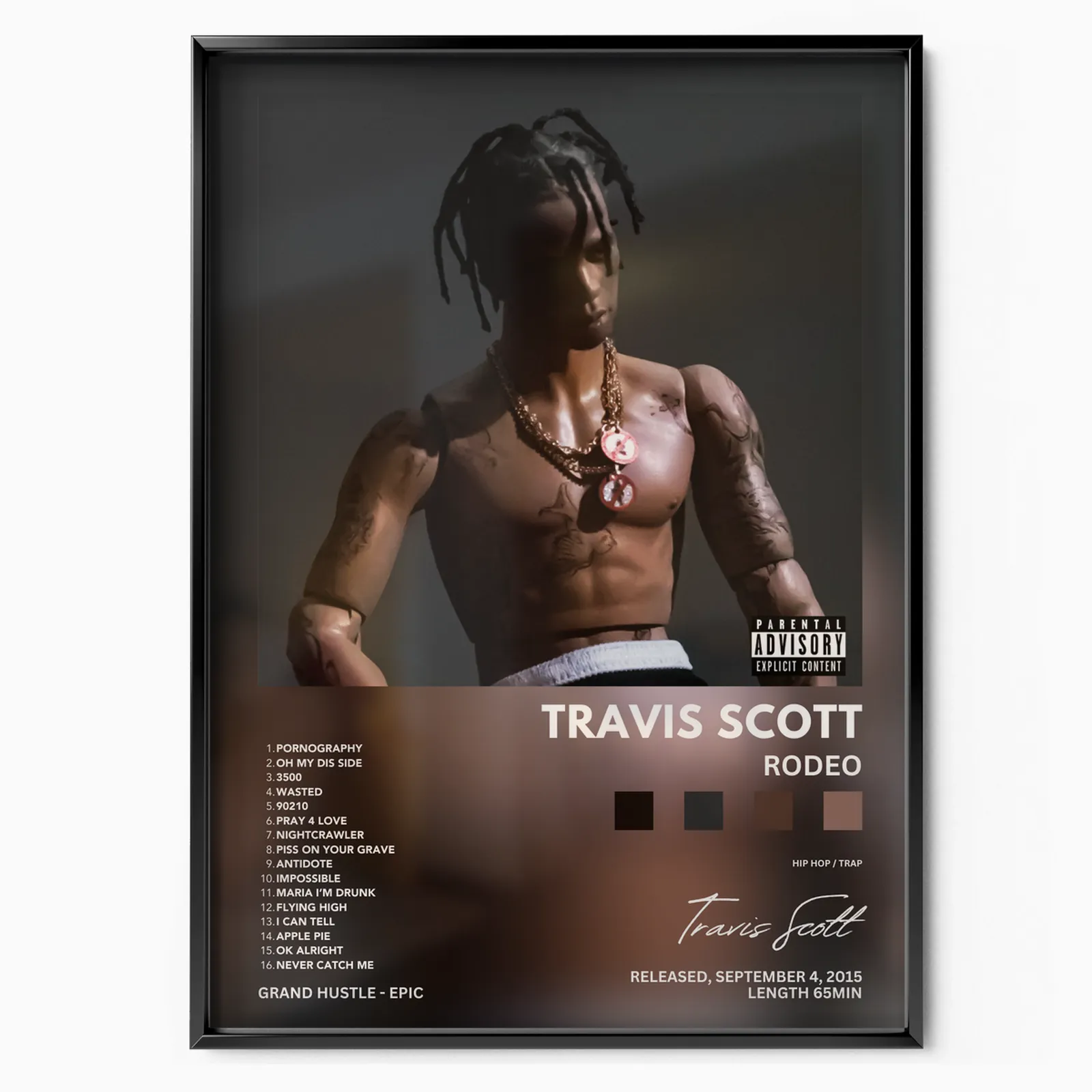
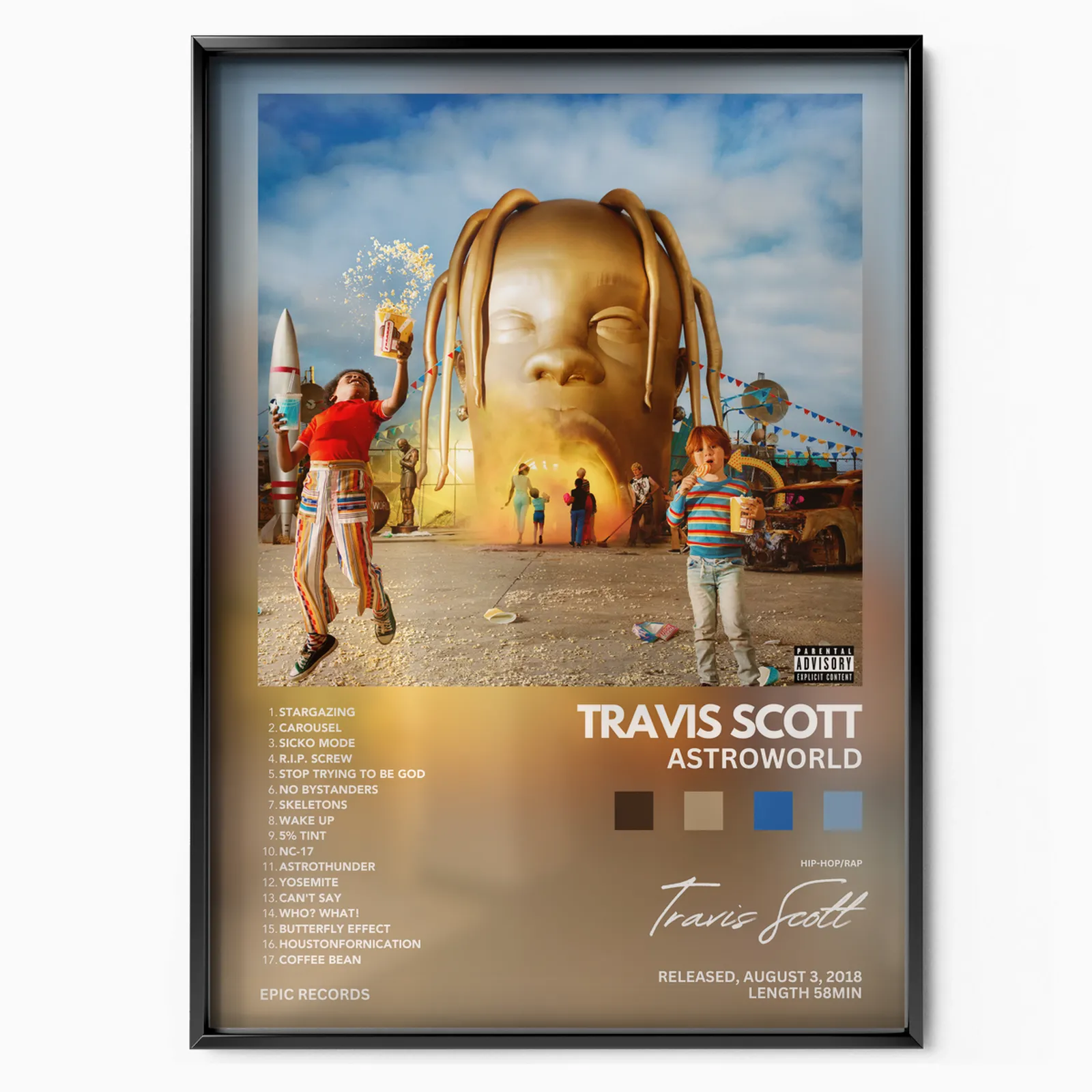
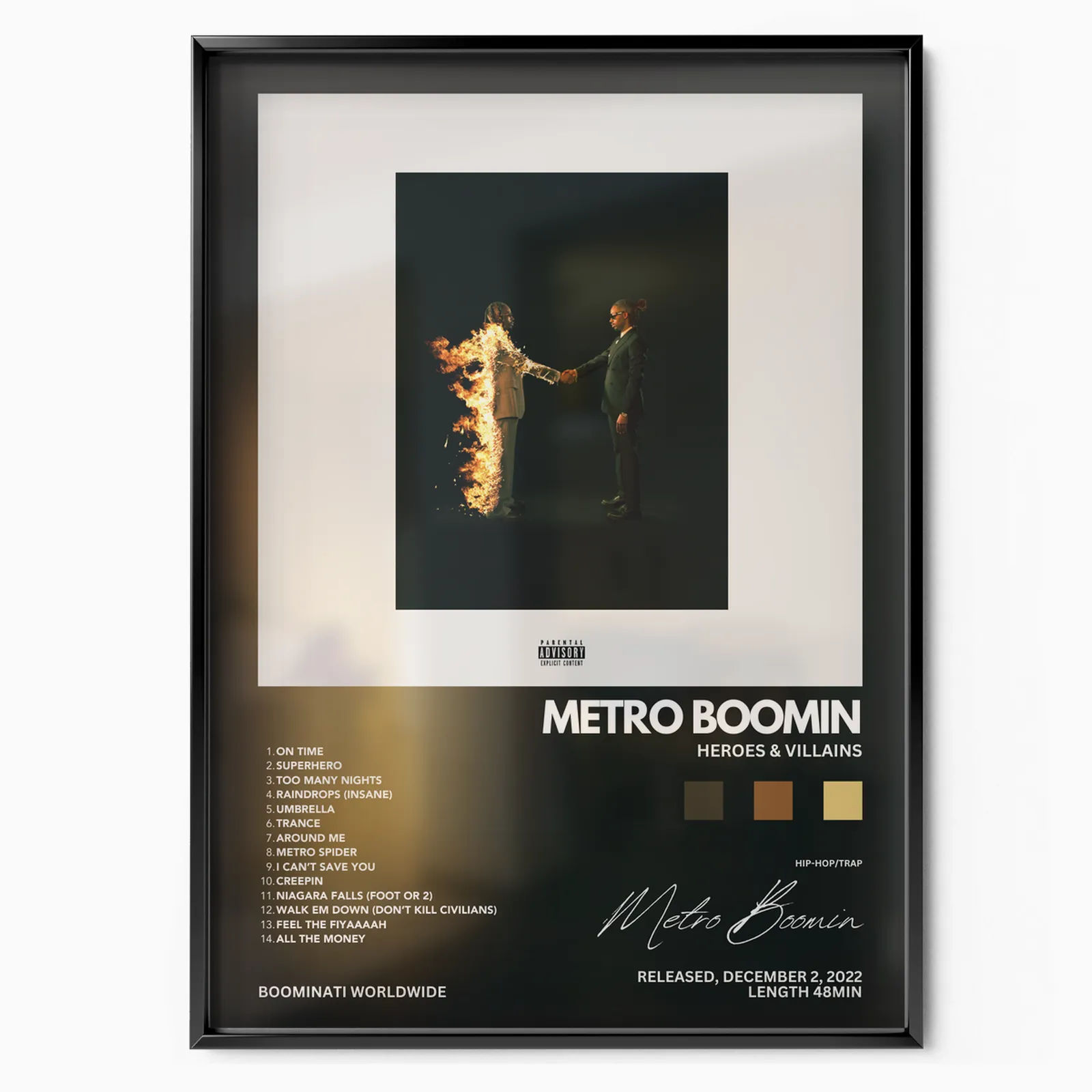
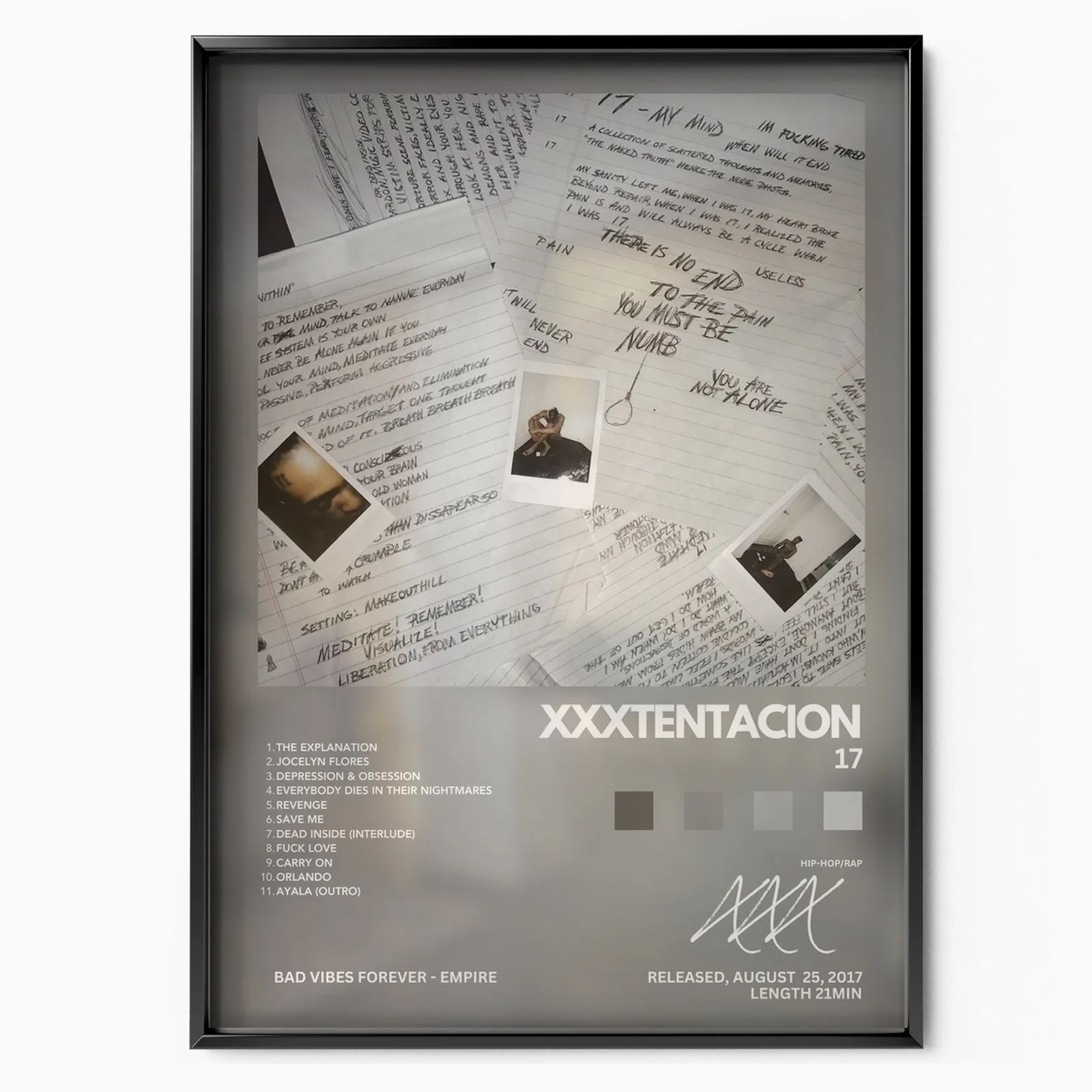
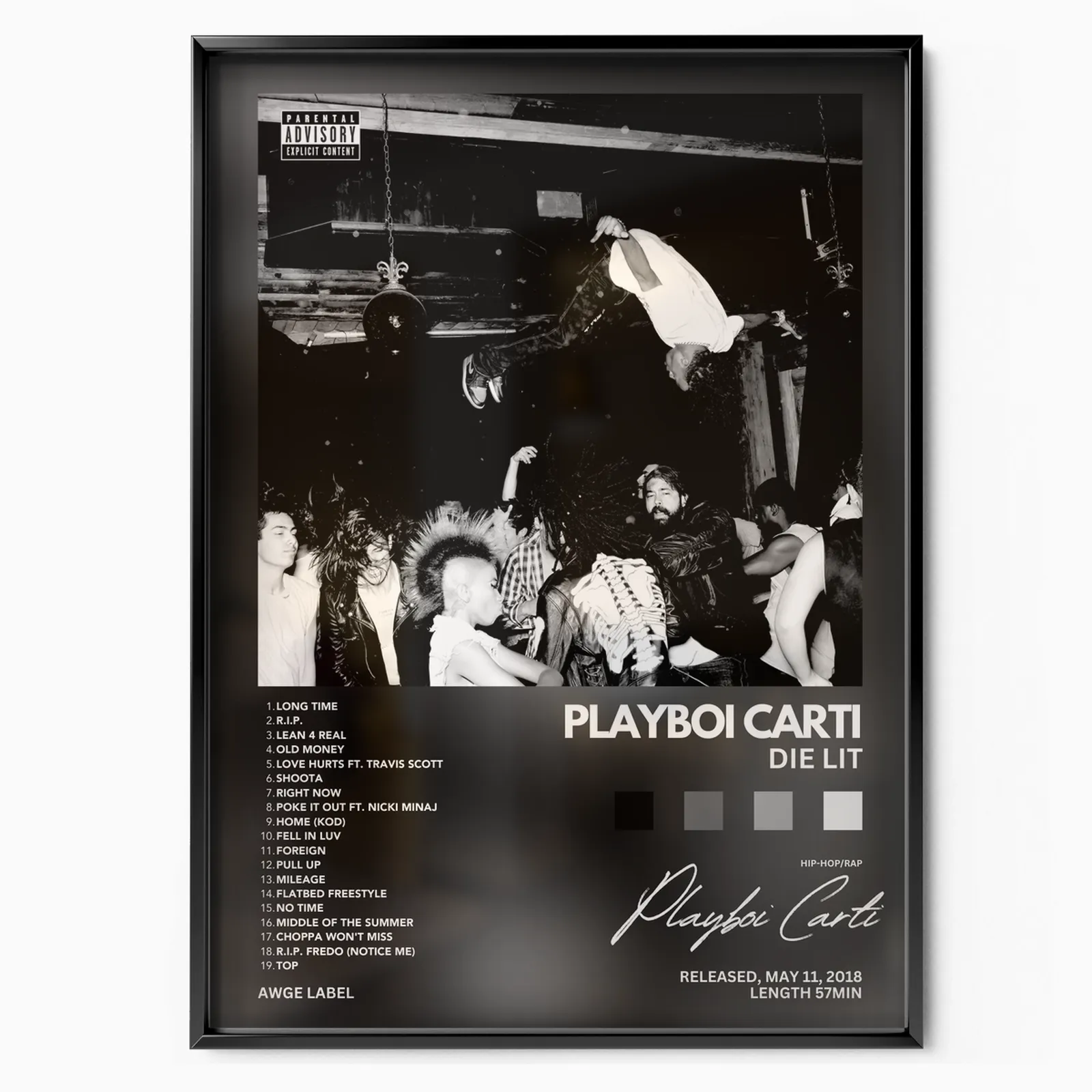
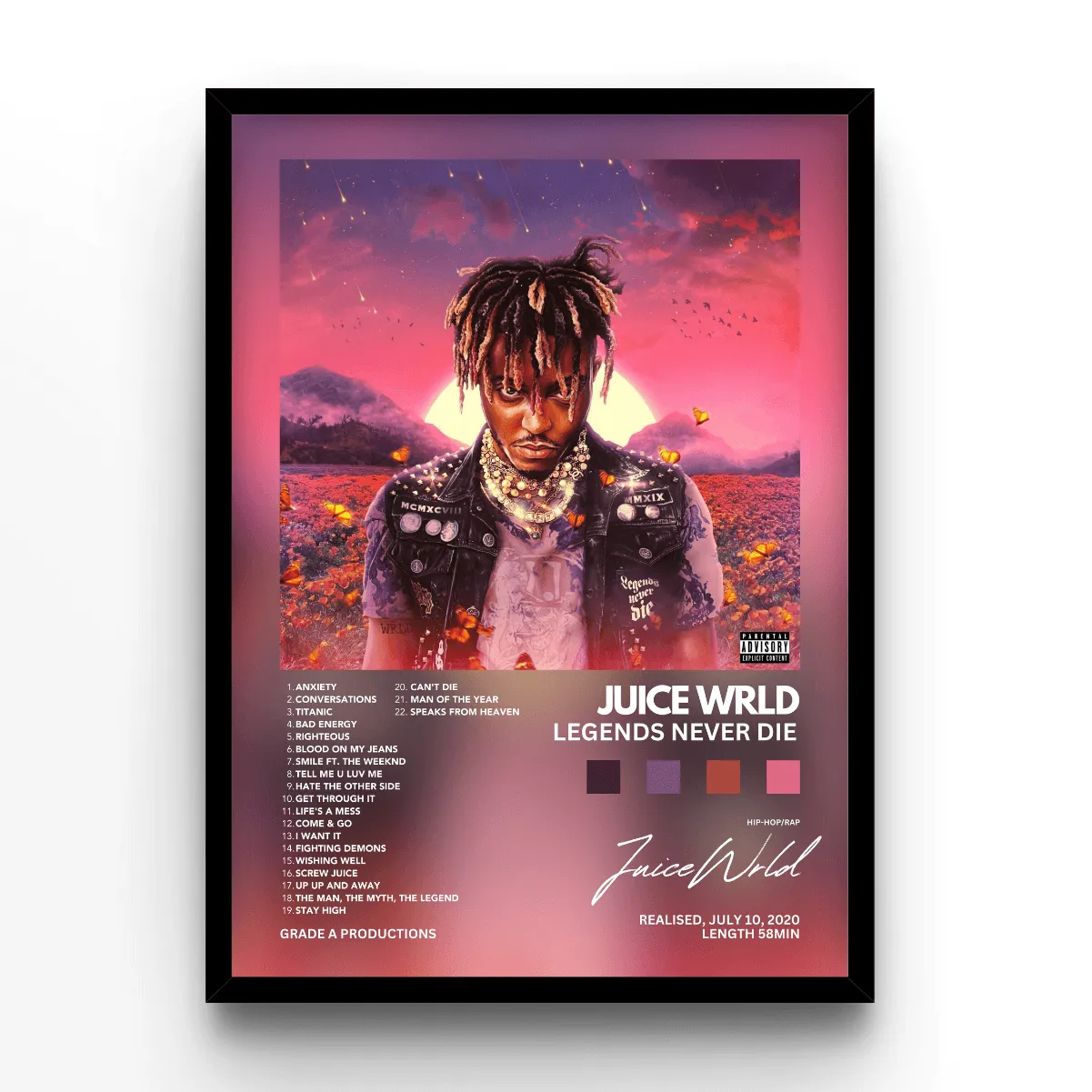
The last decade split into two currents. On one side, big-room trap and psychedelic production: Travis Scott built the Cactus Jack universe from Rodeo and Birds in the Trap Sing McKnight to the era-defining Astroworld in 2018 and the chart-topping Utopia. Producer Metro Boomin stepped to the front with Heroes & Villains, and Don Toliver carried the melodic wing with Life of a Don. On the other side, a generation raised on SoundCloud turned raw emotion into a movement: XXXTentacion's 17, Juice WRLD's posthumous number one Legends Never Die, which logged the biggest streaming week of 2020, plus Lil Peep, Playboi Carti's rage-defining Whole Lotta Red, Lil Uzi Vert's Eternal Atake and the newest wave in Yeat and Ken Carson.
Sizes, frames and building a hip-hop wall
Every design ships in A4, A3, A2 and A1. A4 and A3 suit a desk, a shelf or a tight bedroom grid, while A2 and A1 work as a single statement piece above a bed or sofa. Choose black framing for high-contrast covers and portraits, chrome white to lift brighter sleeve art, or unframed for the flexible, lower-cost route. All prints use museum-grade 200gsm matte stock for deep colour and a glare-free finish that holds up for years. The easiest gallery to start is a three-poster trio: pick one era-defining classic, one modern favourite and one artist portrait, keep to a single frame colour and repeat the A3 size for a clean grid. Thanks to Buy 2 Get 1 Free, that third print is on the house, which makes a proper hip-hop wall the best-value corner of the shop.